The natural way of the world is for a man to live to a ripe old age and pass away, and for his son to mourn him. Accordingly, it is excruciatingly unnatural and heartbreaking for a father to bury his son, which is exactly what my friend Yehoshua Sherman and his wife Sima had to do for their beloved 18-year-old son, Yehuda Shmuel, murdered this past Shabbat.
I went to visit the Sherman family in their home in Elon Moreh for the traditional shiva observance. Although I went to offer comfort, it was they who provided comfort to me, and to all the friends who had gathered in their home.
I drove deep into Samaria and up the winding roads to the top of a mountain where the ancient and new Jewish community of Elon Moreh is nestled. Ancient, because it is where God first appeared to Abraham in the Land of Israel and proclaimed a remarkable promise: “And Abram passed through the land unto the place of Shechem, unto Elon Moreh. And the Canaanite was then in the land. And Hashem appeared to Abram and said: ‘To your offspring I will give this land'” (Genesis 12:6-7). New, because this particular community was established in 1980 by the Religious Zionist movement and is now home to four hundred Jewish families.
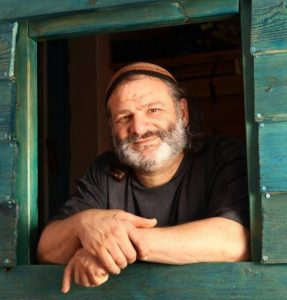
When I entered the house and embraced Yehoshua, the rooms were crowded with mourners and visitors. He explained that just days earlier, Yehuda had spent Shabbat as he often did by providing an extra set of hands on one of the many new farms spread across Judea and Samaria.
These farms have been emerging across the region in recent years for vital reasons: to extend the Jewish presence in the contested territories, provide security for surrounding communities, and counter the illegal Arab land grab that has been advancing menacingly for decades. Coordinated closely with the Israeli government and the IDF, and given new momentum under Finance Minister Bezalel Smotrich’s oversight, dozens of new farms have been established and recognized as official and legal communities throughout Judea and Samaria. Israel365 News has written extensively about the importance of these farms, and through our advocacy work at Israel365 Action, we have become strong supporters of these efforts. Since earning seats in the World Zionist Congress, Israel365 Action has become a leading American voice advocating for Judea and Samaria, working closely with the Israeli professionals who are doing the real work on the ground.
This is, in fact, how I came to know Yehoshua Sherman. He is a senior official at KKL-JNF, overseeing land development and working closely with the Religious Zionist Party within Israel’s national institutions. Yehoshua is one of the most effective policy experts working on behalf of Judea and Samaria — unglamorous, tedious, bureaucratic and legal work that has laid the foundation for the breakthroughs Smotrich has become known for. For Yehoshua, this is not merely a job. It is his life’s calling. And he passed that love for the land on to his children. Following in his father’s footsteps, his son Daniel established a farm called Shuva Yisrael — “Return, O Israel” — based on the verse in Hosea 14:2: “Return, O Israel, to the Lord your God.” The name carries a double meaning: a call to spiritual repentance and a call to physically return to the Land.
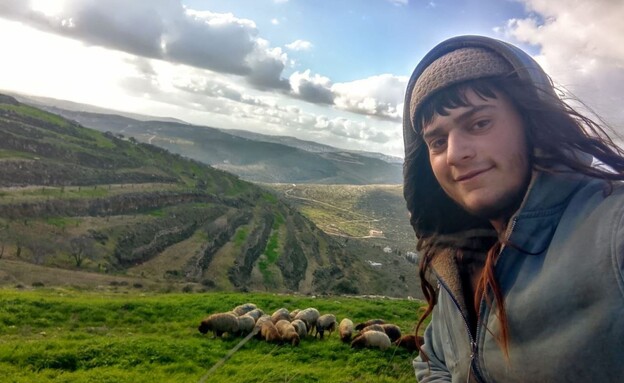
From the time he was a young child, Yehuda embodied that same commitment. He would always say: “Eretz Yisrael tzarich oti — The Land of Israel needs me.” He spent as much time as he could building up and building out the land, wherever he was needed most. During the week, he would shepherd the sheep and on Shabbat, the farms needed extra hands for patrol – guarding the families, the flock, and the perimeter. That is exactly what Yehuda was doing this past Shabbat, alongside his older brother Daniel.
While they were driving their ATV on patrol (driving for security purposes is permitted on Shabbat), a Palestinian terrorist deliberately rammed their vehicle with a truck and sent it plunging off a cliff. Miraculously, Daniel survived. Yehuda Shmuel did not and was buried on Sunday.
Yehuda’s teenage friends have been beside themselves with grief, some lashing out in desperate rage. But the family itself conducted themselves with graceful composure in the face of their terrible tragedy, and offered the most uplifting words to those who came to console them. “Usually it’s the job of a father to teach his son,” Yehoshua said quietly. “But I learned so much from Yehuda.”
He explained that Yehuda and his friends had developed a connection to the Land of Israel that he himself could not fully fathom. They were willing to take great personal risks to inherit the land of Abraham, with a naturalness and urgency that even Yehoshua, who had devoted his professional life to this cause, could not immediately access. “It occurred to me,” he said, “that Yehuda and his friends were so dedicated to the land because they were born into it. They are the first generation of Jews born in Judea and so a love for the land comes so much more naturally to them.” Previous generations sacrificed to build the settlements. Yehuda’s generation was born into them and so their intimacy with the fields and valleys, the mountains and the ravines, runs deeper than their parents can fully comprehend.
Throughout the past two and a half years of war, one of the most remarkable phenomena has been the rise of the young generation as role models and a source of inspiration. It was young Israelis taken hostage who we rallied around — and when many of them emerged from horrific captivity, they became national heroes through the messages of faith and resilience they shared.
While the parents have been divided over politics, the children ran into battle together, fighting side by side regardless of background or belief.
This week is Shabbat Hagadol (the great Sabbath) the Shabbat before Pesach, when Jews around the world read the Haftorah ( a selection from the prophets read publicly in synagogue after the Torah portion on Shabbat) chapters from Malachi.)
“Behold, I will send you Elijah the prophet before the coming of the great and awesome day of the Lord. And he will turn the heart of the fathers to the children, and the heart of the children to their fathers.” (Malachi 3:23-24)
These words, written more than 2,400 years ago in the Land of Israel, illuminate our current moment. The prophet Malachi lived during the Second Temple period, after the Jewish people had returned from Babylonian exile — a time of both physical and spiritual rebuilding. At first glance, his prophecy seems backwards. Throughout history, it is the older generation that typically possesses greater wisdom and moral authority. One would expect that before the arrival of Elijah, the harbinger of the messianic era, the hearts of children would turn toward their parents.
Yet Malachi’s formulation suggests the opposite. Before the great and awesome day of the Lord, the younger generation will have insights their parents lack. The son will possess something so significant that it will inspire his father.
Yehuda Shmuel Sherman, Hashem yikom damo — may God avenge his blood — and may his memory be a blessing, reminds those of us old enough to be his parents and grandparents that in Israel today, moral clarity and spiritual courage are flowing upward, from young to old. Yehuda Shmuel has shown us what commitment to our beloved Israel must look like, by tending sheep and patrolling his farm on Shabbat, and for that we must all be eternally grateful.