



The video spread fast. B’Tselem, the Israeli left-wing NGO, posted footage of Jewish ranchers and IDF soldiers entering an Arab village in Samaria and leaving with 80 sheep. The caption said it all: settlers and the army stealing from Palestinians. Within hours it had gone viral.
The footage had been cut. Half an hour before the clip began, Arabs in two pickup trucks attacked three Jewish shepherds, sending one to the hospital with an ax wound to the head, and drove off with the flock. The army and the ranchers moved fast because the thieves slaughter stolen sheep within hours so the owners can never recover them.
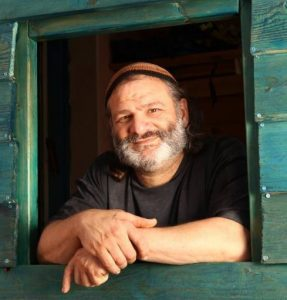
“If you zoom in on the video, you see that there’s spray-paint letters on each sheep: nun and mem,” said Oren Seliger, who heads the Judea and Samaria Situation Room (JSR), in an interview with Israel365 News. The Hebrew letters were the initials of the Jewish rancher who owned the flock. “So we quickly uploaded that, and it killed the story on B’Tselem. But it went viral already. It’s very hard to get the milk back in the jar.”
The JSR exists to get to the truth before the lie spreads. The Yesha Council, the umbrella body of the Jewish communities in Judea and Samaria, built the center to collect, verify and publish every security event in the region in real time. “There’s no opinions here. I’m not editorializing,” Seliger said. “What I’m providing here is fact, is truth. It’s what’s happening in the field.”
321 Attacks in One Month
What the field shows is a region under constant Arab attack. Seliger shared his screen to show the JSR’s live dashboard, which is not yet public and is currently available to Israel’s Foreign Ministry and to diplomats, including the office of Israel’s Ambassador to the United States, Yechiel Leiter. It plots every incident on a map with details on what happened, where, when and who reported it. AI generates the summaries automatically in Hebrew and English.
In the previous month, the dashboard logged 321 terror attacks. In the previous seven days, it logged 69.
The categories read like a terrorist’s manual. They include stone throwing, firebombs and car rammings. They include “stone barricades,” where terrorists pile rocks on a dark road at night. “It forces the car to stop, having to get out to move the rocks, and then they either shoot or they throw Molotov cocktails,” Seliger said. They include dummy explosive devices planted beside real ones, and the poisoning of Jewish flocks. “They put poison in dates and they spread them across the field, and then the sheep come and eat that, or they poison the actual water wells where the sheep are drinking from,” he said.
They also include laser attacks. Terrorists stand on hillsides at night and aim high-powered lasers, cheap ones ordered from Amazon or AliExpress, into the eyes of drivers. “You get a laser into your eye while you’re driving at night. You’re blind for at least a minute,” Seliger said. They aim them at airliners too. Seliger lives in Oranit, in western Samaria, under the flight path into Ben Gurion Airport. “If you sit in a window seat and you look out your window, you’ll often see these green lights every so often. They pop on and off. What they’re trying to do is blind the pilots.”
Against that record, “settler violence” shrinks to what Seliger called a story that is “95% nonsense.” The JSR’s data turns it into a man-bites-dog story: rare, inflated, and drowned out by the daily violence Arabs commit against Jews.
Seliger’s estimate matches the most detailed study of the “settler violence” data yet published. The Regavim Movement examined the database kept by the UN Office for the Coordination of Humanitarian Affairs (OCHA), the main source for international reporting on “settler violence,” in a 125-page report titled “False Flags and Real Agendas.” Israel365 News reported that Regavim found more than 98% of incidents labeled “settler violence” were clashes between Arabs and IDF forces, with no Israeli civilians involved. After filtering, Regavim found 833 incidents over seven years that might involve actual violence.
The UN’s sources explain the inflation. Virtually all of the information is received solely from Palestinian sources, with no independent corroboration; many of the incidents are pure fabrications, while others are highly distorted misrepresentations of events. Some entries record Jews defending themselves against terrorists. On July 26, 2018, Yotam Ovadia was stabbed to death by a 17-year-old Palestinian terrorist, and according to the UN, the neutralization of the terrorist by Yotam is recorded as settler violence. OCHA files every peaceful Jewish visit to the Temple Mount as “storming Al-Aqsa” and counts it as settler violence.
“Ninety-five percent or more of the incidents that are reported as settler violence by the United Nations itself either didn’t involve settlers, didn’t involve violence, or didn’t happen in Judea and Samaria,” Naomi Kahn, director of Regavim’s International Division, told the JNS International Policy Summit. Meir Deutsch, Regavim’s director general, warned that the campaign serves a larger goal: “They are laying the foundations of a Palestinian state whose sole aim is the eradication of the State of Israel.” “For years we have been told about a ‘serious phenomenon’ of settler violence – but we have never been shown the data that proves that it exists,” Deutsch said. Seliger’s situation room is now producing that data, and it points the other way.
The Eighth Front
Israel has fought this war on seven military fronts: Gaza, Lebanon, Syria, Judea and Samaria, Yemen, Iraq and Iran. Seliger said there is an eighth.
“There are eight fronts to this war, and the eighth front is the media war, which is life-saving as well,” he said.
The war came to his own family. When Hamas invaded on October 7, his two sons and two sons-in-law were called up. One son, a paratrooper reservist, spent from October until April lying in ambush on the Lebanese border. Another son rode in the second tank to enter Gaza on October 26 and lost 29 friends in the war.
“I went to 21 funerals as a representative of his,” Seliger said. “He would send me a WhatsApp in the middle of the night telling me, ‘Abba, I have two friends that were killed today. Funeral’s tomorrow. Can you go hug the parents?’ That’s what I would do.”
Seliger had spent 17 years at Cisco Systems managing executive customer relationships in Europe and Israel. When the war began, he decided to stop “putting money into Cisco’s pocket” and put his skills to work for Israel on the eighth front. He found that Israel’s diplomats were going into battle unarmed.
“All of our ambassadors and their staff are in the field abroad, meeting with journalists, meeting with communities, Jewish and non-Jewish,” he said. “They need data. They are our arms. We’re the bullets.”
The other side has been fighting this war for years. Seliger named Haaretz, B’Tselem and Peace Now, which he said run “very professionally run” operations. “If you want to be horribly anti-Israel, all you have to do is quote or connect yourself to these Israeli organizations,” he said. “People that are anti-Israel abroad say, ‘Well, even your own people are sharing this, so it must be true.'”
How the Weapon Works
The Yesha Council’s board is made up of the heads of the 24 municipalities of Judea and Samaria. Each municipality runs its own security operations center, and so do the region’s 200 farms. Before the JSR, each center watched only its own territory, and nobody gathered the whole picture in one place.
Now every alert flows into the JSR automatically. Seliger described a 16-year-old boy stabbed in the shoulder at a bus stop outside Kedumim three weeks earlier. The alert reached the JSR within seconds.
The center also runs its own software monitoring more than 1,200 Arab Telegram channels across Judea and Samaria. It translates them into Hebrew and flags security keywords. Within a minute or two of the Kedumim stabbing, the channels lit up. “We start getting from the Arab channels: ‘Congratulations to Muhammad so-and-so for stabbing an occupier outside the occupied settlement,'” Seliger said. “We have a name now.”
The JSR’s Arabic speakers and open-source intelligence (OSINT) analysts take it from there. In one case they found the attacker had posted photos from a Tel Aviv beach with his girlfriend the day before. In others they found the terrorist was the son of a Palestinian Authority police officer who had used his father’s gun, or a relative of a PA minister.
When terror spiked from one previously quiet village in Binyamin, analysts found a social media video showing men being trained to build roadside bombs. Using facial recognition, they identified the instructors as four terrorists linked to the 2002 Passover massacre at the Park Hotel in Netanya. The men had been serving life sentences and were freed six months earlier in a hostage exchange with Hamas. The JSR passed the details to the security services, and the four were rearrested.
The center now sends drone teams to film the olive harvest from above whenever the Arab Telegram channels announce a confrontation. It is also giving body cameras to Jewish ranchers, many of them teenagers whom the army does not allow to carry guns. “They said to us, ‘Listen, when we’re attacked I need both my hands,'” Seliger said. “They fight with rocks. They fight with sticks. That’s what they have.”
It is a tactic the other side pioneered. “One of the big weapons of the other side, the dark side, is they actually were handing out video cameras to Arabs at one point, before cell phones were so common,” Seliger said. “So we’re doing the same now to the ranchers.”
The Lies, Exposed
The JSR keeps catching the same tricks. When Arabs set fire to the fields where Jewish ranchers graze their flocks, the ranchers fight the flames with leaf blowers because there is no water in the field. “The Arabs take that video and they turn these blowers into flamethrowers,” Seliger said. “They switched the narrative completely on its head, as if it was the Jews that initiated and are burning the field.”
He recalled the claim that settlers had burned a church in the Christian Arab village of Taybeh, a story repeated even by U.S. Ambassador Mike Huckabee. “Look, the fire didn’t even go near the church,” Seliger said. The site was an ancient ruin about 100 meters from a burned field, and the fire had been set by Palestinians burning weeds. Israel365 News reported at the time that the evidence pointed to Arab arson.
When the mayor of an Arab village posted a Facebook welcome to two Swedish anarchists coming to “help” with the olive harvest, JSR analysts went to the Swedish group’s website and found 58 more activists on their way. The center sent the list to the Interior Ministry, which canceled all 60 visas.
“When they say they’re coming to help, they’re not coming to help pick the olives,” Seliger said. “They’re coming to instigate conflict, and to be able to then video it with the Jewish ranchers and farmers in Judea and Samaria, to show how much settler violence there is.”
The JSR also caught a foreign government in the act. The governor of Ramallah posted photos on Facebook of her team giving a “security update” to Britain’s military attaché on dealing with “occupation forces.” The JSR identified four of the Palestinian officials in the room as terrorists who had served life sentences for murdering Israelis and were freed in the hostage deals. The center sent the photos to the Foreign Ministry, which raised the matter with the British Embassy. The next day, the attaché was recalled to the UK. London said he had acted on his own.
“I don’t believe them,” Seliger said. “I think they’re one of the more anti-Israel, definitely anti-Judea and Samaria, governments that we’ve been dealing with for a long time.”
Winning Followers
The JSR launched its X account two weeks before the interview with two followers. “I was one of them,” Seliger said. Within ten days it passed 2,800, including radio host Mark Levin, Ambassador Huckabee and members of Congress. The Quds News Network, a popular Arab outlet, has shared the JSR’s data. A Saudi influencer who supports Saudi Arabia joining the Abraham Accords subscribed so his followers could see what the Arabs of Judea and Samaria are doing. The JSR is considering an Arabic version of its dashboard.
Seliger is not trying to win over The New York Times. “That’s not going to happen,” he said. “My goal, though, is to work with the Wall Street Journal, work with pro-Israel, conservative media around the world, and including in Israel. Real media, media that won’t lie.”
He said Christian broadcasters asked for exactly this when he presented the idea at the National Religious Broadcasters convention in Nashville. “They said, ‘We’re thirsty for truthful, actual data,'” he said. “Our subscribers and the people that are watching our broadcasts want this, need this.”
Silence Kills
Seliger built the JSR on a lesson written in blood on October 7. “October 7th happened because we ignored what was happening in Gaza,” he said. “We didn’t talk about it. They were publishing stuff on their social media while they were planning this invasion, but we just didn’t look at it.”
Israeli intelligence obtained Hamas’s invasion plan, known as the “Jericho” document, more than a year before the attack. It mapped 38 penetration points along the Gaza border, with maps of the communities and the locations of their armories. “On October 7th, those 38 penetration points were the 38 penetration points that were used,” Seliger said. The plan was dismissed because of the four-and-a-half-billion-shekel Gaza barrier. “The contention was that they’re blowing off steam. They can’t get through the barrier.”
A civilian Arabic speaker from Netivot monitored Hamas radio and heard the terrorists rehearsing on models of Israeli communities hidden under tarps. He brought his recordings to the Shin Bet and the police. “They confiscated his equipment,” Seliger said. “His equipment was all returned to him on October 9th or 10th, right after the war started.”
He said part of the reason for the silence was money. Billions of shekels in real estate were going up in Sderot, Netivot and Ashkelon, and nobody wanted to frighten buyers away from communities known as “95% heaven, 5% hell.” Had Israelis debated the threat on television, he argued, communities would have armed themselves the way kibbutzim Sa’ad and Alumim did. Those two kept their security teams’ rifles at home against army directives, reached their positions three minutes faster, and drove the terrorists off. “I’m not saying October 7th wouldn’t have happened,” Seliger said. “I’m saying it could have looked very different.”
The same danger now sits beside central Israel. The Arab city of Qalqilya is about 250 meters from Kfar Saba, separated by a concrete barrier and Highway 6. “A tractor could easily open up the barrier by Qalqilya,” Seliger said. “The police’s biggest fear is that they do that. They go onto Highway 6, they cause a traffic jam, and they just wreak havoc. People in Kfar Saba are still in this concept. They don’t understand what’s right across the street from them.”
October 7 also killed the dream of the creation of an unprecedented Palestinian state inside Israel’s borders, militarized and ethnically cleansed of Jews, with its exclusively Muslim capital in Jerusalem, centered on Judaism’s holiest site, the Temple Mount. Seliger recalled a survivor from the Gaza border communities, long the heartland of Israel’s left, who lost his wife, his son and a leg. Had Hamas struck Gush Etzion or Eli, the man said, he would have blamed “the occupation.” Hamas came for him instead and called him a settler.
“From their perspective, ’48 is an occupation. There is no difference between ’67 and ’48,” Seliger said. “Their goal is not a two-state solution. Their goal is a one-state solution without us in it.”
That raises a question the Bible answers directly: what is the responsibility of the one who sees the danger coming?
The Watchman on the Wall
God appointed the prophet Ezekiel as a tzofeh, a watchman, for the house of Israel, and laid out his obligation in the starkest terms:
“But if the watchman see the sword come, and blow not the horn, and the people be not warned, and the sword do come, and take any person from among them, he is taken away in his iniquity, but his blood will I require at the watchman’s hand.” (Ezekiel 33:6)
The verse places the guilt on the watchman who saw the sword coming and kept silent. The Jericho document, the radio intercepts from Netivot and the warnings that never reached the cabinet all fit Ezekiel’s description of a horn that was never blown. A watchman who sounds the alarm has done his duty, whether or not the people listen. “He heard the sound of the horn, and took not warning; his blood shall be upon him,” the prophet says (Ezekiel 33:5).
Jewish law treats that duty as a matter of life and death. The principle of pikuach nefesh, saving a life, overrides almost every commandment in the Torah, including Shabbat. The Sages derived it from the verse “Ye shall therefore keep My statutes, and Mine ordinances, which if a man do, he shall live by them” (Leviticus 18:5). The commandments were given to live by, so they give way when a life is at stake.
The JSR runs on that principle. “It is so critical what we’re doing that we have a directive that we work on Shabbat,” Seliger said. “The only excuse for breaking Shabbat for an Orthodox Jew is if you’re going to save a life, and I think this is a lifesaver, quite literally.”
He gave a simple example. “If I live there and I find out at the gas station someone was throwing rocks at someone, I’m not going to go to that gas station right now. I’m going to wait until tomorrow to fill up my car.”
The center is funded entirely by philanthropy, with about 25 donors so far, both Jews and Christian Zionists, and it is hiring as it grows. Seliger wants the people of Kfar Saba to understand what sits across the road from them, and he wants Israel’s friends abroad to see the truth for themselves.
Ezekiel’s watchman stood on the wall with a ram’s horn. Israel’s new watchmen have a live map, 1,200 Telegram feeds, drones in the sky and cameras on the shepherds, and this time they intend to blow the horn every time the sword appears.
