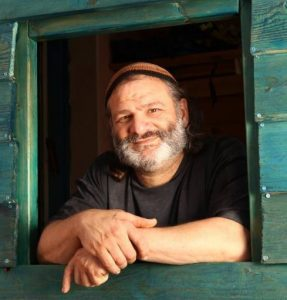
A Lebanese-born Christian whose father fought alongside the IDF in the South Lebanon Army has joined Israel’s Foreign Ministry cadet course, becoming the first member of the SLA community to train as an Israeli diplomat. Jonathan Elkhoury, who fled Lebanon with his family in 2001 at the age of nine, is one of 36 cadets who began the six-month program this week.
“For me, it was the most natural step in my life story, a direct continuation of the alliance my parents forged with the State of Israel in the 1970s and 1980s, with the establishment of the SLA in southern Lebanon,” Elkhoury wrote on Facebook.

The cadets were selected from approximately 2,000 applicants, an acceptance rate of less than two percent, according to the Foreign Ministry. The class includes 19 women and 17 men between the ages of 26 and 51. Among them are an architect, a script supervisor, a publisher, special forces veterans, senior civil servants, and immigrants from Russia, Ethiopia, England, Venezuela and Canada. Twenty-six cadets, including Elkhoury, will train on the political track and ten on the administrative track. On completing the course, they will take up positions at the ministry’s headquarters in Jerusalem and at Israeli diplomatic missions abroad.
Foreign Minister Gideon Sa’ar addressed the cadets at the opening ceremony.
“Represent Israel with a profound sense of justice. That is the essence of the mission,” Sa’ar said. “The better you are as spokespersons, the better diplomats you will be. Anyone who is not a good spokesperson will never be a good diplomat. We are fighting a war not only on the battlefield. We are fighting a battle over public perception against enormous forces, and if we do not know how to tell our story and present our narrative, no one else will do it for us.”
In his post announcing the appointment, Elkhoury wrote that his family’s alliance with Israel was passing to a new generation.
“The bond of brotherhood forged in pursuit of a shared goal of peace and good neighborly relations is now becoming a reality through the next generation, of which I am a part, in the country that has become my official and unquestioned home,” he wrote. “My sense of belonging grew thanks to Israeli society, and above all through the deep understanding that my fate and the fate of the State of Israel are one.”
“After nearly 15 years of public activity in international public diplomacy, working with SLA families in Israel and, in recent years, in the media, I am taking this step with a genuine sense of mission and pride in officially representing my country as part of the Foreign Ministry’s outstanding diplomatic team,” he added.
From Southern Lebanon to the Foreign Ministry
The South Lebanon Army was a Christian-led militia that fought Hezbollah and Palestinian terrorists alongside the IDF during Israel’s presence in southern Lebanon, which ended with the IDF’s withdrawal in May 2000. After the withdrawal, the SLA collapsed, and thousands of its members and their families crossed into Israel. Lebanese law prohibits contact with Israelis, and families who fled cut off ties with relatives who remained in Lebanon.
Elkhoury’s father, an SLA officer, reached Israel in 2000. His mother, his brother and he followed in 2001 after Hezbollah threatened the family, and they settled in Haifa.
Elkhoury later served as spokesman for the Christian Empowerment Council, which promotes the integration of Israeli Christians into military and national service, and as a project manager at Reservists on Duty, encouraging Christian youth to enlist in the IDF or national service. He has lectured on Israel at universities and Jewish communities in the United States.
“My family stayed in Lebanon for 16 generations, so I’m definitely not an Arab,” he told the Jerusalem Post in 2016.
In a recent appearance on Ynet’s “ALL CAPS” program, Elkhoury said Lebanon has been repeatedly dragged into conflict by outside forces, from the PLO and Syria to Iran and Hezbollah. “Lebanon should be for the Lebanese,” he said. “The Lebanese are much more similar to the Israelis than they think.”
Maronite Prayer Hall Vandalized in Nahariya
On Sunday evening, the Saints Peter and Paul prayer hall in Nahariya, which serves Lebanese Maronite Christians including former SLA members and their families, was found vandalized, community leader Father Rudy Noura told the Times of Israel. Religious icons, including one depicting Jesus on the cross, were slashed, and statues were shattered.
“We consider this a grave and unacceptable attack, not only on Church property, but above all on the sanctity of a place dedicated to worship and on the right of the faithful to practice their religion freely, safely, and with dignity,” the Maronite Archeparchy of Haifa said in a statement.
An apology note written in English was left on the altar. “To a deeply valued community,” it read. “I am so sorry. I don’t know what came over me to make me do that.” The note ended with “Please forgive me,” followed by a heart and a cross.
Noura said he arrived at 6:10 p.m., after the damage was discovered. “I said, this person, I am to forgive him, to love him, to hug him even,” he said. According to Noura, the Nahariya municipality, the police and the Foreign Ministry contacted the community immediately and offered assistance.
Ambassador George Deek, the Foreign Ministry’s special envoy to the Christian world, called the vandalism “disgraceful.”
“All the more painful because it belongs to a community of Lebanese Christians who stood alongside Israel and found a home here,” Deek said. “Any attack on a place of worship, of any faith, is an attack on the freedom and dignity we must protect.”
Lebanon and the Temple
The connection between Lebanon and the Holy Temple in Jerusalem begins with cedar. When King Solomon set out to build the First Temple, he turned to Hiram, king of Tyre, the Phoenician port city on the coast of modern Lebanon, who had been a friend to his father David:
And Hiram king of Tyre sent his servants unto Solomon; for he had heard that they had anointed him king in the room of his father; for Hiram was ever a lover of David. (I Kings 5:15)
Solomon asked Hiram for cedars, telling him that “there is not among us any that hath skill to hew timber like unto the Zidonians” (I Kings 5:20). Hiram’s men felled the trees in the mountains of Lebanon and floated them down the coast on rafts, and Solomon paid in wheat and oil. Inside the finished Temple, the Bible says, “all was cedar; there was no stone seen” (I Kings 6:18). Solomon’s royal complex in Jerusalem included a hall built of so much Lebanese cedar that the Bible calls it the “House of the Forest of Lebanon” (I Kings 7:2).
Some of those timbers may still be lying on the Temple Mount. After a 1927 earthquake damaged the Al-Aqsa Mosque, its ancient roof beams were removed. In the 1970s, Israeli botanists identified most of them as cedar of Lebanon. Carbon-14 testing dated one oak beam to around 880 BCE, the time of Solomon or shortly after, and a cypress beam to about 630 BCE, half a century before the Babylonians destroyed the First Temple. The mosque’s builders had reused materials left from the destroyed Temples. In January, as Israel365 News reported, the Beyadenu movement found beams lying beside the Gate of Mercy under a torn blue tarp, and the Israel Antiquities Authority had them covered again before the winter rains.
“The fact that physical remains from the days of King Solomon or the era of Herod are left outdoors and exposed to the elements is a national disgrace,” said Akiva Ariel, acting director of Beyadenu.
Five centuries later, when the exiles returned from Babylon to build the Second Temple, they went back to the same mountains:
They gave money also unto the hewers, and to the carpenters; and meat, and drink, and oil, unto them of Zidon, and to them of Tyre, to bring cedar-trees from Lebanon to the sea, unto Joppa, according to the grant that they had of Cyrus king of Persia. (Ezra 3:7)
The Sages went further and gave the Temple Lebanon’s name. When Moses pleaded to cross the Jordan and see “that goodly hill-country, and Lebanon” (Deuteronomy 3:25), Rashi explains that “Lebanon” means the Temple. The Talmud (Yoma 39b) explains the name: the Hebrew Levanon comes from lavan, white, because the Temple malbin, whitens, the sins of Israel. Isaiah used the same image: “though your sins be as scarlet, they shall be as white as snow” (Isaiah 1:18).
Rabbi Pinchas Winston, an author of works on the end of days, told Israel365 News that Lebanon’s place in the Temple is written into its name.
“Unlike Syria, which was incorporated into ancient Israel, Lebanon was a separate country that was an ally in building the Temple,” Rabbi Winston said. “Spiritually, Lebanon’s role in the Temple was not coincidental. The word ‘Lebanon’ comes from the word lavan (white). Lebanon needed to play a role in the Temple in order for it to be a mechanism for whitening sins.”
The same Talmudic passage records that forty years before the Romans destroyed the Second Temple, its great doors began to open by themselves at night. Rabbi Yochanan ben Zakkai rebuked the Temple and read it as a warning, citing the prophet Zechariah: “Open thy doors, O Lebanon, that the fire may devour thy cedars” (Zechariah 11:1). Lebanon was the Temple, and its cedars were the Temple’s timbers.
Every Shabbat, Jews sing the psalm that places the cedars of Lebanon inside God’s house:
The righteous shall flourish like the palm-tree; he shall grow like a cedar in Lebanon. Planted in the house of the LORD, they shall flourish in the courts of our God. (Psalms 92:13-14)
The prophets promise that Lebanon will return to Jerusalem when the Temple is rebuilt. Isaiah, describing the nations streaming to a restored Zion, names Lebanon by name:
The glory of Lebanon shall come unto thee, the cypress, the plane-tree and the larch together; to beautify the place of My sanctuary, and I will make the place of My feet glorious. (Isaiah 60:13)
The Hebrew is kevod haLevanon, the glory of Lebanon, brought to adorn the Mikdash (Temple) in the end of days.
Solomon built the First Temple in an era of peace, secured in part through his alliance with Hiram. Rabbi Yehuda Glick, a former Likud Knesset member and Temple Mount activist, has pointed to that model. “If the options are to bring a House of Prayer to the Temple Mount through peace or war, it is certainly preferable to do so through peace like the First Temple, which was brought through peace,” Rabbi Glick said.
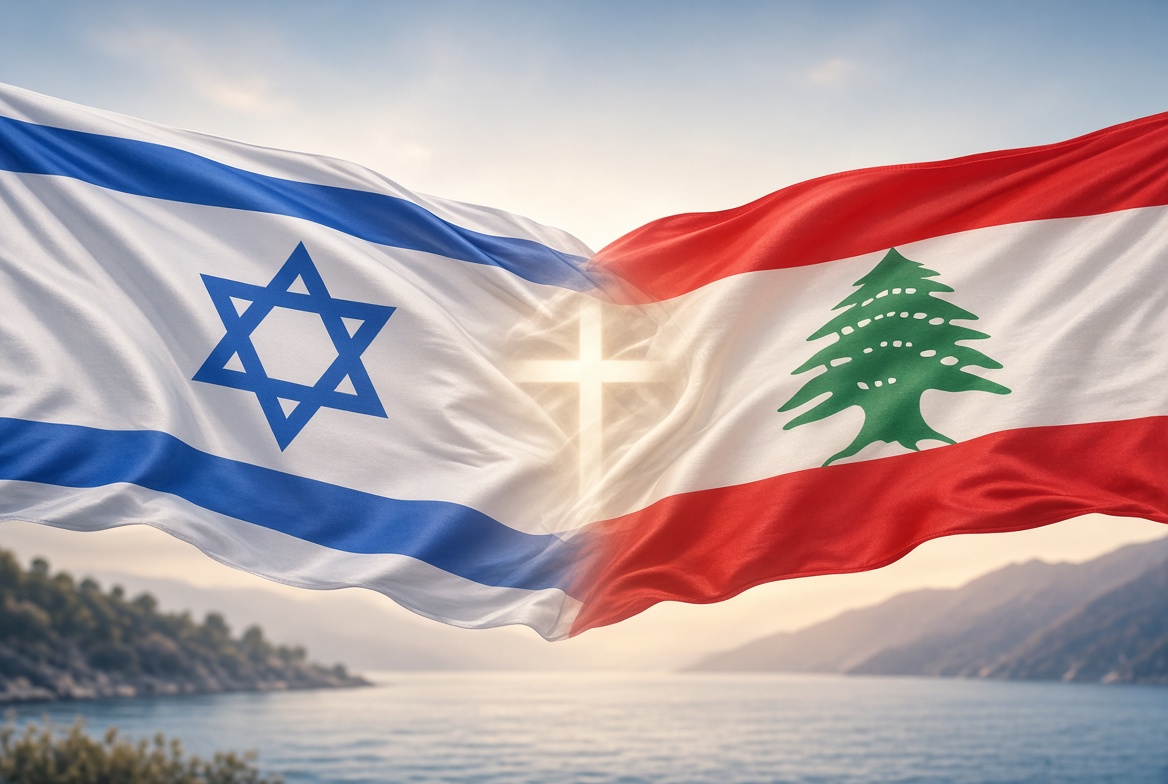
That alliance has returned to the diplomatic table. In April, Israeli and Lebanese ambassadors sat across from each other at the White House in direct talks, and President Trump announced a three-week extension of the Israel-Lebanon ceasefire. “The United States is going to work with Lebanon in order to help it protect itself from Hezbollah,” Trump wrote on Truth Social. Two days earlier, Trump read aloud from the Oval Office the passage in II Chronicles 7 in which God answers Solomon’s prayer at the dedication of the Temple, the house built with Lebanon’s cedars.
The Glory of Lebanon
For three thousand years, Lebanon has been bound up with the house of God in Jerusalem. Hiram’s craftsmen cut its cedars for Solomon. The men of Tyre and Sidon floated them to Jaffa for the exiles returning from Babylon. The Sages gave the Temple the name Lebanon, and Isaiah promised that the glory of Lebanon would return to beautify the place of God’s sanctuary.
The South Lebanon Army stood with Israel while the rest of Lebanon fell to Hezbollah, and its families paid for that loyalty with exile. This week, the son of an SLA officer, a man who calls Israel his “official and unquestioned home,” began training to represent the Jewish state before the nations. The road from Lebanon to Jerusalem is the oldest alliance in the Bible, and it runs straight to the Temple Mount.