



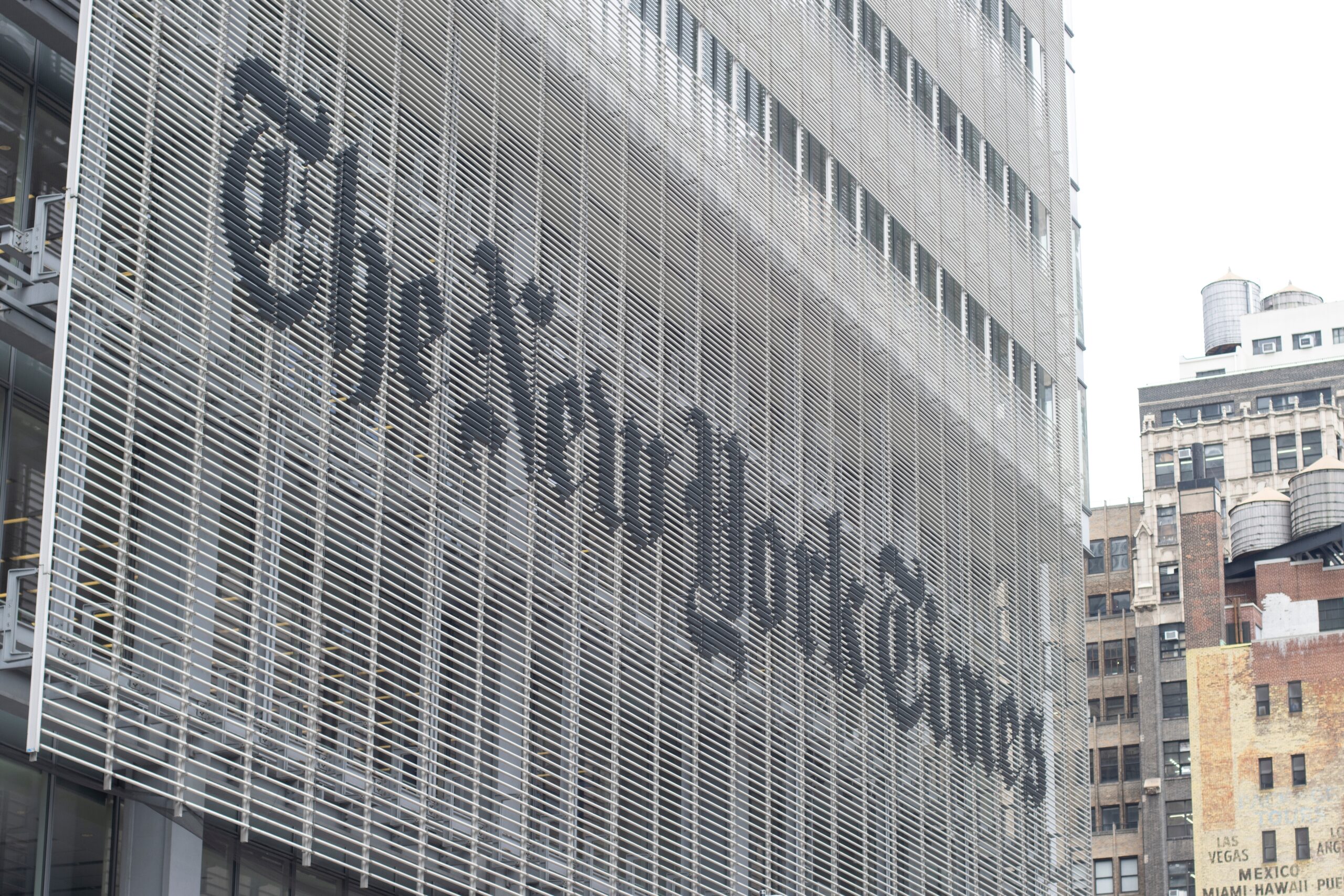
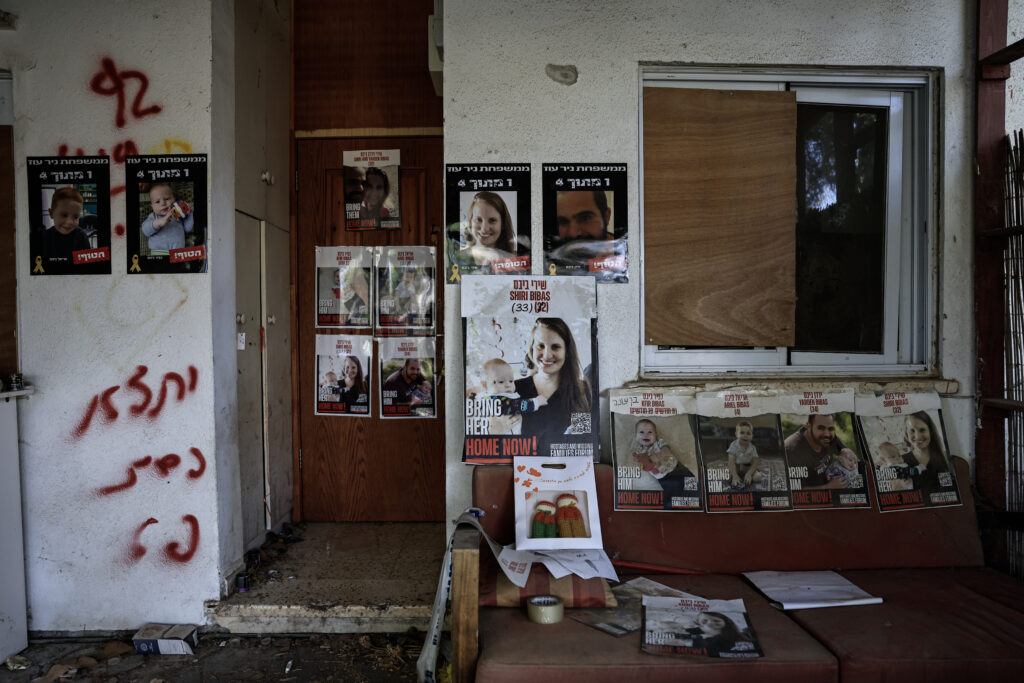
On September 14, in an article in The New York Times about backlash to the documentary Naza, correspondent Isabel Kershner wrote that Israelis remained divided over the political and military failures preceding the Hamas invasion of October 7, 2023. She went on to discount the criticism, writing, “But Israelis still largely view themselves as the victims of Oct. 7.” The sentence appeared directly after the article had already stated the plain facts — roughly 1,200 people killed and about 250 taken hostage — which meant the newspaper had the truth on the page and chose, in its very next sentence, to frame that truth as a matter of Israeli self-perception rather than settled fact, implying that Israelis were not, in fact, the victims of a horrific mass terrorist attack by Palestinian Hamas.
A Sentence That Could Not Survive Scrutiny
Tamar Sternthal, Israel director of the media watchdog CAMERA, caught the implication of Kershner’s line and said so publicly, without hedging. “Wait, what? That Israelis are victims of the Oct. 7 massacre is a matter of Israeli ‘perception’ and not simply fact?” she wrote. “If they’re not the victims, then what are they? The perpetrators?” CAMERA’s formal statement pressed further: “Implying Israelis falsely view themselves as victims while downplaying Oct. 7 ignores basic reality. Intelligence failures don’t negate civilian suffering. True journalistic integrity requires context and facts, not narrative spin.”
The Times did not defend the sentence. It deleted it. On September 16, the paper’s editors attached a formal note admitting the line had resulted from “an editing error” that “inadvertently suggested that Israelis’ experience as terror victims was a matter of perception.” The correction carried enough weight that the newspaper’s own communications account posted it publicly, an acknowledgment rarely extended to a single sentence within a longer story about a film controversy.
The Film Behind the Sentence
The documentary that produced this controversy deserves scrutiny on its own terms. Naza is a Hebrew acronym for netzek agavi, meaning collateral damage, and its central claim is large enough to fill a headline: that the Israel Defense Forces ran a policy of mass civilian killing in Gaza, assisted by artificial intelligence and accepted in advance rather than treated as an accident.
The film premiered at the Venice Film Festival to a twenty-five-minute standing ovation, the longest in the festival’s history, and won the Special Jury Prize. The entire evidentiary foundation rests on interviews with twenty-four people presented as Israeli intelligence officers and soldiers, filmed at night with their faces and voices digitally altered. Not one of them can be independently identified. The IDF has stated it has seen only promotional excerpts of the completed film, meaning the institution accused within it has not been permitted to answer the specific claims made against it. IDF Chief of Staff Lt. Gen. Eyal Zamir called the film “based on blood libels” and “deliberate distortion of reality,” ordering the Military Advocate General to examine legal action. “False, manipulative and unfounded vilification is not legitimate criticism,” Zamir said, “even if it receives sanctimonious applause.”
The director’s own record raises serious, independently documented questions about his reliability as a narrator of events in Gaza. In 2020, Yuval Abraham produced a profile of a Hebrew-language school in Gaza run by a man he described as a former prisoner who had killed “a soldier his own age.” The truth, later confirmed by the outlet that produced the piece, was that his victim was Shimon Biran, a thirty-two-year-old Israeli civilian murdered on his way to work. The Israeli research organization Regavim has since documented that the same man defended Palestinian “resistance” carried out with “a stone, a knife or a gun,” and, after October 7, described civilians fleeing the Nova festival massacre as “settlers” fleeing “resistance.” Regavim’s conclusion was direct: “Turning a convicted terrorist into the sympathetic face of a ‘coexistence’ story while his victim becomes a ‘soldier’ is whitewashing, plain and simple.” Separately, investigative journalist Eitan Fischberger has documented that Abraham has maintained a close personal friendship for years with a man who serves as vice president of Euro-Med Human Rights Monitor, an organization Israel designated a terrorist entity in 2015.
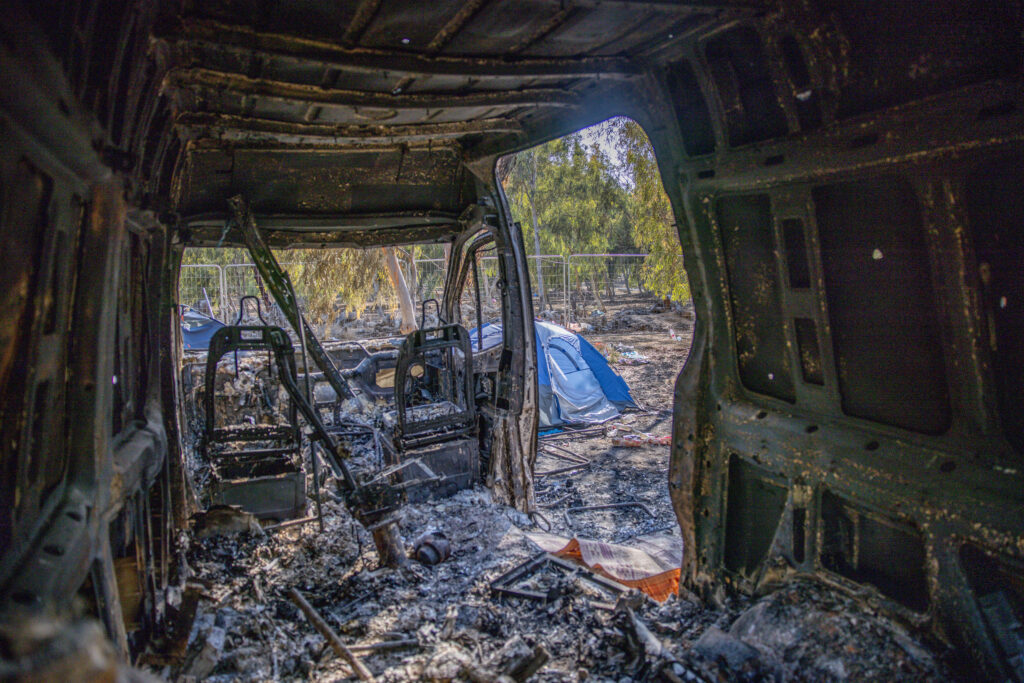
Even taken entirely on its own terms, the film concedes the very distinction its central charge requires erasing. Genocide, as a legal matter, requires proof of specific intent to destroy a protected group. Collateral damage, the film’s own chosen title, is a legal term describing harm that occurs alongside a lawful target, precisely the opposite of intent. Hamas leader Yahya Sinwar admitted in 2016 that the group had “decided to turn that which is most dear to us, the bodies of our women and children, into a dam blocking the collapse in Arab reality.” A film that dismisses the use of human shields as an “absurd” excuse never has to reckon with an enemy that has said, repeatedly and without embarrassment, that it counts on exactly that outcome.
A Study the Times Could Not Answer
The deleted sentence did not appear in isolation. Two days earlier, on September 14, Edieal Pinker of the Yale School of Management published a peer-reviewed study in the journal Studies in Conflict & Terrorism, analyzing 1,559 Times articles mentioning both Israel and Gaza between October 2023 and June 2024. His findings, built on rigorous coding protocols with inter-rater reliability scores in the high 80s to high 90s percent, were stark. Ninety-one percent of the articles failed to mention any Israeli casualty occurring after October 7. Fifty percent never referenced the Israeli hostages Hamas was holding. The word “Israel” appeared 27,205 times across the dataset against just 8,499 mentions of “Hamas,” a ratio more than three to one. Personal stories of Palestinian suffering appeared on two out of every three days across the sample; comparable personal accounts of Israeli suffering appeared in fewer than one article in twenty. Pinker concluded that the resulting coverage “assigns near-exclusive agency and responsibility to Israel while diminishing Hamas’s role in initiating and sustaining the conflict.”
Confronted with a rigorously reviewed academic study built on hard, reproducible data, the Times did not engage a single finding. It dismissed the study wholesale. “The advocates behind multiple studies on media bias cherry-pick data that supports their beliefs while ignoring any evidence to the contrary,” the paper said in a statement. “We remain open to good-faith disagreement, but we will not let critics or advocacy campaigns move us away from independent reporting.”
Pinker’s study did not stand alone. A separate investigation into the BBC’s wartime coverage, led by British lawyer Trevor Asserson, found that the broadcaster associated Israel with the word “genocide” fourteen times more often than it did Hamas, and documented more than 1,500 breaches of the BBC’s own editorial guidelines in the war’s first four months alone. A third study, published in Middle East Quarterly by researchers Andrew Fox and Tatiana Glezer, examined casualty reporting across eight major outlets and found that Hamas-supplied casualty figures were cited in every publication sampled, while Israeli figures appeared in only four percent.
A Pattern Years, Not Days, in the Making
None of this was new. A 2022 analysis by Israeli journalist Lilac Sigan, published in Ma’ariv, found that during the first half of that year, Israel received 832 mentions in Times reporting while Hamas and Hezbollah, both U.S.-designated terrorist organizations, received a combined fifty-nine. Of the newspaper’s Israel-related coverage that period, fifty-three percent portrayed Israel negatively and only thirteen percent positively.
The pattern reached its most serious point in May 2026, when columnist Nicholas Kristof published an op-ed alleging that Israel operates a systematic program of sexual violence against Palestinian prisoners, including the claim that Israeli guards use specially trained dogs to rape detainees. The column relied heavily on Euro-Med Human Rights Monitor, whose founder was named by Israeli intelligence in 2013 as a Hamas operative in Europe. The watchdog HonestReporting found that one of Kristof’s named sources had, one day after Hamas murdered more than 1,200 Israelis, publicly praised the “heroic fighters” flying “the green flag” over “the camps of the occupier.” Former Israeli Prime Minister Ehud Olmert, quoted in the piece in a way that appeared to validate its claims, said afterward: “I did not validate these claims. I have no knowledge supporting these claims, as I said to Mr. Kristof.” Israel’s Foreign Ministry called the column “one of the worst blood libels ever to appear in the modern press,” and Prime Minister Netanyahu announced Israel would pursue legal action. The Times did not retract the column. Notably, it ran on the same morning an Israeli commission released its own findings, built on 430 interviews, documenting Hamas’s systematic sexual violence against Israeli women and children on October 7.
Two Witnesses, Arriving Close Together
Set against this record, the deleted “victims” sentence stops looking like an isolated editing error and starts looking like the moment a pattern finally became visible in a single line of text. A single voice can be dismissed as bias. A second, arriving independently and pointing at the same wound, becomes far harder to wave off. A third and a fourth, stretching back across years, stop being coincidence and start being a record. This month, one sentence made that record impossible to deny for even the newspaper that wrote it. The next test is whether The New York Times is willing to listen before the correction becomes necessary, rather than only after enough witnesses have made denial impossible.
