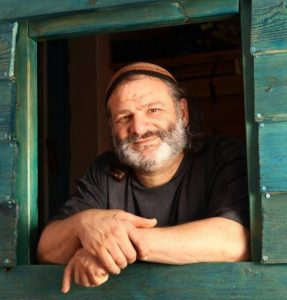

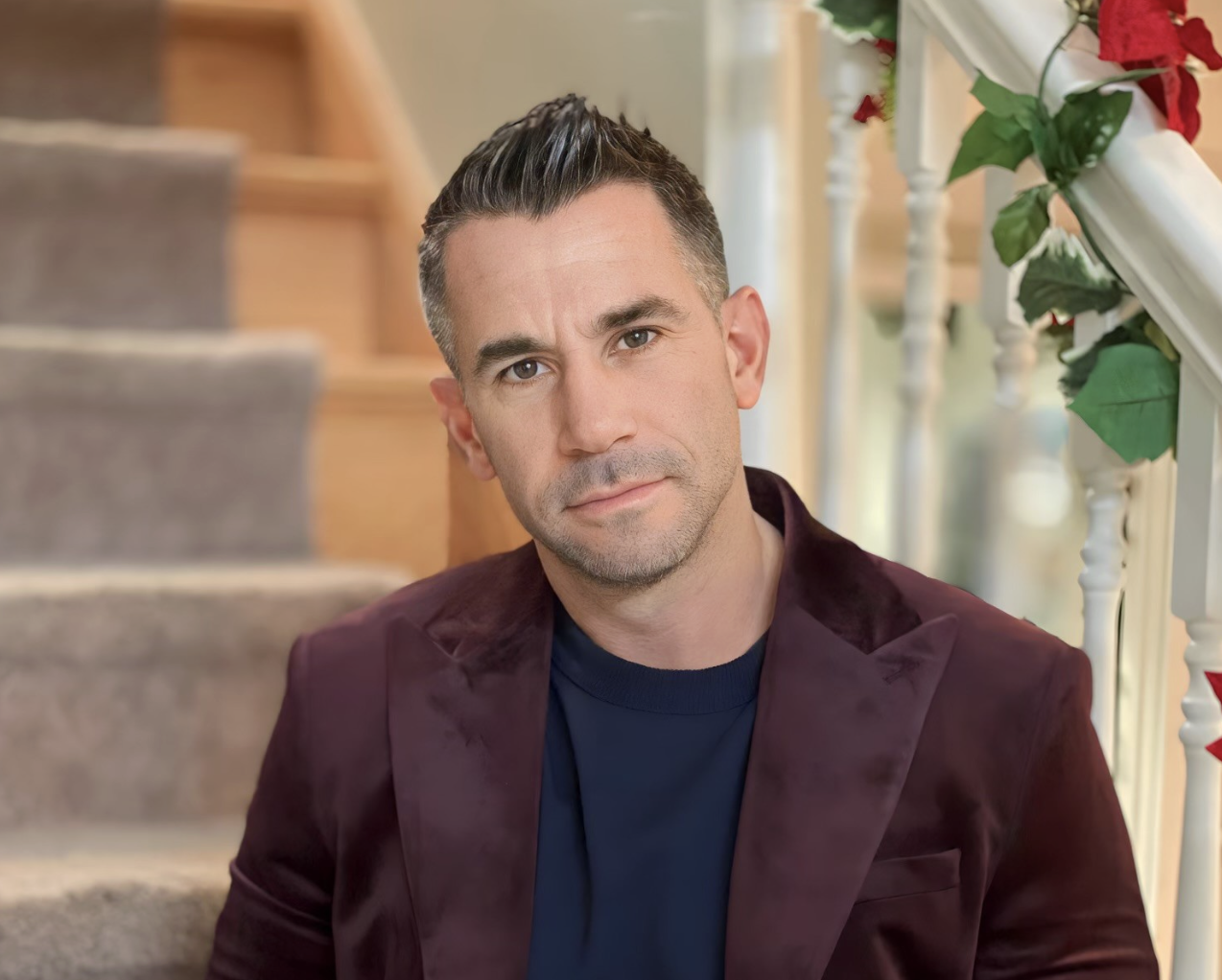
Craig Syracusa has sat across from some of the biggest names in entertainment. He has interviewed world-famous actors, musicians, and athletes – people whose faces are known across continents. And what he has learned, after thousands of interviews over nearly three decades, is that the most important story in almost every one of their lives is the one nobody in Hollywood will let them tell.
“I interviewed a guy a couple of years ago,” Syracusa told Rabbi Rami Goldberg on Biblical Money, the faith-and-finance podcast produced by Israel365. “One of the biggest stars in South America. We’re having dinner, talking, and he was ready to kill himself. Hooked on drugs. He said, ‘I got on my knees and said, God, you need to save me.’ And his life was transformed.”
He paused. “I can give you a list. Actors like Martin Sheen. The same stories, over and over. They were ready to end their lives, or they were addicted to something, and they gave their life to God – and everything changed.”
These are household names. And in every studio-approved interview, every press junket, every late-night appearance, the story that actually shaped them never comes up – because nobody in that system wants to ask.
Syracusa built his entire career around asking it anyway.
He came up in entertainment the hard way – commercials, extra work, bit parts – before pivoting to directing and documentary filmmaking. He worked at Entertainment Tonight, produced a reality show with Mark Cuban, and was by any measure on a conventional trajectory toward a successful secular career. Then he went to Fatima.
Fatima is a small town in Portugal where, in 1917, Catholics believe the Virgin Mary appeared to three shepherd children. Syracusa went there not as a pilgrim but as a filmmaker, shooting a documentary about young people on a religious pilgrimage – their transformation, not his. But somewhere in Fatima, filming other people’s faith, something happened to him. “I had this experience with the Holy Spirit,” he said. “I wasn’t drinking. I wasn’t on drugs. I was just there filming. And I knew it was God.”
He came home, walked away from Entertainment Tonight on a Friday, and started working at a Catholic media company the following Monday. Everyone around him thought he had lost his mind.
He had not lost his mind. He had found his mission.
That mission is straightforward: use the access and relationships he built in the secular world to tell the stories that world refuses to tell. Stories about what happens when someone who has everything finally hits the wall. Stories about surrender, transformation, and the kind of faith that doesn’t come from growing up in church but from running out of every other option.
Hollywood wants none of it. Syracusa described pitching faith-based projects to major platforms and receiving not a rejection but rather endless runarounds – meetings that go nowhere, emails that go unanswered – the slow bureaucratic burial of anything connected to God.
When a deal does come through, the first demand is always the same: rewrite the script. Soften the faith. Give the priest a love interest. Remove whatever made the story honest in the first place. Christians on screen are either buffoons or villains. Sincere faith is either played for laughs or treated as a mental illness. And the rare film that gets made – a Cabrini, a Father Stu – takes decades of fighting and usually requires someone to put up their own money. Syracusa has a finished documentary on mental health he cannot raise forty thousand dollars to edit. He has a film about a Catholic priest in Vietnam that has been in development for years. He refuses to bend the script. He keeps going anyway.
Rabbi Rami recognized everything Syracusa was describing. Orthodox Jews get the same Hollywood treatment – their communities flattened into stereotypes, their faith either invisible or sinister. He brought up a recent film set in Brooklyn depicting a Hasidic rabbi as a hitman.
Syracusa grew up in Bensonhurst, on the border of Borough Park, spending Friday afternoons helping his Hasidic neighbors turn their lights on before Shabbat. These were not strangers. They were family friends whose homes he walked through and whose lives he knew from the inside. “The way they depicted Brooklyn, the rabbi – it was horrible,” he said. “It really bothers me.”
What bothers him is not just the inaccuracy. It is the intent behind it. People of faith – Jewish, Catholic, Evangelical – are all targets of the same cultural hostility, the same reflexive contempt from an industry that has decided religion is either irrelevant or dangerous. The caricatures are not accidents. They are a message.
Syracusa’s answer to that message is to keep telling the real stories. The ones the celebrities whispered to him off camera. The ones about the floor of a hotel room at three in the morning, the moment the drugs stopped working, the prayer that went up when there was nothing else left. Those stories exist in enormous numbers, across every tier of fame and every corner of the entertainment world. Hollywood sits on them. Syracusa does not.
That fire, he said, was lit in a small Portuguese town more than fifteen years ago and has not gone out since.
To hear the full conversation, listen to the episode on Biblical Money, Rabbi Rami Goldberg’s podcast exploring faith, finance, Bible, and business.