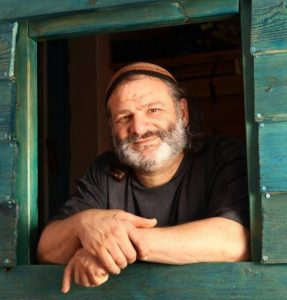
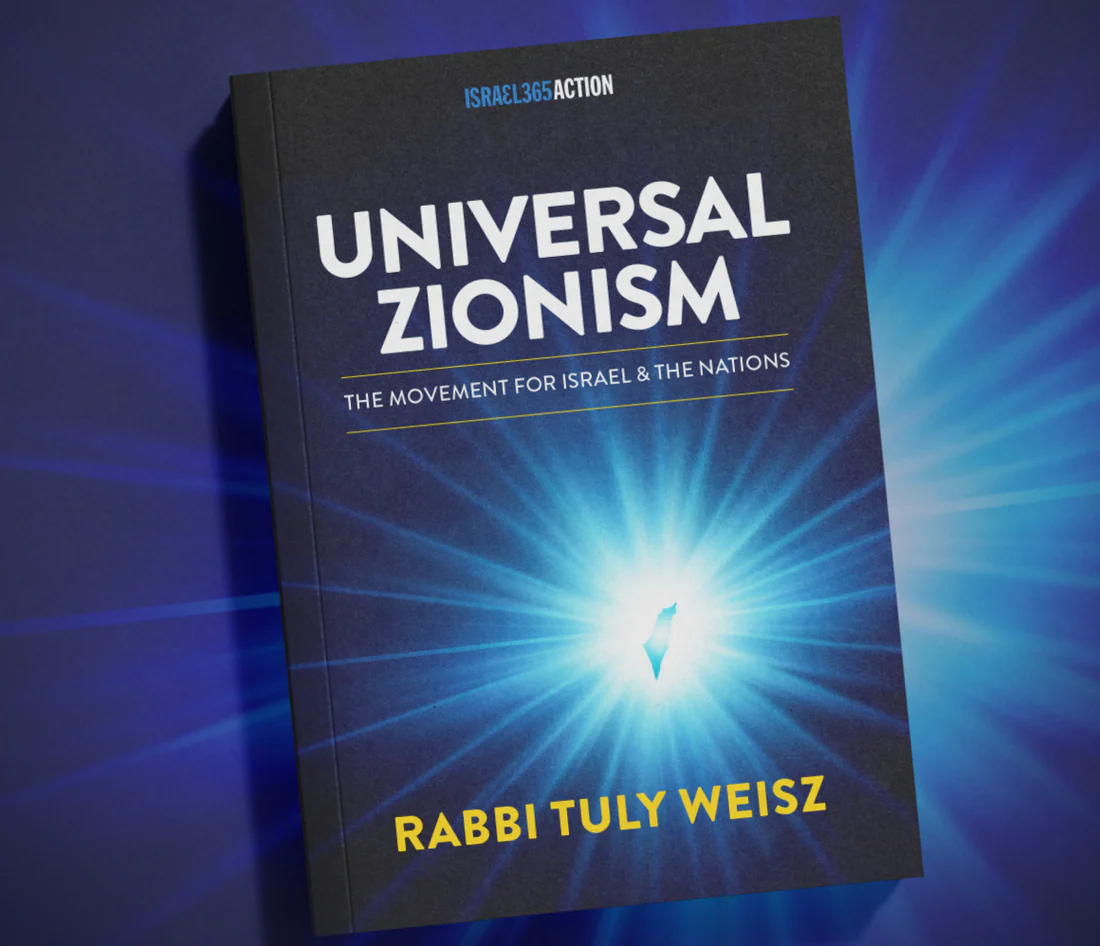
In his new book, Rabbi Tuly Weisz argues that Israel’s success in achieving sovereignty and security creates the platform for something greater: fulfilling the Jewish people’s ancient mission to serve as a light unto the nations. Drawing on biblical history and contemporary events, he presents a roadmap for Jewish-Christian reconciliation that could transform not only Israel but all of humanity.
On October 7, 2023, the world witnessed the largest massacre of Jews since the Holocaust. But according to Rabbi Tuly Weisz, founder of Israel365, that horrific day—and the global antisemitic eruption that followed—may paradoxically mark the beginning of humanity’s most significant transformation.
In his new book Universal Zionism: The Movement Powering Today’s Jewish-Christian Alliance, Weisz presents a sweeping vision of Jewish history as an unfolding divine plan with three distinct phases: Political Zionism, which established Jewish sovereignty; Religious Zionism, which infused that sovereignty with spiritual meaning; and now Universal Zionism, which positions Israel to fulfill its ultimate purpose as a light unto the nations. The book argues that the reconciliation between Jews and Christians represents the most vital alliance of our generation—one that will lead to the restoration of Israel, America, and ultimately the world.
Weisz dedicates the book to Charlie Kirk, the conservative activist murdered in September 2025 while engaging with students on a college campus. Kirk’s assassination and the immediate blood libel blaming Jews that followed exemplify the civilizational clash that Universal Zionism seeks to address. Yet Kirk’s legacy also demonstrates the power of Jewish-Christian partnership: a devout Christian who studied Torah with his mentor Dennis Prager, who championed Israel without reservation, and who understood that defending Western civilization required defending the Jewish state. As Weisz writes in his dedication, Kirk demonstrated “the best example of this book’s central topic: Universal Zionism.”
Why Do Jews Keep Missing Their Own Destiny?
The book’s most provocative insight emerges from Weisz’s analysis of the biblical kings. He traces a pattern where each stage of Israel’s development requires different leadership, yet the outgoing leader consistently resists or attacks his successor. King Saul, who established Israel’s first monarchy and created political stability, spent his final years trying to kill David rather than preparing him for leadership. King David, who brought spiritual vitality to the nation, delayed naming Solomon as heir and nearly allowed a power struggle to fracture the kingdom.
Weisz observes that “these historical patterns repeat in our modern era with remarkable precision.” He explains: “The pioneers of Political Zionism achieved unprecedented success: they brought Jews back from the four corners of the earth, drained malaria-infested swamps and made deserts bloom, created a world-class innovative hub, and built one of the world’s most capable armies.”
The parallel to modern Zionism is striking. Theodor Herzl’s Political Zionism achieved the impossible—transforming a persecuted diaspora people into a sovereign nation. David Ben-Gurion built that nation’s institutions and defended it against overwhelming odds. Benjamin Netanyahu has presided over Israel’s emergence as a regional power. Each represents a phase of King Saul’s mission: establishing security and achieving normalization among the nations.
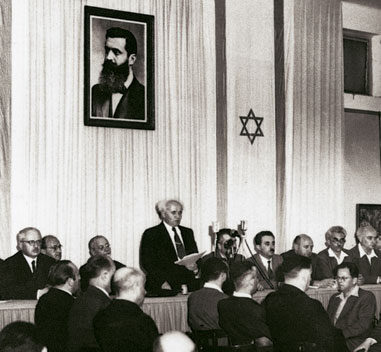
But Weisz argues that Political Zionism has reached its limits. Israel has achieved military strength, economic prosperity, and international recognition. The question facing this generation is more fundamental: What is Jewish sovereignty intended to achieve? As Netanyahu himself observed in a quote Weisz includes: “If the central aim of the Jewish people during its exile was to retrieve what had been lost, the purpose now is to secure what has been retrieved. It is a task that has barely begun, and its outcome is of profound import, not only for the fate of the Jews, but for all mankind.”
Rabbi Abraham Isaac Kook recognized this question a century ago. Where most Orthodox rabbis rejected Zionism as a dangerous secular movement, Rav Kook saw the hand of God working through history in unexpected ways. Weisz quotes Rav Kook’s revolutionary teaching: “We must not look down at our brethren who desecrate the Sabbath and appear as rebels. In truth, the spirit of the Lord is working through them to build and to plant… The profane will one day be sanctified.”
Political Zionism represented what Kook called “Messiah son of Joseph”—the necessary but incomplete first stage of redemption that creates conditions for the ultimate messianic transformation. In his eulogy for Herzl, Rav Kook made the audacious declaration that Weisz highlights: “The soul of the Messiah son of Joseph appeared in him, to begin the redemption of Israel. Even if he himself did not reach completion, through him the awakening of the redemption began.”
Religious Zionism built upon this foundation. After the Six-Day War in 1967, students from Rav Kook’s yeshiva led the settlement movement that returned Jews to biblical cities like Hebron, Shiloh, and Bethlehem. They understood that Jewish claims to Tel Aviv and Haifa depend entirely on Jewish connection to Hebron and Shechem. If Israel has no right to the biblical heartland, it has no legitimate claim to exist anywhere.
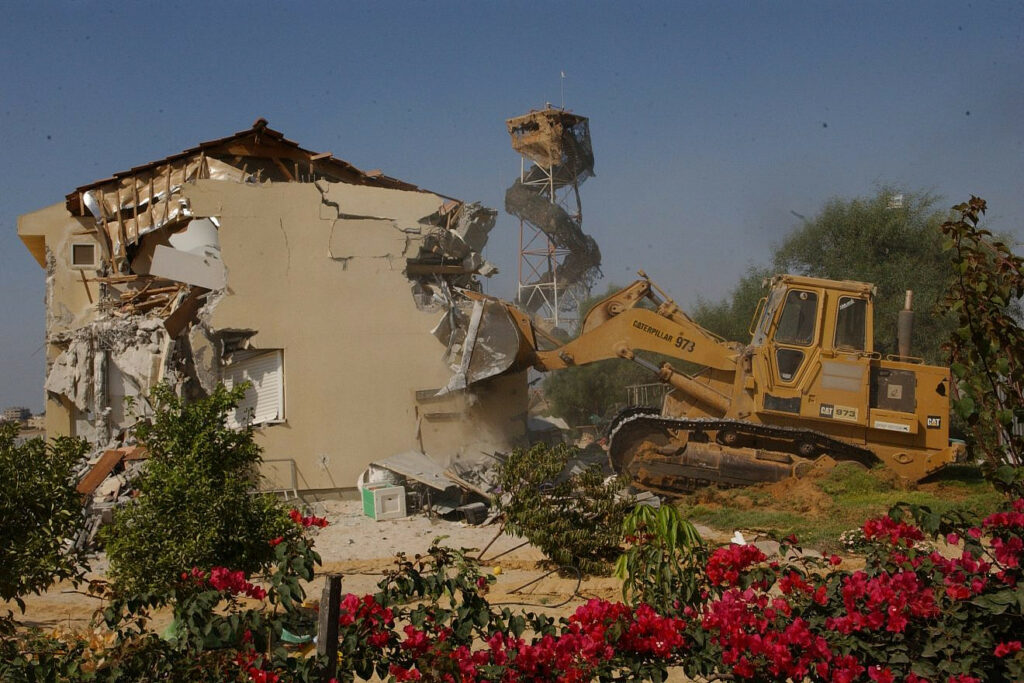
October 7th vindicated Religious Zionism’s insistence that territorial compromise brings only more war. The 2005 Gaza withdrawal—presented as a path to peace—created the launching pad for the worst massacre of Jews since the Holocaust. Weisz notes the bitter irony: “Sharon’s withdrawal from Gaza was supposed to enhance Israeli security while demonstrating to the world Israel’s commitment to peace. Instead, the terror group Hamas immediately seized control of the territory.”
Yet Weisz argues that even Religious Zionism remains too inward-facing for the challenges ahead. Israel needs more than internal spiritual revival; it requires engagement with the nations that are awakening to Israel’s significance. This is where Universal Zionism enters the picture.
What Ancient King Solomon Teaches About Modern Israel
Weisz structures his analysis around Israel’s three most famous kings. King Saul established security and political infrastructure. King David brought the Ark of the Covenant to Jerusalem and established the spiritual foundations. But it was King Solomon who built the Temple and turned Israel outward to influence the world. Solomon’s reign represented the golden age precisely because he combined his father’s spiritual depth with an unprecedented universal mission.
The book provides detailed information about Solomon’s Temple that most readers have not considered. Unlike other ancient temples that served a particular people, Solomon explicitly designed his Temple as a “house of prayer for all nations.” Weisz explains the architectural symbolism: “Unlike other buildings where windows were meant to allow light in, the Temple windows were narrow inside but wide on the outside in order to radiate light outwards to illuminate the world.”
During the festival of Sukkot, seventy sacrificial bull offerings were made on behalf of the seventy nations of the world. Solomon’s dedication prayer, which Weisz quotes at length, specifically asked God: “If the foreigner, who is not of Your people Israel, comes from a distant land for the sake of Your name… when he comes to pray toward this house, hear in heaven Your dwelling place, and grant all that the foreigner asks of You; thus the peoples of the earth will know Your name and revere You” (1 Kings 8:41-43).
Solomon’s universal vision extended beyond religious matters. He married foreign princesses to create international alliances. His merchant fleets sailed to distant lands. Kings and queens traveled from across the known world to consult his legendary wisdom. When the Queen of Sheba visited, she declared: “It was a true report which I heard in my own land about your words and your wisdom. However, I did not believe the reports until I came and my eyes had seen it. And indeed, the half was not told to me. Your wisdom and prosperity exceed the fame of which I heard” (1 Kings 10:6-7).
Yet Solomon’s outward focus ultimately corrupted him. The foreign wives he married to spread knowledge of God instead turned his heart toward idolatry. Weisz draws the crucial lesson: “The very openness that allows Jewish values to influence others also creates opportunities for external influences to corrupt Jewish identity and purpose. Universalism without boundaries becomes relativism, while mission without distinctiveness loses its power to transform.”
He emphasizes the balance required: “The key insight from Solomon’s reign is that Israel can serve as a blessing to all nations only by remaining faithful to its own unique calling and identity. The moment Jews begin to compromise Judaism’s essential elements in order to accommodate others, the universal mission collapses.”
How Christians Became Zionism’s Secret Weapon
The book’s most surprising sections trace the role Christians have played in Jewish restoration. Weisz reveals that Christian support for Jewish return to Israel predates Theodor Herzl by decades. George Bush (ancestor of two U.S. presidents) published a book in 1844 arguing that the restoration of the Jewish people would benefit all humanity. Christian missionaries established hospitals and schools throughout 19th-century Palestine. Biblical archaeologists such as Edward Robinson conducted the first systematic excavations that proved the ancient Jewish presence in the land.
When Herzl convened the First Zionist Congress in Basel in 1897, ten Christians attended as official participants. Henry Dunant, founder of the Red Cross, had already established an organization advocating for Jewish return to Palestine. Reverend William Hechler became Herzl’s guide through European diplomatic circles. Weisz describes their dramatic first meeting: On March 10, 1896, “Hechler appeared unannounced at Herzl’s apartment, clutching a copy of The Jewish State under his arm. ‘Here I am,’ said Hechler, standing in Herzl’s doorway. ‘That I can see,’ replied Herzl, ‘but who are you?’ ‘You are puzzled,’ Hechler observed. ‘But you see, as long ago as 1882, I predicted your arrival… Now I am going to help you.'”
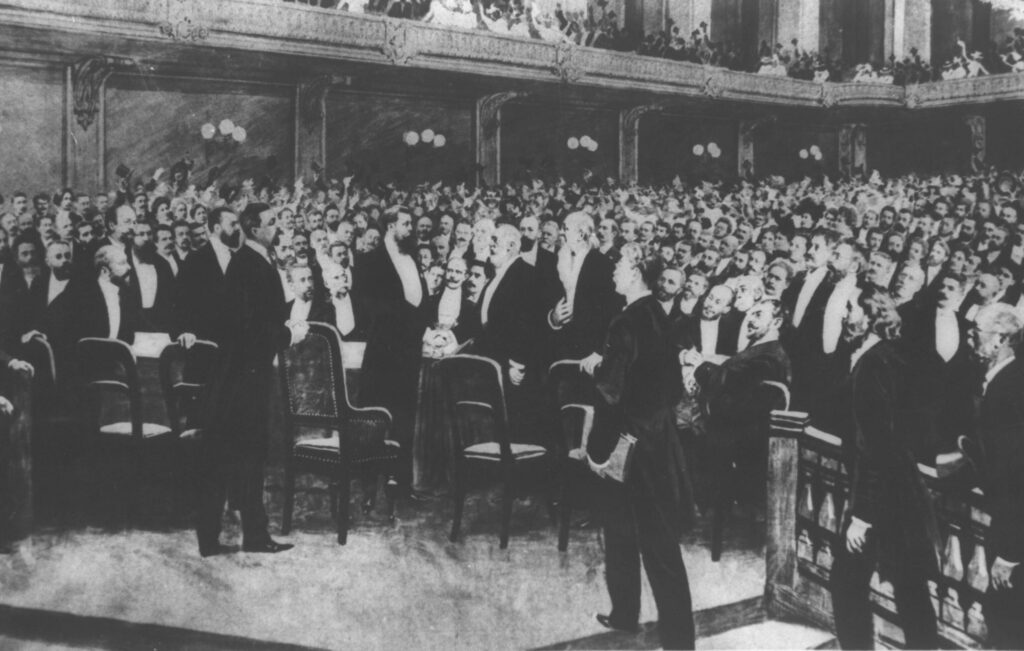
This partnership, Weisz notes, “represents the first recorded meeting between Jewish Zionism and Christian Zionism, a match made in heaven.”
After Herzl’s death, Christian pastor William Blackstone sent a Bible to Herzl’s bedside with every verse about Israel’s restoration underlined. Weisz writes: “Blackstone’s point was unmistakable. The promises of God were clear and eternal, and no human vote could alter the divine decree that had designated Palestine as the Jewish homeland!”
This Christian enthusiasm for Jewish restoration stood in stark contrast to Jewish religious leadership. Both Reform and Orthodox rabbis condemned Herzl’s movement. Weisz quotes from the joint statement they issued: “The endeavors of the so-called Zionists to found a Jewish national state in Palestine runs counter to the messianic prophecies of Judaism.”
The theological foundation for Christian support was revolutionary. For centuries, Christianity had taught Replacement Theology—the doctrine that God abandoned the Jews for rejecting Jesus, transferring all His promises to the Church. This poisonous theology provided religious justification for nearly 2,000 years of persecution. Weisz traces the devastating consequences: “During the Crusades of the 11th and 12th centuries, Christian armies aimed to liberate the Holy Land from Muslim control, but massacred ‘infidel’ Jews along their route, viewing them as enemies of Christ who deserved death.”
Only after World War II did significant numbers of Christians begin questioning this theology. The Six-Day War accelerated this transformation. When Israel liberated Jerusalem in 1967, millions of Christians worldwide witnessed what they understood as biblical prophecy unfolding before their eyes.
Televangelist Pat Robertson articulated on his “700 Club” program the new Christian understanding that Weisz quotes: “You must realize that the God who spoke to Moses on Mount Sinai is our God. Abraham, Isaac, and Jacob are our spiritual Patriarchs. Jeremiah, Ezekiel, and Daniel are our prophets. King David, a man after God’s own heart, is our hero. The Holy City of Jerusalem is our spiritual capital. And the continuation of Jewish sovereignty over the Holy Land is a further bulwark to us that the God of the Bible exists and that His Word is true.”
Today, hundreds of millions of Christians stand with Israel—not despite their faith but because of it. Yet as Weisz documents from his own experience, many Jews remain unaware of this support. He describes his awakening as a rabbi in Columbus, Ohio: “At one meeting at the Columbus Jewish Federation in 2008, we heard a presentation from a Christian Zionist—which at the time I thought was a complete oxymoron… I learned that there were over one thousand churches in Columbus and thousands of local Christians who loved Israel as much as we did, and I didn’t know any one of them!”

Can Ancient Prophecies Guide Modern Foreign Policy?
Weisz’s most controversial arguments concern Israel’s current political challenges. He insists that any territorial compromise with Palestinians represents not just strategic foolishness but theological rebellion against God’s explicit promises. He writes forcefully: “The Torah’s promise is neither ambiguous nor conditional. When God told Abraham, ‘All the land that you see, to you will I give it, and to your seed forever’ (Genesis 13:15), He established an eternal covenant that no government or international organization possesses the authority to revoke.”
This stance puts Universal Zionism in direct conflict with decades of international consensus. Since the 1993 Oslo Accords, the “land for peace” formula has dominated Middle East diplomacy. Israel withdrew from Gaza in 2005, removing 8,000 settlers and destroying thriving communities in the hope of achieving peace.
Weisz describes the tragic outcome: “The pain was compounded in the very moment the last Israelis departed Gush Katif, when Palestinian Arabs entered—not to preserve and inhabit the flourishing communities that had been handed over—but to torch the houses and synagogues and to tear apart the greenhouses with their bare hands, erasing years of labor and hope in a matter of days.”
He connects this modern destruction to ancient patterns: “As Genesis (26:15) records: ‘All the wells that his father’s servants had dug in the days of Abraham his father, the Philistines stopped them and filled them with earth.’ In the ancient world, destroying wells meant cutting off life itself—an act of hatred that helped no one. This same impulse can be seen in modern Palestinian rejectionism: the choice to destroy rather than build, to embrace ruin instead of the prosperity that could serve all.”
The book makes a forceful case that Israel should apply sovereignty over all of Judea and Samaria. Weisz argues: “For Jews and Christians who honor the Hebrew Bible as the Word of God, recognizing a Palestinian State in the land God gave to the descendants of Isaac exclusively is a hypocritical contradiction. If the Bible is true concerning issues such as salvation and eternal life, it must also be trustworthy concerning the boundaries of the Promised Land including Judea and Samaria.”
He frames the prophetic mandate in urgent terms: “The prophecy in Joel 4:2 warns that God will judge the nations for dividing His land—a warning that applies as much to Israeli politicians who support territorial compromise as to foreign powers who pressure Israel to withdraw.”
What Would a Universal Zionist Movement Actually Do?
The book’s final section transitions from historical analysis to a practical blueprint. Weisz acknowledges the ambitious scope: “What follows is an initial attempt to imagine how Universal Zionism might take shape as a movement capable of reshaping the relationship between Israel and the nations. It draws on my experiences and conversations with hundreds of Jewish and Christian Zionists, but makes no claim to perfection.”
The movement would rest on three pillars. First, a core set of beliefs providing ideological clarity—beginning with recognition that the Bible still means what it says about the Land of Israel. Weisz states clearly: “At the heart of Universal Zionism lies a simple but radical proposition: the Bible still means what it says about the Land of Israel. Jews and Christians who take Scripture seriously must support complete Jewish sovereignty over the territories God promised to the descendants of Abraham, Isaac, and Jacob.”
Second, a political agenda turning vision into action. Weisz proposes a complete reframing of Israel advocacy: “Public diplomacy requires reframing the narrative around Israel from defensive arguments about security needs to positive assertions about moral and spiritual imperatives. Current consensus often begins by accepting the premise that Israeli control over Judea & Samaria is illegitimate, then attempts to apologetically provide security-based rationales that sound increasingly unconvincing. Universal Zionism reverses this dynamic by confidently asserting that Jewish sovereignty over all of Israel represents the restoration of justice after centuries of colonial occupation by various empires.”
Third, spiritual and cultural resources sustain the movement through inevitable challenges. Weisz draws inspiration from the Lubavitcher Rebbe, whose Chabad movement revolutionized Jewish outreach. He explains: “The Rebbe’s extraordinary success in transforming Judaism from an inward-facing religion into a global outreach movement offers crucial lessons for our generation in transitioning towards Universal Zionism. He demonstrated that maintaining uncompromising dedication to Jewish tradition and Torah study need not conflict with passionate engagement with the broader world.”
The Rebbe’s campaign promoting the Seven Noahide Laws provides a model for Jewish-Christian cooperation. Weisz writes: “The Rebbe’s campaign for the Seven Universal Laws provides a perfect template for interfaith cooperation in our generation. Instead of continuing to focus on theological differences that divide us, Jews and Christians can unite around the moral foundations that we share, recognizing that these universal principles derive from the same divine revelation at Sinai that both communities revere.”
The book concludes with an urgent call to action. Weisz writes: “The choice before us is stark, and the window of opportunity may not be open for long. We can seize this moment to fulfill history’s greatest promise, or we can allow fear, division, and shortsightedness to squander the chance to achieve what previous generations could only have dreamed about.”
He frames the challenge in generational terms: “Universal Zionism calls each of us to join the movement powering the Jewish-Christian alliance that will determine whether our children inherit a world of unprecedented peace and blessing, or the collapse of everything previous generations built.”
A Movement Whose Time Has Come
Universal Zionism presents a vision that will strike some readers as impossibly ambitious, while others will wonder why it has taken so long to articulate. Weisz writes with the conviction of someone who has spent decades building bridges between Jewish and Christian communities and who has witnessed firsthand how these relationships transform both sides.
The book’s greatest strength lies in its refusal to separate spiritual vision from political reality. Too often, religious language about Israel remains disconnected from the hard choices facing Israeli policymakers. Weisz insists that biblical promises provide not only spiritual comfort but also practical guidance for contemporary decisions regarding borders, settlements, and sovereignty.
He writes about the religious awakening sweeping through Israel since October 7th: “When the war broke out over the Simchat Torah holiday, soldiers were called up and immediately reported for duty without having any time to prepare or pack. In the early days of the war, the most requested item from IDF soldiers was not food or other basic necessities they didn’t have time to pack, but tzitzit—the ritual fringes commanded by the Torah and worn by observant Jewish men.”
Weisz connects this spiritual hunger to the prophetic pattern described in Malachi: “Behold, I will send you Elijah the prophet before the coming of the great and awesome day of the Lord. And he will turn the heart of the fathers to the children, and the heart of the children to their fathers” (Malachi 3:23-24). He interprets this verse as describing our present moment: “The prophet envisions a time when moral clarity and spiritual courage will flow upward from young to old, when the next generation will show their parents the path forward.”
The 300,000 Israeli soldiers who enlisted after October 7th represent what Weisz calls “the generation of Rising Lions.” He writes: “This current generation of Rising Lions represents the finest the Jewish people have ever produced in our long history. The divisions that plagued previous generations of Israelis are dissolving as a new sense of spiritual purpose emerges.”

But he insists this awakening must extend beyond Israel’s borders: “Universal Zionism insists that this religious revival pulsating through Israel since October 7th is not meant to remain confined to the Jewish people. Especially now, such outward focus could provide tremendous healing and purpose for Israelis grappling with war trauma while uniting different streams of Israeli society around a shared mission larger than political divisions.”
The book arrives at a moment of maximum clarity and maximum danger. October 7th shattered illusions that territorial compromise brings peace while simultaneously triggering the worst global antisemitic explosion since the Holocaust. Weisz observes: “What proved even more shocking than the October 7th attacks was the global response that began on October 8th… In cities with the largest Jewish populations – New York, London, Paris, Sydney – mobs of local activists were suddenly donning keffiyehs, waving Palestinian flags, and screaming ‘Globalize the Intifada!'”
Yet he sees hope emerging from this darkness: “Rather than responding to all the accusations leveled against us or focusing obsessively on the antisemitic symptoms manifesting all around, Jews must stay focused. We must remember why we are back in Israel in the first place, where we are headed as a nation, and what role we must play in the unfolding of history and human destiny.”
The book’s final vision connects individual purpose to cosmic destiny: “Universal Zionism is not just an idea, it is an invitation and an opportunity to participate in the unfolding of biblical prophecies in the most important story ever told. We have the privilege to be part of the solution to humanity’s deepest problems, and to help usher in the golden age that has been promised since the beginning of time.”
Weisz concludes with words that capture both the urgency and the promise of his vision: “This is not a time for academic debate or theoretical discussions. This is a time for urgent, decisive, transformative action. The window of opportunity is closing because the enemies of civilization are mobilizing and the red-green alliance is gaining strength. But so are the forces of light, if we have the courage to act upon the truths revealed in these pages.”
To continue exploring Rabbi Tuly Weisz’s revolutionary vision and discover how you can be part of this transformative journey, click here to get Universal Zionism, now $10 off, for yourself today!