

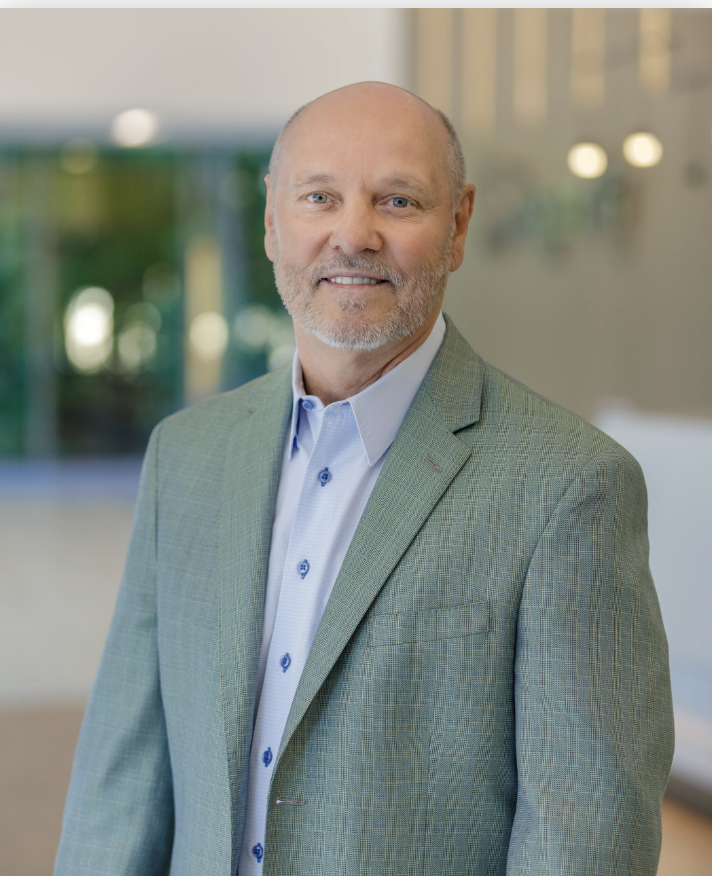
Long before he became the CEO of a multibillion-dollar public company, Paul Sarvadi found himself in the back of an ambulance, watching his newborn child slip away and realizing he could not save his wife, who was dying beside him. In that moment—one he recounts quietly but clearly—Sarvadi confronted a truth that would shape the rest of his life: he was not in control, and never had been.
That realization ignited the faith that later powered his rise, influenced his business philosophy, and ultimately guided him into a deep relationship with Israel and the Jewish people. It also became the spiritual foundation behind the Nathaniel Foundation, the philanthropic engine he created long before he had any wealth to give, and which today plays a major role in strengthening Jewish-Christian ties.
In his conversation with Rabbi Rami Goldberg on Biblical Money, Sarvadi walked through the journey from that ambulance to the corner office—and why he believes God’s priorities must become our priorities if we want to live lives of purpose.
Building Insperity: A Company Fueled by Biblical Values
Sarvadi didn’t come from privilege. He didn’t finish college, didn’t have a mentor, and didn’t have financial backing. What he did have was a conviction that small businesses were failing because they lacked one thing: a real strategy for people.
While most entrepreneurs obsessed over sales or technology, Sarvadi saw that the companies who thrived were the ones who built healthy cultures. That insight became Insperity—a full outsourced HR department for small and midsize businesses, based on the idea that people are the core of every strategy.
But the deeper layer—the part Sarvadi almost never broadcasts publicly—was that the company’s cultural bedrock came directly from the Bible: The worth of every individual, integrity as the cornerstone, servant leadership instead of power, and the idea that work is “avodah”—a Hebrew word that means both service and worship, intertwined.
Insperity eventually became one of America’s great business success stories of the past four decades. Yet Sarvadi insists the real accomplishment wasn’t the IPO or the financial scale. It was staying faithful even when it cost him. He described a moment when a partner violated a major contract. Matching the violation would have protected Insperity’s profits, while honoring his own commitments meant absorbing the loss.
He honored his commitments. It nearly wiped out a year of profitability, but it permanently strengthened the soul of his company.
The Nathaniel Foundation: A Bridge Between Christians and Jews
Long before Insperity grew into a powerhouse, Sarvadi set aside something that seemed absurd at the time—a foundation with no money in it. He placed shares of his young company into the Nathaniel Foundation with the belief that if God blessed his business, its success should bless others.
That decision proved prophetic.
Today, the Nathaniel Foundation directs significant resources to humanitarian causes, leadership development, and—most notably—programs that build Jewish-Christian relationships and support the land of Israel.
Sarvadi explained that this emphasis wasn’t strategic; it was personal. His love for Israel began with a fascination for the Hebrew names of God, grew deeper after meeting Christian scholars who taught the Jewish roots of Scripture, and came alive the moment he set foot in Israel for the first time.
Standing on the land where the Bible unfolded, seeing hills and battlegrounds he had only read about, Sarvadi felt clarity about what matters most to God: His people, His land, and His word.
The Nathaniel Foundation reflects that priority. Its board evaluates every project through the lens of impact—and many of the initiatives they fund are meant to strengthen the bond between Christians and Jews, especially at a time when Israel faces rising hostility and misinformation.
Sarvadi sees this partnership as essential for both communities. Not political, not symbolic, but spiritual.
A “Calling,” Not a Career
One of the strongest messages in the interview came when Rabbi Rami asked what advice Sarvadi gives to young people looking at a world reshaped by AI and uncertainty.
Sarvadi didn’t hesitate. A job trades hours for income. A career is better, but still limited. A calling, he said, is where everything in your life finally aligns. WHen you find your calling, you stop driving with one foot on the gas and one on the brake.
His calling was to help business owners build healthier companies rooted in dignity and biblical principles. But he believes every person has a calling—something that excites them because it helps others and extends God’s influence into the world.
And that calling, he added, must be lived out through faith, not fear. It’s the same faith that carried him from tragedy to purpose, from a startup to a public company, and from surface-level Christianity to a profound relationship with Israel and the Jewish people.
A CEO Whose Success Begins in Scripture
Paul Sarvadi’s story is not a business story with some religion sprinkled in. It’s the opposite. His business achievements sit within a spiritual framework—one shaped by Scripture, lived out through servant leadership, and expressed through deep commitment to Israel and Jewish-Christian partnership.
As he told Rabbi Rami, the real measure of success is not what you build—it’s whether what you build aligns with God’s priorities.
For the full conversation, watch Paul Sarvadi’s interview on Biblical Money.