For three thousand years, Jews have prayed toward one mountain in Jerusalem. Now a veteran Bible scholar, who also happens to be the prime minister’s brother-in-law, says the prophet Ezekiel had a different mountain in mind: the summit 15 kilometers north of the capital where Jacob laid his head on a stone and saw angels climbing to heaven.
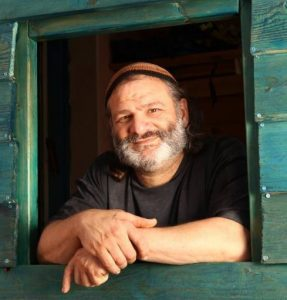
Dr. Hagai Ben-Artzi, a lecturer in Bible, Talmud and Jewish thought and the older brother of Sara Netanyahu, published a lengthy revised article this week arguing that, according to Ezekiel’s vision, the Third Temple will be built in Beit El. “It turns out, then, that according to Ezekiel’s vision, the Temple Mount of the days of the Messiah will be the mountain of Beit El (known today as Pisgat Yaakov), and the Third Temple will be built on the summit of the mountain of Beit El,” he wrote.
Asked by Arutz Sheva on Monday whether he stood by it, he did not hesitate. “I stand behind the article. My argument is that the prophet Ezekiel disagrees with Maimonides.”
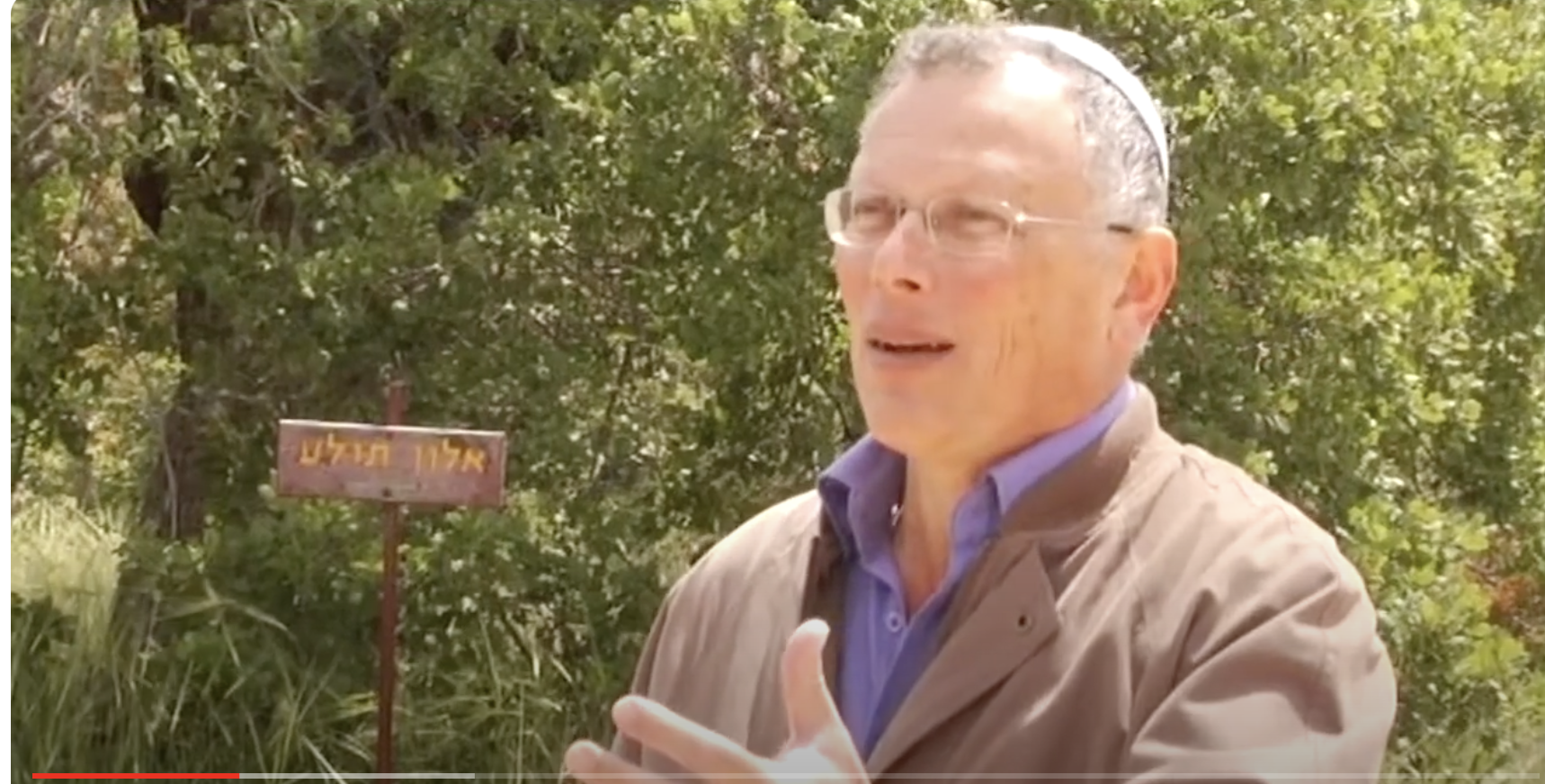
Ben-Artzi laid out the full argument weeks earlier, in an 80-minute lesson delivered on the night of Hoshana Rabbah, the last night of Sukkot, at the annual all-night study session in Beit Hogla, the Jewish community facing Jericho in the Jordan Valley. The video was posted on YouTube on October 25.
“I am proposing a chiddush [novel insight] that has not yet appeared in Torah literature or in academic research,” he told the audience, “on the question of where the Third Temple will be built.”
Eight chapters on the end of days
Ben-Artzi began with the obvious answer. “At first glance, the answer is simple. Maimonides rules explicitly: Mount Moriah. The First Temple, the Second Temple, and in the future, the Third Temple will also be built on Mount Moriah. But here we have the book of Ezekiel.”
The final nine chapters of Ezekiel, chapters 40 through 48, describe the Land of Israel, Jerusalem and the Temple in the messianic era. “There is nothing like this in the Bible,” Ben-Artzi said. “It is the only place in the Bible that describes, in eight chapters, in great detail, the Land of Israel in the days of the Messiah.”
Ezekiel received the vision in Babylon, 14 years after the destruction of the First Temple, on Yom Kippur. Years earlier, God had brought the prophet to Jerusalem in a vision to show him the sins that would bring the destruction. This time, Ben-Artzi said, “it is a hand that brings him to see the redemption.”
The vision opens with the prophet standing on a mountain, looking south at a city.
“In the visions of God brought He me into the land of Israel, and set me down upon a very high mountain, whereon was as it were the frame of a city on the south.” (Ezekiel 40:2)
The math
Ezekiel’s angel measures everything with a kaneh (measuring reed) of six cubits and a handbreadth, which Ben-Artzi rounds to three meters. With that unit, he says, the numbers in the final chapter of Ezekiel produce a map.
Ezekiel 48:16 gives the city 4,500 reeds on each side, about 13.5 kilometers, an area of roughly 182 square kilometers. Ben-Artzi then made his first striking claim. Jerusalem’s municipal area today is about 130 square kilometers. Add Ma’ale Adumim and the E1 corridor that links them, and the total comes to roughly 180.
“Today’s Jerusalem is the Jerusalem of the days of the Messiah,” he said. “That is a big thing. Ezekiel describes a city of 180 square kilometers, ninety times larger than Jerusalem at its peak.” At the end of the Second Temple period, he noted, the city covered about two square kilometers.
The prophets foresaw a Jerusalem that would burst its walls.
“Jerusalem shall be inhabited without walls, for the multitude of men and cattle therein.” (Zechariah 2:8)
The Sages read that verse literally, and so do the city’s planners. As Israel365 News has reported, Jerusalem’s municipal plans have been preparing Zechariah’s vision of a Greater Jerusalem, and earlier this year the city saw its first expansion since the Six-Day War, a step the Talmud (Sukkah 41b) and the Midrash (Pesikta Rabbati 31) anticipate when they describe the future Temple in a transformed and enlarged city. The prophetic picture reaches past Jerusalem itself: in the messianic era, the Sages teach, all of Israel will become like Jerusalem, and the nations like Israel.
Around the city, Ezekiel sets aside a terumah, a holy portion that belongs to no tribe: strips of 25,000 by 10,000 reeds, about 75 by 30 kilometers each. One strip holds the city. One belongs to the Levites. One belongs to the kohanim (priests), and in its center stands the Temple Mount, 500 reeds square, about one and a half kilometers on each side.
“And for these, even for the priests, shall be the holy offering: toward the north five and twenty thousand in length, and toward the west ten thousand in breadth, and toward the east ten thousand in breadth, and toward the south five and twenty thousand in length; and the sanctuary of the LORD shall be in the midst thereof.” (Ezekiel 48:10)
That Temple Mount, Ben-Artzi said, is about 20 times the size of today’s, and the Temple itself about six times the size of the Second Temple.
The Vilna Gaon and the Malbim
The two great commentators on these chapters, the Vilna Gaon (the Gra, 1720–1797) and the Malbim (1809–1879), draw the strips in different orders. Both place the city in the southern strip and the Temple outside the city to the north.
According to the Malbim, the priests’ strip lies farthest north, putting the Temple about 45 kilometers north of Jerusalem. “Interesting, that is about Shiloh,” Ben-Artzi noted.
According to the Gra, the priests’ strip lies directly north of the city. “Now I’ll drop the bomb,” Ben-Artzi said. “According to the Gra’s method, the Temple Mount is in the center of the strip north of Jerusalem. The width of that strip is 30 kilometers, and the Temple Mount is at its center, meaning it is 15 kilometers north of the city’s northern edge. Fifteen kilometers north of Jerusalem is exactly the mountain of Beit El.”
“Who am I to decide between two such giants?” he asked the audience. He sided with the Gra, and he did not hide a personal connection. His mother’s family, the Paritzkys, are descendants of the Vilna Gaon’s students who came to the Land of Israel some 200 years ago. Recent family research, he said, shows he is a ninth-generation native of the land.
The summit fits Ezekiel’s description. “Many times I stand on our mountain in Beit El and say, wow, I am standing where Ezekiel stood, in a prophetic vision of course, and I see the frame of a city to the south,” he said. From Pisgat Yaakov, the view takes in the city’s northern neighborhoods and the Chords Bridge at its entrance. The summit and its surroundings cover about two and a half square kilometers, close to the size of Ezekiel’s Temple Mount, and they remain empty. The British declared the area a military zone, the Jordanians kept it, and Israel kept it after 1967. The homes of Beit El sit at the foot of the mountain.
Ezekiel versus Maimonides
Maimonides built his Hilchot Beit HaBechira (Laws of the Chosen House) on the Temples of Solomon and of the returning exiles. Of Ezekiel’s Temple, he wrote that “although it is written in Ezekiel, it is not explicit and clear,” and for that reason he did not base his rulings on it. He also ruled that the place of the altar is exact and may never be changed: the place where Isaac was bound, where Noah offered after the Flood, where Cain and Abel brought their offerings, and where Adam was created.
Ben-Artzi told Arutz Sheva that Maimonides knew what he was setting aside. “Maimonides himself was aware of this, but writes that Ezekiel’s words are obscure and sealed, and therefore in the Laws of the Chosen House he does not rule according to him. Today, we have reached a point where we do understand Ezekiel.”
He also acknowledged that the final word belongs to prophets. The site of the First Temple was revealed to King David through three prophets, Samuel, Nathan and Gad. The Second Temple was built under three more prophets: Haggai, Zechariah, and Malachi. “Rav Kook, and Maimonides before him, say everything will be on the basis of prophecy,” he said. “Prophets will answer all these questions for us. But what we have is Ezekiel’s description.”
The mountain that moved
Ben-Artzi’s second argument comes from the Book of Genesis. Beit El, “House of God,” received its name from Jacob on the night he fled from Esau.
“And Jacob awaked out of his sleep, and he said: ‘Surely the LORD is in this place; and I knew it not.’ And he was afraid, and said: ‘How full of awe is this place! This is none other than the house of God, and this is the gate of heaven.'” (Genesis 28:16–17)
Rashi, the foremost commentator on the Bible, rejects the view that Jacob was speaking of Jerusalem, since Beit El is a separate city to the north. To explain how Jacob could call Beit El “the house of God,” Rashi cites the tradition that Mount Moriah was uprooted and came to Beit El to meet him.
“For many years I struggled with this Rashi,” Ben-Artzi said. “Mount Moriah was not uprooted. Such a thing never happened in history. The commentators on Rashi usually say it was all in the dream.” Then the pieces connected. “I claim, and this is the chiddush I am proposing, that Rashi is interpreting Jacob’s dream according to Ezekiel’s vision. When he says Mount Moriah was uprooted and came here, he is really saying the Third Temple will move from Mount Moriah to Beit El.”
The same reading, he said, explains the sin of Jeroboam, who set up a golden calf at Beit El after the kingdom split (1 Kings 12:28–29). “Jeroboam saw something true. It is written explicitly: this is none other than the house of God. His mistake was that he thought it referred to the First Temple, to his own days. It refers to the days of the Messiah.”
The prophets, he noted, describe the future Temple with Jacob’s name. “Come ye, and let us go up to the mountain of the LORD, to the house of the God of Jacob,” wrote Isaiah. “Why Jacob?” Ben-Artzi said. “Because Jacob saw it.” Even the climb fits, he added. In Jerusalem, visitors descend to the Temple Mount, which sits lower than the hills around it. In Beit El, “you go up.”
A Temple for billions
The heart of the lesson lies in why Ezekiel’s Temple must be so large.
“In the days of the Messiah, millions will come here, tens of millions, hundreds of millions, maybe billions,” Ben-Artzi said. He described leading a group to the Western Wall for Selichot in the month of Elul, when police closed the plaza at 100,000 people. “The Temple on Mount Moriah cannot serve. Ezekiel gives us a knock on the head and tells us: stop thinking in terms of the First Temple, in terms of the Second Temple.”
“Even them will I bring to My holy mountain, and make them joyful in My house of prayer; their burnt-offerings and their sacrifices shall be acceptable upon Mine altar; for My house shall be called a house of prayer for all peoples.” (Isaiah 56:7)
In his reading, the priests’ strip becomes a vast campus of thousands of schools and study halls where the nations come to learn. “The main role of the kohanim will be to teach Torah, to teach Torah to billions of people,” he said. “All of Israel will be a kingdom of priests.” He cited the prophet Zechariah, who foresaw ten men from every nation taking hold of the garment of a Jew and saying, “We will go with you, for we have heard that God is with you” (Zechariah 8:23).
He has given his grandchildren practical advice. “You must learn English, because when the gentiles come to Jerusalem they will want to learn Torah, and you will not be able to teach them.” He noted that America’s founders were lovers of the Bible. “To this day, those who support us are Bible lovers.”
Jerusalem itself, in his picture, becomes the logistical center for the pilgrims, with hotels, transportation and parking, while the Old City is preserved as a historic site. “Ezekiel is the only prophet in the Bible who describes for us the complex that will absorb all these pilgrims,” he said.
Ben-Artzi is not the first to plan for a Jerusalem built to the scale of the prophets. The nascent Sanhedrin (the revived court of 71 elders) completed a study of Jerusalem’s borders in 2017, culminating in an official ruling designating the borders of greater Jerusalem for the Third Temple era. It modeled the ruling on the rite the prophet Nehemiah performed when he set the city’s boundaries before the Second Temple service resumed. Rabbi Hillel Weiss, the Sanhedrin’s spokesman, told Israel365 News that establishing those borders may be the final step before the Temple service returns, and that Jerusalem’s borders in the Third Temple era will be far larger than in the days of the Second Temple. Weiss has also proposed a global rail network to carry the nations to Jerusalem, calling it one of many improvements needed to prepare the city to host the Third Temple.
The Sanhedrin, however, has placed that Temple on the mountain where it always stood. In its 2018 letter inviting the Arab world to support the Temple, the court declared that “the time has come to rebuild the Temple on Mount Moriah in Jerusalem in its ancient place.”
“Publish it”
Ben-Artzi said he showed his article to several rabbis in Beit El, including Rabbi Shlomo Aviner, before publishing. “No one told me not to publish,” he said. “They told me, you can’t argue with Ezekiel.” He pointed to the angel’s command to the prophet in Ezekiel 40:4: “declare all that thou seest to the house of Israel.”
He described the insight as something that came to him at night while teaching Ezekiel. “Perhaps I merited this because I live in Beit El,” he said, “and apparently because we are standing before the building of the Temple, and the first question that will be discussed is where. If Mashiach ben David comes in another year or two and says, ‘Come on, we are building the Temple,’ they will ask him where.”
He has hedged his own bets. He built his home in Beit El 43 years ago on land the state holds by military seizure. He also bought an apartment in Jerusalem’s Nof Zion neighborhood with a balcony facing the Temple Mount. “I decided I am investing in both,” he said.
Who is Hagai Ben-Artzi
Ben-Artzi, born in 1950, grew up in a traditional but non-religious Jerusalem home steeped in Bible study. His father, the poet and educator Shmuel Ben-Artzi, attended David Ben-Gurion’s Bible study circle. “My father was a Bible teacher, and he taught us to study it, delve into it, and love it,” he has said. He became Torah-observant as a young man and has taught Bible and Jewish thought at Bar-Ilan University and Jerusalem teachers’ colleges. He is the author of the Megillot series of Hebrew histories, including Megillat Chanukah, which has been translated into English and French.
He has lived in Beit El since its early years and has guided visitors through the traditional site of Jacob’s dream for decades. “The existence of the site of Jacob’s dream is what gives us our rights to be here,” he has said.
A record of controversy
Ben-Artzi has never been shy about attacking his own brother-in-law from the right, and Netanyahu has distanced himself from him more than once.
In 2005, he joined Baruch Marzel’s Jewish National Front party and demanded to head its Knesset list.
Around 2011, at an event organized by a Beit El group, he called on the prime minister to resign over the construction freeze and the prisoner exchange for Gilad Shalit, saying Netanyahu was causing greater damage to Israel than the governments of Rabin, Barak and Olmert. “What we are seeing here is an unprecedented move,” he said.
In 2014, he called for a public boycott of the new 50-shekel note bearing the image of poet Shaul Tchernichovsky. “It cannot be that a man like this, even with all his importance as a poet, should become a symbol of the state of Israel,” he said.
In 2015, he gave an interview to Qatar’s Al Jazeera from his Beit El home, claiming Netanyahu opposed a Palestinian state at heart while endorsing the two-state solution as a tactic. “Unfortunately, the Israeli government, including my brother-in-law, Benjamin Netanyahu, they, unfortunately – I’m sad to say that – agreed to the two-state solution,” he said. That year, after the demolition of the Draynoff buildings in Beit El, he backed Naftali Bennett for prime minister.
In the Beit Hogla lesson, he recalled confronting Netanyahu over the 1994 peace treaty with Jordan, after which official Israeli maps left everything east of the Jordan River blank. “I spoke with him and said, how did you agree to such a disgrace?” Ben-Artzi said. “He told me several times, listen, it is part of the agreement, and it is hard to cancel.”
During the war against Hamas, his tone toward Netanyahu turned. He declared that only “the Messiah, son of David” is fit to succeed him, and charged that “the entire hostage campaign is a political campaign aimed at toppling Bibi and the government.” In October 2025, after the deal that freed some 2,000 Palestinian prisoners, including 250 convicted murderers, he warned that Israel was “signing approval for the next massacre with our own hands.”
The brother-in-law and the prime minister
On the Temple Mount, the two men stand on opposite sides. Ben-Artzi prays there and sings “Next year in the Temple.” Netanyahu has spent years publicly holding the line against Jewish prayer on the Mount.
In 2023, Ben-Artzi ascended the Temple Mount and joined a prayer quorum led by rabbis of the Har HaBayit Yeshiva, praying there properly for the first time in his life. “Master of the Universe, we need a Temple!” he declared aloud. “In all the synagogues where they sing ‘Next year in rebuilt Jerusalem,’ I get angry. I sing, ‘Next year in the Temple.'” He added a warning to those who oppose Jewish ascent. “It is permitted to oppose ascending the Temple Mount for various reasons, but it is forbidden to say we do not know where the Temple was. You make a fool of yourself.”
On Jerusalem Day in June 2024, after National Security Minister Itamar Ben-Gvir declared that “Jews prayed freely on the Temple Mount,” Netanyahu’s office answered that “the status quo on the Temple Mount has not changed and will not change.” Two months later, Ben-Gvir told Army Radio that “the policies on the Temple Mount allow prayer, period.” The Prime Minister’s Office responded the same day: “There is no change to the status quo on the Temple Mount.” When Ben-Gvir became the first government minister to lead prayers on the Mount, on Tisha B’Av 2025, the office repeated that Israel’s policy “has not changed and will not change.”
The reality on the ground moved anyway, and at times Netanyahu moved with it. In January 2026, he said publicly that the changes allowing Jewish prayer had been coordinated with him and denied they breached the status quo. That month, police under a new Jerusalem commander close to Ben-Gvir began allowing Jews to enter with a printed prayer page. In August, Jewish men ascended with prayer books for the first time.
In July 2026, Netanyahu reversed course in public. Opening a Security Cabinet meeting, he declared that “on the issue of the Temple Mount there is no change in the status quo, nor will there be,” and repeated his directive that ministers may not ascend the Mount without his advance approval through his military secretary. Former Likud MK Moshe Feiglin called on ministers to ignore “this clearly illegal order of the prime minister.” As recently as Sukkot, the Times of Israel reported that Ben-Gvir was still declaring Jewish prayer permitted “despite statements to the contrary from Prime Minister Benjamin Netanyahu.”
The prime minister guards the status quo on Mount Moriah. His brother-in-law prays on it, and looks 15 kilometers north.
The house of the God of Jacob
Ben-Artzi’s reading will meet fierce resistance from the Temple Mount movement, which has fought for decades for Jewish prayer on Mount Moriah and has seen real gains in recent years. Maimonides’ ruling on the fixed place of the altar is the foundation of that struggle.
The two mountains stand 15 kilometers apart on the same ridge. Jacob slept on one and called it the house of God. Abraham bound Isaac on the other. Both are in Jewish hands today, and both are claimed by the international community for the creation of an unprecedented Palestinian state inside Israel’s borders, militarized and ethnically cleansed of Jews, with its exclusively Muslim capital in Jerusalem, centered on Judaism’s holiest site, the Temple Mount.
Ben-Artzi is certain of one thing: the House that God promised Jacob will be built to receive the whole world.
“And many peoples shall go and say: ‘Come ye, and let us go up to the mountain of the LORD, to the house of the God of Jacob; and He will teach us of His ways, and we will walk in His paths.’ For out of Zion shall go forth the law, and the word of the LORD from Jerusalem.” (Isaiah 2:3)