


Just 45% of American churchgoers know that Saul was the first king of Israel. Another 32% named David, and 11% chose Herod, who ruled roughly a thousand years after Saul.
Those answers come from a new Lifeway Research survey that put dozens of Bible questions to 2,012 American churchgoers. The average score was 51. Sixty-five percent earned an F, and only 9% earned an A.
“Church leaders often theorize that churchgoers don’t know their Bibles but have typically lacked objective proof,” said Scott McConnell, executive director of Lifeway Research. “This study confirms most Christian churchgoers haven’t learned or don’t remember many things in the Bible and how it is organized.”
The online survey, conducted August 12 to 29, covered Protestant, nondenominational, Catholic, and Orthodox Christians who attend church in a typical month. Its margin of error is ±2.2 %.
Jewish tradition has been answering this problem for thousands of years. Every week, Jews around the world read the same portion of the Five Books of Moses, called the parsha, and finish the entire text together every year. Christians who want to know their Bibles can join that cycle this Shabbat.
The Hebrew Bible gap
The survey exposed a sharp divide between the two halves of the Christian Bible. Four in five respondents correctly completed John 3:16. Only 28% could complete the words of the prophet Micah:
“It hath been told thee, O man, what is good, and what the LORD doth require of thee: only to do justly, and to love mercy, and to walk humbly with thy God.” (Micah 6:8)
Only 11% could put four Old Testament events in the correct order, compared with 27% who managed the same task for the New Testament. Just 35% knew that the anointing of Israel’s first king appears in 1 Samuel. Two-thirds (67%) believed Hezekiah is a book of the Bible, and 44% said the same of the Gospel of Thomas, which appears in no Christian canon. Only 51% knew that “God helps those who help themselves” appears nowhere in Scripture.
The stakes reach well beyond a quiz. Pew Research Center counts about 2.3 billion Christians worldwide, 28.8% of the global population. In the United States, the share of the population that identifies as Christian fell from 78.3% in 2010 to 64.0% in 2020. The churchgoers in this survey are the committed core of that shrinking community.
Lifeway’s data also points directly to the cure. Daily Bible readers averaged 66 on the quiz, while those who rarely or never read averaged 36. Daily reading was the strongest predictor of higher scores, adding 13.8 points. Yet only 21% of churchgoers read every day, 22% rarely or never open a Bible, and 56% rely on their pastor’s sermon to engage with Scripture in a typical week.
The famine Amos foretold
The prophet Amos described this condition 2,700 years ago:
“Behold, the days come, saith the Lord GOD, that I will send a famine in the land, not a famine of bread, nor a thirst for water, but of hearing the words of the LORD.” (Amos 8:11)
The Sages took that warning personally. The Talmud (Shabbat 138b) records that when they gathered in the vineyard at Yavneh, they declared that the Bible’s teaching was destined to be forgotten from Israel, and they cited Amos as their proof. They explained that the “word of the LORD” the prophet mentions carries three meanings: Jewish law, prophecy, and ketz, the appointed time of the final redemption.
That third meaning belongs on the desk of every student of prophecy. A generation that cannot place Saul before David has no means of reading the signs of its own era.
Rabbi Shimon bar Yochai rejected his colleagues’ despair. He pointed to God’s promise in Deuteronomy 31:21, “for it shall not be forgotten out of the mouths of their seed.” The word of God would survive, he taught, and the famine would come as confusion, with clear teaching hard to find in one place.
Never Three Days Without Water
Jewish law built its defense against that famine into the calendar.
The Talmud (Bava Kamma 82a) traces the public Bible reading to the Israelites’ first days after crossing the sea, when they “went three days in the wilderness, and found no water” (Exodus 15:22). The Sages understood water as a symbol of God’s word, drawing on Isaiah’s call to all who thirst. Moses and the prophets therefore established public readings on Shabbat, Monday, and Thursday, so that Israel would never go three days without it. Ezra the Scribe later expanded those readings.
Ezra also understood that hearing the words was only the beginning. When he gathered the returning exiles in Jerusalem, the reading came with instruction:
“And they read in the book, in the Law of God, distinctly; and they gave the sense, and caused them to understand the reading.” (Nehemiah 8:8)
The Five Books of Moses are divided into 54 weekly portions. The Talmud (Berakhot 8a) goes further and instructs each person to complete the portion alongside the community through shnayim mikra v’echad targum, reading the text twice and its translation once, every week of the year. The sermon supplements that personal labor and never replaces it.
The Sages also made education universal. The Talmud (Bava Batra 21a) credits Yehoshua ben Gamla, a high priest in the final years of the Second Temple, with placing teachers in every province and town and enrolling children at age six or seven. “If not for him the Torah would have been forgotten from the Jewish people,” the Talmud declares.
The cycle rewards whoever keeps it
The power of this system lies in the practice itself. When Pew tested Americans’ religious knowledge in 2010, white evangelicals answered an average of 5.1 out of seven Bible questions correctly, ahead of American Jews at 4.3. Pew’s 2020 study of Jewish Americans found that only 12% attend services weekly.
Those figures carry the lesson. Knowledge of the Bible passes to those who show up for it, week after week, and a Jew who abandons the cycle loses what it offers. A Christian who enters it stands to gain.
Many already have. In 2017, Rabbi Tuly Weisz, editor of The Israel Bible, reported that the weekly portion was “by far the most popular” of the reading plans the project offered, among a readership that is primarily non-Jewish. “I was surprised at how many Christians were interested in studying the weekly Torah portion,” he said. “I thought that was just a ‘Jewish thing.’”
The Sages debated how far such study should extend. Rabbi Yochanan ruled sharply against non-Jews engaging in Torah study, while Rabbi Meir taught that a non-Jew who does so is like the High Priest, basing himself on the words “which if a man do, he shall live by them” (Leviticus 18:5). The Talmud (Sanhedrin 59a) reconciles the two by applying Rabbi Meir’s praise to the seven commandments binding on all mankind. Centuries later, Maimonides ruled in a responsum that Jews may teach the commandments to Christians, because Christians accept the text of the Bible as true.
Start this Shabbat
The cycle offers an immediate way in. Many of the questions churchgoers missed in the Lifeway survey sit inside the annual readings. Each parsha is paired with a haftarah, a selection from the Prophets. The haftarah for the portion of Korach, from 1 Samuel, recounts Samuel’s renewal of Saul’s kingship. The haftarah for Balak closes with Micah 6:8. The haftarah for Beshalach tells the story of Deborah, one of the figures churchgoers could not place in order.
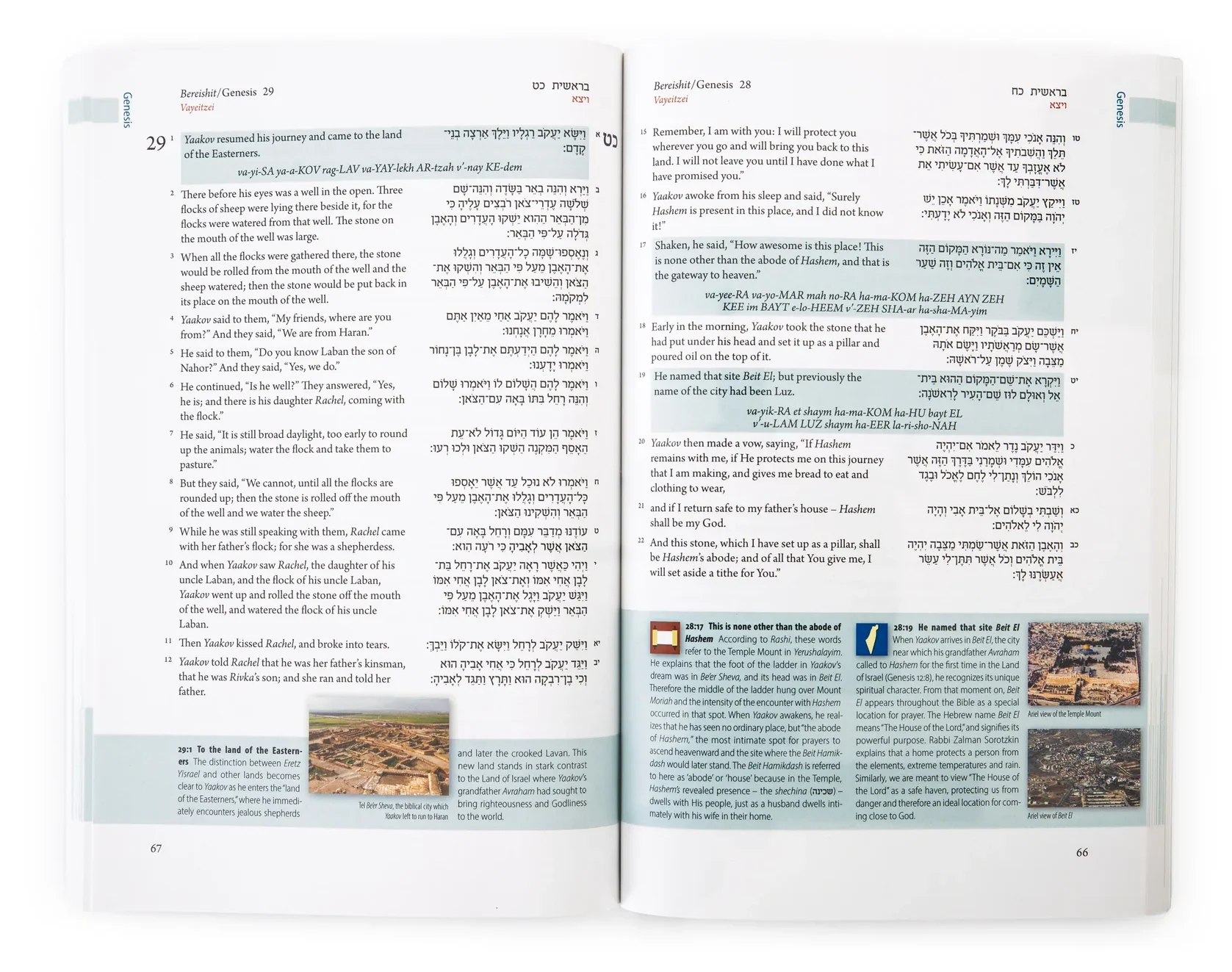
This Shabbat, November 21, Jews around the world will read Vayetzei (Genesis 28:10–32:3), which runs 148 verses, about 30 a day for a reader who starts on Monday. It opens with Jacob fleeing his brother, alone on the road and asleep on the ground at Bethel, when God appears to him and speaks:
“And, behold, the LORD stood beside him, and said: ‘I am the LORD, the God of Abraham thy father, and the God of Isaac. The land whereon thou liest, to thee will I give it, and to thy seed.’” (Genesis 28:13)
A Christian who reads that verse this week, alongside the Jewish people, is reading the deed to the Land of Israel in the same week its heirs are reading it in synagogues from Jerusalem to the Golan.
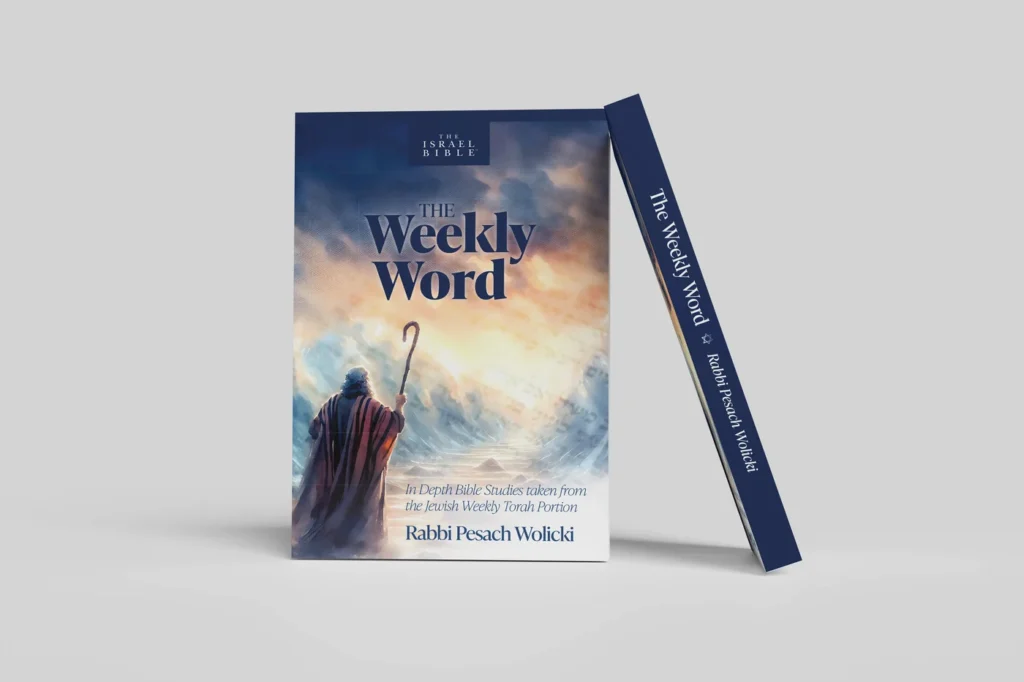
For readers who want to make that commitment, The Weekly Word: In-Depth Bible Studies Taken from the Jewish Weekly Torah Portion offers a companion to the annual cycle. Written by Rabbi Pesach Wolicki, the book follows the weekly parsha with accessible commentary that draws on Jewish tradition and connects the Torah’s teachings to questions of responsibility, faith, and daily life. Each chapter gives readers a way to move beyond simply completing the week’s verses and begin understanding what they mean. It works equally well for individual study, family discussion, or a weekly Bible group. The answer to biblical illiteracy is not another quiz. It is the discipline of opening the Bible, studying it carefully, and returning to it every week.
Amos saw the famine. Isaiah saw how it ends:
“They shall not hurt nor destroy in all My holy mountain; for the earth shall be full of the knowledge of the LORD, as the waters cover the sea.” (Isaiah 11:9)
That flood begins with one reader, one portion, and one open Bible on Monday morning.
