




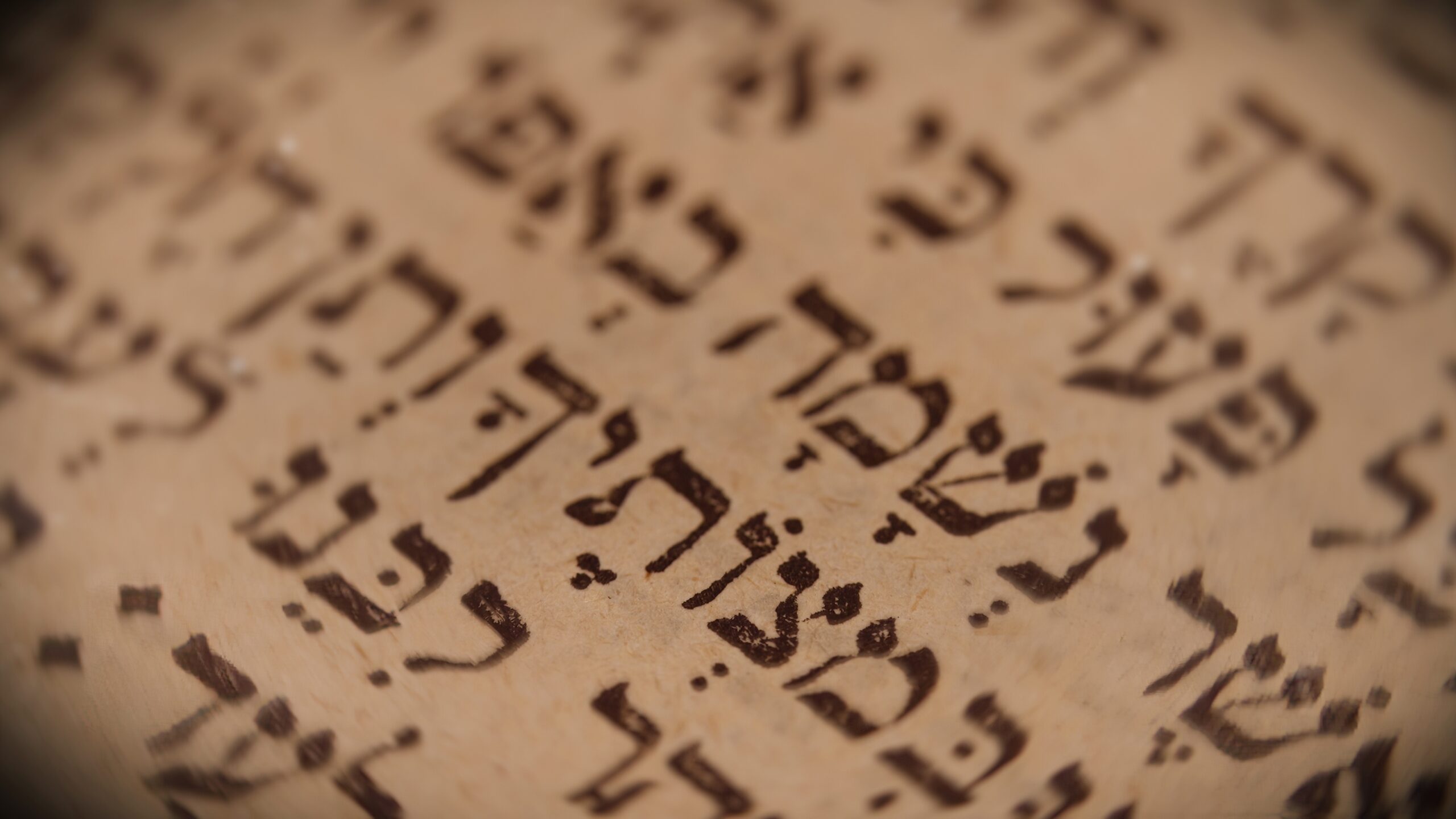
What does heaven have to do with fire and water? Why does the Hebrew word for a flimsy hut come from the same root as the word “to see”? And how does a single letter turn exile into redemption?
These are the kinds of questions Rabbi Elie Mischel, Director of Education at Israel365, takes on in his Hebrew word series on The Israel Bible YouTube channel. Each episode runs about 20 minutes and follows one Hebrew word through the Bible, from its three-letter root to the prophets’ vision of the end of days. In recent weeks he explained why God built heaven out of enemies and why the nations of the world will one day come to Jerusalem to sit in a sukkah.
Since Israel365 relaunched the channel a few months ago, it grew to nearly 6,000 subscribers. I sat down with Rabbi Mischel to talk about what he is building and why.
Zahava Schwartz: What is the idea behind the series?
Rabbi Elie Mischel: So many Christians tell me they want to study the Bible in its original language. They can feel that something is lost in translation, and they’re right. A single Hebrew word can open up a principle that runs through the whole Bible, and very often it speaks directly to what we are living through right now in Israel. I want to give people that experience without asking them to first master an entire language.
ZS: Why not just encourage people to learn Hebrew?
EM: I’d love for them to, but it’s a real challenge. Children pick up languages almost effortlessly. My kids absorb Hebrew in school here in Israel the way they breathe the air. Adults can only learn a language with much more effort, and biblical Hebrew is harder still. It differs from modern Hebrew in its grammar, vocabulary, and style, and it takes years of serious study before most people read it comfortably.
Most adults with jobs and families simply don’t have the time to invest in this. So I bring the Hebrew to them. I show the letters, I explain the root, and I let the word itself reveal what the English translation is obscuring.
ZS: Give me an example.
EM: The Hebrew word for heaven is shamayim. Hidden inside it are two other words: esh, fire, and mayim, water. Fire and water are enemies. Water puts out fire, and fire boils water away. Yet God builds heaven out of both of them, living together in one place.
In the Bible, fire stands for judgment and water stands for mercy. Every parent, every boss, every person of faith struggles to hold those two together. When your child breaks a rule, do you enforce the consequence or give him another chance? Heaven is the place where God holds both in perfect peace, as Job says: “He makes peace in His high places” (Job 25:2). So heaven is not just a reward waiting for us at the end. It is a model for how we are meant to live down here. You can’t see any of that in the English word “heaven.”
ZS: Your episode on the shofar took off in a way none of us expected. Why do you think it struck such a chord?
EM: I think people sensed that the shofar is much more than a Jewish ritual. The Bible never actually calls Rosh Hashanah “the day of the shofar.” It calls it “a day of blasting” (Numbers 29:1). God emphasizes the sound, not the horn. So the question becomes: what is that sound supposed to do to us?
Maimonides teaches that the shofar is an alarm clock for the soul, calling out: wake up, you sleepers, and return to your Creator.
And the word itself adds a second layer. Shofar shares its root with shafar, to make beautiful, to improve. A raw animal horn has to be scraped and polished before it can make a sound, and that is exactly what the sound asks of us. We follow it from Mount Sinai to the walls of Jericho, all the way to the great shofar the prophets promise at the end of days: “And on that day, a great shofar shall be blown, and those who were lost in the land of Assyria and those who were driven out to the land of Egypt shall come, and they shall worship the Lord on the holy mountain in Jerusalem” (Isaiah 27:13).
ZS: Some of these episodes get very personal. You admit that for years you dreaded the High Holy Days.
EM: I did. Rosh Hashanah and Yom Kippur are the days of teshuvah, which we usually translate as “repentance.” To me that word meant a courtroom. I pictured God as a prosecutor reading out my record, and I sat in synagogue going down the list of my failures and feeling smaller every hour. I respected God, but I approached Him the way you approach a judge, hoping to get through the hearing.
Then I looked hard at the word itself. Teshuvah comes from the root shuv, which means to return. Not to grovel, not to hate yourself. To come home. In the Bible, sin is turning your back on God and walking away, so teshuvah is simply turning around. And God is already there, facing you.
That one word changed everything for me. The holiest days of the year stopped being a trial and became a homecoming. I stopped seeing God as a judge waiting to sentence me and started seeing Him as a father waiting for His child to walk back through the door. Today I actually look forward to those days. Understanding the Hebrew didn’t just fix my relationship with the holidays. It repaired my relationship with God Himself. That is what I tried to share in the teshuvah episode, and I hear from viewers that it did the same for them.
ZS: Who is watching these videos?
EM: Mostly Christians, with a good number of Jewish viewers too. These ideas were never meant for the Jewish people alone. We just finished celebrating Sukkot, and it’s a perfect example. The Hebrew root of sukkah, the little hut we live in for a week, also means to see, to perceive. From outside, a sukkah looks like a shack. From inside, you look up through the branches and see the open sky, and you remember that God is the One holding you up, not your walls or your bank account.
Zechariah says that one day all the nations will come up to Jerusalem year after year “to worship the King, the Lord of hosts, and to celebrate the Feast of Tabernacles” (Zechariah 14:16). Sukkot is the festival of seeing, and the prophet promises that one day the whole world will learn to see. When a Christian watches these videos and starts to see the Bible with Hebrew eyes, that prophecy is already beginning.
ZS: Does someone need to know any Hebrew to follow along?
EM: Not a word. The Hebrew letters appear on screen, I explain each root, and I translate everything. Viewers walk away knowing a few real Hebrew words and, more importantly, understanding the Bible better than they did 20 minutes before.
ZS: What’s coming next, and how can people help?
EM: We release new words regularly, and there’s already a good library to explore, from aliyah to ger and regel. The best thing anyone can do is subscribe and like the videos. That’s how YouTube decides who sees them, and it’s how this teaching reaches people who are hungry for it. And leave a comment telling us which Hebrew word you want me to explore next. I read them.
New episodes of Rabbi Elie Mischel’s Hebrew word series and other Bible teachings come out every week. Subscribe to The Israel Bible on YouTube so you never miss one.


