

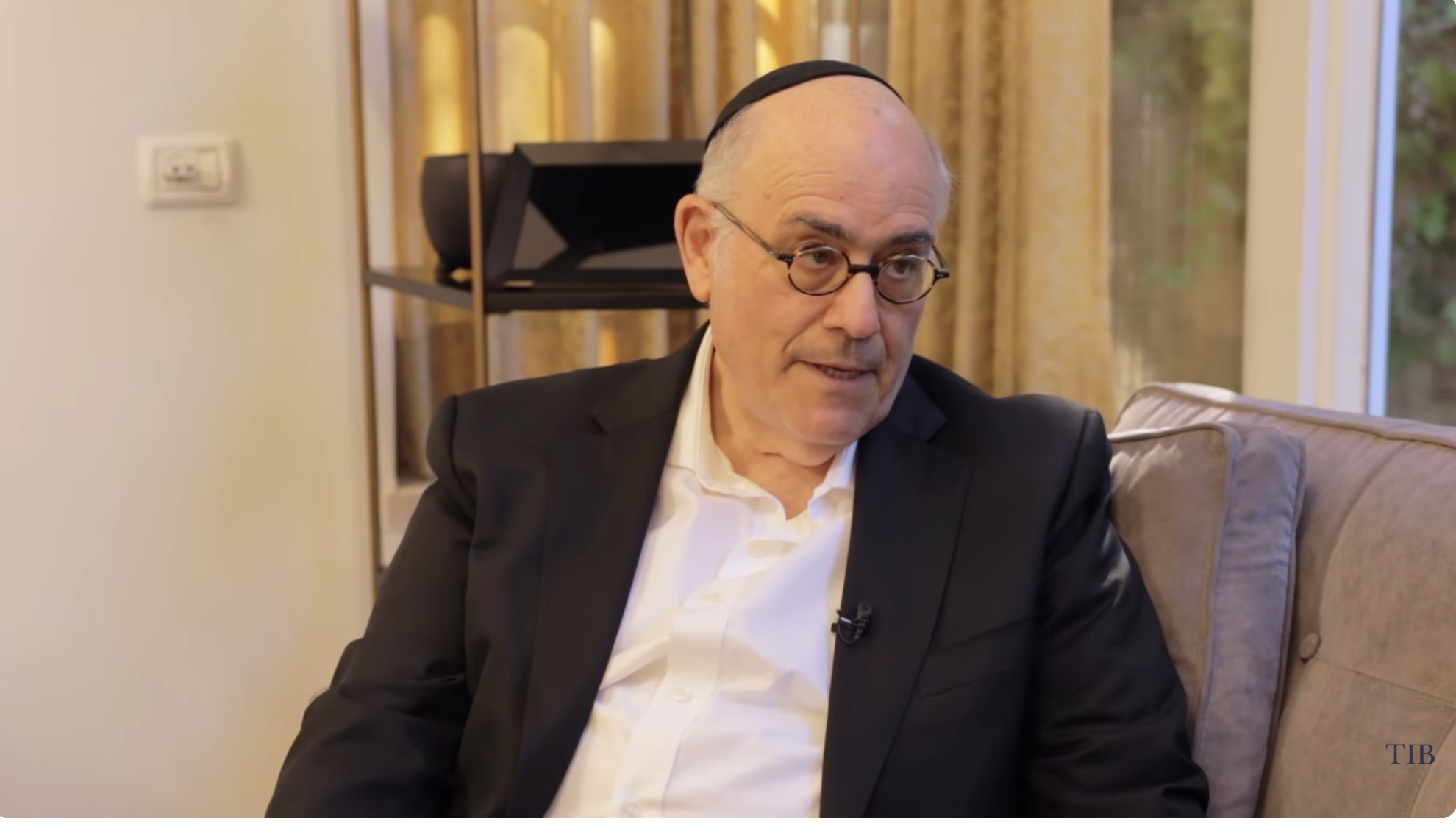
Rabbi Tuly Weisz released the second episode of his podcast, The Universal Zionist, this week, sitting down with Rabbi Dr. J.J. Schacter just as the Jewish world enters the days leading up to Tisha B’Av, the fast day marking the destruction of both Temples in Jerusalem, observed this year at the end of July.
Schacter is not your typical scholar. He left the yeshiva world only long enough to earn a PhD in Near Eastern languages from Harvard, then brought that training right back into it, teaching Talmudic sources by day and studying with a Hasidic rebbe on weekends. He served as a pulpit rabbi in Manhattan, helped found the Torah U-Madda Journal, and now serves as senior scholar at Yeshiva University, where congregational rabbis travel in from across the country to study with him. For over three decades he has taught eight-hour Tisha B’Av study sessions, a practice he picked up from his own teacher, Rabbi Joseph B. Soloveitchik.
His father, Rabbi Herschel Schacter, was the first American army chaplain to enter Buchenwald, leading a service there just days after liberation. A photograph of that moment hangs today in Yad Vashem. Schachter says growing up in that shadow shaped his own sense of what a rabbi owes the Jewish people, even as he chose a different path than his father’s.
In the episode, Schacter and Weisz discuss why the destruction of the Temple still shapes Jewish life today, including a theological question that troubled Jewish communities across medieval Europe: if God truly stood with the Jewish people, why did history look the way it did? Schacter walks through how the rabbis of that era responded, and argues that the same question, asked today, points to a very different answer. He also traces how Tisha B’Av came to hold centuries of later tragedy within its mourning, from the Crusades to the Holocaust to October 7th, and why that matters for understanding the day as more than a single historical event.
One of the more striking moments in the episode comes when Schacter describes a group of Christians who gather every year to mourn alongside the Jewish people on Tisha B’Av itself, a practice tied to a verse from the prophet Zechariah. Schacter calls what they do extraordinary, and pushes for that solidarity to keep showing up in concrete ways, not just once a year.
“History happened,” Schacter says at one point. “You may be uncomfortable with what happened, but you have to acknowledge it and then deal with it.”
The episode is available now, timed to release ahead of Tisha B’Av.
Listen to the full episode of The Universal Zionist with Rabbi Tuly Weisz and Rabbi Dr. J.J. Schacter.