
Troy Miller has spent decades inside American Christianity. As President and CEO of the National Religious Broadcasters, he has watched more churches, more ministries, and more Christian media organizations than perhaps any other person in America. What he has seen troubles him deeply.
“The issue is no longer simply that Scripture is denied,” Miller wrote recently. “It is that Scripture is often no longer known with sufficient depth to be interpreted responsibly, rejected intelligently, or applied coherently. In decades past, most Americans at least knew what they were rejecting. A society that has lost the categories necessary to understand truth has entered a truly precarious condition.”
The research confirms what Miller sees on the ground. The American Bible Society found that only 17 percent of American adults have read the entire Bible, while more than half rarely or never engage with it at all. Among Christians under 35, the numbers are significantly worse. That number has been declining for years, and there is no sign it is turning around.
On June 14, Israel365 is convening Open the Book: A National Conversation on Biblical Literacy, a major live online event bringing together Jewish and Christian leaders to address what is being lost and what can actually be done about it.
Speakers include Rabbi Tuly Weisz, founder of Israel365; Rabbi Pesach Wolicki, Executive Director of Israel365 Action; Tony Perkins, President of the Family Research Council, Dr. Steve Martin, Dr. Yael Leibowitz, and Rabbi JJ Schachter.
The event is free. SIGN UP HERE.
A Crisis Decades in the Making
Rabbi Elie Mischel, Director of Education at Israel365, puts it plainly: “Biblical illiteracy is potentially disastrous for the future of America.” It is also, he argues, an emergency that most people are not taking seriously enough.
Research from Ligonier Ministries shows that large numbers of self-identified Christians, including many evangelical churchgoers, now view the Bible as a collection of ancient myths rather than authoritative Scripture, and cannot articulate basic doctrinal claims they have ostensibly believed their entire lives.
The explanations are not mysterious. Smartphones and social media have systematically rewired the cognitive habits that sustained reading requires. The Bible is long, complex, and non-linear; the attention economy trains the opposite of everything that reading it demands. At the same time, the megachurch era quietly shifted churches away from verse-by-verse biblical teaching toward topical, therapeutic preaching that used Scripture as decoration rather than foundation. Congregations stopped expecting to be taught the Bible; churches stopped expecting to teach it.
And the grandparents who once modeled what it meant to live inside the text, who quoted Psalms at dinner, who memorized passages through decades of repetition, are increasingly no longer in the room. The intergenerational chain of transmission that carried biblical knowledge from one generation to the next for centuries has broken.
Miller captures what this produces: Christians who cannot interpret Scripture responsibly, reject it intelligently, or apply it coherently. Biblical language remains publicly useful, he warns, even as biblical meaning is steadily evacuated from it.
The consequences reach far beyond the church. The American Founders did not build a republic in a moral vacuum. They operated inside a framework of biblical assumptions about human nature, justice, accountability, and the limits of power. John Adams put it plainly: “Our Constitution was made only for a moral and religious people. It is wholly inadequate to the government of any other.” Constitutional self-government requires citizens formed by moral conviction, and that conviction cannot survive where the text that grounded it has been forgotten.
Michele Bachmann, Dean of the Robertson School of Government at Regent University, has been making this argument for years. Christians who do not read their Bibles cannot evaluate current events through any coherent moral or theological lens, and that leaves them entirely unequipped to navigate the defining crises of our time.
The Israel Consequence
There is one area where the impact of biblical illiteracy is particularly acute, and especially dangerous: support for Israel.
“Biblical illiteracy is also extremely dangerous for the relationship between America and Israel,” says Rabbi Mischel. “Israel and America are separated by thousands of miles. It is not automatically obvious to young Americans why they should care about, let alone support, Israel. The only reason that makes sense, the only reason anyone would be compelled to stand with Israel, is the Bible.”
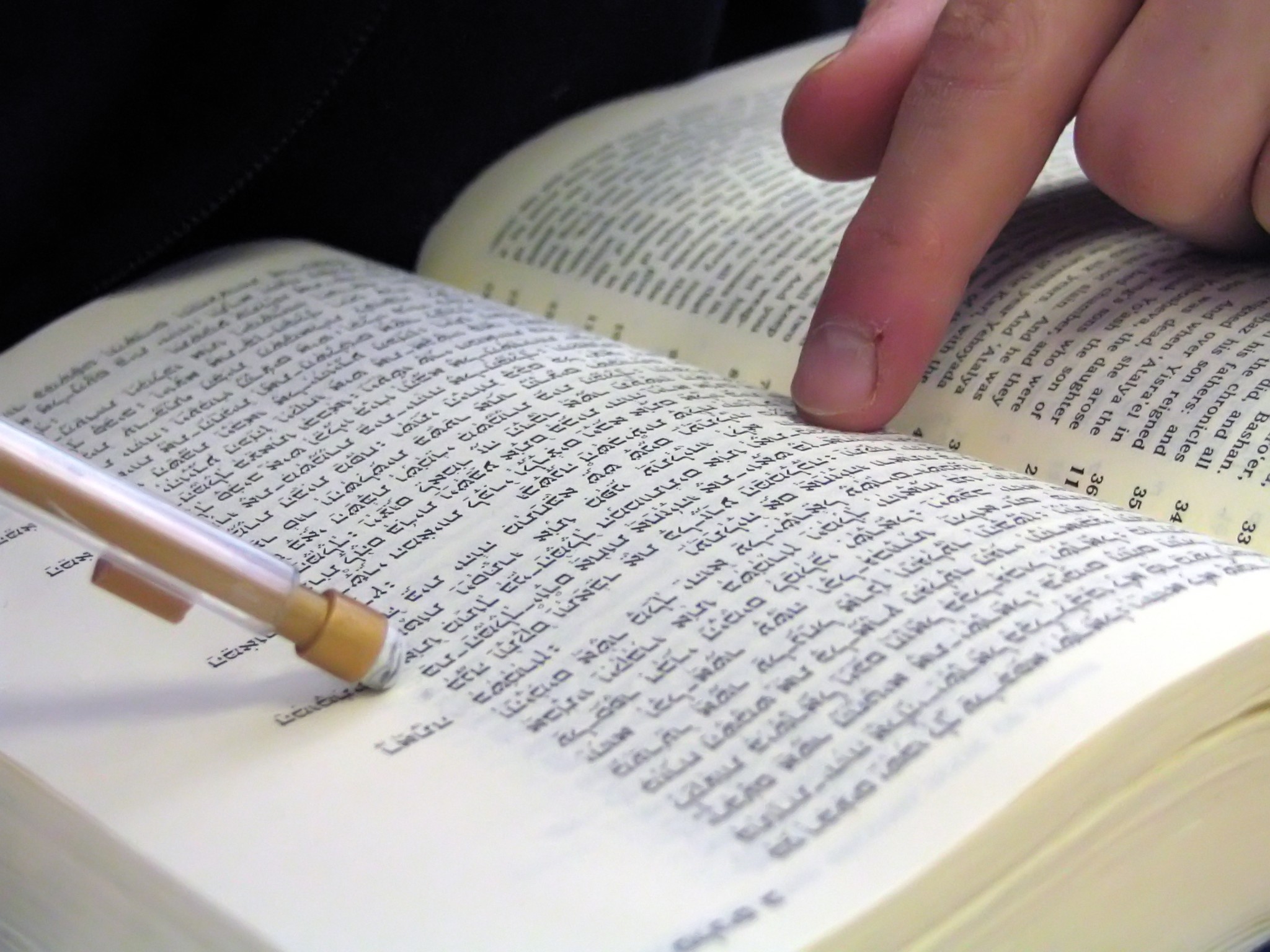
He is describing something structural, not sentimental. Open the Hebrew Bible to any page and Israel is there. The Jewish people are present in every book, from Genesis to Chronicles. The covenant with Abraham, the Exodus, the prophets’ vision of national restoration, these are not background details. They are the architecture of the entire text. Christians who know their Bibles understand Israel’s significance because the Bible makes it impossible to miss.
Christians who don’t know their Bibles have no such framework. And without it, they are vulnerable.
Bachmann has warned repeatedly that support for Israel is not a political opinion; it is an explicit biblical mandate, grounded in the covenant of Genesis 12. When Christians stop reading Genesis, that conviction doesn’t weaken gradually. It disappears. The International Christian Embassy Jerusalem has documented what follows: Christians who lose their grounding in the Hebrew Bible become vulnerable to replacement theology, the belief that G-d canceled His original covenants with the Jewish people, and to secular moral frameworks in which support for Israel appears as merely one political position among many.
Polling from Tel Aviv University confirms what this looks like in practice. Support for Israel among younger evangelicals has dropped sharply, with a significant segment now claiming neutrality or favoring the Palestinian cause — not because they have studied the conflict carefully, but because they have no biblical framework through which to understand it at all.
Rabbi Mischel is direct about where this leads: “Young people become susceptible to every form of misinformation from Israel’s enemies, from people who are actively and deliberately working to separate America from Israel, people like Candace Owens and Tucker Carlson. The most important thing for anyone who cares about the America-Israel alliance is to teach the Bible, not just the New Testament, but the Hebrew Bible, the foundational half. Without it, everything else falls apart.”
Why Jews and Christians Must Solve This Together
The organization convening this conversation on June 14 is not a church, a seminary, or a Christian ministry. It is Israel365, a Jewish organization based in Israel, whose rabbis read the Hebrew Bible in Hebrew every week, in the land where it happened. That is not incidental. It is the point.
For years, Israel365 has been doing something no other organization does at scale: bringing Orthodox Jewish scholarship on the Hebrew Bible directly to Christian audiences across America. Throughout June, that work takes the form of a free 30-Day Bible Challenge, 26 videos covering all 24 books of the Hebrew Bible, with rabbis and leading Christian voices in conversation together, all on The Israel Bible YouTube channel.
At the June 14 event, Open the Book: A National Conversation on Biblical Literacy, Jewish and Christian leaders will sit down together and talk seriously about what comes next. The question on the table is not whether the crisis is real, but what Jews and Christians, together, are going to do about it.
As America marks 250 years since its founding, that question could not be more urgent.