


Rabbi Isser Weisberg told Tamar Yonah that an ancient Jewish prophecy explains today’s headlines — from the Iran nuclear standoff to Trump’s Gaza ambitions
In a wide-ranging interview on the Tamar Yonah Show, Rabbi Isser Weisberg connected the dots between a 2,500-year-old vision of a paralyzed bear, the Dome of the Rock, October 7th, and Donald Trump’s desire to build a resort in Gaza. He does it with a calm, scholarly precision that is either deeply compelling or deeply unsettling, depending on where you stand.
Rabbi Weisberg, a longtime communal rabbi and educator with expertise in Jewish eschatology (the theology of the end times), has spent more than 35 years studying the prophecies scattered across the Hebrew Bible, the Talmud, the Zohar, and later kabbalistic sources. He is also, by his own admission, very aware of how easily this field can go wrong.
“A lot of people, they see a nice prophecy, or they hear something, and right away they’re putting it on YouTube,” he says early in the interview. “A lot of times it’s taken out of context… You really have to spend a lot of time. It’s very, very complicated.”
With that caveat firmly on the table, he proceeds to lay out one of the most sweeping prophetic interpretations of current events you are likely to hear.
The Lubavitcher Rebbe’s 1991 Instruction
The rabbi begins with a question that religious Jews familiar with Jewish law might immediately raise: aren’t you supposed to avoid trying to calculate when the Messiah is coming? He quotes the Rambam (Maimonides), a foundational medieval authority, both of whom discouraged the practice on the grounds that it wastes time better spent on Torah study and ethical living, and because, frankly, no one has ever successfully figured it out.
“The Rambam says, you’re wasting your time because you’re not going to figure it out,” Weisberg explains. “He says everybody tried to figure it out. Even the sages of the Talmud tried to figure it out.”
But he points to a pivotal moment: in 1991, the Lubavitcher Rebbe, Rabbi Menachem Mendel Schneerson, the towering leader of the Chabad-Lubavitch movement who passed away in 1994, publicly called on his followers to study all the prophetic sources related to the redemption. This, Weisberg argues, was a signal that the earlier restriction no longer applied: end-of-times events were finally unfolding in real time, and people needed to understand what they were witnessing.
“The Rambam’s restriction doesn’t apply anymore,” Weisberg says. “It only applied in earlier times, before it’s unfolding. As it’s unfolding, to the contrary, we’re supposed to learn all these sources to understand what we’re seeing.”
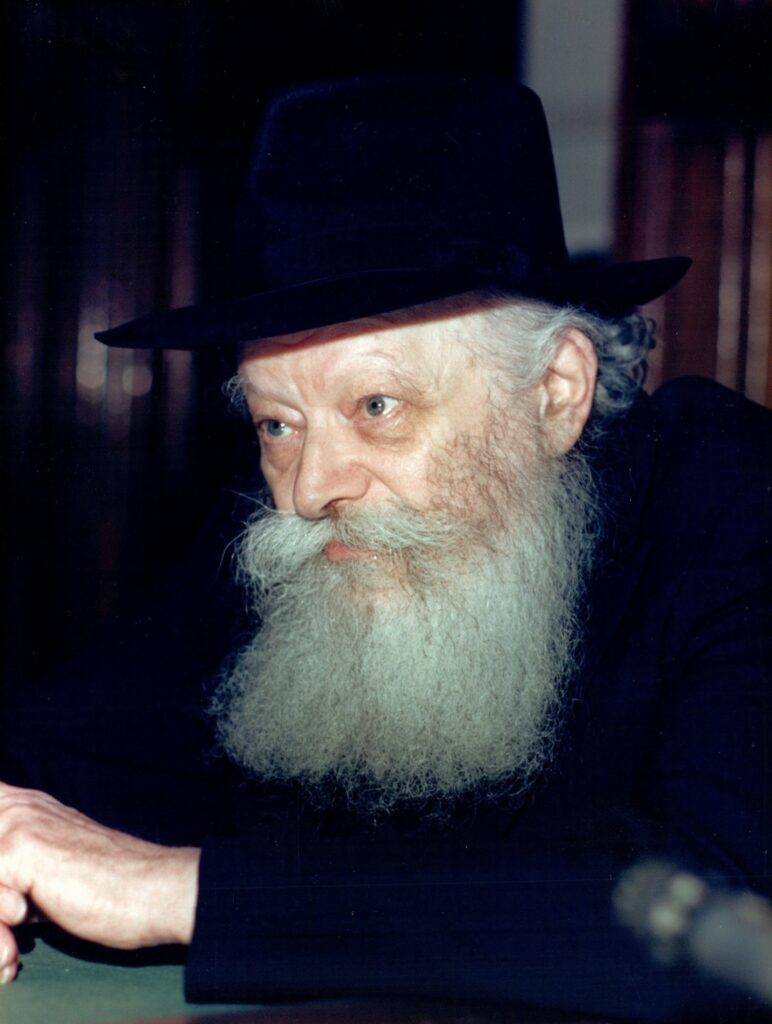
The 1991 timing was the year that saw the collapse of the Soviet Union and the beginning of a massive wave of Jewish immigration to Israel, ultimately more than a million people, many of them from the former Soviet republics. The Rebbe, Weisberg recalls, declared this a fulfillment of biblical prophecy about the ingathering of the exiles.
Is Gog the USA?
At the heart of Jewish end-times theology is the war of Gog and Magog, the cataclysmic final conflict described in the biblical books of Ezekiel and Zechariah, in which a great northern power leads a coalition of nations against Israel before the Messianic era begins. For centuries, scholars have debated who “Gog from the land of Magog” represents.
Weisberg’s answer, developed over decades of research, is unambiguous: Magog is the United States of America.
His primary source is the Arizal, Rabbi Isaac Luria, the 16th-century Kabbalist regarded by virtually all streams of traditional Judaism as an unparalleled mystical authority. The Arizal, Weisberg explains, wrote that the Hebrew words Gog and Magog have a numerical value of 70, and that Gog represents whichever nation controls the 70 nations of the world, i.e., the global superpower, at the time of the redemption.
“After 1991, America is the undisputable superpower,” Weisberg says. “So then it’s for sure Magog. You only have to identify who Gog is.”
He also floats a linguistic observation: the first president of the United States was named George, and the name George shares three of the four Hebrew letters of Gog. Whether that is evidence or coincidence, he acknowledges, is debatable. But he finds it suggestive that the tradition of naming something after its founding figure is well-attested in the Bible itself.
The geographical question of how Magog is described as being from the “distant north” of Israel, while America is on the other side of the globe, he answers with a creative if controversial argument: Israel is not at the equator, but if you reposition the globe so that Israel sits at the “belly button” of the world (as described in Ezekiel), the north then encompasses Alaska, which became an American state in 1959, placing America genuinely north of Israel on a reoriented map. He acknowledges this is a stretch, but presses on.
America’s “Secret War” Against Israel
This identification leads to a sweeping reinterpretation of U.S.-Israel relations across the past several decades. Far from being Israel’s loyal protector, Weisberg argues, America has played the role of Gog; not through open military aggression, but through relentless diplomatic and political pressure designed to prevent Israel from establishing full sovereignty and, crucially, from rebuilding the Temple in Jerusalem.
He traces this pattern from the very beginning. “America was not the first one to recognize [Israel]. Truman did not recognize it for another year. Russia was the first one to do it.” During Israel’s War of Independence in 1948, just three years after the Holocaust, “America said, ‘We’re not sending you one bullet.'” Meanwhile, the British were actively arming Arab armies, including the Jordanians.
The pattern continued through every subsequent administration. After the Sinai Campaign of 1956, American pressure forced Israel to withdraw from the Sinai Peninsula; a withdrawal Weisberg blames, counterfactually but pointedly, for making the 1967 Six-Day War and the 1973 Yom Kippur War inevitable. He even includes Ronald Reagan in this critique: “He armed Iran to the teeth… He sold very sophisticated AWACS to Saudi Arabia. And Israel protested, and he said, ‘Jump in the lake.'”
Even in Trump’s first term, he argues, this pattern held. When Prime Minister Netanyahu was finally ready to formally annex parts of Judea and Samaria (the West Bank), territory that Weisberg and many on the Israeli right regard as historically and biblically Israelite, Trump said no. The reason: it would jeopardize the Abraham Accords, the normalization agreements Trump was brokering between Israel and several Gulf Arab states.
“Trump stopped the Jews from merely taking control of their own land,” Weisberg says. But he is careful to say this was not malice. It was, in prophetic terms, America fulfilling its role as Gog, pressuring Israel, keeping it in a state of dependence, preventing it from fully actualizing its biblical destiny.
The Good Esav: Trump’s Second Term as a Turning Point
Weisberg believes Trump’s second term, which began in January 2025, represents the end of this era. The dynamic has fundamentally changed.
He uses the biblical story of Jacob and Esau to explain it. In Genesis, Jacob (the ancestor of the Jewish people) and Esau (whose descendants, in Jewish tradition, spiritually became Rome and eventually Western civilization) are rivals, but brothers. After years of estrangement, Esau comes to meet Jacob with a large army, and Jacob, fearing for his life, sends lavish gifts and bows before his older brother. Instead of attacking, Esau embraces him and offers his protection.
“This is the new Esav [Esau],” Weisberg says, using the Hebrew pronunciation. “Trump now has broken that pattern. Gog from the land of Magog is gone, is dead, is finished.”
“Trump is the best version we’re going to have of Esav before Mashiach comes,” Weisberg says. “He’s not the Gog version of Esav that’s fighting Jews in any way, not even politically.”
The tension in Trump’s current behavior, simultaneously championing Israel and restraining it, threatening Iran and negotiating with it, Weisberg attributes to the natural complexity of this transitional moment, and to an ongoing dispute in heaven between the souls of great sages who disagree about how the final confrontation should unfold.

Iran: The Bear Unchained
If America is Magog, then Iran, ancient Persia, plays the role of the second great power in the final drama. And here the prophetic framework becomes, in some ways, the four world empires that would subjugate the Jewish people: Babylon, Persia, Greece, and Rome. The Talmud further states that at the end of days, only two of these empires will remain: the Roman (Western civilization, led by America) and the Persian (Iran), and that there will be a massive confrontation between them.
Weisberg adds a mystical dimension from Daniel chapter 10: the angel Gabriel tells the prophet that he and the archangel Michael have been physically restraining the spiritual force of Persia, holding it back from unleashing its rage against the Jewish people, for centuries. This restraint, he argues, is why the historical Persian Empire was so remarkably benevolent toward the Jews: Cyrus allowed the Jews to return from Babylonian exile; Darius commanded that anyone who interfered with the rebuilding of the Temple would be hanged. The Talmud itself was compiled within the borders of the Persian Empire.
But that supernatural restraint, he says, has now been lifted. The Islamic Revolution of 1979, which transformed Iran from a secular monarchy friendly to Israel into a theocratic regime singularly obsessed with Israel’s destruction, represents the moment the bear was finally unchained.
“For 2,500 years, this bear has been shackled and it’s full with rage,” he says. “For 2,500 years, I have a mission to devour Jews. This is my godly mission. And these angels are not letting me do it.”
October 7th, in this framework, was Iran finally fulfilling its ancient prophetic mission, its proxies, Hamas, unleashing violence on the scale that the angels could no longer prevent. And yet even October 7th, as horrific as it was, was a toned-down version of what the prophecies originally described.
The verse in Daniel chapter 12, Weisberg explains, says that when Iran finally attacks, it will be the worst time of suffering for the Jewish people since the nation was formed at Sinai; worse than the Holocaust, worse than the destruction of the First and Second Temples. “October 7th was horrible beyond imagination, but it did not eclipse the Holocaust,” he says. The fact that it didn’t, he argues, is evidence of the power of centuries of prayer by righteous Jews that the decree be softened.
Zechariah chapter 14, he notes, describes enemies conquering half of Jerusalem and taking its inhabitants captive, which would mean hundreds of thousands of hostages. October 7th produced 251. The gap between the prophecy and the event, he suggests, is the measure of how much the prayers of the righteous accomplished.
The 2027 Deadline — and Verse Number 5,787
Perhaps the most arresting claim in the interview is Weisberg’s assertion, which he has been making for six years, that the Jewish year 5787, corresponding roughly to 2026-2027, represents a prophetic deadline for the onset of the Messianic era.
He derives this from the final verses of the book of Daniel, which state: “Lucky is the person who waits and reaches 1,335 days.” The question is when to start counting those 1,335 years. Weisberg’s answer: from the completion of the Dome of the Rock, the Islamic shrine built on the Temple Mount in Jerusalem. The Dome’s interior inscription gives its completion date as the Arabic year 72, which spans April 691 to April 692 CE. Adding 1,335 years to 692 yields 2027.
He adds a remarkable numerical observation: if you count all the verses in the Hebrew Bible, verse number 5,787, corresponding to the Jewish year 5787, or 2027, falls in Deuteronomy chapter 32, verse 34, in the portion called Ha’azinu. That verse reads, in his translation: “The secret of the end is with Me, God, and I don’t tell anybody else.”
“God hid the secret in plain sight,” Weisberg says with evident wonder, “because he’s telling you a secret, and if you count the verses, the secret is revealed. But nobody counted it until recently.”
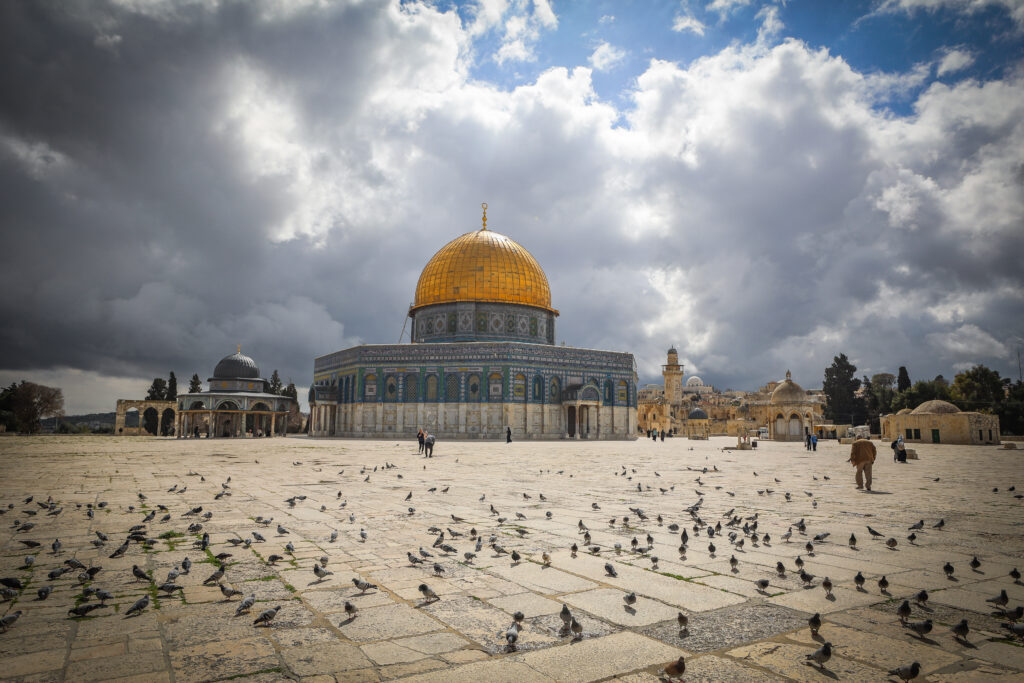
He is quick to add layers of uncertainty: different Jewish traditions divide the biblical verses differently (Sephardic vs. Ashkenazic customs), so the verse count may not land precisely on 5787. The Dome may have been completed in 691 rather than 692, which would make the deadline this year. And even if 2027 is the deadline, it is a deadline. The Messiah could come earlier, and indeed may already be overdue.
Who Is Mashiach Ben Yosef?
Jewish eschatology includes a fascinating and often-overlooked figure: the Mashiach Ben Yosef, a “first Messiah” who precedes the final Davidic Messiah. He is described as a great righteous leader who prepares the world for the Messiah’s coming, but who is killed in the wars of Gog and Magog, though centuries of prayer, Weisberg says, have sought to avert or soften that fate.
When asked directly who this figure is, Weisberg answers without hesitation: “For sure it’s the [Lubavitch] Rebbe. Not a question about it.”
His reasoning: the Lubavitcher Rebbe explicitly declared his mission to be preparing the world for the Messiah’s coming, and spent four decades doing exactly that, building a global network of Chabad centers and bringing hundreds of thousands of Jews back to religious practice. The Midrash says the Mashiach Ben Yosef will reign for 40 years; the Rebbe led his movement from 1951 until his stroke in 1992, precisely 40 years. And the tradition notes that some followers of the Mashiach Ben Yosef will mistakenly believe he is the final Messiah. This is a description that fits the messianic beliefs of some within the Chabad community today.
“Everything it says about Mashiach Ben Yosef, the Rebbe fulfilled all the prophecy,” he says. “That era is behind us. We’re on the final, final phase.”
Gaza, Lebanon, and the Limits of Military Victory
For those hoping for a decisive Israeli military victory in Gaza or Lebanon, Weisberg offers cold comfort, but frames it in prophetic rather than strategic terms.
“I’m a thousand percent convinced we’re finished with the wars of Gog and Magog,” he says. But he argues that the wars in Gaza and Lebanon are not those final wars, though they are something smaller, and their resolution will remain incomplete. Isaiah chapter 11, he notes, describes the Messiah blowing away the Philistines (whom he identifies with modern Palestinians) with barely any effort, suggesting the defeat of Hamas is specifically a post-Messianic event, not something that will happen before.
Similarly, Zechariah chapter 10 says Israel will inherit Lebanon, but only after the Messiah comes.
“It’s not in the books,” he says simply, of a complete military victory in these theaters before the Messianic era.
The real war, the one that is in the books, is between America and Iran. That confrontation is happening now, and Weisberg believes it will determine the shape of everything that follows.
What Comes Next?
Weisberg outlines three components of the Messianic era that he believes are imminent in some form: the appearance of the Messiah himself, the ingathering of all Jews to Israel, and the rebuilding of the Temple (or at minimum, the reinstatement of sacrifices on the Temple Mount altar). He is careful to say he does not know which will come first, or in what form.
He even raises the possibility that a sufficiently bold Israeli prime minister could simply authorize the construction of an altar on the Temple Mount, in an area where no existing Islamic structure stands, and begin sacrificial worship. This alone, he suggests, would constitute a Messianic beginning, regardless of whether a recognized Messiah has appeared.
“Imagine if we’re praying for so long that we should be able to bring the sacrifices. If we actually do that, that’s big,” he says.
His final message is urgent, but not panicked. He warns that after the Messiah comes, people will regret not having done more — more charity, more kindness, more study — during the window when such actions carried maximum spiritual weight.
“He’s definitely coming today, tomorrow, He’s definitely coming,” Weisberg says. “And we’re going to say: I knew Mashiach was coming. Why didn’t I take that opportunity to do more?”
