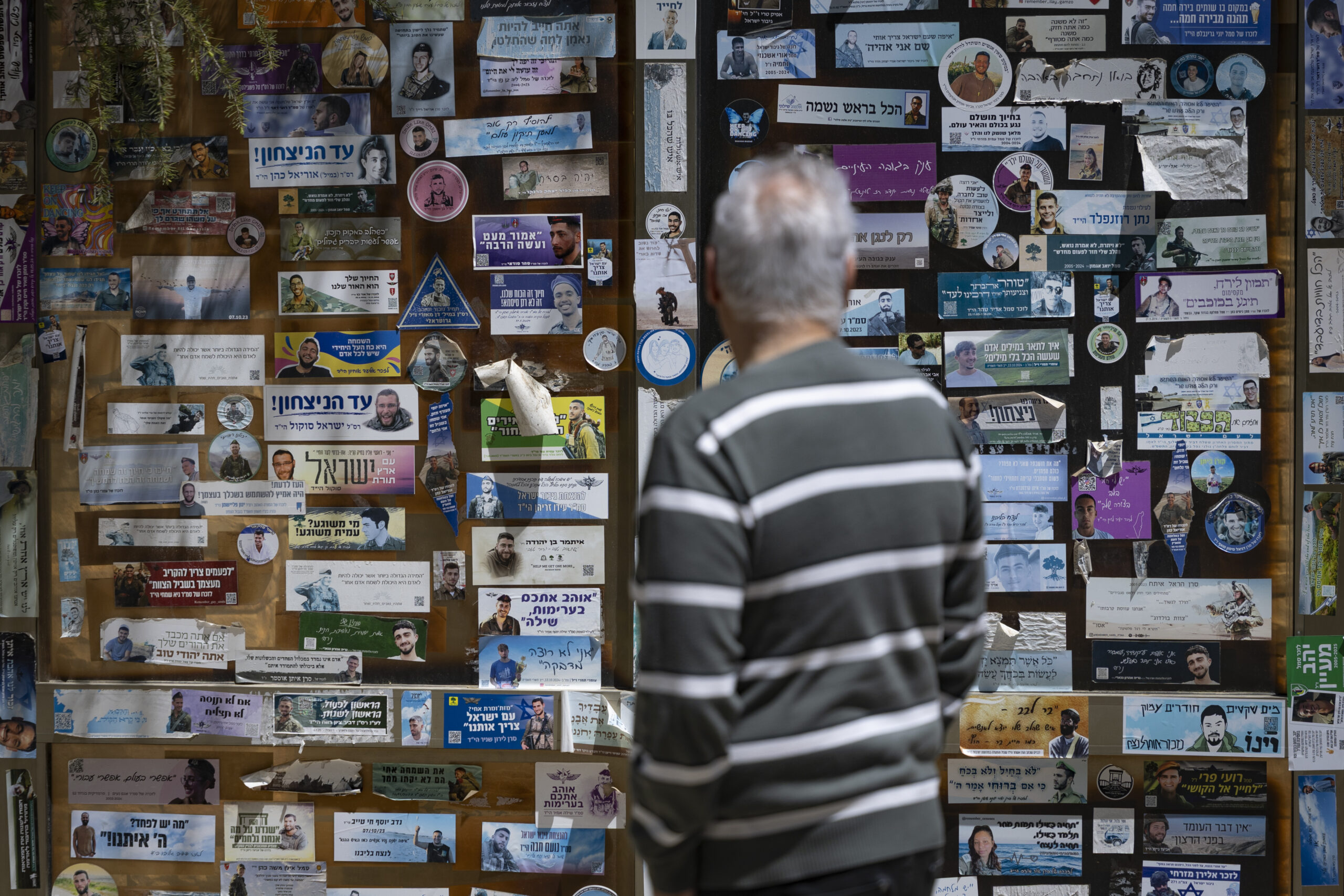
Every year on Yom Hazikaron, Israel’s Memorial Day, the entire country stops. A siren wails for one full minute, traffic halts, conversations pause, and a nation stands at attention for its fallen.
This year, Israel365 brought that moment to hundreds of supporters around the world. The “Remember and Honor” webinar, moderated by Rabbi Rami Goldberg, opened with that same siren, and for one full minute, attendees sat in silence at their screens.
The evening was held in honor of the soldiers killed since October 7th, 2023, and the families they left behind. Soldiers, spouses, and bereaved parents gathered to share what this war has cost, not in statistics, but in lives.
Elisha Gimpel, a young soldier who grew up in Efrat after moving from America at age nine, spoke about returning to Gaza during a period of intense international pressure and internal calls for a ceasefire. The soldiers, he said, never slowed down. “They knew what had to be done.” He described losing his Druze commander, Jala, in battle, and attending the funeral of a friend named Agam the same day news broke of the pager operations in Lebanon. The strategic gains Israel holds today, he said, came at a price that most people never saw up close.
Allie Feuerstein, an Israel advocate whose husband has served roughly 400 reserve days since October 7th, described what that looks like at home. Her youngest was six months old when her husband was first called up. One son developed sensory issues and refused to wear anything but pajamas for a year. Another had out-of-character temper tantrums. “Each of my kids struggled in their own way,” she said.
Allie also shared a moment from last Yom Hazikaron. Her family lit a candle for a soldier from her husband’s unit who was killed, leaving behind a two-year-old daughter. Her husband showed their sons a video of the fallen soldier with his little girl, filmed three months before he died. Her four-year-old said, “This little girl doesn’t have her Abba anymore.” Her six-year-old answered: “He sacrificed his life for all of us.” That night, the six-year-old told Allie that he wanted to be a soldier.
The program also featured video testimonies from widows of fallen soldiers. These women woke up one morning with a husband and went to sleep that night without one. They are now raising their children alone, managing grief alongside school runs, bills, and a future they never planned for.
The evening’s final testimony came from Avi Rosenfeld, father of Natan Rosenfeld Hy”D, a combat engineer killed in Gaza. Avi described his son as a kid who rode his bike on one wheel and won over every teacher he had. Natan chose the combat engineers because, he told his father, they are the first ones in and the last ones out. “I want to do my part.”
When Natan was killed, an anti-tank rocket struck him directly but did not fully detonate. The blast that took his life prevented a larger explosion that would have killed sixteen soldiers standing nearby on a cache of ammunition. His son’s death, Avi said, saved sixteen families from receiving the knock at the door that every Israeli dreads.
Avi, whose faith had been unsettled for decades by the memory of grandparents who perished in the Holocaust, said standing at his son’s coffin changed something in him. “I swore to God I’m going to come off the fence. I’m going to spend the rest of my life dedicated to doing good in his name.” He spoke of walking the streets of Jerusalem that morning, struck by the fact that the Jewish people, 0.7% of the world’s population, are still here. “I know which side of the fence I stand on. And I know that’s what Natan wants.”
The program closed with Hatikvah. As Rabbi Goldberg noted before the singing began, Israel’s national anthem is not a triumphant song. It is a song of longing. We are not there yet, it says. But we are on our way.
Since October 7th, 2023, over one thousand Israeli soldiers and security personnel have given their lives to fight for the State of Israel. Every one of them was somebody’s son, brother, husband, somebody’s commander, somebody’s Abba who won’t be coming home. They left behind children who struggle in their own ways, six-year-olds who cry and then decide they want to be soldiers, and women who woke up one morning with a husband and went to sleep that night without one. These widows are still here, still showing up, still raising the next generation of Israel, alone.
Their husbands gave everything. Now it is our turn.
Donate now to support IDF widows and their children at israel365charity.com.
To watch the full ceremony, click here