
The panic over artificial intelligence feels familiar. When the printing press arrived, people worried it would corrupt society. When calculators became common, teachers feared students would never learn math. Now, with AI solving scientific problems that have stumped researchers for years and writing essays that pass college exams, the anxiety has reached a new pitch.
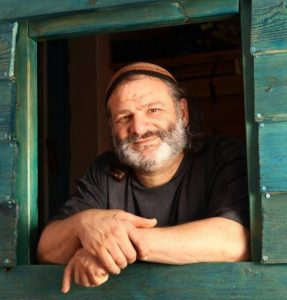
But Tim Moon, a veteran educator who spent decades teaching classical reasoning and rhetoric before launching his own AI consulting business, isn’t worried. In fact, he thinks AI might do something unexpected: teach us what it really means to be human.
In a recent conversation on Biblical Money, Rabbi Rami Goldberg’s podcast exploring faith, finance, and business, Moon made a case for embracing AI rather than fleeing from it. His argument isn’t rooted in blind techno-optimism but in decades of watching students wrestle with logic, watching machines process information, and recognizing the irreplaceable value of what only humans can do.
The Educator Who Became an AI Consultant
Moon’s career began in classical Christian education, where he taught formal logic, rhetoric, and critical thinking. He trained students to construct arguments, identify fallacies, and communicate with precision and confidence. When AI technology exploded, Moon saw immediate connections between the logic he’d been teaching for years and the way these new machines operate.
“There’s so many organic connections between AI and logic and rhetoric and truth,” Moon explained. “Teaching and programming, there’s just a lot of very interesting connections.”
Now semi-retired, Moon runs his own business helping small businesses and educators leverage AI effectively. His focus isn’t on replacing human teachers or workers but on understanding how machines can handle what they do best so humans can focus on what only they can do.
What Machines Do Fast (and What Only Humans Can Do)
When Rabbi Goldberg asked whether AI is helping or hurting student learning, Moon’s answer challenged the binary. “We’re in a different world now,” he said. “These tools can leverage us if we apply them right. If we fight against them, they’re just going to frustrate and bury us.”
His approach is developmental. Young students need to write by hand, do math without calculators, and build foundational skills through practice and muscle memory. “Kids need to write on a piece of paper with a pencil,” Moon insisted. But as students advance, the equation changes. “When they get into calculus, they need a calculator.”
The key is making the work harder, not easier. “In high school, it needs to get so hard that it requires a machine to help do it, and then the teacher needs to orchestrate that.”
Moon sees AI solving problems in medicine, physics, and mathematics that have plagued experts for years. “What if our understanding of medicine and physics and travel and space can be geometrically changed rapidly?” he asked. “That’s going to change our world completely. That is going to happen.”
His conclusion: “We created the technology. It was our intelligence that created it. And if we take the same intelligence and apply it to leveraging it, we will succeed.”
The Seventh Grader Who Called Out Politicians
One of Moon’s favorite teaching moments came through his daughter Monica, a seventh grader at the time. After studying logical fallacies in his class, she started noticing them everywhere, particularly in political ads on the radio during her drive home.
“She asked me why politicians were always using logical fallacies,” Moon recalled. “She had been listening to the commercials and recognized the fallacies, mostly emotional appeals and ad hominem attacks.”
What happened next captured everything Moon loves about empowering students through classical education. “The next day she says, ‘Well, Dad, I called them and asked them why they use that, and they didn’t have a response.'”
A seventh grader, armed with nothing but logic training, called a political campaign to question their reasoning. “She was confident enough to call a politician on the phone and ask why they’re using logical fallacies,” Moon said. “That to me was a huge reward.”
That’s the kind of critical thinking Moon believes AI should enhance, not replace. Machines can process information faster than any human, but they can’t replicate discernment, wisdom, or the courage to challenge powerful people when they’re being dishonest.
AI Is Data in a Box
To demystify AI, Moon drew on an analogy from Star Trek. “Do you remember the character Data?” he asked Rabbi Goldberg. “The AI is really Data in a box. Data could walk around, he had hands and feet, he was in time and space. The AI we have today is just in a box somewhere on a transformer on the planet, and no one ever sees it.”
That mysterious quality creates unnecessary fear. But Moon’s experience talking with AI has taught him something surprising: “I’ve learned a lot about being human by talking to a machine. And I’ve learned a lot about being a machine by watching humans.”
He’s noticed that machines often display patience and kindness while humans act mechanically, going through motions without thinking or engaging deeply. “Sometimes when I watch people, they’re just going through motions, doing mechanical things, and we miss the opportunity to really engage and communicate and talk about the deeper things and create important things.”
For Moon, AI isn’t a threat to humanity. It’s a mirror. “It could wind up teaching us more about who we really are, or maybe some of the things we’ve forgotten that we are, that we used to take for granted.”
The Human in the Loop
Moon acknowledges AI can be misused. Bias exists in how models are trained. Bad actors will exploit the technology. But he argues the solution isn’t rejection; it’s keeping “the human in the loop.”
“The human being has to be the one who’s directing the effort,” he said. “Someone who has some knowledge and some skill and some discernment.”
When Rabbi Goldberg raised concerns about AI bias, particularly anti-Semitism in training data, Moon clarified how these systems work. “These models are pre-trained and formally trained by scientists and programmers,” he explained. “They’re not trained by the people who ask them questions. If those scientists weren’t anti-Semitic, the machines aren’t going to be anti-Semitic.”
If biases exist, they need to be corrected by scientists, not by users ranting at chatbots.
Living in the Garden Now
Toward the end of the conversation, Moon shared how his theology has shifted over the years. He used to see spiritual life as “I’m here and God’s there, and my job is to get to where God is someday.” Now he believes differently. “God’s everywhere and I’m somewhere, so I’m always connected to Him. I need to just enjoy the garden.”
That theology informs his view of technology. Embedded in humanity, Moon believes, is divinity. “If we learn to listen to it, we’re going to be doing okay,” he said. “If we don’t, it’s not because of the tools. It’s because of our hearts.”
Rabbi Goldberg closed by quoting a Hasidic rabbi: “Where can God be found? Anywhere you’ll let Him in.”
“That’s right,” Moon agreed. “I think that’s true.”
For Moon, AI isn’t the enemy of human flourishing or spiritual depth. It’s just another tool, like the printing press or the calculator, that humans can use well or poorly. The question isn’t whether the technology will change us. It’s whether we’ll remember what makes us human in the first place: the capacity to think, love, create, and communicate.
And maybe, in the process of teaching machines to be smart, we’ll rediscover what it means to be wise.
Watch the full episode here.