The National Religious Broadcasters Convention pulls together thousands of Christian leaders, media executives, and activists each February. They arrive in Nashville with packed schedules, constant meetings, and phones that never stop. In the middle of that intensity, Israel365 offers something fundamentally different. Not another panel. Not another strategy session. A pause. A deliberate interruption of the pace that dominates modern Christian leadership culture.
At NRB 2026, that interruption takes the form of the Israel365 Shabbat Experience—an in-person, guided introduction to the meaning and structure of Shabbat itself.
The Israel365 Shabbat Experience will take place during the NRB 2026 International Christian Media Convention, from Tuesday through Thursday, February 17–19, 2026, at the Delta Mezz (#6), formerly Canal A, in Nashville. You do not have to be attending NRB to sign up for the Shabbat Experience.
Each session runs approximately 35–40 minutes. Registration is required, and space is limited. To sign up, click here.
The week of NRB and the Shabbat Experience coincides with Parshat Terumah, the Torah portion that describes God’s command to build the Tabernacle, the precursor to Solomon’s Temple in Jerusalem—the first House of Prayer for All Nations. The resonance is unmistakable. A gathering centered on Shabbat, sacred order, and shared responsibility unfolds during the very week the Torah turns to building a dwelling place for God in the world.
Rather than beginning with policy or politics, the Israel365 Shabbat Experience begins with structure—how God ordered time before He ever commanded nations.
Shabbat is not introduced at Sinai but at creation, before there was a Jewish people. “And God blessed the seventh day and sanctified it, because on it He rested from all His work which God created to do” (Genesis 2:3). Shabbat is embedded into the structure of the world itself. It is a divine act of separation between sacred and profane, work and rest, man and God. Long before commandments were given to Israel, Shabbat was established as a fixed point in time that belongs to God alone.
The Sages taught that Shabbat is a testimony. By observing it, a person testifies that God created the world and continues to rule over it. This idea is not abstract or symbolic. It is practical and confrontational. One day a week, Shabbat declares that human productivity is not the highest value. God is.
The West is collapsing. Families fracture because there is no protected time. Faith is dismissed because nothing is sacred. The progressive Left works to strip God from public life, from education, from media, from law. Politics alone cannot reverse this. The real solution is spiritual, and God already provided the weapon needed: Shabbat. One day each week to stop. To remember. To put God back at the center. This is how we rebuild families, renew faith, and defend Judeo-Christian civilization.
The Bible is explicit that Shabbat is not limited in its moral scope to Jews alone. In the Ten Commandments, Shabbat rest is commanded not only for Israelites but for servants and the stranger within Israel’s gates. “The seventh day is a Sabbath to the Lord your God; you shall not do any work—you, your son, your daughter, your servant, your maidservant, your animal, and your stranger who is within your gates” (Exodus 20:10). Shabbat is social, national, and ethical. It creates a weekly reset that restores human dignity and family structure.
Israel365 has written extensively about the biblical responsibility of the nations, often described as Bnei Noach, the children of Noah. The Sages understood that while Israel has a unique covenant with God, the nations are not exempt from divine expectation. Shabbat stands at the center of that expectation as a recognition of God’s sovereignty over time itself. When Christians choose to honor Shabbat, they are not becoming Jews. They are aligning themselves with the Bible’s moral architecture.
This vision is explored in greater depth in Rabbi Elie Mischel’s book, Shabbat Revolution: A Practical Guide to Weekly Renewal. Drawing on classical Jewish sources and contemporary reality, Rabbi Mischel explains how Shabbat restores order to family life, renews faith, and strengthens societies that have lost their moral center. Where many discussions of Shabbat remain theoretical, the book offers clear, practical guidance for Jews and Christians seeking to reclaim sacred time. Copies of the book will be available at NRB.
The Israel365 Shabbat Experience was created to make these ideas tangible.
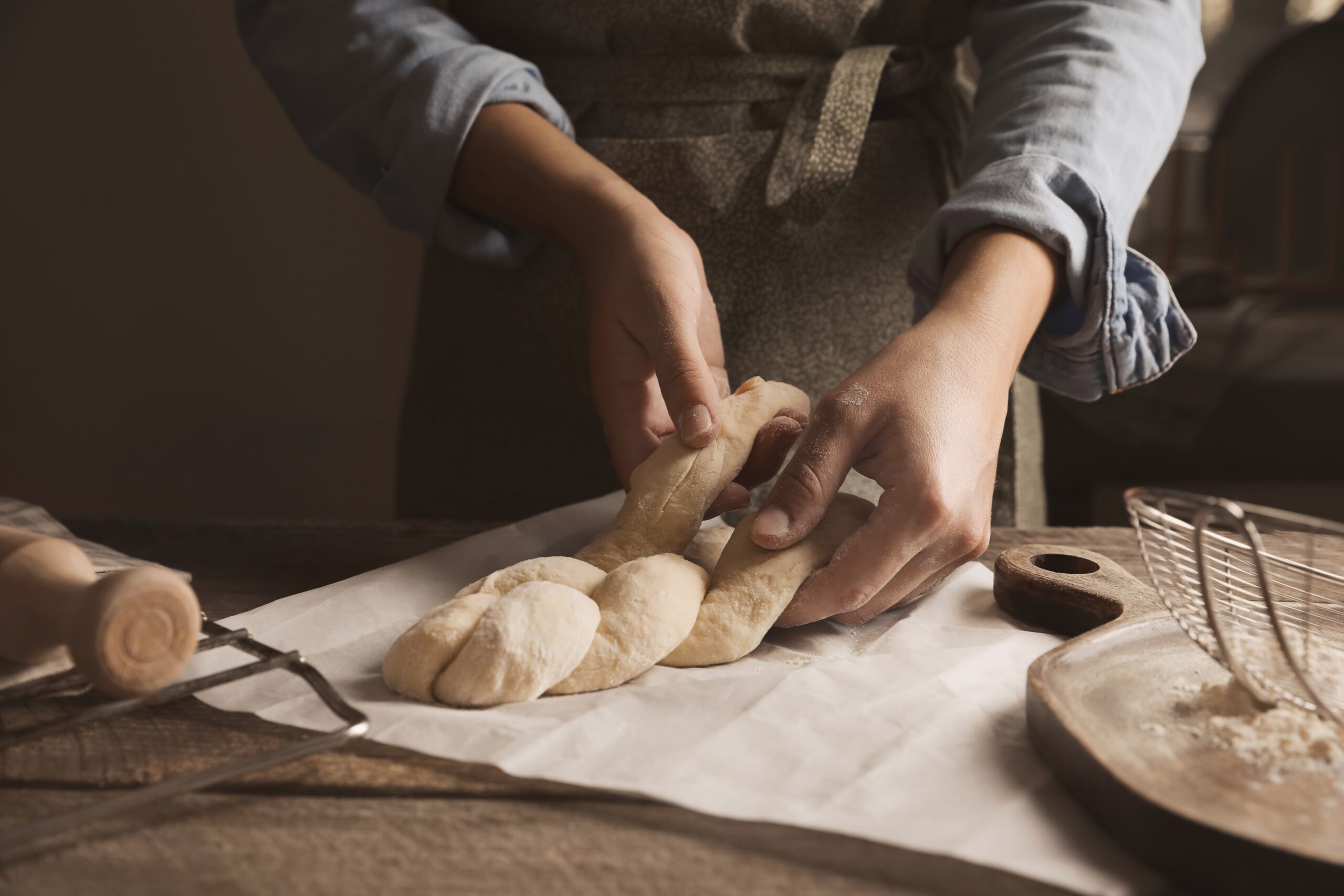
It is not a lecture. It is not a performance. It is a guided, hands-on encounter modeled after a Friday afternoon in a Jewish home. Participants step into a Shabbat-observant environment and experience the physical and emotional shift from weekday to holy day. Challah is braided by hand, with its symbolism explained clearly.
Conversation slows, distraction fades, and sacred time becomes real—just as it does on Shabbat.
The Israel365 Shabbat Experience is designed for Jews and Christians who want to understand what Shabbat is, why it exists, and why it has preserved the Jewish people for thousands of years. It exhibits how Shabbat builds strong families because it demands presence, how it builds faith because it removes distraction, and how it builds nations by teaching restraint.
The Torah portion associated with this experience, Parshat Terumah (Exodus 25:1–27:19), is the longest single passage in the book of Exodus devoted to a single subject: the Mishkan. Its length signals importance. The Mishkan was the first great project the Israelites undertook together, a physical space designed to house God’s presence.
The Israel365 Shabbat Experience draws that lesson inward.
NRB gathers voices trying to influence culture. Shabbat reminds participants that culture is shaped first in the home, at the table, one day a week.
Israel365 was founded to strengthen the bond between Israel and Bible-believing Christians by grounding that relationship in Scripture, truth, and shared responsibility. Based in Israel, Israel365 works daily to bring authentic Jewish voices to a Christian audience seeking depth, not slogans. The mission has always been clear: connect Christians to the land, the people, and the Bible of Israel without dilution or apology.
The Shabbat Experience is the clearest expression of that mission because it is lived, not explained.
For a short but meaningful window of time, participants slow down, listen, and encounter the rhythm God embedded into creation itself.
For those who wish to go further, Israel365 is also hosting a full, 25-hour Shabbat gathering immediately after NRB concludes.
This separate event—the Fourth Annual Israel365 Shabbat: Jews & Christians United for Israel—offers the opportunity to fully live Shabbat from candle lighting through Havdalah in a traditional, communal setting.
Shabbat restores faith. It rebuilds families. It strengthens nations. See that all—and more—for yourself at the Israel365 Shabbat Experience. Sign up here.