




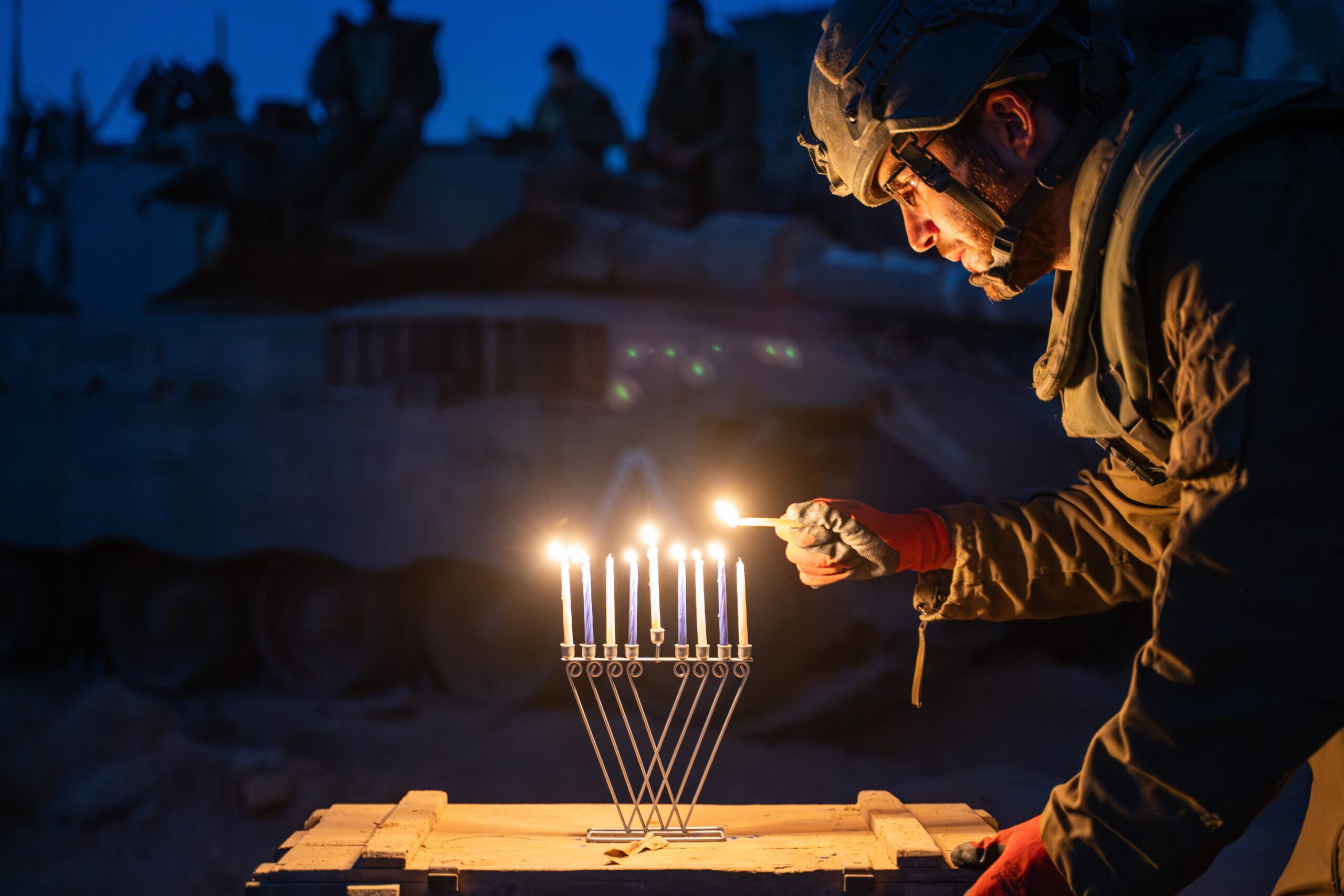
Chanukah is often described as a holiday of light. That is true, but it misses the heart of the story.
Chanukah is about refusal. Refusal to disappear. Refusal to trade meaning for comfort. Refusal to accept a world that insists faith stay private and values stay quiet.
That’s why Chanukah feels different this year.
Since October 7, something has shifted. Not only in Israel, but across the world. Conversations that once felt theoretical now feel urgent. Moral questions that people avoided now demand answers. And many who once felt distant from Israel now find themselves paying closer attention, even when they did not plan to.
This shift is not accidental.
For most of modern history, Zionism was treated as a Jewish issue. A political necessity. A response to danger. Important, but limited.
Chanukah reminds us that the Jewish story has never been limited.
When the Maccabees confronted Greek power, they were not fighting only for survival. They were defending the right to live by their values in public. They rejected a culture that promised acceptance in exchange for surrender.
That same tension exists today.
Israel is not only defending its borders. It is defending an idea. The idea that moral clarity still matters. That truth is not endlessly flexible. That a people shaped by covenant cannot quietly blend into the background of history.
This is where Universal Zionism enters the conversation. Universal Zionism is the belief that Israel’s return to history carries meaning not only for Jews, but for the moral direction of the world. It holds that Zionism has entered a new stage, one in which Israel’s story resonates far beyond its borders and invites others to engage with it as a moral reference point, not just a national one.
Universal Zionism does not dilute Jewish identity. It depends on it. Just as Chanukah celebrates resistance rather than assimilation, Universal Zionism insists that Israel’s strength comes from staying rooted in its purpose. At the same time, it recognizes that Israel’s story now speaks to people who do not share Jewish identity but recognize its significance.
The menorah was never meant to be hidden. It burned in public, announcing that faith and values belong in the open. Though differently, Israel stands publicly today as well. Watched. Judged. Defended. Condemned.
People are not only reacting to what Israel does. They are reacting to what Israel represents.
Many sense that this moment is about more than geopolitics. It is about whether civilization still believes in moral boundaries. Whether violence can be excused. Whether truth can be bent without cost.
Chanukah teaches that small acts of courage can change history. One stand. One refusal. One light that keeps burning.
That idea sits at the center of Rabbi Tuly Weiz’s new book, Universal Zionism: The Movement Powering Today’s Jewish-Christian Alliance. He wrote it to make sense of this moment, to trace how Zionism reached this stage, and to explain why Israel’s role now carries meaning far beyond its borders.
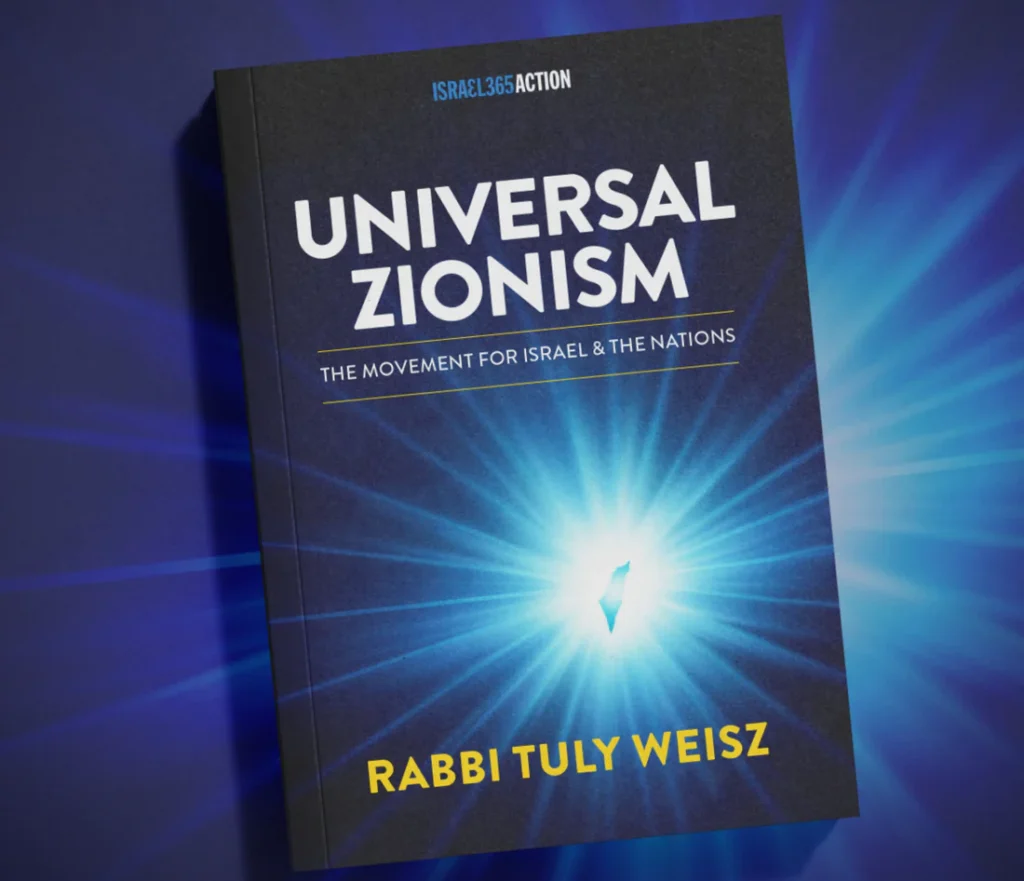
This book does not offer catchy slogans or “fluffy” ideas. It offers clarity, explores how we arrived here, and why this moment demands more honesty, more courage, and fewer illusions.
Chanukah reminds us that light does not eliminate darkness. It challenges it.
If this year has left you asking harder questions about Israel, about history, and about where all of this is heading, those questions deserve to be taken seriously. Chanukah reminds us that clarity does not arrive easily, but only when people refuse to look away.
Universal Zionism: The Movement Powering Today’s Jewish-Christian Alliance steps into that space and helps explain why this moment matters and why choosing clarity is never a small act.

