
The well where Jacob met Rachel has been restored for visitors, though Israel’s security services still warn Israelis against travel to Turkey
Turkey’s Tourism Ministry and the municipality of Haran have renovated Jacob’s Well in Haran, in southeastern Turkey, where locals call it “Yakup Kuyusu.” The authorities invited travel writers from around the world to the reopening. According to tradition, this is the well where the patriarch Jacob first saw Rachel and wept.
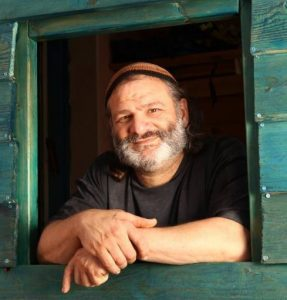
Jacob Maor, creator of the JewishTraveler blog, reported on the reopening for the Jerusalem Post. He found a site that looks much as the Bible describes it. Shepherds still water their flocks there, as the Torah describes.
What visitors will find
A stone structure has been built over and around the well to preserve the original. Most of it is below ground, with only about half a meter of the upper walls and roof visible. An opening in the roof, covered with iron bars, sits directly above the well, and a flight of stone steps descends from the roof to the water. The well and the structure stand inside a public garden. Around the old well are other ground-level wells with round stones covering their openings.
The round stones echo the scene in Genesis, where a great stone covered the mouth of the well and the shepherds waited until every flock had gathered before rolling it away. A stone at the Abraham Monastery in Haran is considered by many to be the original stone that covered Jacob’s Well.
Maor’s advice to visitors is simple. “I recommend bringing a Bible or Chumash, and reading the relevant verses aloud beside the well.”
A Jewish matchmaking tradition
For generations, the well was more than a biblical landmark for the Jews of the region. For centuries, Jews from Urfa, Izmir, Constantinople and northern Iraq gathered at the well for family picnics on Tu B’Av (the 15th of Av), the Jewish holiday of love. Young people met there, and their mothers arranged potential matches.
The custom has rabbinic roots. More than two centuries ago, Rabbi Chaim Palaggi, chief rabbi of Izmir, wrote a responsum about a father who took his daughters to drink from the well, seeking a segula (spiritual remedy) to help them find husbands. The well appears to have served as a place of prayer for those waiting for a match, much as the tomb of Rabbi Yonatan ben Uziel in Amuka, near Safed, does today.
The custom faded as Haran’s Jewish families made aliyah (immigration to Israel). Rabbi Mendy Chitrik, the Chabad emissary in Istanbul, has tried to revive it.
Sacred to Muslims as well
The well has survived partly because Muslims also consider it sacred, and local people value its water for healing. Locals also call it “the well that heals illnesses.” The mayor of Haran, Mahmut Özyavuz, told Maor that he once poured the well’s water over a sick child who was later healed, and offered the writer a cup to drink.
Open to the world, closed to Israelis
The renovated well is welcoming visitors from around the world, but Israelis will have a hard time joining them. In September, Israel’s Counter-Terror Bureau warned of a “tangible threat” to the safety of Israelis in Turkey. The National Security Council and the security establishment reiterated that Turkey “currently has a high level of risk for Israelis,” and advised Israeli citizens to refrain from nonessential travel there.
Maor himself ended on a hopeful note. “If relations between Israel and Turkey warm again, Israelis may once more come to relax in Antalya,” he wrote.
Haran: where the Jewish story keeps returning
Haran appears in the Bible long before Jacob arrives. Abraham’s journey to the Land of Israel began there. Terah took his son Abram from Ur of the Chaldees toward Canaan, but the family stopped in Haran and settled. God’s call came to Abram there, and he left Haran for the land God would show him (Genesis 12:4).
Two generations later, Abraham’s servant Eliezer went back to the same region to find a wife for Isaac. He stopped at a well outside the city of Nahor and prayed for a sign, and Rebecca came out with her water jar. The Bible tells the story of the next generation at a well as well.
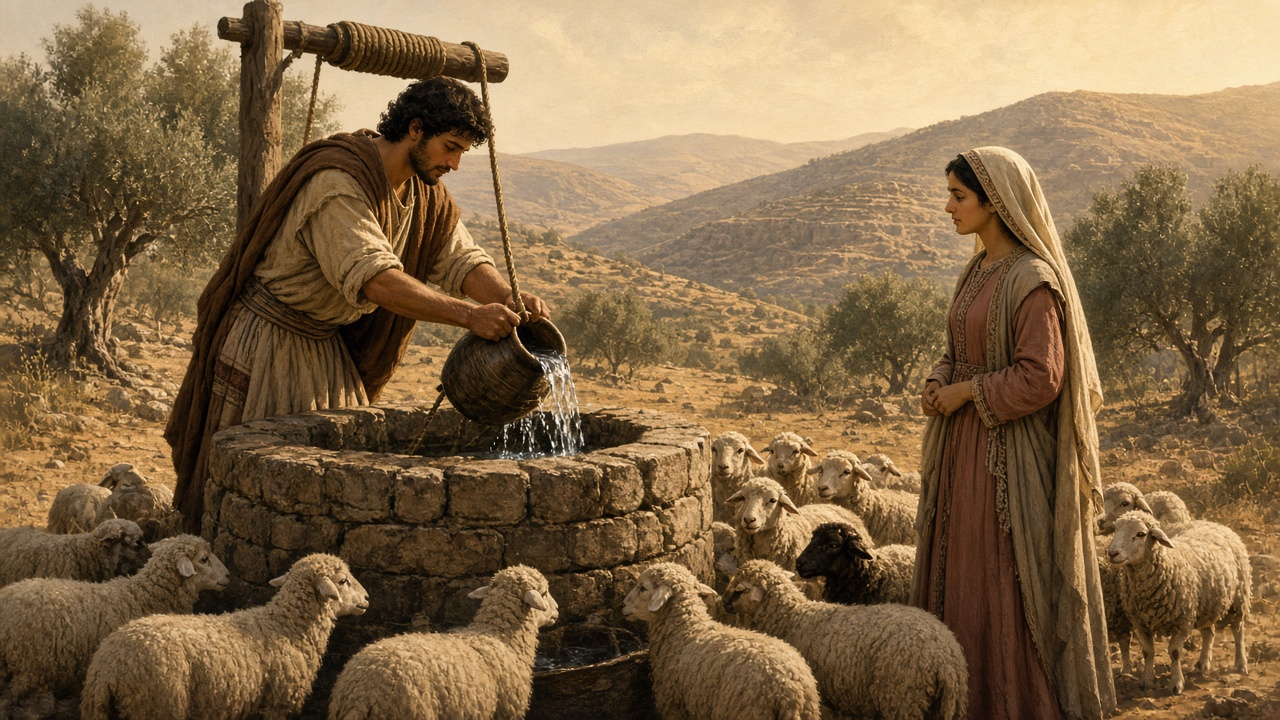
Jacob reached Haran as a fugitive. He had taken his father’s blessing, and Esau had sworn to kill him. His mother Rebecca sent him to her brother Laban in Haran, and on the way he slept at Beit El and dreamed of the ladder. When he arrived, he found the shepherds gathered around a covered well:
“And it came to pass, when Jacob saw Rachel the daughter of Laban his mother’s brother, and the sheep of Laban his mother’s brother, that Jacob went near, and rolled the stone from the well’s mouth, and watered the flock of Laban his mother’s brother.” (Genesis 29:10)
The stone that needed every shepherd in the field to move, Jacob moved alone. Rashi explains that he rolled it away k’ma’avir et hapekak mei’al pi tzlochit, like a man pulling a cork from the mouth of a bottle, to show how great his strength was (Rashi on Genesis 29:10).
Then Jacob kissed Rachel and wept. The Sages asked why the joy of that meeting ended in tears. Rashi gives two answers. Eliezer had come to the same region with ten camels laden with gifts, and Jacob came with nothing. Esau’s son Eliphaz had chased him on Esau’s orders and taken everything he carried. In his second answer, Rashi says Jacob saw by ruach hakodesh (divine inspiration) that Rachel would not be buried beside him (Rashi on Genesis 29:11).
Both came true. Jacob worked for twenty years in Haran, cheated over and over by Laban. Rachel died on the road to Bethlehem and was buried there, alone, while Jacob was laid to rest in the Cave of the Patriarchs in Hebron beside Leah.
The Bible places the well only “in the field” outside Haran, where the shepherds said they came from. The site in the Turkish garden rests on local tradition.
Two wells, both out of reach
Most Christians know a different “Jacob’s Well,” and it stands at the other end of Jacob’s journey. That well, known in Arabic as Bir Ya’qub, is a deep well hewn from solid rock, a short distance from Tel Balata, believed to be the site of biblical Shechem. Jewish, Samaritan, Christian and Muslim traditions all associate it with Jacob. The Bible ties Jacob to that spot when he comes home from Haran:
“And Jacob came in peace to the city of Shechem, which is in the land of Canaan, when he came from Paddan-aram; and encamped before the city.” (Genesis 33:18)
The Hebrew word for “in peace” is shalem (whole). Rashi explains that Jacob arrived whole in body, whole in his wealth and whole in his Torah (Rashi on Genesis 33:18). The man who reached the well in Haran with empty hands came back to the Land of Israel complete. At Shechem, he bought a field from the sons of Hamor and built an altar he named El-Elohei-Yisrael (God, the God of Israel). It was the first piece of the Land of Israel that Jacob owned. Generations later, the Israelites buried Joseph’s bones in that same field (Joshua 24:32).
Christians revere the Shechem well as the place where, according to the Gospel of John, Jesus spoke with a Samaritan woman. A cruciform church built around 380 CE was the first of a succession of churches erected over the well, and one of them appears on the sixth-century Madaba mosaic map. The Greek Orthodox Church acquired the property in 1860. Construction of a new church was halted by the 1917 Russian Revolution, which cut off Russian funding, and by an earthquake in 1927. The present church, completed in 2007, is modeled on a basilica from the Crusader era.
Jacob’s descendants cannot safely reach either well. The Haran well lies in a country Israel’s security services rank as high-risk for Israelis. The Shechem well lies in Area A, under full Palestinian Authority control, and Israeli civilians are barred from entering. Jews reach nearby Joseph’s Tomb only on nighttime visits under IDF escort. The well where Jacob’s exile began and the field where his return was sealed are both closed to his children.
The first exile and the first return
The Sages taught ma’aseh avot siman l’banim (what happened to the fathers is a sign for the children). Ramban applies the principle across the Book of Genesis, and Jacob’s years in Haran are its clearest example. Jacob left the Land of Israel empty-handed, fleeing an enemy. He lived in exile under a master who exploited him, and he built a family there. In the end, God ordered him home:
“And the LORD said unto Jacob: Return unto the land of thy fathers, and to thy kindred; and I will be with thee.” (Genesis 31:3)
Jacob came back with wives, children and flocks, and became the father of the twelve tribes. The pattern of the Jewish people was set at that well in Haran: exile, survival, growth among strangers, and return to the land.
Rachel, the woman Jacob met at the well, became the mother who weeps for that return. The prophet Jeremiah hears her crying from her lonely grave near Bethlehem as her children are carried into exile, and God answers her:
“Thus saith the LORD: Refrain thy voice from weeping, and thine eyes from tears; for thy work shall be rewarded, saith the LORD; and they shall come back from the land of the enemy. And there is hope for thy future, saith the LORD; and thy children shall return to their own border.” (Jeremiah 31:15–16)
Rachel’s children have come back to their own border. The Jews of Haran made aliyah and left the well behind. Today, Jacob’s descendants pray at Rachel’s Tomb on the road to Bethlehem, while the stones of Jacob’s Well wait in a Turkish garden for a time when his children can safely visit.
The story that began at the well in Haran ended in the Land of Israel. The Bible says that is where every Jewish exile ends.