
An Israel Antiquities Authority delegation toured eight heritage sites, from crumbling tombstones in Shamakhi to the Khan’s Palace in Sheki, as the two allies deepen ties.
Conservation experts from the Israel Antiquities Authority (IAA) spent five days this month examining Jewish cemeteries and ancient monuments across Azerbaijan, home to the Mountain Jews, who trace their ancestry to the Ten Tribes of Israel carried into exile by Assyria nearly 2,800 years ago. The delegation visited the country November 1-5 at the invitation of Azerbaijan’s State Tourism Agency, with the support of Israel’s Foreign Ministry, and examined crumbling tombstones in the old Jewish cemetery of Shamakhi and Jewish heritage sites in the Quba region.
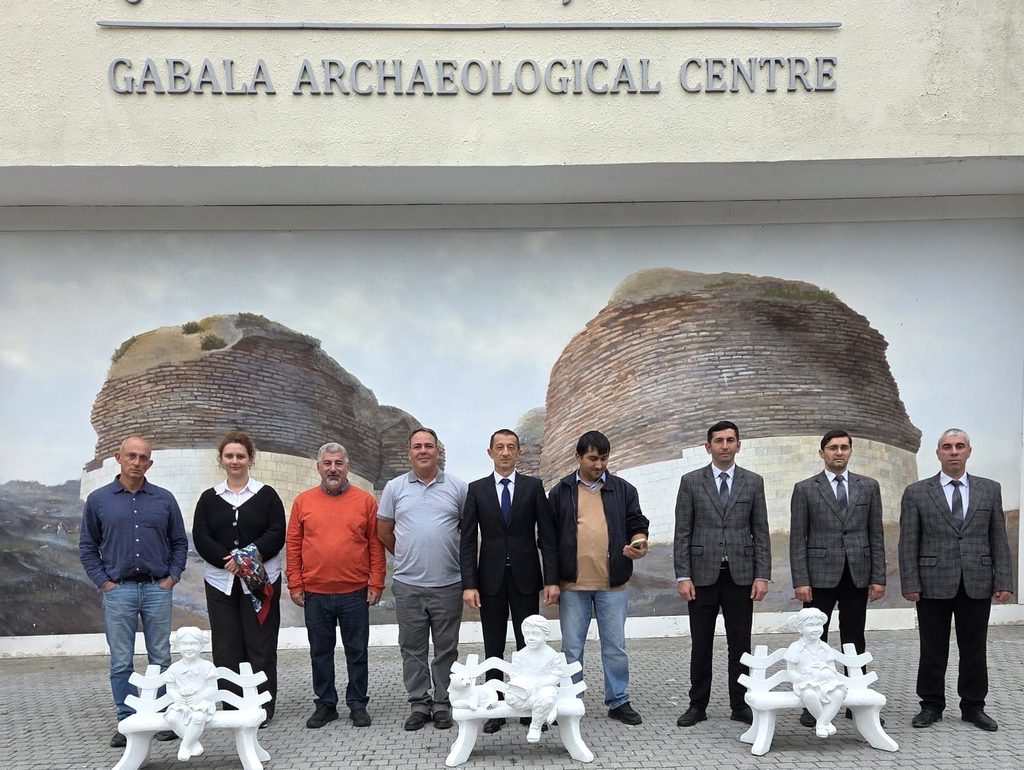
The team toured eight of Azerbaijan’s most significant archaeological and historical sites and discussed their condition, ongoing and planned conservation work, and ways to open them to the public. Some of the work has already been completed, some is underway, and more is planned, the IAA said.
The delegation was led by Attorney Ami Shahar, deputy director of the IAA’s Conservation Administration, together with Avi Mashiach, director of heritage conservation, and Mark Avrahami, head of specialty conservation.
“Israel is known worldwide for its innovation and high-tech. That same creative thinking we embed into heritage preservation,” Shahar said. “In a country that is the cradle of the culture of three religions, we have developed vast knowledge and experience, with innovative working methods and solutions for preserving ancient sites and artifacts. The cooperation with Azerbaijan, particularly right now in today’s complex global reality, is an important opportunity which allows us to strengthen friendly relations through joint professional work.”
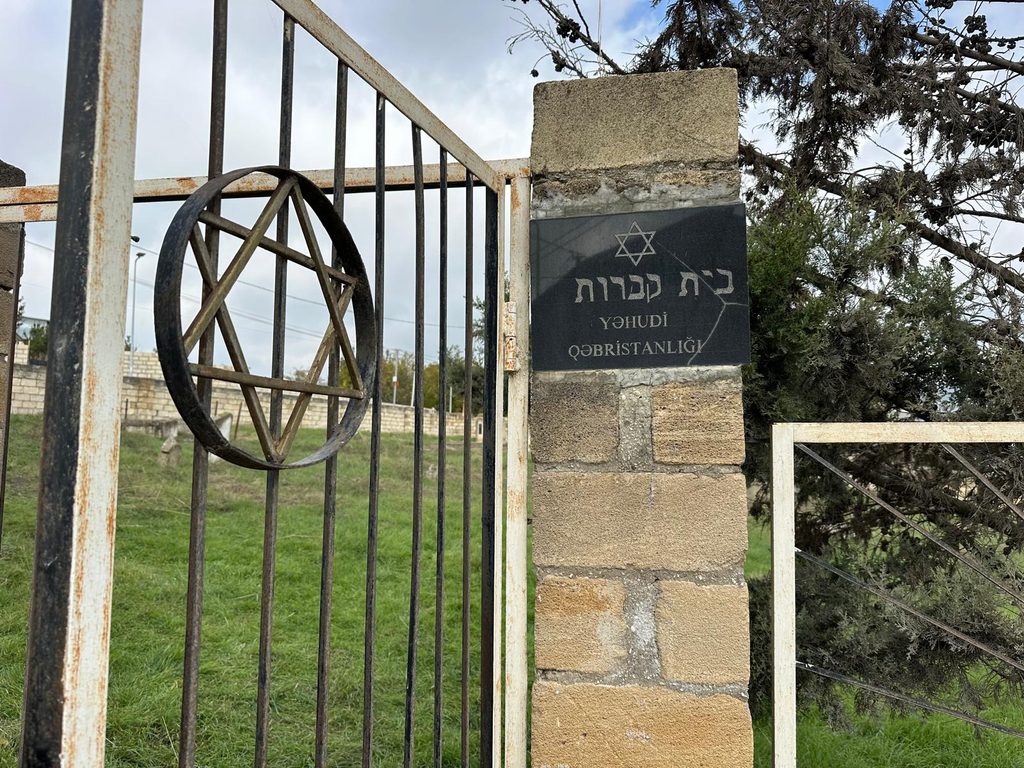
Tombstones under lichen
The Jewish sites drew particular attention. The experts examined the old Jewish cemetery in Shamakhi and discussed how to document and preserve it. They visited the village of Muju, once home to a Jewish community, and its cemetery, along with Jewish heritage sites in the Quba region.
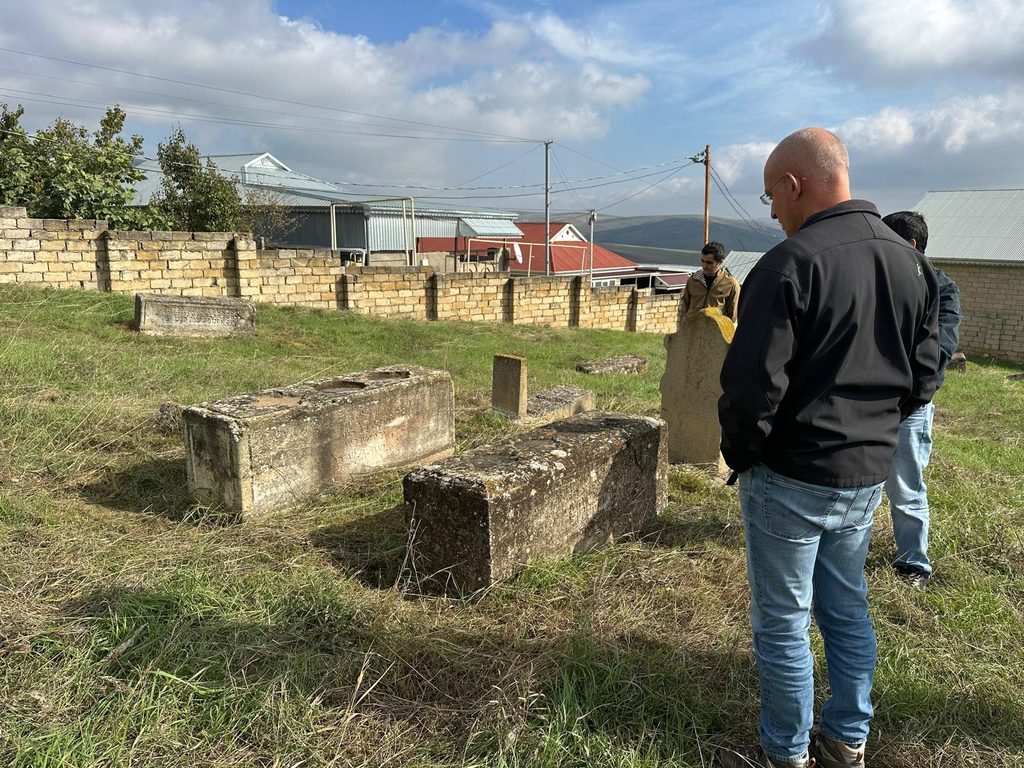
“In the Jewish cemetery in Shamakhi, where the tombstones hold important information about the life of that Jewish community, we identified tombstones whose stability had been compromised, as well as lichen covering the stone surface and inscriptions,” Shahar said. The two sides discussed documenting the sites with 3D models and training local conservation and planning teams.
“Preserving Jewish cultural heritage assets around the world, alongside strengthening international collaborations and the exchange of professional knowledge, is a central element of the Preservation Administration’s vision and goals,” he added.
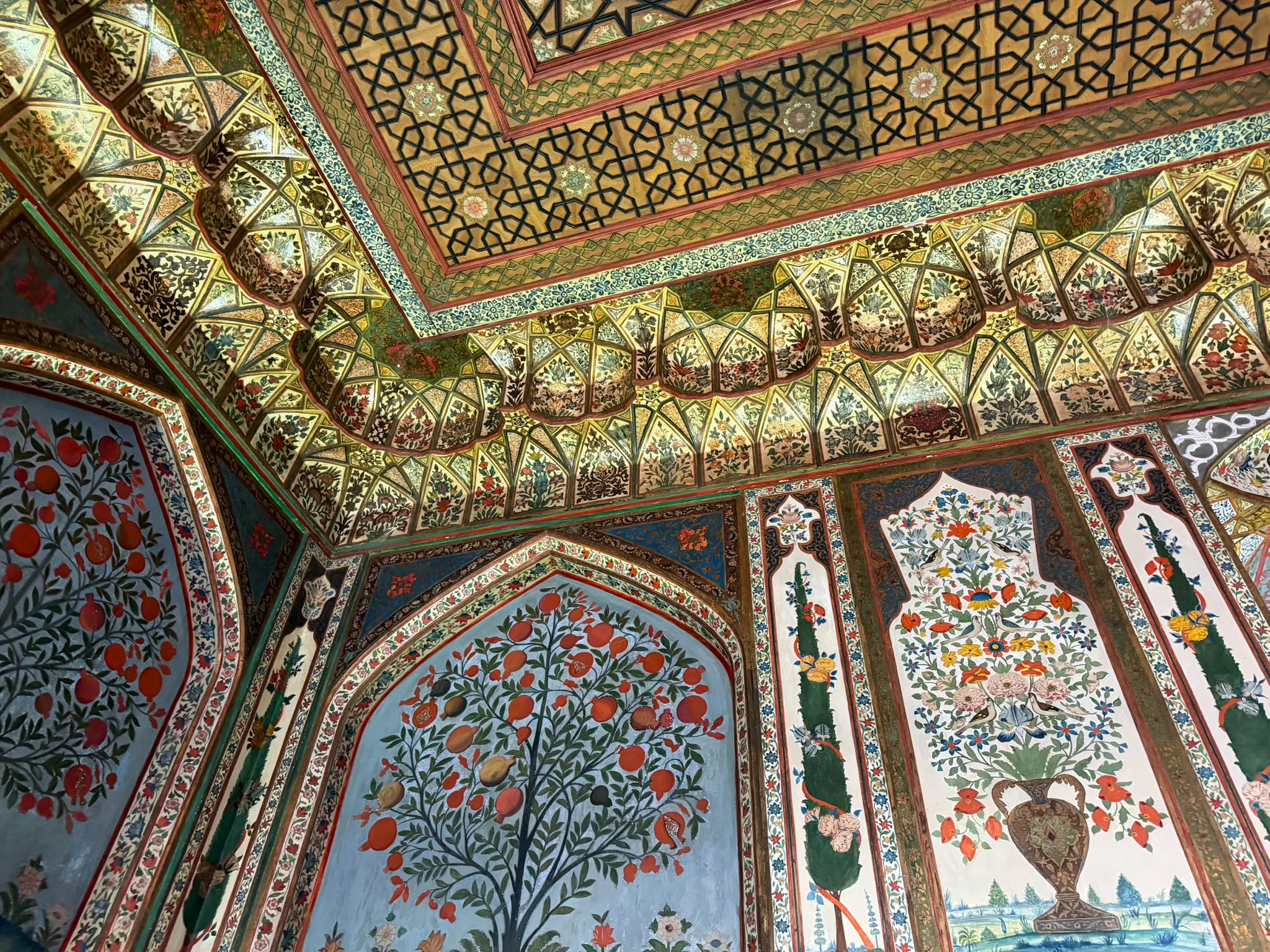
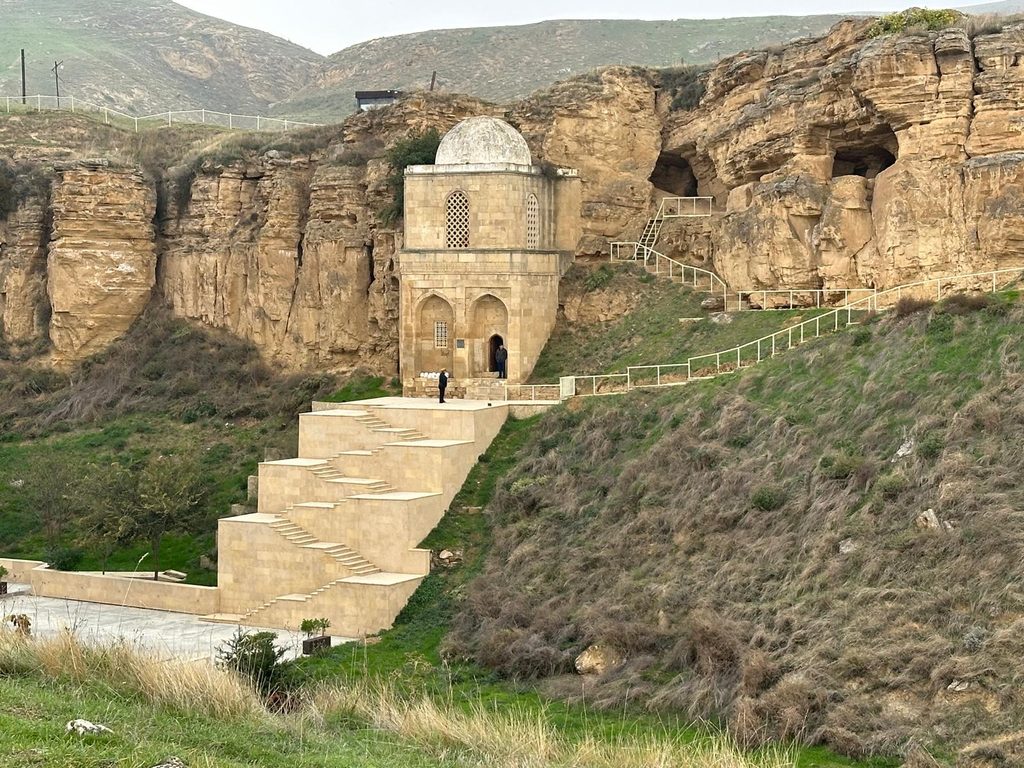
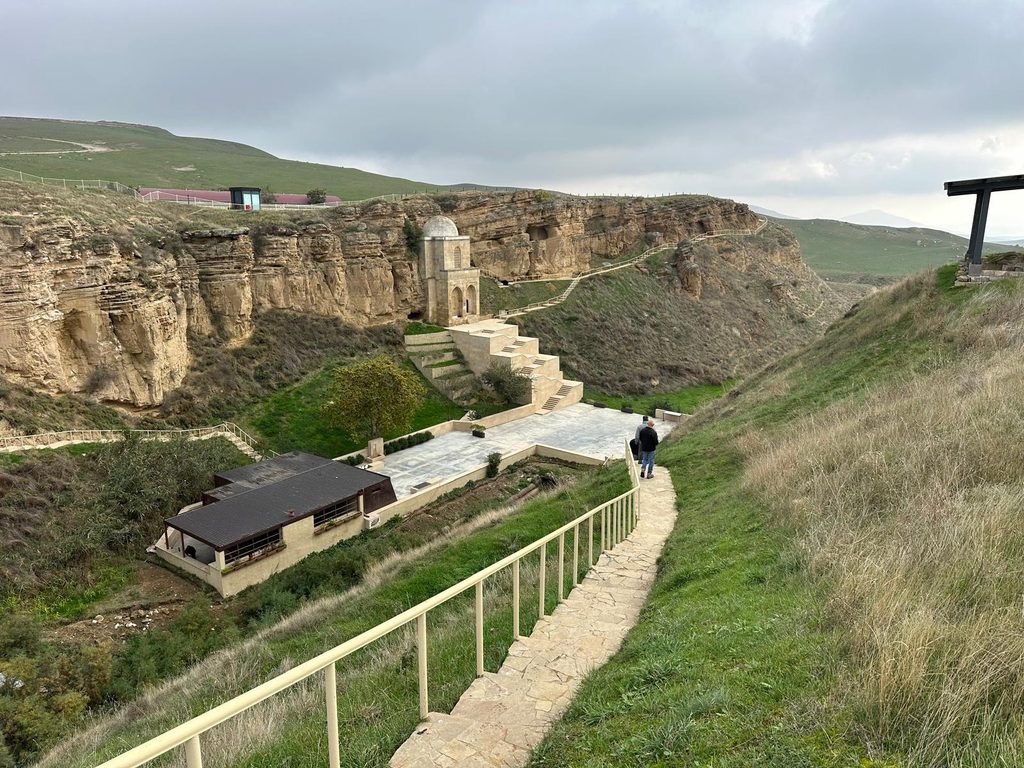
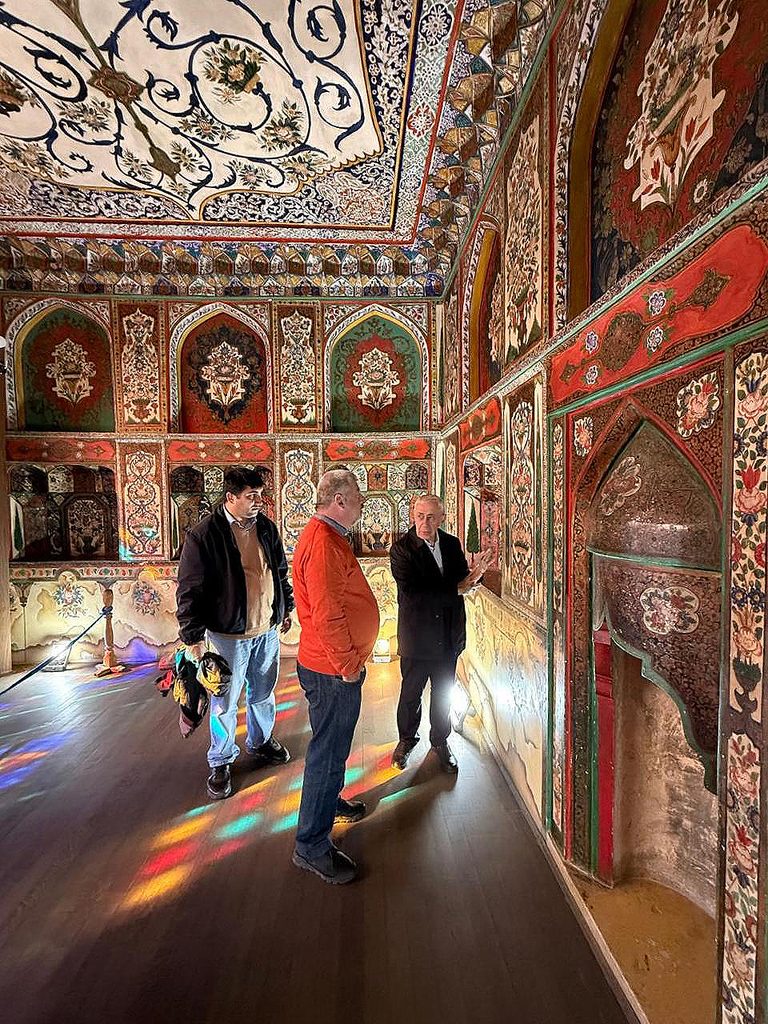
The tour also took in sites sacred to Azerbaijan’s Muslim majority and its pre-Islamic past: an ancient caravanserai, the remains of the medieval city of Shabran, Mount Beshbarmag, a traditional pilgrimage site, the Diri Baba Mausoleum, a Sufi burial structure from 1402, and the archaeological park of ancient Gabala, capital of Caucasian Albania for about 900 years. At the 18th-century Palace of the Shaki Khans, a UNESCO World Heritage Site famous for its murals and stained-glass shebeke windows, the experts examined the paint layers, the ceilings and the indoor climate, and discussed limiting visitor numbers to protect the murals.
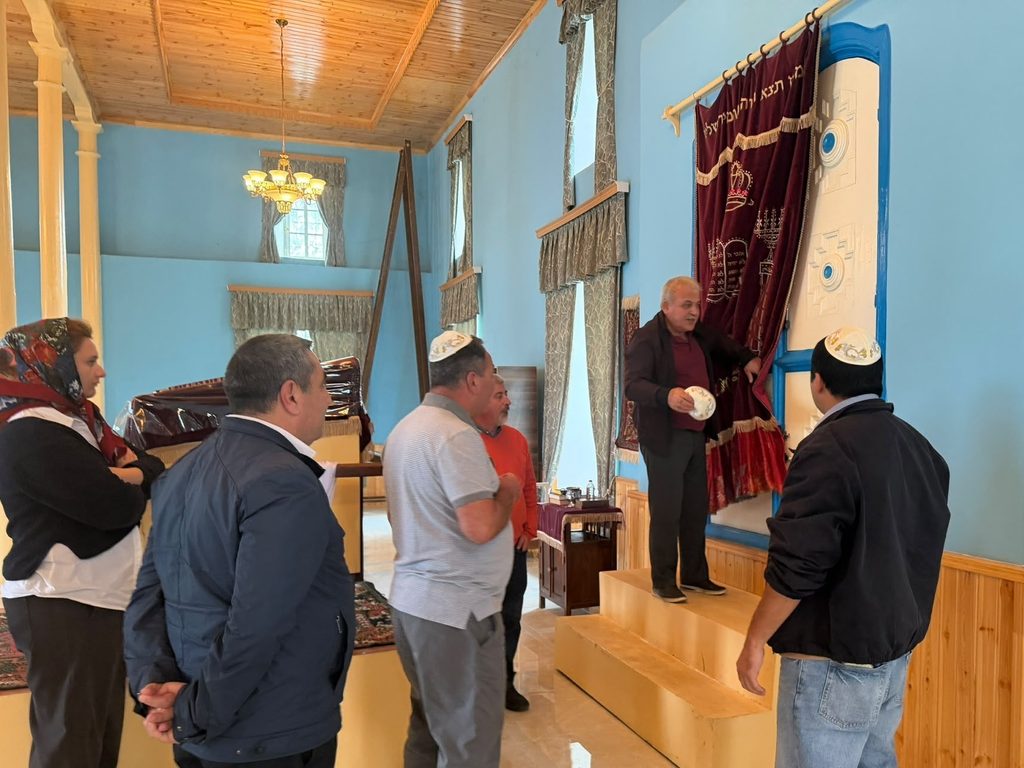
Heritage Minister Rabbi Amichai Eliyahu said the work is a Jewish obligation. “The preservation of cemeteries and Jewish heritage sites in Azerbaijan is part of our responsibility to preserve the story of Jewish communities and pass it on to future generations,” he said. “Especially these days, it is important to deepen friendly relations with Azerbaijan through joint efforts.”
The Mountain Jews and the Red Village
The Quba region the delegation visited is home to the Mountain Jews, known in their own language as Juhuro. They speak Judeo-Tat, a Persian-based Jewish language, and have kept their own tradition of Judaism, distinct from both Ashkenazim and Sephardim.
Across the Kudyal River from the city of Quba stands Qırmızı Qəsəbə, the Red Village, known in Russian as Krasnaya Sloboda. It is the only town outside Israel whose entire population is Jewish. Under the czars it was called simply the Jewish Village, and the Soviets renamed it for its red roofs and their politics. The Khan of Quba granted the Mountain Jews land and protection there in the 18th century. At its height, the village had about 18,000 residents and 13 synagogues. Today 3,000 to 4,000 Jews remain, two synagogues are active, and almost every family has children or grandchildren in Israel.
The Mountain Jews paid their own price in the Holocaust. When the Germans reached the North Caucasus in 1942, they murdered some 1,000 to 1,500 Mountain Jews, including 472 in a single day near the village of Bogdanovka.
Israel’s partner on Iran’s border
The heritage visit comes as the alliance between Jerusalem and Baku grows closer. Azerbaijan, a Shiite-majority country on Iran’s northern border, has long been Israel’s largest oil supplier, exporting some $1.4 billion a year to Israel by 2023, and Israeli arms have flowed the other way. Azerbaijan’s state oil company, SOCAR, has bought into Israel’s Tamar gas field and moved into every layer of Israel’s energy business.
Azerbaijani President Ilham Aliyev once compared the relationship to an iceberg, with nine-tenths of it below the surface, according to a leaked 2016 diplomatic cable. It has surfaced since the war. After Iran launched two drones at Azerbaijan’s Nakhchivan exclave on March 5, Aliyev warned that Iran “will face our iron fist.” Israel has explored bringing Azerbaijan into the Abraham Accords, following Kazakhstan’s decision to join.
The Muslim-majority country also stands out for how it treats its Jews. Azerbaijan’s First Lady Mehriban Aliyeva has held up the Red Village as a model of the country’s tolerance, and the IAA’s hosts described Jewish heritage as “an integral and inseparable part of Azerbaijan’s historical and cultural heritage.”
In the cities of the Medes
The Mountain Jews carry an oral tradition, passed down from generation to generation, that they descend from the Ten Tribes of Israel exiled by the king of Assyria. The Bible records where the Assyrians took them:
In the ninth year of Hoshea the king of Assyria took Samaria, and carried Israel away into Assyria, and placed them in Halah and in Habor by the river of Gozan, and in the cities of the Medes. (2 Kings 17:6)
The cities of the Medes lay in the mountains of what is today northwestern Iran. The name Azerbaijan itself comes from Atropatene, the ancient northern province of Media. According to Mountain Jewish tradition, their ancestors left the Land of Israel, passed through Syria, Babylonia and Persia, and then headed north into Media and the Caucasus.
Historians are divided. Some point to evidence of Jews in the region since 457 BCE, while others point to the Persian roots of Judeo-Tat and trace the community to later migrations from Persia. The tradition of descent from the exiled tribes remains central to how the Mountain Jews understand themselves.
The Sages debated whether the Ten Tribes would ever come home. In the Talmud (Sanhedrin 110b), Rabbi Akiva held that they would not return, while Rabbi Eliezer taught that they would. The prophet Isaiah described their return in the end of days:
And it shall come to pass in that day, that the great trumpet shall be blown, and they shall come which were ready to perish in the land of Assyria, and the outcasts in the land of Egypt, and shall worship the LORD in the holy mount at Jerusalem. (Isaiah 27:13)
Many of the Mountain Jews have already come home. Almost every family in the Red Village has children or grandchildren in Israel.
Guarding the graves
The tombstones of Shamakhi, covered in lichen and leaning out of place, are the record of a Jewish community that lived far from the Land of Israel for generations. Shahar noted that their inscriptions “hold important information about the life of that Jewish community.” Israeli experts are now working to read them, model them in 3D and keep them standing.
The prophet Ezekiel promised the scattered tribes that even their graves would not hold them in exile:
Therefore prophesy and say unto them, Thus saith the Lord GOD; Behold, O my people, I will open your graves, and cause you to come up out of your graves, and bring you into the land of Israel. (Ezekiel 37:12)
The living Mountain Jews have been coming home to Israel for decades. Now the Jewish state is sending its experts back to the mountains of the Caucasus to protect the graves of those who stayed.