The Tourism Ministry sent Jerusalem’s Santa Claus through caves and battlefields where Judah Maccabee’s family fought for Jewish freedom, along the ancient route to Jerusalem.
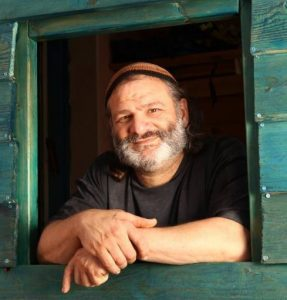
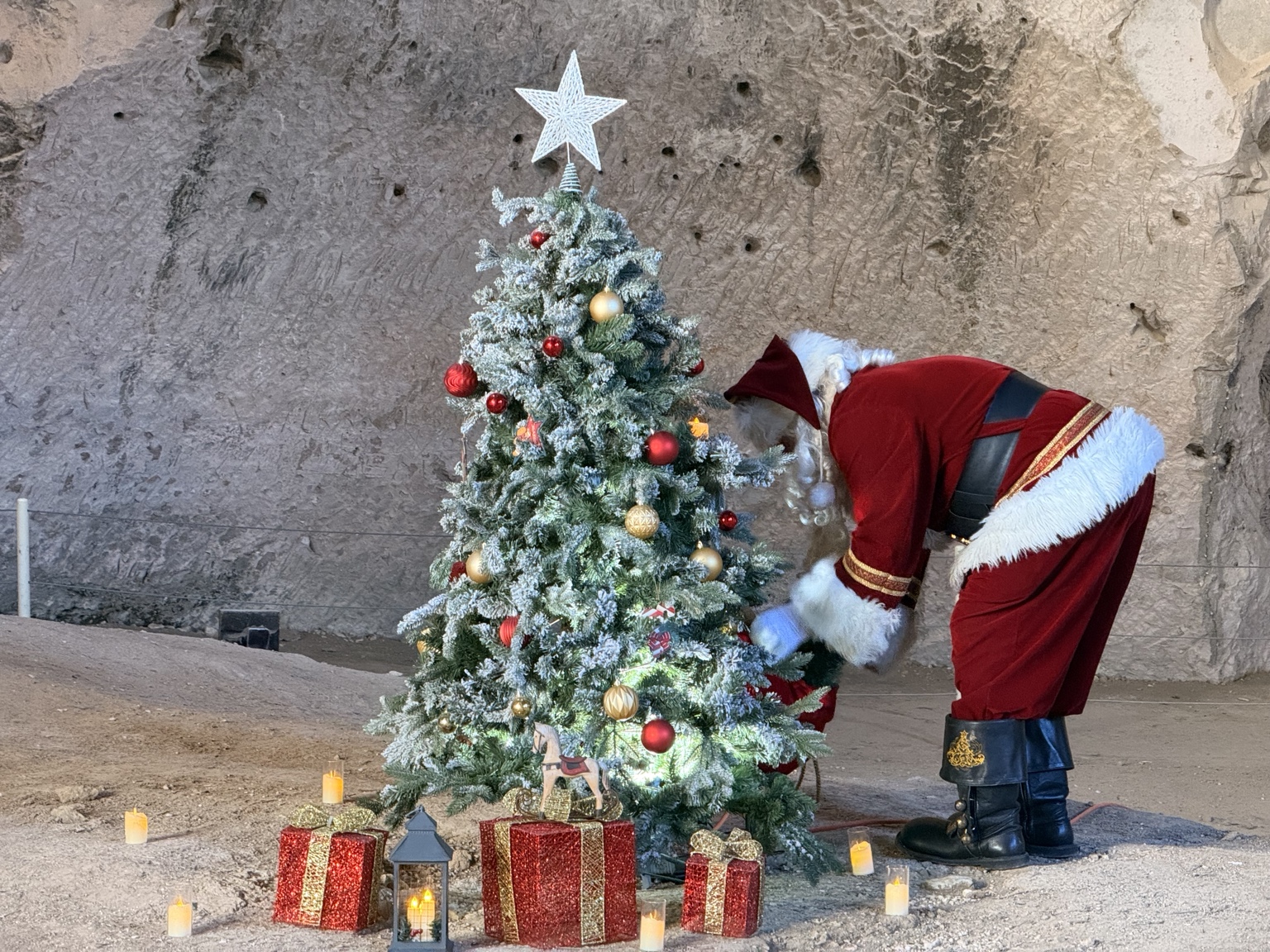
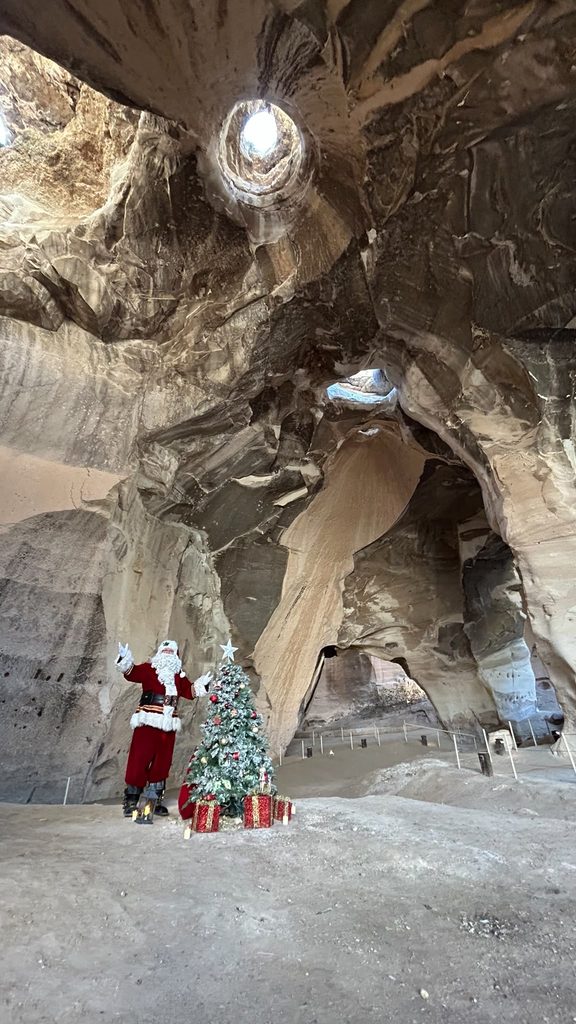
A Christmas tree glowed inside an ancient cave on Monday, surrounded by artificial snow and strings of lights, a short drive from the spot where Judah Maccabee’s family took the city of Maresha more than 2,100 years ago. Issa Anis Kassissieh, known around the world as Jerusalem’s Santa Claus, posed among the carved stone chambers of the Bell Caves at Beit Guvrin as cameras rolled for Israel’s Ministry of Tourism.
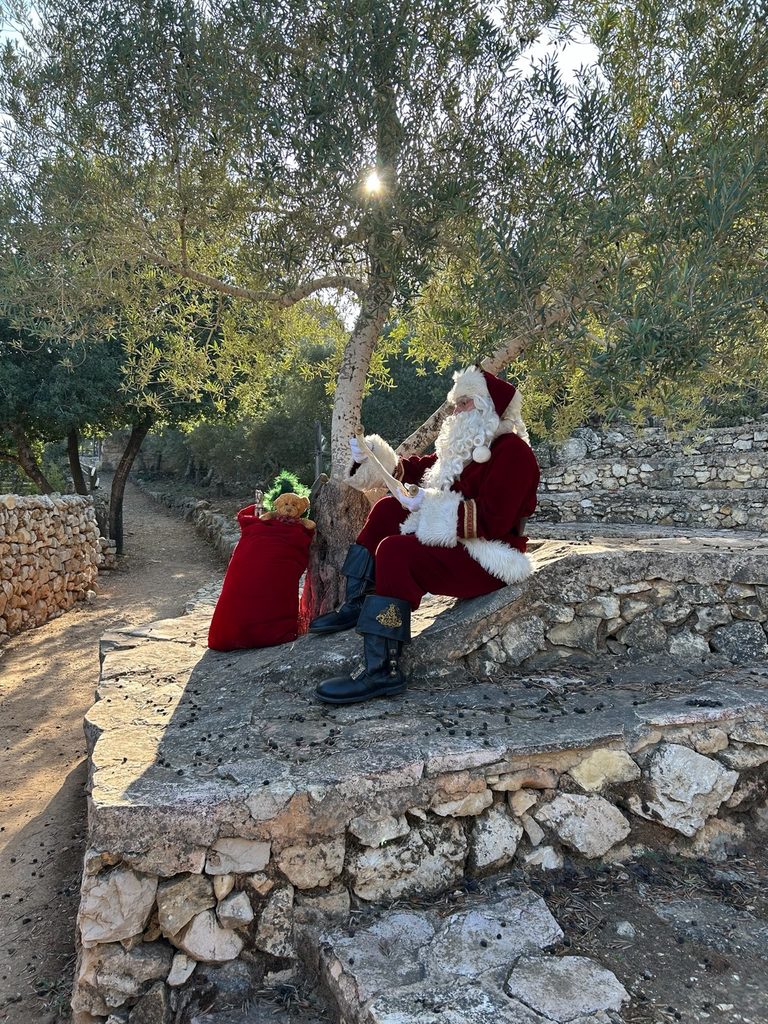
The Nov. 23 tour, organized with the Mateh Yehuda Regional Council’s tourism department, took Santa through the Judean foothills along the historic road from Yafo to Jerusalem. He started at the biblical garden of Yad Hashmona, continued to the Bell Caves, met children at the Jewish-Arab village of Neve Shalom, and lit candles beside a Christmas tree at the Latrun Monastery and Winery. The ministry says the photos and videos will be used to present Israel to the world.
“Israel is home to sacred Christian sites, a rich history, breathtaking landscapes, and diverse communities,” said Michael Izhakov, Director-General of the Ministry of Tourism. “Through Jerusalem’s Santa Claus tour, we hope to share all of those with the world, extend our Christmas greetings and a message of hope, and invite visitors from around the globe to come, meet the people, and experience for themselves all that Israel has to offer.”
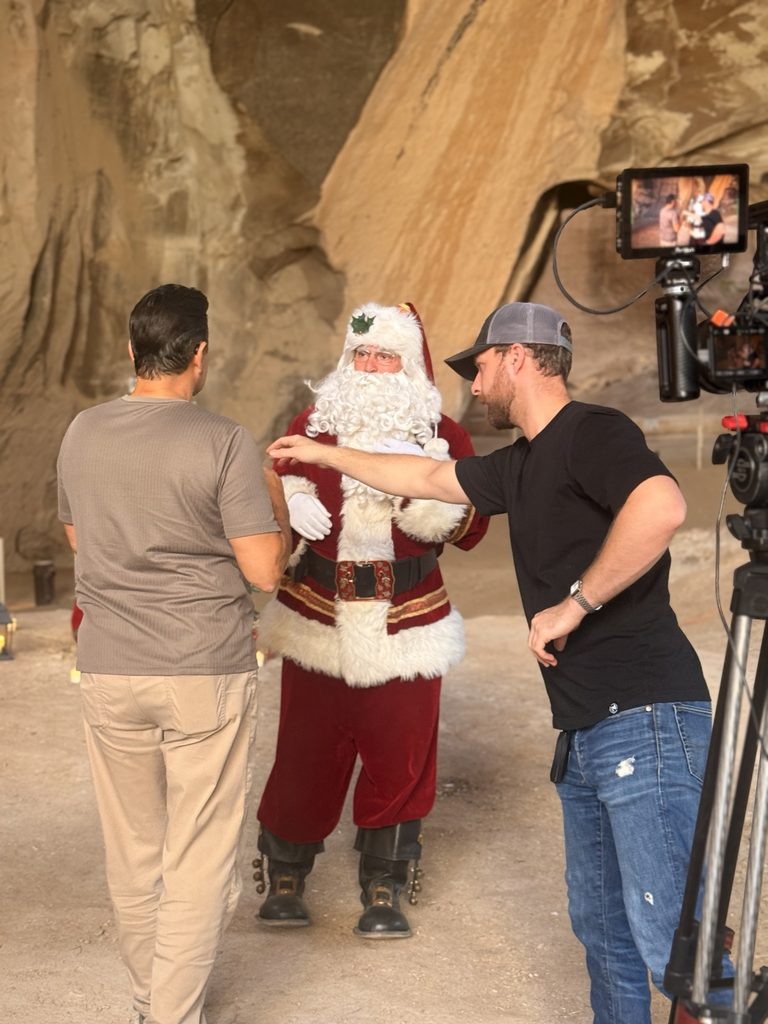
The ministry’s press release presents the route as a story of “the history, faiths and communities along the routes leading to Jerusalem.” The deeper story is older. Two of Santa’s stops were battlegrounds of the Hasmonean family, whose victory Jews will celebrate on Hanukkah, the Festival of Lights, beginning at sundown on Dec. 4.
Maresha: a city of Judah
The Bell Caves belong to the Beit Guvrin-Maresha complex, a UNESCO World Heritage site in what the ministry calls the “Land of a Thousand Caves.” Before it was a tourist park, Maresha was a city of the tribe of Judah. The Bible lists it among the towns of Judah’s inheritance, and King Rehoboam, son of Solomon, fortified it to guard the approach to Jerusalem.
And Rehoboam dwelt in Jerusalem, and built cities for defense in Judah. (2 Chronicles 11:5)
The following verses name Maresha among the fortress cities. Centuries later, Edomites settled in the region, and Maresha became a Hellenized city. The Hasmonean king John Hyrcanus, nephew of Judah Maccabee, conquered it at the end of the second century BCE, as the historian Josephus records. The Maccabees’ fight for Jewish independence, which began with the rededication of the Temple, reached this hill country under his rule.
Latrun: where Judah Maccabee fought at Emmaus
The Latrun Monastery and Winery, Santa’s final stop before returning to Yad Hashmona, stands beside ancient Emmaus. The First Book of Maccabees describes how Judah Maccabee’s outnumbered fighters camped near Emmaus and launched a night attack that routed the Greek general Gorgias. That victory cleared the way to Jerusalem and to the purification of the Temple that Hanukkah commemorates.
Christian tradition also identifies the area with Emmaus. Trappist monks have lived at Latrun since 1890 and are known for their wine, a fitting product for the Judean Hills, which the ministry notes is Israel’s first officially recognized wine appellation.
The Tourism Ministry called the route a story of history and faith. For Jews, it is the road the Maccabees walked to take back the Temple.
A Finnish atonement and a shared village
Santa’s tour opened and closed at Yad Hashmona, whose name means “Memorial to the Eight.” Finnish Christians founded the community in 1971 to honor eight Jewish refugees who had fled Austria to Finland in 1938. In November 1942, Finland handed them to the Gestapo. Seven were murdered in Auschwitz, and the lone survivor later made aliyah, immigrating to Israel. Finnish Prime Minister Paavo Lipponen issued an official apology in 2000.
“The first purpose of Yad Hashmona is to atone for the sins of the Finnish people against the Jewish nation,” Ayelet Ronen, the community’s general secretary, told the Jerusalem Post. Its biblical garden, where Santa began, recreates the agricultural life described in the Bible.
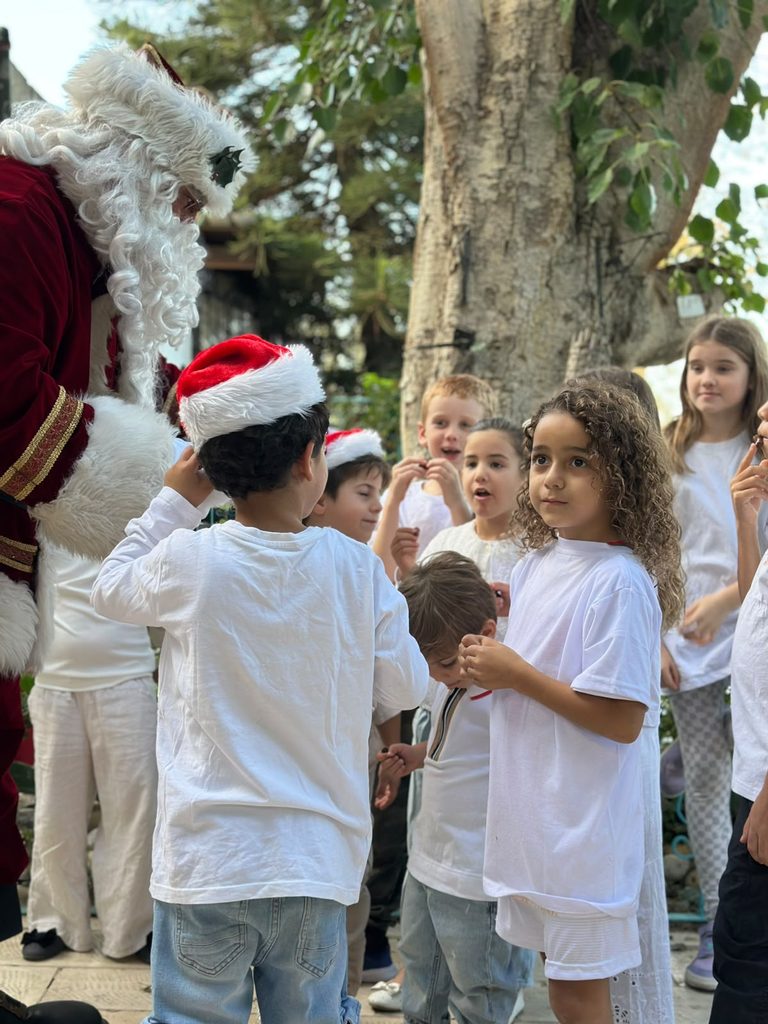
From the caves, Santa traveled to Neve Shalom, a village where Jewish and Arab families live side by side and send their children to a bilingual school. Father Bruno Hussar, a Dominican priest born to a Jewish family in Egypt, founded it in the 1970s. The press release says Santa “brought smiles and excitement as he met with local children, shared Christmas greetings, and spread a message of love, unity, and peace.”
Christmas trees from the Jewish National Fund
The Santa tour is the newest chapter in a long Israeli tradition of welcoming Christmas. For decades, Keren Kayemeth LeIsrael-Jewish National Fund (KKL-JNF), the organization founded to redeem the Land of Israel for the Jewish people, has grown Christmas trees in its own forests. Its foresters cultivate Arizona cedars at Givat Yeshayahu and in northern forests until they reach about two meters. The trees go free to churches, monasteries, convents, embassies and foreign journalists, and members of the public can take one home for a token fee of 80 shekels.
“We planted these tree plots years ago, in order to meet the demand during Christmas time,” Elisha Mizrachi of KKL-JNF’s public relations department said in 2017. “It is part of our vision of shared life for Christians, Muslims and Jews in Israel.”
The war against Hamas interrupted the tradition for two years. Last December, KKL-JNF brought it back, delivering 110 trees to 34 diplomatic missions, from the U.S. Embassy to the Russian Embassy. Christmas trees were also handed out at the New Gate of Jerusalem’s Old City on Dec. 18, 2025.
A growing Christian community
Israel’s Christians are growing in number. On the eve of Christmas 2025, Israel’s Central Bureau of Statistics counted about 184,200 Christians, 1.9% of the population, after 0.7% growth during 2024. About 78.7% are Arab Christians.
Bethlehem went dark
Bethlehem, under Palestinian Authority control, chose otherwise. After Hamas terrorists invaded Israel on Oct. 7, 2023, church leaders in Bethlehem canceled the city’s public Christmas celebrations in 2023 and again in 2024, in what Al Jazeera described as solidarity with Gaza. The tree in Manger Square returned only last Christmas, after a ceasefire brokered by the Trump administration.
In Israel, the trees kept growing. KKL-JNF’s two-year pause was the war’s doing, and the forests stayed ready for the day the tradition returned.
A house of prayer for all peoples
The Maccabees fought so that Jews could serve God freely in His Temple. The prophet Isaiah saw that same Temple as a gathering place for every nation that seeks the God of Israel:
Even them will I bring to my holy mountain, and make them joyful in my house of prayer: their burnt offerings and their sacrifices shall be accepted upon mine altar; for mine house shall be called an house of prayer for all people. (Isaiah 56:7)
This December, the menorah’s lights and the Christmas trees will shine along the same road to Jerusalem. Jews will kindle the Hanukkah lights for the victory won at Emmaus and Maresha. Christians will celebrate in a Jewish state that grows their trees, counts a growing Christian community, and sent Santa down the Maccabees’ road to invite the world to come and see.