


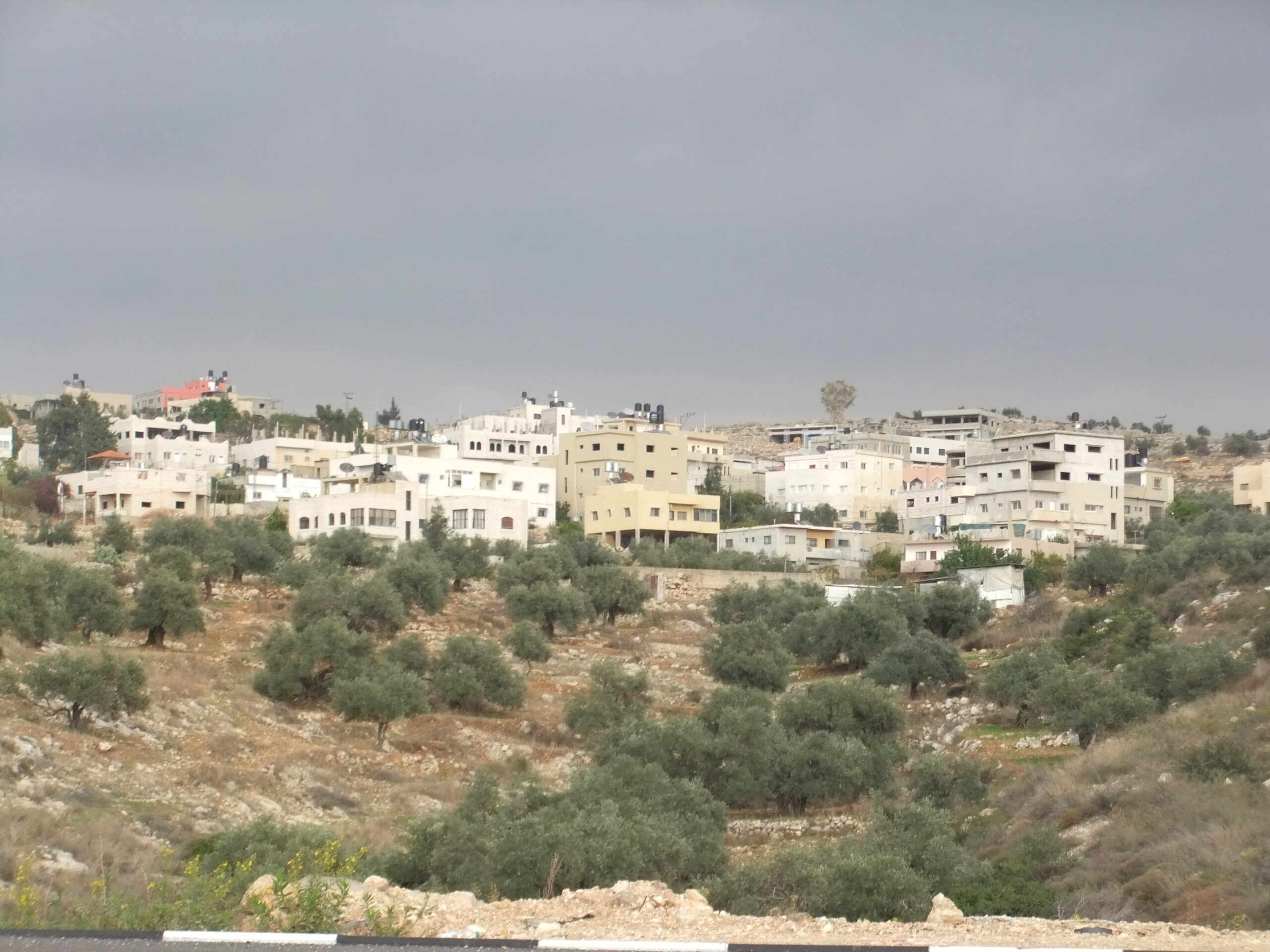
On Saturday night, November 14, flames went up at a Bedouin encampment west of Ramallah. Within hours, the Palestinian Authority’s official news agency had a culprit. “Colonists set fire to a tent on Saturday evening in a Bedouin community near the village of Deir Qaddis, west of Ramallah, with no injuries reported,” WAFA reported. By Sunday, the story had grown into a scene of stone-throwing settlers and homeless families, and it was running on pro-Palestinian sites around the world.
According to the Judea and Samaria Situation Room (JSR), an information center founded by the Yesha Council, the arsonists were the Bedouins themselves.
𝗔𝗿𝗮𝗯𝘀 𝗦𝗲𝘁 𝗙𝗶𝗿𝗲 𝘁𝗼 𝗧𝗵𝗲𝗶𝗿 𝗢𝘄𝗻 𝗧𝗲𝗻𝘁𝘀 – 𝗮𝗻𝗱 𝗕𝗹𝗮𝗺𝗲𝗱 𝗝𝗲𝘄𝘀
— JSR – The Judea & Samaria Situation Room (@JSR_EN) November 14, 2026
Arab social media reports claimed that Jews had set fire to tents and property belonging to a Bedouin community in Deir Qaddis, west of Ramallah, as part of an “escalation in settler… pic.twitter.com/90cvUDE9kf
The JSR reported that Bedouins leaving the site burned the remnants they had left behind near Natof, a Jewish community under construction in the western Binyamin Region. Natof is the first new community advanced in Binyamin since the 1980s for a founding group of secular families, approved under the Diplomatic-Security Cabinet’s decision to regulate new communities in Judea and Samaria.
The Palestinian accounts did not agree with one another. WAFA and IMEMC reported one tent and no injuries. VPP News, a Substack outlet, reported that “settlers threw stones and ignited multiple family tents” and left families homeless. The Palestine Chronicle ran a video still of the blaze on an unrelated story about Jerusalem, captioned as settlers burning Palestinian tents. The footage shows a fire. It does not show who set it.
Deir Qaddis is one more entry in a campaign that has run for years. A fire, a fight, or a flock of sheep becomes a “settler attack” before anyone checks the facts, and the claim travels from Palestinian social media to the wire services, to the United Nations and finally to the foreign ministries that sanction Israel.
In another recent case, B’Tselem, the Israeli left-wing NGO, posted footage of Jewish ranchers and IDF soldiers leaving an Arab village in Samaria with 80 sheep, captioned as settlers and the army stealing from Palestinians. The clip went viral. It had been cut. Half an hour earlier, Arabs in two pickup trucks had attacked three Jewish shepherds, sending one to the hospital with an ax wound to the head, and driven off with the flock.
𝗙𝗶𝘃𝗲 𝗔𝗿𝗮𝗯 𝗧𝗲𝗿𝗿𝗼𝗿 𝗔𝘁𝘁𝗮𝗰𝗸𝘀 𝗼𝗻 𝗝𝗲𝘄𝘀 𝗶𝗻 𝗝𝘂𝗱𝗲𝗮 𝗮𝗻𝗱 𝗦𝗮𝗺𝗮𝗿𝗶𝗮 𝗶𝗻 𝗢𝗻𝗲 𝗗𝗮𝘆
— JSR – The Judea & Samaria Situation Room (@JSR_EN) November 18, 2026
During the previous day (17.11.26), the following incidents were reported across Judea and Samaria: 2 attacks on Jewish shepherds, 2 stone-throwing attacks and… pic.twitter.com/vmXt8Nkxqc
“If you zoom in on the video, you see that there’s spray-paint letters on each sheep: nun and mem,” said Oren Seliger, who heads the JSR, in an interview with Israel365 News. The Hebrew letters were the initials of the Jewish rancher who owned the flock. “So we quickly uploaded that, and it killed the story on B’Tselem.”
The JSR was established by the Yesha Council, chaired by Yisrael Gantz, at the initiative of its CEO, Omer Rahamim. Now operating as an independent body, it collects, verifies, and publishes reports on security incidents across Judea and Samaria in real time, focusing on factual reporting from the ground without commentary or editorial interpretation.
The record that wasn’t
Saturday’s fire came on the heels of record figures from the United Nations: 457 settler attacks in October, the highest monthly tally since the world body began documenting them in 2006, and 2,159 for 2026 as of its October 22 report. Those numbers carry consequences. In June, Australia, Britain, Canada, France, New Zealand, and Norway imposed coordinated sanctions on what they call networks financing settler violence.
The Regavim Movement obtained 10 years of incident reports from the UN Office for the Coordination of Humanitarian Affairs (OCHA), the main source for international reporting on the subject. Its report, “False Flags and Real Agendas,” found that more than 98% of incidents labeled “settler violence” were clashes between Arabs and IDF forces, with no Israeli civilians involved.
Regavim found that virtually all of OCHA’s information comes from Palestinian sources with no independent corroboration. When Asaf Raviv shot dead the 17-year-old terrorist who had just stabbed Yotam Ovadia to death in the community of Adam in 2018, the UN logged it as settler violence. Naomi Kahn, director of Regavim’s International Division, said OCHA counts every peaceful Jewish visit to the Temple Mount as “storming Al-Aqsa,” and that her team found traffic accidents and even a dog bite listed as settler attacks.
“Ninety-five percent or more of the incidents that are reported as settler violence by the United Nations itself either didn’t involve settlers, didn’t involve violence, or didn’t happen in Judea and Samaria,” Kahn said.
Channel 12 analyst Amit Segal, drawing on Hebrew University criminologist Dr. Michael Wolfowicz’s analysis of UN data from 2016 to 2022, estimated about 20 violent incidents per month, most of them mutual. Segal set that figure against the IDF’s count of 25,257 Palestinian attacks on settlers between 2019 and 2022.
“For years we have been told about a ‘serious phenomenon’ of settler violence – but we have never been shown the data that proves that it exists,” said Regavim Director General Meir Deutsch.
The JSR is now producing that data from the ground, documenting terror attacks across Judea and Samaria.
320 terror attacks in 30 days
On October 25, which marked the first 30 days of the olive harvest season, the JSR reported 320 terror attacks across Judea and Samaria, including 123 stone-throwing attacks. That was a 69% increase over the 30 days preceding the harvest.
The attacks have continued since. The JSR reported 11 Arab terror attacks on Jews across Judea and Samaria on November 16 and 17, leaving four Israelis injured. The six attacks on November 16 comprised three assaults on Jewish shepherds and three stone-throwing attacks, with one Israeli injured. The five on November 17 comprised two attacks on Jewish shepherds, two stone-throwing attacks and one vehicle-ramming attack, with three Israelis injured.
The incitement is running alongside the attacks. “Stab the Jews!” the JSR warned on November 17, reporting that Arabs were circulating an incitement video that morning in Telegram groups in Judea and Samaria, calling for the murder of Jews.
“𝗦𝘁𝗮𝗯 𝘁𝗵𝗲 𝗝𝗲𝘄𝘀!” Arabs are circulating an incitement video this morning in Telegram groups in Judea and Samaria, calling for the murder of Jews.
— JSR – The Judea & Samaria Situation Room (@JSR_EN) November 17, 2026
𝗝𝗦𝗥 𝗦𝗶𝘁𝘂𝗮𝘁𝗶𝗼𝗻 𝗥𝗼𝗼𝗺 pic.twitter.com/FIdIBZIsdZ
This week, security forces located and destroyed 17 explosive devices in the Nur a-Shams “refugee camp” in western Samaria, including 11 pipe bombs, four devices made from fire extinguishers and two devices designed to strike the underside of vehicles.
The reports are reaching an audience. The JSR’s X account passed 5,000 followers less than a month after its launch, among them radio host Mark Levin, US Ambassador Mike Huckabee, and members of Congress.
The watchman on the wall
The JSR was built on a lesson written in blood on October 7. Israeli intelligence held Hamas’s “Jericho Wall” invasion plan more than a year in advance. The plan, Seliger said, mapped the 38 penetration points used that day. Refael Hayoun, a civilian intelligence volunteer in Netivot who monitored Hamas radio and heard the terrorists rehearsing, had his equipment confiscated months before the attack. “October 7th happened because we ignored what was happening in Gaza,” Seliger said. “We didn’t talk about it.”
The Bible spells out the responsibility of the one who sees the danger coming. God appointed the prophet Ezekiel as a tzofeh, a watchman, for the house of Israel, and defined his duty:
“But if the watchman see the sword come, and blow not the horn, and the people be not warned, and the sword do come, and take any person from among them, he is taken away in his iniquity, but his blood will I require at the watchman’s hand.” (Ezekiel 33:6)
The guilt falls on the watchman who saw the sword and kept silent. The principle of pikuach nefesh, saving a life, overrides almost every commandment in the Bible, and the JSR runs on it. “It is so critical what we’re doing that we have a directive that we work on Shabbat,” Seliger said. “I think this is a lifesaver, quite literally.”
At the JSR’s launch, Gantz said the center would stand against “an industry of lies and fake news that seeks to turn false accusations into accepted facts.” That industry was at work on Saturday night outside Natof. According to the JSR, Bedouins packing up beside a new Jewish community burned what they left behind, and by Sunday the fire was on its way to becoming another line in a UN database and another reason to sanction Israel.
This time, the watchman was on the wall.

