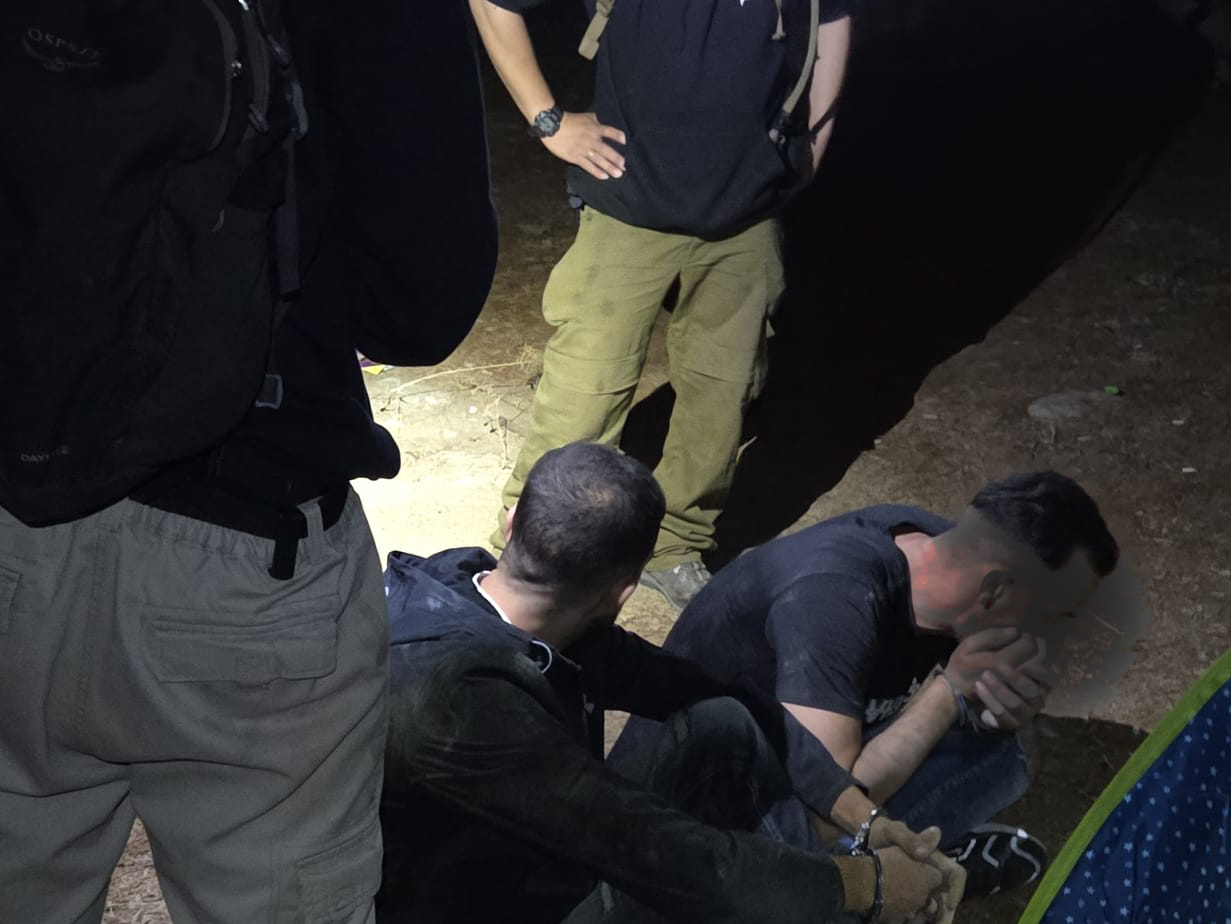
Above ground, it looked like a weekend picnic in the Judean Hills, with friends gathered around a crackling campfire. Nine meters below their feet, inside an ancient cistern, their partners were tearing through ancient plaster with an electric jackhammer.
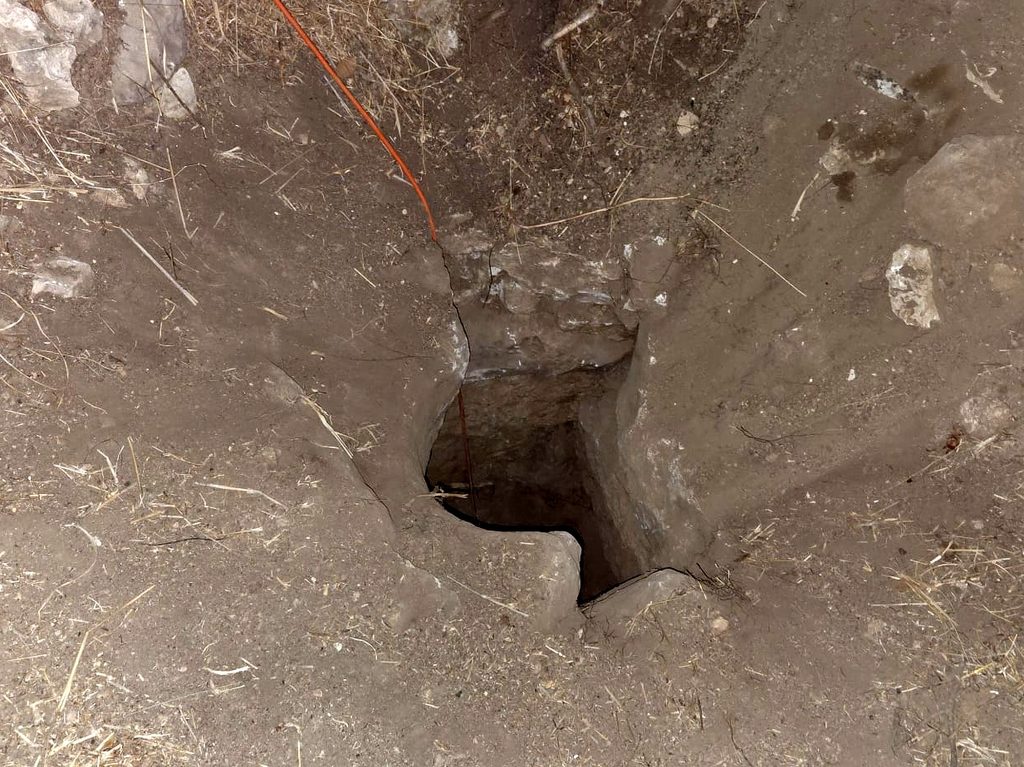
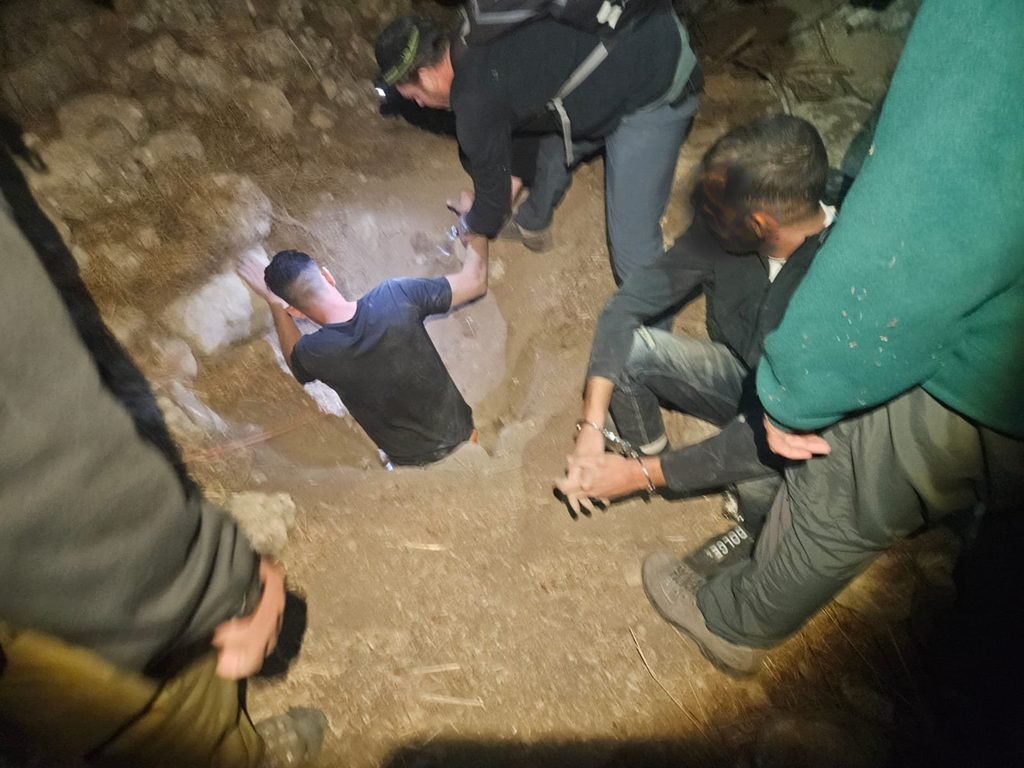
Inspectors from the Israel Antiquities Authority’s Robbery Prevention Unit arrested six suspected antiquities thieves last weekend at Horbat Adash, a declared archaeological site in Begin Park near the town of Mevo Beitar, west of Jerusalem. The suspects were caught red-handed, allegedly digging inside the ancient water cistern.
The gang came prepared for a serious dig. Inspectors found a generator, an electric jackhammer, augers, digging tools, a long ladder and lighting equipment. According to the Antiquities Authority, the members stationed beside the campfire were there to make the operation look like an innocent family outing while the others worked underground.
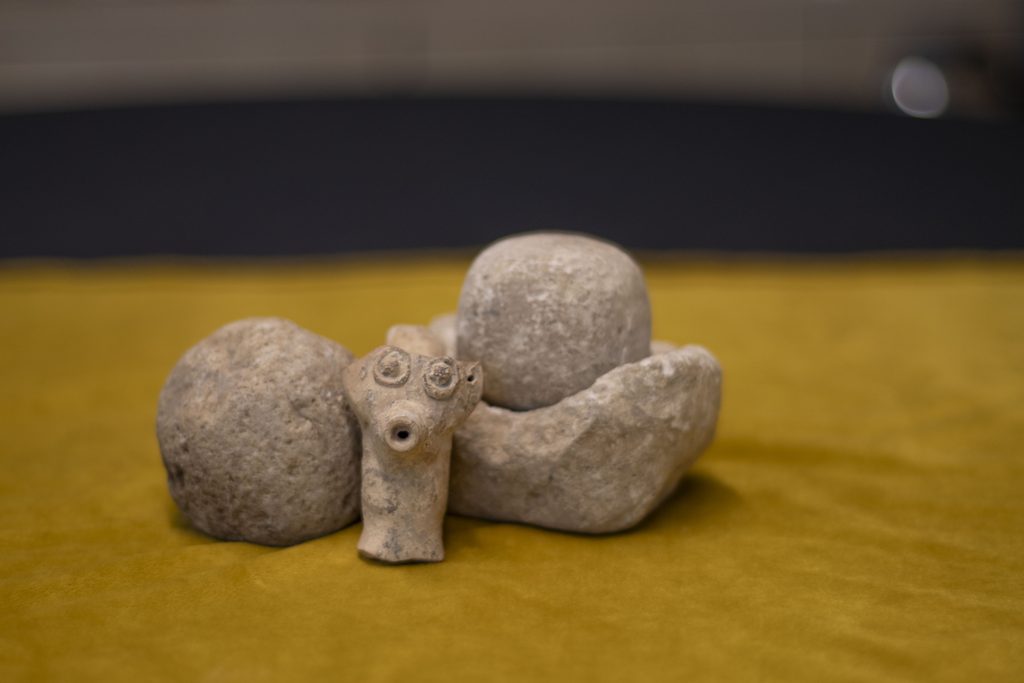
The cistern held a trove of history. Inspectors recovered fragments of hundreds of pottery vessels, several stone vessels and a rare fragment of a zoomorphic vessel, its neck shaped like an animal, dating to the Early Muslim period. The mix of finds from different eras shows that at some point in antiquity the cistern stopped holding water and became a refuse pit.
The damage is permanent. The suspects left extensive destruction around the site as they broke into the cistern. Inside, they gouged the walls and floor and smashed layers of ancient plaster that had survived in place for centuries. The Antiquities Authority believes the gang was hunting for buried treasure.
The six were arrested on suspicion of damaging an antiquities site, an offense that carries up to five years in prison. They were questioned at a police station, and the case will be transferred to the State Prosecutor’s Office to consider an indictment.
A Village That Lasted 1,000 Years
Horbat Adash, meaning the ruins of Adash, preserves the remains of a settlement that survived for nearly a millennium. It was founded in the Second Temple period in the 1st century BCE and remained inhabited into the Early Muslim period in the 8th century CE.
Archaeologists previously uncovered a hewn public mikveh, a Jewish ritual immersion bath, with a double entrance. The two entrances allowed bathers to go down impure on one side and come up purified on the other, a design found at sites tied to Temple-era purity practice. The site also holds remains of buildings, water systems and industrial installations, along with a public building from the Early Muslim period that served as a mosque.
The village sat in the heart of Judah. Mevo Beitar takes its name from ancient Betar, the hilltop fortress a short distance away where Shimon Bar Kokhba made his last stand against Rome. The Mishnah in Tractate Ta’anit (4:6) lists the fall of Betar among the calamities of the Ninth of Av. The Jews who immersed in the mikveh at Horbat Adash lived in the same hills, under the same rule of Rome.
Looting Fueled by Social Media Legends
Dr. Amir Ganor, director of the Antiquities Authority’s Robbery Prevention Unit, blamed a wave of online legends for sending amateurs into ancient sites with shovels.
“Unfortunately, legends about ancient treasures hidden in archaeological sites have recently become widespread on social media,” Ganor said. “These stories encourage people to go out and dig without a permit at archaeological sites, hoping to get rich quickly. However, the reality is completely different: illegal excavations cause irreversible damage to archaeological sites and findings. Ancient layers are destroyed; findings are displaced and disconnected from their archaeological context. That causes valuable historical information to be lost, which can never be restored.”
Ganor warned that looting carries a heavy price. “It is important that those who see treasure hunting as an innocent adventure should understand that this is a serious criminal offense, which may result in investigation, prosecution, heavy fines and even imprisonment,” he said. “The damage caused to archaeological sites is damage to the heritage and history that belong to us all.”
Heritage Minister Rabbi Amichai Eliyahu promised a hard line. “The ancient sites of the Land of Israel are not a free-for-all,” Eliyahu said. “We will not allow these sites to be turned into a playground for treasure hunters at the expense of our shared public heritage. The destroyers of history must and will be brought to justice. We will continue to fight looting, protect our cultural assets, and preserve the history of the Land of Israel for future generations.”
Hewn Cisterns and Hidden Treasure
The cisterns of the Land of Israel are part of God’s promise. Before the Israelites crossed the Jordan, Moses told them they would inherit a land already prepared for them:
“And houses full of all good things, which thou didst not fill, and cisterns hewn out, which thou didst not hew, vineyards and olive-trees, which thou didst not plant, and thou shalt eat and be satisfied.” (Deuteronomy 6:11)
In a land with no great river, the bor, the cistern carved into bedrock to catch the winter rains, meant survival. Every family depended on one. The Bible returns to the cistern again and again. Joseph’s brothers threw him into one: “and the pit was empty, there was no water in it” (Genesis 37:24). The officials of Judah lowered the prophet Jeremiah into another, where “there was no water, but mire; and Jeremiah sank in the mire” (Jeremiah 38:6).
Jeremiah turned the cistern into one of the sharpest images in prophecy. “For My people have committed two evils: they have forsaken Me, the fountain of living waters, and hewed them out cisterns, broken cisterns, that can hold no water” (Jeremiah 2:13). The prophet contrasts the living spring that never runs dry with the borot nishbarim, broken cisterns, that leak away whatever is poured into them. The cistern at Horbat Adash lived out the verse. It was hewn to hold life-giving water, it cracked or fell out of use, and it ended as a dump for broken pots.
Tales of buried gold have drawn looters to the Judean Hills for generations. The most famous source is the Copper Scroll, found in 1952 in Cave 3 at Qumran, near the Dead Sea. Unlike the other Dead Sea Scrolls, it was engraved on metal and lists some 64 hiding places of gold and silver across the land. Not one has been found.
King Solomon pointed to the treasure worth digging for. “If thou seek her as silver, and search for her as for hid treasures; then shalt thou understand the fear of the LORD, and find the knowledge of God” (Proverbs 2:4-5). The real wealth of Horbat Adash lay in the plaster walls the gang smashed and the pottery they scattered: the record of Jews who immersed in purity, drew water from these hills and held onto the land for a thousand years. That record belongs to the Jewish people, and no jackhammer can buy it back.