The regime that massacred thousands of protesters and is enriching uranium near weapons-grade now helps set the UN’s human rights and disarmament agenda. The vote came a day after Tehran demanded the UN shield its nuclear program from a $20 million US bounty.
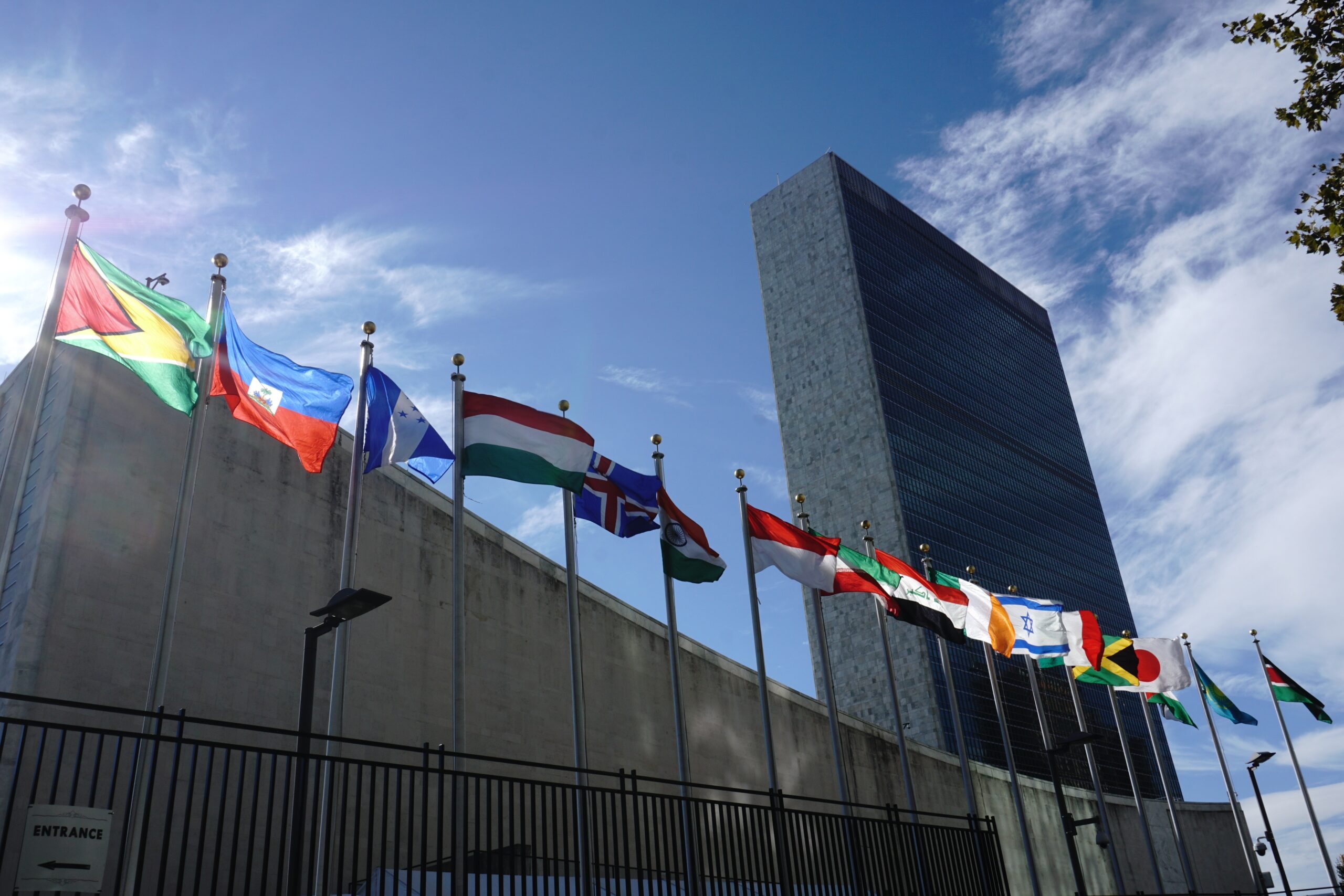
In January, Iran’s regime gunned down thousands of its own protesters, and it is enriching uranium a step short of weapons-grade. It will now help set the United Nations’ priorities on human rights, women’s rights, and disarmament. On Wednesday, the UN General Assembly elected Iran to the Committee for Programme and Coordination, a body that reviews and coordinates the organization’s programs and priorities. Iran received 144 votes in favor in a secret ballot.
Hillel Neuer of UN Watch summed it up in one word. The idea that Iran would sit on the committee, he said, “is an absurdity.”
The timing made it worse. The vote capped a week in which the United States, Iran, and the UN each showed which side they are on.
On November 6, Washington put a price on Iran’s nuclear secrets. The U.S. government is offering up to $20 million — and possible relocation — for information about Iran’s nuclear program, the State Department’s Rewards for Justice program announced on Friday. “The U.S. government remains committed to countering any attempt by Iran to develop a nuclear weapons program,” Rewards for Justice wrote on X.
On November 10, Tehran ran to the UN for protection. Iranian Foreign Minister Seyed Abbas Araghchi wrote to Secretary-General António Guterres, the president of the Security Council and IAEA Director General Rafael Grossi. He demanded that they “condemn this abhorrent announcement explicitly and unequivocally” and “hold the United States accountable for its continuing wrongful acts.”
On November 11, the UN gave Iran its seat.
“A travesty of justice”
According to UN Watch, the committee shapes the UN’s priorities on women’s rights, human rights, disarmament, and counterterrorism. It has 34 member states, and members serve three-year terms.
Neuer had urged representatives to demand a vote on Iran’s candidacy to block its election. After the vote, he called the outcome “a travesty of justice,” noting that Iran’s government “massacred tens of thousands of people in January.” On X, he wrote that the General Assembly had “just elected the murderous Islamic Republic of Iran.”
SHAME: The U.N. General Assembly by 144 votes just elected Iran's Islamic Regime to the Committee for Program and Coordination, which shapes priorities on Women’s Rights, Disarmament & Counter-Terrorism. Disgraceful reward for a regime that massacred tens of thousands of people. pic.twitter.com/fPJA81DJpO
— UN Watch (@UNWatch) November 11, 2026
Neuer had warned about the vote for months and called Iran’s candidacy “Orwellian.” “It’s the last government in the world that should have any influence,” he said. He described Iran as “a regime that beats, blinds, tortures, rapes, and imprisons women for standing up for their rights.” His verdict on the institution was harsh: “At least half the U.N. is made up of dictatorships. It is a case of the lunatics running the asylum.”
The January crackdown he referred to is the bloodiest in the Islamic Republic’s history. According to Amnesty International, the authorities carried out massacres of protesters, primarily on 8 and 9 January, when the death toll rose into the thousands. January 2026 marks the deadliest period of repression by the Iranian authorities in decades of Amnesty’s research. Casualty estimates from Iran’s protest crackdown range from 3,100 to over 30,000, with verification hampered by an internet shutdown.
Tehran’s shield
Araghchi’s letter shows how the regime uses the UN. It called the American reward offer “abhorrent and deplorable” and “reckless and dangerous.” It insisted that Iran’s nuclear scientists “must be able to perform their professional duties without intimidation, threats, coercion.”
The letter also contained a threat against the UN’s own nuclear watchdog. “The normal implementation of safeguards obligations cannot be expected,” Araghchi wrote, while Iran’s facilities and personnel “are exposed to assassination, sabotage and aggression.” In other words, Tehran warned that the inspections designed to keep it from building a bomb may stop.
Again and again, the letter describes Iran’s nuclear work as a “peaceful nuclear program.” The international nuclear watchdog’s findings point in a different direction. Officials said the International Atomic Energy Agency reported that Iran was able to enrich uranium to 60% purity. That is a step away from the 90% purity required for nuclear weapons. No civilian power program requires uranium enriched that far.
The United States is trying to expose the program. The department hopes to get recent information on Iran’s nuclear facilities, equipment, and personnel. Iran asked the UN to shield it. The next day, the General Assembly gave Iran a seat on the committee that sets the UN’s disarmament priorities.
A year of promotions for Tehran
The committee seat continues a pattern. In April, Iran was selected as one of 34 vice presidents of the 11th Review Conference of the Nuclear Non-Proliferation Treaty. The Non-Aligned Movement bloc put Iran forward. Christopher Yeaw, the US assistant secretary for arms control and nonproliferation, objected that the conference was acting “rather than choosing to use this review conference to defend the integrity of the NPT and call Iran to account.” “It is beyond shameful and an embarrassment to the credibility of this conference.”
The promotions began in February. That month, Iran was elected vice-chair of the United Nations Charter Committee, a body tasked with examining and strengthening the principles of the U.N. Charter. Iran was also elected vice-chair of the UN Commission for Social Development, a body focused on democracy, gender equality, and non-violence.
In a single year, the UN named the regime building toward a nuclear weapon a vice president of the nonproliferation conference. It handed the regime that ignores the UN Charter a role guarding it. And it seated the regime that massacred protesters on bodies shaping gender equality and human rights.
America alone
The battle lines were drawn in April, when the UN’s Economic and Social Council (ECOSOC) nominated Iran to the committee. On April 8, 2026, ECOSOC nominated Iran to the committee by consensus. Canada, Britain, France, Germany, Spain, the Netherlands, Norway, Finland, Switzerland, Austria, and Australia did not object. The United States was the only member to object, declaring the regime unfit. Israel365 News reported on the nomination at the time.
Neuer explained why America’s allies went along. “The short answer is interests, cynicism, politics, dealmaking, and a culture of ‘go along to get along,'” he said. He described the thinking of a European or Canadian ambassador: “you don’t want to pick a fight with dozens of countries or trigger friction with Iran.”
Some of those governments later denied their role. Global Affairs Canada said Iran was nominated by the Asia-Pacific Group and that Canada “did not endorse or vote for this nomination.” The post was corrected by an X Community Note.
Canada Changes Sides
This week, Ottawa moved to Washington’s side of the line. Foreign Minister Anita Anand announced on X how Canada voted:
“Canada is steadfastly opposed to giving Iran a seat on the UN Committee for Programme and Coordination — and Canada voted against Iran’s inclusion today at the UN,” Anand wrote. “The committee should be comprised of countries entrusted with shaping the work of the United Nations and must uphold the principles of its Charter. The Iranian regime silences dissent at home and fuels instability across the Middle East. We stand with the people of Iran.”
Neuer welcomed the reversal and noted how late it came. He praised Anand for “reversing course.” He said the No vote “is the right position, and it is the one we urged Canada to take.” He also wrote that he “only wish[ed] Canada had taken this exact position in April.” He compared electing Iran to a UN body on women’s rights to “putting Count Dracula in charge of the blood bank.”
Shabnam Assadollahi was less forgiving. She is a human rights advocate who was imprisoned for 18 months in Evin Prison as a teenager. “The United Nations has once again exposed the staggering gap between its human rights rhetoric and its actions,” she wrote in the Times of Israel. On Canada’s late reversal, she wrote: “A statement after the damage is done is not the same as leadership when it matters.” Her message to the world body: “To the UN: Human rights are not a public-relations slogan.”
America’s other allies have stayed silent. UN Watch urged the other April consensus members to publicly state whether they voted for or against Iran. Britain, France, Germany, and Australia have not said which side of the line they stood on.
Israel: a double standard
During the session, Israel’s delegation pointed to how differently the UN treats the Jewish state. Israel objected during the session to what it called a double standard in how Israeli candidates are treated. It accused Arab groups of repeatedly subjecting Israeli candidates to politically motivated votes. Israel called the process a “waste of time and resources.”
The contrast was on display in April. Iran’s nomination passed without objection from any democracy except the United States. At the same session, Israel’s mission to the United Nations also pointed to political tensions surrounding the vote, saying Iran attempted to challenge Israel’s candidacy during the same ECOSOC session.
Haman gets a promotion
The Bible records an earlier time when a Persian court elevated a man bent on destroying the Jews:
“After these things did king Ahasuerus promote Haman the son of Hammedatha the Agagite, and advanced him, and set his seat above all the princes that were with him” (Esther 3:1).
The Sages note that this verse comes right after Mordechai saved the king’s life by exposing an assassination plot. The man who protected the throne went unrewarded, and the man who would plot genocide was given the highest seat. The prophet Isaiah described that kind of moral inversion:
“Woe unto them that call evil good, and good evil; that put darkness for light, and light for darkness; that put bitter for sweet, and sweet for bitter!” (Isaiah 5:20).
This week the lines were clear. The United States offered $20 million to stop a nuclear bomb. Iran demanded that the UN protect the program building it. And 144 nations, voting in secret, gave Tehran a seat on the committee that shapes the UN’s disarmament agenda. The UN has made its choice.
The story of Esther ends with Haman hanged on the gallows he built for Mordechai. The nations that promoted Persia this week should remember how that story ended.