




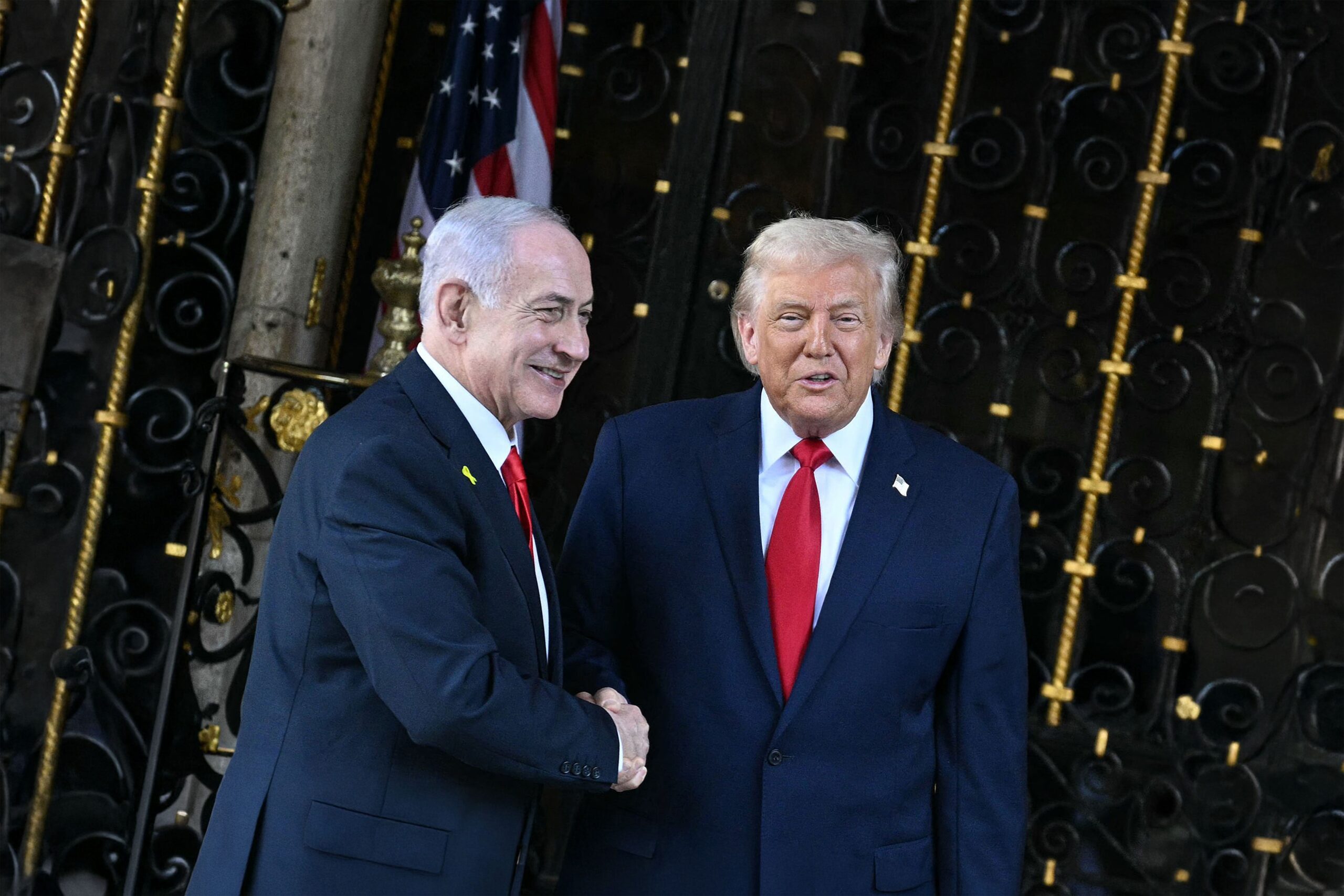
President Donald Trump announced on Tuesday that America’s annual military aid to Israel, roughly $4 billion a year, will end at the close of 2026. Speaking to “Fox & Friends” by phone as Americans headed to the polls for the midterm elections, Trump said he and Prime Minister Benjamin Netanyahu “made a deal months ago that we’re stopping.” Israel’s defense establishment, its Finance Ministry and Netanyahu’s political rivals all learned the news from television.
Trump said Israel no longer needed the funding and that some Democrats and left-wing politicians were using US financial support for Israel as a talking point to criticize Republicans. He singled out Michigan’s Democratic Senate nominee Abdul El-Sayed, who campaigned against aid to Israel, asking why Republicans should “suffer the slings from lunatics like El-Sayed” over money Israel does not need.
The exchange began when one of the hosts asked Trump about rising antisemitism and the erosion of support for Israel, particularly among younger voters. Trump first praised the partnership, describing Israel as America’s helper in the region and saying “we are the big, they are the small.” Later, a host summed up the strategy as removing a talking point the left had weaponized against Republican candidates, and Trump enthusiastically embraced that formulation.
Trump insisted the idea came from Jerusalem. According to Trump, Netanyahu told him, “I think it would be appropriate if we do not receive aid,” because he understood the issue had become a point of contention. Trump said the support included “things and money,” calling it military aid, cash or “barter,” and said he and Netanyahu had discussed ending the assistance for years. Pressed on whether he meant hardware or a check, Trump answered, “Any way you want to define it.”
“Israel is a very thriving country,” Trump said, stressing that Israel can still buy American weapons and tying the move to his campaign vows to curb free foreign aid and cut government spending. Asked whether Israel could still purchase US arms, Trump said Israel can buy whatever it wants, and so can Europe.
Caught off guard in Jerusalem
The current agreement does not match Trump’s timetable. The 10-year memorandum of understanding signed in 2016 under the Obama administration covers 2019 through 2028 and provides $38 billion over the decade: $33 billion primarily for defense procurement and $5 billion for joint missile defense programs, including Iron Dome, David’s Sling, and Arrow. As Israel’s financial daily Globes noted, the agreement expires in September 2028, just months before the end of Trump’s second term, leaving open whether the deal Trump described applies to the period after the memorandum expires or alters the current arrangement. The president’s remarks also left unclear whether the halt is immediate or gradual, and whether it covers every component of the security assistance.
The memorandum is not a legally binding treaty, and annual funding remains subject to congressional appropriations, so an understanding between Trump and Netanyahu would not by itself cancel funding already authorized and appropriated by Congress. Thomas Warrick of the Atlantic Council told Al Jazeera that Trump “will probably not cut off US military aid to Israel by the end of 2026,” citing ongoing missile defense and counter-drone programs that cannot easily be switched over to a foreign military sales program.
Israeli officials were blindsided. A Finance Ministry official told the Walla news site that no formal document had been submitted from the Prime Minister’s Office regarding the end of aid, and that the ministry was surprised by the intention to do so immediately. A senior defense official told the Kan public broadcaster, “We did not expect this announcement, certainly not today.” Senior economic officials told Ynet that “Giving up two years of American assistance effectively means $8 billion,” warning that the money would come from taxes on citizens and calling the Election Day announcement a campaign maneuver. Netanyahu’s office did not comment hours after the announcement, and the prime minister posted twice on social media about allegations of foreign interference in Israel’s elections instead.
Netanyahu’s rivals pounced. Gadi Eisenkot, his main challenger in last week’s Knesset election, said learning of the change through the media “shows just how much Netanyahu’s conduct poses a real danger.” Eisenkot added that Netanyahu can no longer be trusted and must be replaced, and that the special relationship with the US is a central component of Israel’s national security. Democrats party head Yair Golan argued that Israel’s defense spending has reached enormous proportions, its offensive weapons stocks need replenishing, and its air defenses were depleted by the long war, warning that the cost “will fall entirely upon the Israeli public.” Yisrael Beytenu leader Avigdor Liberman said the price of Trump’s endorsement of Netanyahu is $3.8 billion per year.
ZOA: “Campaigns of Hate”
The Zionist Organization of America, which has traditionally backed Trump, issued a sharp response. “ZOA is concerned that President Trump stated today that the U.S. will cut off all of the $3.8 billion in military aid to Israel at the end of 2026, almost two years earlier than provided for in the current U.S.-Israel Memorandum of Understanding,” said ZOA National President Morton Klein. “The ZOA is questioning why the U.S. isn’t also ending the over $4 billion in annual U.S. aid to the Arab Muslim countries of Egypt, Jordan, Pakistan and Lebanon, and the Palestinian Authority entity.”
Klein noted that those countries vote with the United States less than 10 percent of the time at the United Nations, while Israel votes with Washington more than 90 percent of the time, more than any other nation. “We are also concerned that an abrupt cutoff will harm the U.S. defense industry and the almost 300,000 jobs that the aid to Israel supports,” he said. “Over the last three years, Israel has had to spend approximately $177 billion, to degrade the arch enemies of America and the killers and kidnappers of Americans, including Hamas, Hezbollah, the Houthis, Iraqi militias and the Islamic Republic of Iran.”
Klein reserved his strongest words for Trump’s reasoning about El-Sayed. “We are concerned that the early aid cutoff sends a message to Jew-haters that their outrageous, false condemnations of the Jewish state pay dividends and influences U.S. policy,” he said. “We cannot allow campaigns of hate to have any impact on our policy.” The ZOA urged Trump “to reconsider an abrupt cut-off, to consider a gradual phase out, and to assure that joint technology arrangements are an adequate substitute that benefits both America and our valuable ally Israel.”
Republican Jewish Coalition CEO Matt Brooks took a different view, saying the US-Israel relationship under Trump is stronger than ever and that weaning Israel off foreign military assistance has been openly discussed in coordination between the two governments.
Blaming Israel for the grocery bill
The talking point Trump said he wanted to neutralize has a specific shape: American families cannot afford rent, groceries, and health care because Washington sends money to Israel. It came to a head in Michigan in the final week of the campaign, when Rebellion PAC, an independent group backing El-Sayed, released an ad linking US military aid to Israel to Americans’ struggles with the cost of living. The ad features two people in a grocery store suggesting they cannot afford basic goods because of the aid. The PAC was founded by Young Turks host Cenk Uygur, uncle of anti-Israel streamer Hasan Piker, who campaigned with El-Sayed in the primary.
Democratic Rep. Haley Stevens, who lost the Senate primary to El-Sayed, called the ad antisemitic and said it dramatized an argument El-Sayed had made throughout the campaign: “that Israel is the reason that Michigan cannot afford schools, healthcare, and child care.” El-Sayed said he disagreed with the ad, but Stevens endorsed Republican Mike Rogers anyway. Piker had already drawn condemnation for comparing Jewish residents who opposed El-Sayed to members of the Ku Klux Klan. El-Sayed’s opposition to military aid extends to funding for the defensive Iron Dome system, and his own campaign ran an ad featuring Tucker Carlson.
The same argument runs through the Republican right. Former Georgia Congresswoman Marjorie Taylor Greene pushed in July 2025 to strip $500 million in missile defense funding from Israel, arguing on the House floor that Israel can defend itself and that “They have universal healthcare and subsidized college” while Americans are $37 trillion in debt. Speaking of her own children, Greene said, “They can’t afford rent. They can’t afford to buy a house.” Her amendment drew six votes. On Tuesday, the former congresswoman dismissed Trump’s announcement on X, saying ending annual aid would not change the outcome of the midterm elections.
Rep. Thomas Massie (R-KY), whose July amendment to cut off aid to Israel failed 314 to 104, called Trump’s announcement a “desperate Election Day lie.” Massie dismissed the $3.8 billion as small change next to US spending on the Iran war, which he described as fought on Israel’s behalf, and claimed the same taxpayer money would keep flowing to Israel as military coordination instead of a separate line item.
Podcast personalities pushed the same line to millions of listeners. Comedian Dave Smith repeatedly calls US aid to Israel immoral, arguing Americans are taxed to support a wealthy country’s social services while they lack basic safety nets themselves. Carlson, once Trump’s most prominent media backer, branded this year’s US-Israeli campaign against Iran Israel’s war and accused Trump of being beholden to Netanyahu. Carlson drew bipartisan condemnation in October 2025 when he hosted white nationalist Nick Fuentes for a friendly interview.
On the left, Rep. Ro Khanna (D-CA) claimed credit, saying Trump was trying to stave off a Democratic wave by adopting a position establishment Democrats had called too radical. The Council on American-Islamic Relations said ending free military aid is not enough and demanded a complete halt to arms sales.
The numbers undercut the grocery-store argument. The aid is military assistance Israel must spend in the United States, money that would never have gone to American households or lowered grocery prices. The public is buying the argument anyway. A June Quinnipiac poll found 48 percent of voters and 66 percent of Democrats believe the US is too supportive of Israel, up from 16 percent and 20 percent in 2017. An ABC News/Washington Post/Ipsos poll last month found 58 percent of Americans favor reducing or ending military aid to Israel.
What America gets for its money
Defenders of the aid make a hard-nosed case: Washington is buying something, and getting it at a bargain price. According to the ZOA, then-Secretary of State Alexander Haig famously called Israel “the largest American aircraft carrier in the world that cannot be sunk, does not carry even one American soldier, and is located in a critical region for American national security.” Former US Air Force intelligence chief General George Keegan said the United States would need five CIAs to gather the intelligence Israel provides.
Retired US Army officer John Spencer, West Point’s director of urban warfare studies, laid out the returns this summer after Vice President JD Vance reminded Israeli critics of a US-brokered Iran deal how much American taxpayers subsidize Israel’s defense. Spencer described Israel as a laboratory where new technologies and tactics are tested under real combat conditions, giving the US military data it could never replicate in simulations. He pointed to the Israeli-developed Trophy active protection system now installed on US Army Abrams tanks, and to co-developed missile defense programs including Iron Dome, David’s Sling, and Arrow. Israel’s wars, Spencer argued, teach American forces about drones, tunnel warfare, cyber threats, and urban combat without US troops paying for those lessons in blood, and a strong Israel anchoring the Middle East frees Washington to concentrate on China. “No other recipient of American military assistance provides the same combination of economic, security, military, innovation, and strategic returns,” Spencer said.
The lessons flow directly into American doctrine. Brig. Gen. Michael Vane, a senior US Army trainer, acknowledged in 2003 that Israel’s lessons in counterinsurgency “shaped the U.S. war on terrorism” in ways few other allies could match. Secretary of War Pete Hegseth has said, “Fighting shoulder to shoulder with such a capable ally is a true force multiplier,” praising “the critical role the State of Israel plays in our strategic calculus.”
The money itself stays in America. By 2028, every dollar of Foreign Military Financing to Israel must be spent in the United States, an arrangement no other major aid recipient operates under, making Israel a major customer for F-35 fighter jets, radar systems, and precision-guided munitions. When the Obama administration signed the current memorandum in 2016, the White House noted that it would let Israel buy more American-made capabilities, supporting American jobs.
Former Israeli ambassador Yoram Ettinger, head of the Second Thought US-Israel initiative, has long argued that the $3.8 billion is an annual investment that returns several hundred percent to American taxpayers by saving US lives and strengthening US security. Supporters also point out that military aid to Israel represents roughly 0.045 percent of the federal budget, while Israel consistently spends more than 5 percent of its GDP on its own defense.
Part of the package traces back to 1978, when, according to the ZOA, Washington induced Israel to surrender the Sinai, including the Alma oil fields and four oil wells Israel had developed at enormous cost, by agreeing to pay $2.5 billion a year in lost oil revenue. That payment forms part of today’s $3.8 billion, and the ZOA values the Alma fields at $433.8 billion today. “The $3.8 billion of U.S. aid has been of great benefit to America,” Klein said.
Israel Asked First
Ending American aid has been a goal of the Israeli right for decades. In July 1996, during his first term, Netanyahu told a joint session of Congress that Israel would begin gradually reducing American economic aid. Economic aid was then cut by $120 million a year, and by 2008 Israel had stopped receiving American economic grants entirely.
Many on the Israeli right view military aid as a limit on Israeli sovereignty. Retired IDF general Amir Avivi told Breitbart in 2024 that aid “puts on Israel lots of restrictions” that prevent it from pursuing its security interests freely, and former Prime Minister Naftali Bennett and former Israeli ambassador to the US Michael Oren have voiced similar concerns. Likud MK Amit Halevi spearheaded an effort to convert the military relationship into joint projects and investments, a plan Israel pitched extensively to the Trump administration and Capitol Hill.
American conservatives picked up the idea. In March 2025, the Heritage Foundation drafted a plan to cut off aid to Israel by 2047, timed to coincide with the 100th anniversary of Israel’s independence, with Israel buying more American weapons along the way. The roadmap was developed with input from Israel’s Misgav Institute for National Security and Zionist Strategy.
Netanyahu then made it official policy. In January, he told The Economist, “I want to taper off military aid within the next 10 years,” meaning a reduction to zero from $3.8 billion a year, and pointed to an Israeli economy expected to reach roughly $1 trillion within a decade. He told the Knesset Israel would allocate roughly NIS 350 billion over the next decade to build independent weapons production. In May, he told CBS, “I want to draw down to zero the American financial support,” adding that he wanted to start the process immediately. In a June letter to Rep. Marlin Stutzman (R-IN), who sponsored a resolution calling for a new MOU that ends aid, Netanyahu wrote that “The time has now arrived for us to move from aid recipient to partner.” Speaking to reservists in Gush Etzion this summer, he put it plainly: “I want armaments independence.”
Formal talks on the next agreement were set to begin in May and were expected to focus on winding down military aid over 10 years in exchange for joint partnership funds, with Israel’s Defense Ministry describing the goal as moving “from aid to partnership.” Days before the Knesset election, Netanyahu told Israelis to “get used to the fact that it won’t happen, because America has changed.”
Trump was slower to come around. Jewish Insider reported that when Netanyahu first proposed winding down military aid, Trump was bewildered and did not immediately support the move. By June, US Ambassador to Israel Mike Huckabee said on X that the next memorandum of understanding will end US aid to Israel in favor of prioritizing trade. The late Senator Lindsey Graham, who died in July after a brief illness, wrote in January that “we need not wait ten years” to begin scaling back aid.
The dispute in Jerusalem is over pace and politics. Even those who support winding down US aid insist the withdrawal must be gradual, and Eisenkot, Netanyahu’s likely successor, is a staunch advocate for indefinite US aid.
From a $100 million loan to $330 billion
American assistance to Israel began in 1949 with a $100 million loan from the US Export-Import Bank, and for two decades consisted mainly of economic loans while France served as Israel’s main military patron. During the 1973 Yom Kippur War, President Richard Nixon asked Congress for $2.2 billion in emergency aid to replace Israel’s losses and counter Soviet arms flowing to Egypt and Syria.
Routine military aid has held at $3.8 billion a year, with occasional supplements. Aid reached $4.8 billion in 2022 and surged to $12.5 billion in 2024 after the October 7 massacre, with $6.8 billion for military aid and $5.7 billion for missile defense, before returning to $3.8 billion in 2025. In total, the US committed about $175 billion to Israel between 1946 and 2025 in nominal terms. Adjusted for inflation, the Council on Foreign Relations puts the total at around $330 billion, including missile defense.
Israel’s defense spending is placing an increasingly heavy burden on the country’s economy. In 2025, the Defense Ministry’s budget reached a record NIS 110 billion ($29 billion), accounting for approximately 81% of Israel’s total defense budget of NIS 136 billion ($36.9 billion).
Trump’s Election Day gamble did not save his party. By Wednesday morning, Democrats had seized control of both the House and the Senate. The incoming Congress, which includes some of the loudest critics of aid to Israel, will now hold the purse strings on whatever comes next.
