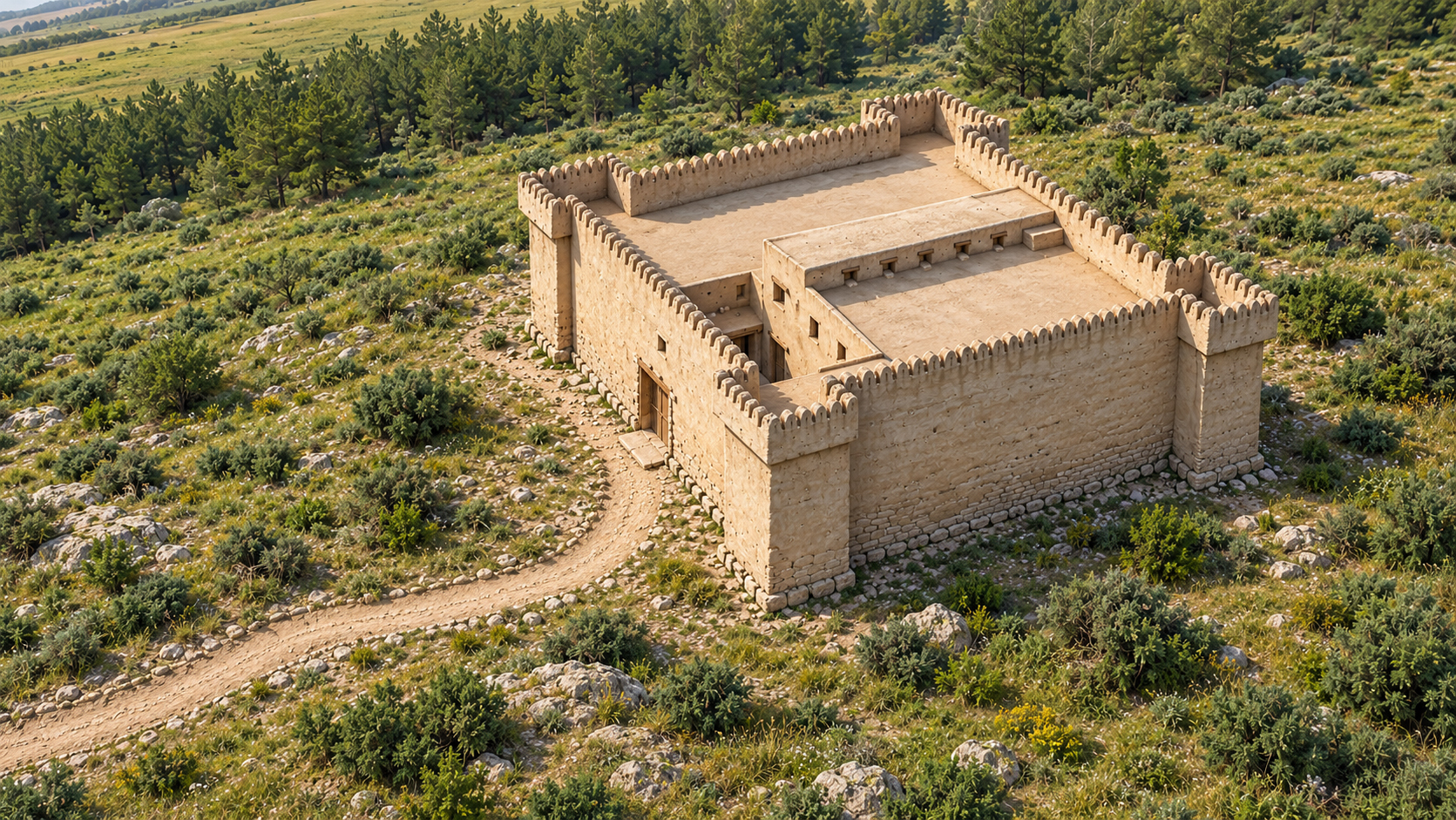
A stone fortress built more than 3,100 years ago, when Israelites, Philistines and Canaanites fought over the same hills, reopened to the public on Thursday. The Gal’on Fortress stands in the Guvrin Forest in the Judean Lowlands, the Shefelah, about 40 minutes south of Jerusalem. Keren Kayemet LeYisrael–Jewish National Fund (KKL-JNF) and the Israel Antiquities Authority (IAA) re-inaugurated it on October 29 after completing excavation, conservation and accessibility work.
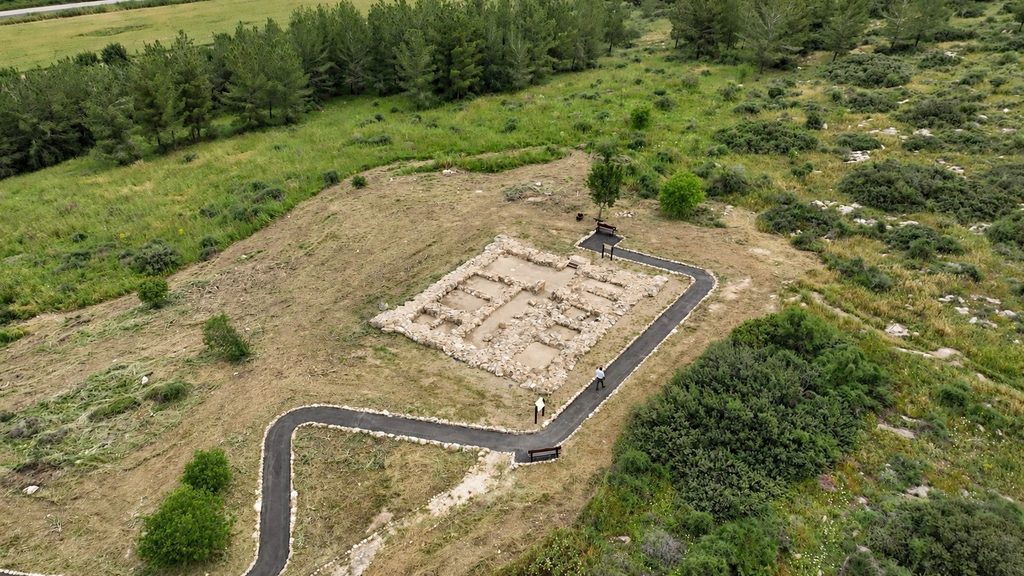
The fortress dates to the mid-12th century BCE, the period described in Sefer Shoftim, the Book of Judges. It first opened on a preliminary basis six years ago. KKL-JNF has now invested about NIS 400,000 to preserve the structure and make it accessible to all visitors.
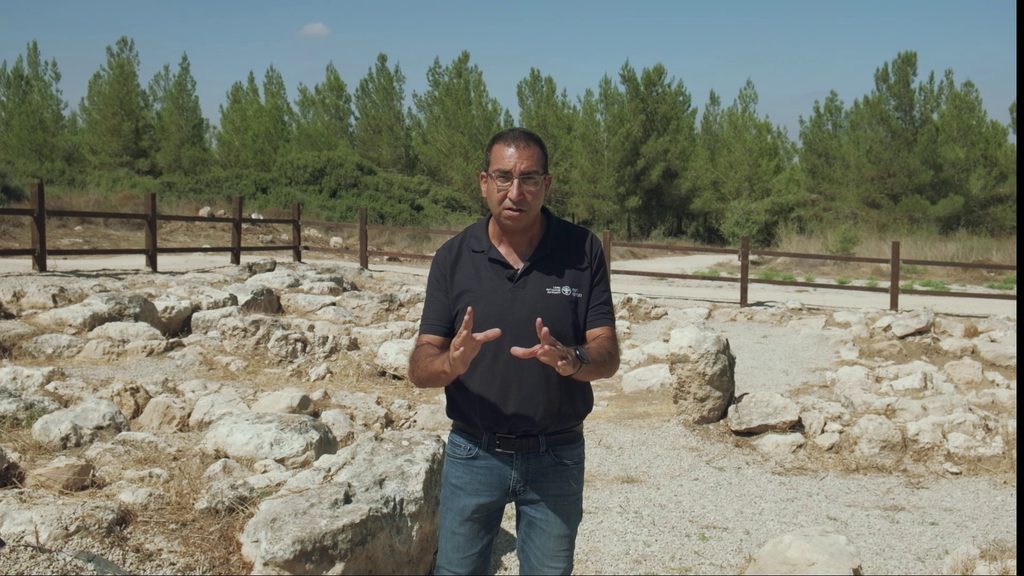
The excavators, Dr. Saar Ganor and Dr. Itamar Weissbein of the IAA, said the site shows the struggle described in Judges playing out on the ground.
“The Gal’on Fortress provides a glimpse into the geopolitical reality described in the Book of Judges, in which the Canaanites, Israelites, and Philistines fought each other,” the archaeologists said. “At the onset of the 12th century BCE, the Land of Canaan was still ruled by the Egyptians, and its inhabitants were their subjects. At this juncture two additional major players appeared in the region: the Israelites and the Philistines, which led to a series of bloody territorial struggles.”
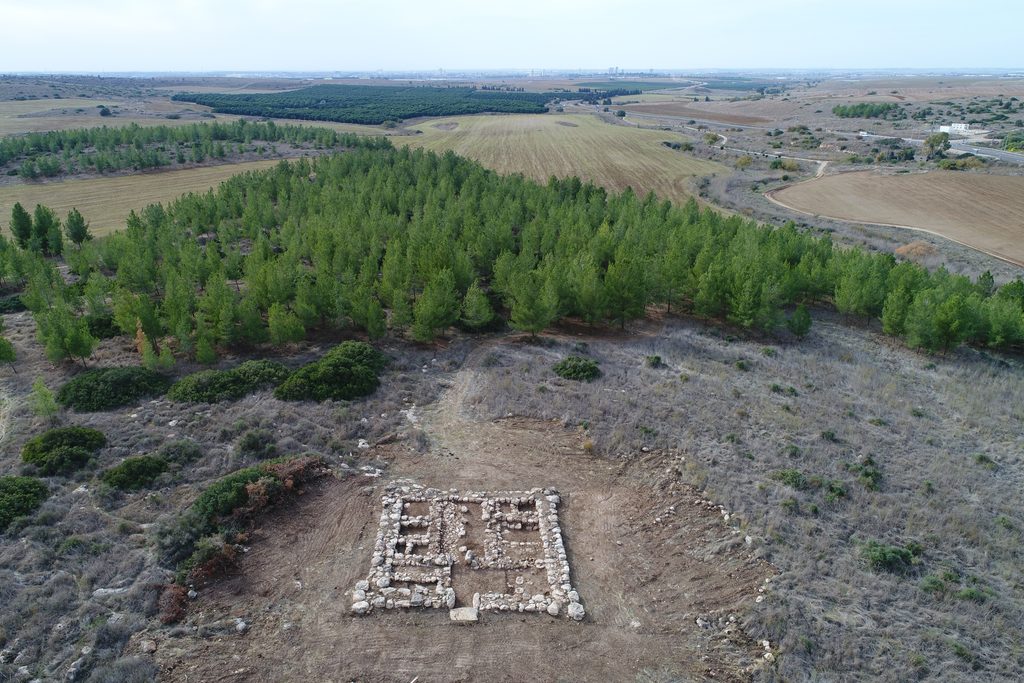
They explained that the builders chose the location to control movement through the region. “It seems that the Gal’on Fortress was built in a strategic location, overlooking the main road connecting the coastal plain to the Judean Lowlands; part of either a Canaanite or Egyptian attempt to deal with the new geopolitical situation.”
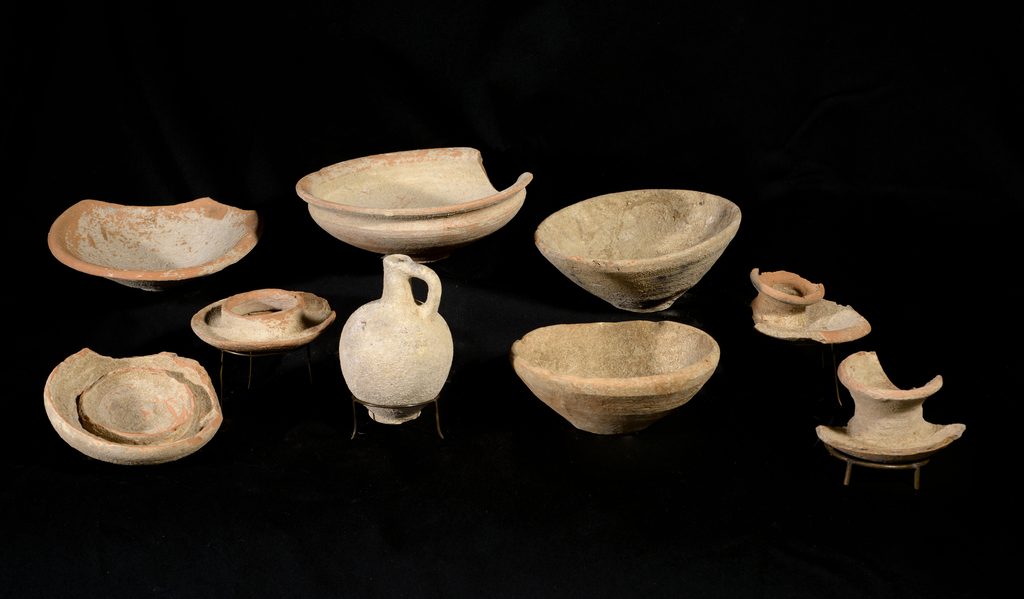
The fortress was uncovered by IAA archaeologists working with teenage volunteers and announced in 2020. It measures 18 by 18 meters (59 by 59 feet), with a watchtower at each of its four corners, and a massive threshold carved from a single rock weighing around three tons was preserved at the entrance. The excavators found a large number of bowls, some made in a style copying Egyptian bowls, and the building follows the plan known from other sites in Israel as Egyptian “governor houses.” In the middle of the 12th century BCE, the Egyptians left the land of Canaan and returned to Egypt. Ganor and Weissbein said that once the Egyptians left, the unprotected Canaanite cities fell, probably at the hands of the Philistines.
The fortress sat on a fault line. According to the excavators, the Philistines confronted the Egyptians and the Canaanites on a border that presumably stretched between the Philistine kingdom of Gath and the Canaanite kingdom of Lachish along Nahal Guvrin. Judah held the hill country to the east. The Valley of Elah, where David faced Goliath, runs through the same lowlands just to the north.
A Fortress Rebuilt for Modern Visitors
The renovation included preserving the citadel walls and coating the buildings with a protective material designed to blend into the landscape. Workers highlighted the fortress rooms so visitors can see the full layout of the structure. KKL-JNF also built a new access road, parking, a picnic area and a new signage system, along with accessible parking and an accessible path leading to the citadel.
The Guvrin Forest is itself a KKL-JNF project. Planting began in 1963, and the forest now covers about 4,400 dunams, roughly 1,087 acres, of conifers, broad-leaved trees and Mediterranean shrubland that bursts with seasonal wildflowers.
KKL-JNF Chairman Eyal Ostrinsky tied the project to the organization’s mission. “Preserving the heritage sites of the Land of Israel is part of our connection to our roots and our responsibility to pass on the story of this land to future generations,” Ostrinsky said. “Gal’on Fortress offers the public an opportunity to experience a fascinating chapter in the country’s history firsthand, amid the landscapes of the Guvrin Forest.”
Ami Shahar, the IAA’s Deputy Director-General for Conservation, said excavation is only the first stage of an archaeologist’s responsibility. “For us, archaeology does not end with uncovering ancient remains; it is equally important to ensure that the sites excavated by the Israel Antiquities Authority are preserved for years to come, so that the public can continue to enjoy them in the future,” Shahar said. “We invite everyone to come, explore the remains of the ancient fortress, and enjoy a unique combination of history, nature and accessibility in the heart of the Guvrin Forest.”
Heritage Minister Amichai Eliyahu drew a direct line from the fortress to Israel’s current wars. “In these days when the State of Israel is required to be on vigilant guard for its security, the Gal’on Fortress reminds us that the struggle for the land is not a new story,” Eliyahu said. “Already in the days of the Judges, the communities of ancient Israel faced the reality of conflicts with neighboring peoples, and just like today – out of a complex reality, Israel’s strong grasp on the land of our heritage was gradually established in this region. Visiting the site connects us to our roots, and sharpens our responsibility to continue to watchfully protect our land, from every direction.”
Why Did God Leave Enemies in the Land?
Eliyahu’s words point to a question that runs through the entire Book of Judges. God promised the land to Israel and brought the people across the Jordan under Joshua. Why, then, did He leave the Philistines and Canaanites in place, ensuring generations of war in the very hills where the Gal’on Fortress stands?
The Bible names this exact frontier as unfinished business. At the end of Joshua’s life, God lists the territory still in enemy hands, and the list reads like a map of the fortress’s surroundings: “This is the land that yet remaineth: all the regions of the Philistines, and all the Geshurites; from the Shihor, which is before Egypt, even unto the border of Ekron northward—which is counted to the Canaanites; the five lords of the Philistines: the Gazite, and the Ashdodite, the Ashkelonite, the Gittite, and the Ekronite” (Joshua 13:2-3). Egypt, the Canaanites and the Philistine lord of Gath all appear in a single verse, the same three powers the archaeologists identified at Gal’on.
Judah received the lowlands as its inheritance. The tribal list opens with the words “In the Lowland” (Joshua 15:33), ba-Shefelah in Hebrew, and includes Lachish and Mareshah, which lies beside modern Beit Guvrin, a few kilometers from the fortress. Judah took the hills and struggled in the valleys: “And the LORD was with Judah; and he drove out the inhabitants of the hill-country; for he could not drive out the inhabitants of the valley, because they had chariots of iron” (Judges 1:19). The lowland roads, like the one under Gal’on, remained a battleground.
The Book of Judges then gives God’s reason directly:
“Now these are the nations which the LORD left, to prove Israel by them, even as many of Israel as had not known all the wars of Canaan; only that the generations of the children of Israel might know, to teach them war, at the least such as beforetime knew nothing thereof” (Judges 3:1-2).
The next verse names the enemies: “the five lords of the Philistines, and all the Canaanites” (Judges 3:3).
The passage describes two purposes. The first is a test. In the previous chapter, God states that He left the nations “that through them I may prove Israel, whether they will keep the way of the LORD to walk therein” (Judges 2:22). The second is training. A generation that entered the land on the miracles of the wilderness had to learn to defend it with its own hands. The land of Israel was given as a gift, and it is held through faithfulness and vigilance.
When Israel failed that test, the Philistines of the coastal plain moved into Judah’s lowlands. “And the children of Israel again did that which was evil in the sight of the LORD; and the LORD delivered them into the hand of the Philistines forty years” (Judges 13:1). This is the era of Samson, whose story unfolds in Zorah, Eshtaol and Timnah, the same strip of Shefelah. The occupation ran so deep that when Samson struck back, the men of Judah came to hand him over to the enemy, and they rebuked him with a sentence that sums up the period: “Knowest thou not that the Philistines are rulers over us? what then is this that thou hast done unto us?” (Judges 15:11).
The men of Judah had accepted foreign rule as a permanent reality and treated the one man fighting it as the problem. Samson refused to accept it. The Sages taught the principle of ma’aseh avot siman l’banim, “the deeds of the fathers are a sign for the children,” which Ramban (Nachmanides) applies throughout his commentary to show that the experiences of earlier generations map the path of those who follow. The Philistines of the coastal plain have their heirs in Gaza. The men of Judah who wanted quiet at any price have their heirs as well, in every voice that urged Israel to accept terror on its borders as a fact of life.
The struggle over the Shefelah ended in Israel’s favor. After Goliath fell in the Valley of Elah, “the men of Israel and of Judah arose, and shouted, and pursued the Philistines, until thou comest to Gai, and to the gates of Ekron. And the wounded of the Philistines fell down by the way to Shaaraim, even unto Gath, and unto Ekron” (1 Samuel 17:52). Saar Ganor, one of the Gal’on excavators, also excavated Khirbet Qeiyafa, the Elah Valley fortress that many scholars identify with biblical Shaaraim. Two generations later, King Rehoboam fortified the same frontier, building “cities for defence in Judah” (2 Chronicles 11:5), among them “Gath, and Mareshah, and Ziph… and Lachish, and Azekah” (2 Chronicles 11:8-9). The strategic logic that placed a fortress over the Guvrin road guided the kings of Judah as well.
Stones That Testify
The Gal’on Fortress was built by Canaanites or Egyptians trying to hold a road against the newcomers arriving from the sea and from the hills. Three thousand years later, the fortress has been restored by the Jewish National Fund, in a forest planted by Jews, and reopened by an agency of the Jewish state, with a Jewish minister of heritage reading its lessons aloud. Pharaoh’s governors are gone. The five lords of the Philistines are gone. The Canaanite kings of Lachish are gone. The people of the Book of Judges are back on the road between the coastal plain and the hills, guarding it once again, and this time they planted a forest around it.