


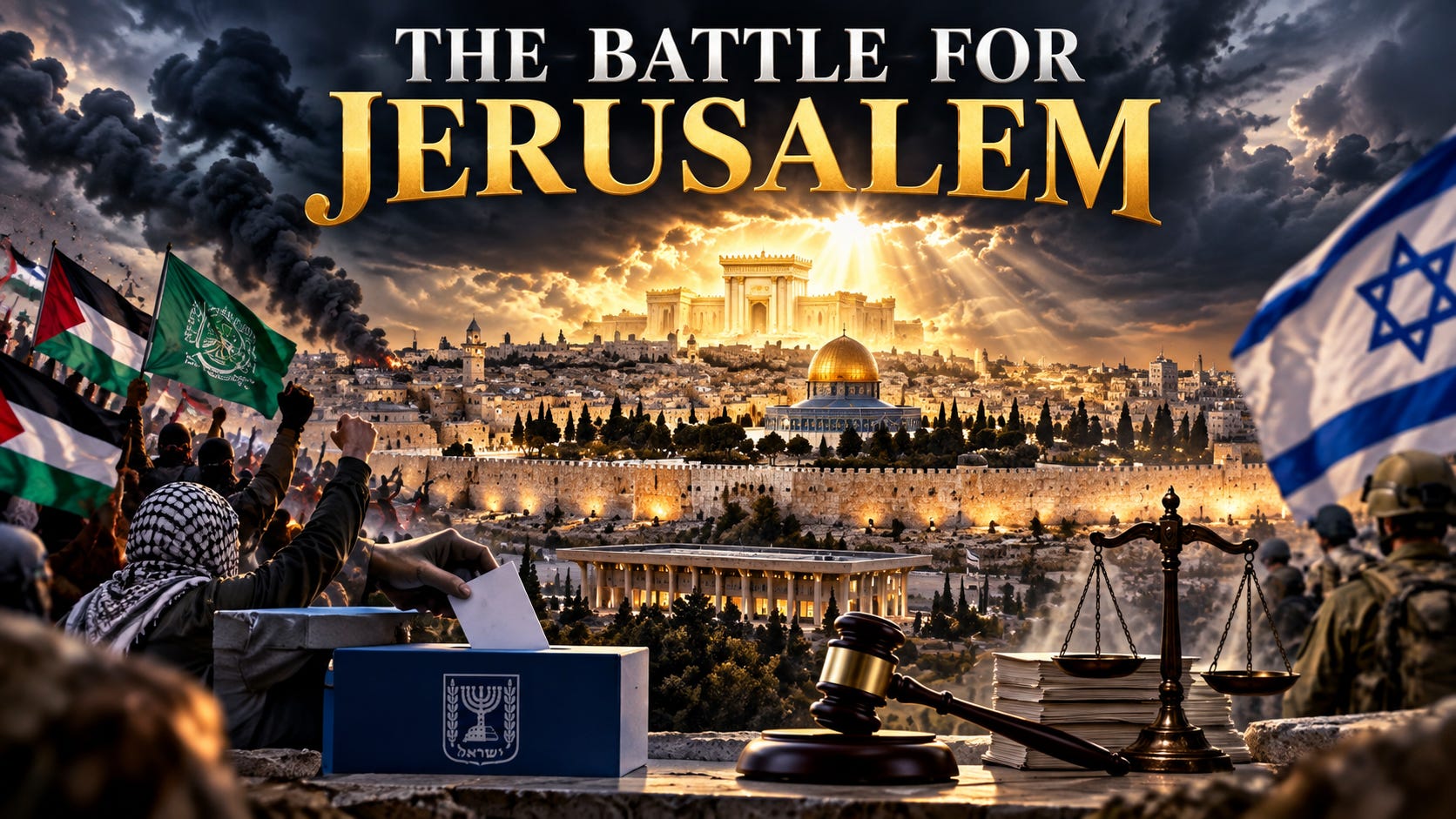
Israel’s elections raise questions extending far beyond the formation of the next government. The political influence of Arab-led parties, conflicting media polls, and controversial judicial decisions force us to confront a fundamental question: what does it mean to preserve Jewish sovereignty in the Jewish homeland?
Zionism was founded upon a simple proposition: after centuries of exile, persecution, and dependence upon foreign rulers, the Jewish people must regain control over their national destiny. We did not return after nearly two thousand years merely to establish another country with a flag, army, and parliament. These are instruments of a greater mission. As Yeshayahu declares, וּנְתַתִּיךָ לְאוֹר גּוֹיִם — “I will make you a light unto the nations.” Our distinctiveness is not something to apologize for, but a responsibility to build a society rooted in Torah, justice, and morality.
Yet Israel’s Jewish identity remains contested. Certain political movements reject Jewish sovereignty, while others seek to redefine the state’s constitutional character. These positions exist among particular Arab political movements, elements of the ideological left, and some Haredi groups, although their motivations differ. The question is whether Jewish national self-determination should remain the defining principle of Israel.
History offers a warning. In 1974, under Yasser Arafat, the PLO adopted its Phased Plan, envisioning incremental territorial and political gains toward broader objectives. The plan did not specifically prescribe electoral participation as a means of dismantling Israel, but it demonstrated the strategic importance of political advances.
Consider Ahmad Tibi, who advised Arafat before entering the Knesset; Haneen Zoabi, who publicly rejected the Zionist vision; and Azmi Bishara, who left Israel amid allegations of assisting Hezbollah, which he denied and which were never resolved through a completed trial. More recently, Balad chairman Sami Abu Shehadeh withdrew his candidacy during disqualification proceedings over an article concerning October 7. These cases differ, but they raise questions about the boundary between legitimate political opposition and support for hostile armed activity.
Following the election, Prime Minister Netanyahu publicized remarks attributed to Joint List politician Osama Saadi, who reportedly referred to Palestinians in Gaza, Judea and Samaria, and “occupied Jerusalem.” That last expression deserves particular attention. Under Israel’s Basic Law, Jerusalem, complete and united, is its capital. Although the city’s status remains internationally disputed, describing East Jerusalem as occupied challenges Israel’s claim to sovereignty there. The disagreement concerns not merely government policy but competing visions of Jerusalem’s future.
There is a profound prophetic dimension to this struggle. Zechariah declares, וְהָיָה בַיּוֹם הַהוּא אָשִׂים אֶת יְרוּשָׁלִַם אֶבֶן מַעֲמָסָה לְכָל הָעַמִּים — Jerusalem will become a burdensome stone for the nations. Later, he describes nations gathering against Jerusalem in war. How striking that Hamas named its October 7 attack طوفان الأقصى — Al-Aqsa Flood, invoking the holy site on the Temple Mount.
But who says that every dimension of the prophetic struggle over Jerusalem must unfold exclusively on a military battlefield? Could the battle also take place within the Knesset, through elections, judicial decisions, constitutional disputes, and competing visions of Jewish sovereignty? Perhaps the struggle over Jerusalem is not only about who physically controls its streets and sacred sites, but also about who determines the character and future of the state governed from its capital. We cannot know with certainty how these ancient prophecies relate to contemporary events, but the possibility that Jerusalem’s political institutions themselves could become an arena of this historic struggle deserves serious contemplation.
Israel already possesses constitutional safeguards. The Nation-State Basic Law recognizes the Jewish people’s unique right to national self-determination, while Section 7A of Basic Law: The Knesset permits disqualification of parties or candidates under specified circumstances. Whether these protections should be more firmly entrenched against alteration by an ordinary parliamentary majority deserves serious consideration, alongside the protection of individual rights and political equality.
The election also raises questions about civic responsibility. For years, the demand to end Haredi military exemptions has dominated political debate, while most Arab citizens are neither conscripted nor universally required to perform national service. Their legal circumstances differ, but the question of shared obligations remains.
One proposed reform would require both genuine, current Israeli residency and fulfillment of military, national, or recognized civilian service for voting eligibility. Such a requirement would apply across communities rather than by ethnicity or religion. It would also fundamentally depart from universal adult suffrage and require careful provisions for those unable to serve, young adults, and citizens temporarily abroad. The central question is whether political participation should be conditional upon residence and national service, and what that would mean for equal citizenship.
The Israeli media also deserves scrutiny. For months, competing networks presented sharply different polling projections, often accompanied by confident political interpretations. Channel 14 offered a substantially different picture from other major broadcasters. Polling discrepancies do not prove deliberate manipulation, but they demand transparency about methodology, assumptions, and editorial judgment. A free press must inform the public rather than present political preferences as scientific certainty.
The judiciary presents another controversy. Before the election, the Central Elections Committee voted to disqualify the Joint List and Ra’am, but the Supreme Court overturned those decisions, finding insufficient evidence under the applicable legal standard. By contrast, Rabbi Meir Kahane’s Kach party was disqualified in 1988, while Michael Ben-Ari and Baruch Marzel were barred in 2019 on grounds involving incitement to racism. The cases involved different evidence and legal grounds, but the contrasting outcomes invite scrutiny of the consistency of electoral disqualification standards.
Taken together, these controversies invite an unsettling question. Are we witnessing unrelated institutional disputes, or a convergence of forces whose cumulative consequences could weaken Israel’s Jewish character? A coordinated conspiracy cannot be assumed without evidence. Yet different political and ideological movements can produce overlapping consequences without sharing a common strategy.
Our mystical tradition offers a spiritual framework for contemplating internal challenges during redemption. The Torah introduces the Erev Rav, the mixed multitude that accompanied Israel from Egypt, while later teachings, including Tikunei Zohar, associate the concept with spiritual confusion and corruption. These teachings do not justify labeling political opponents or entire communities as enemies. They do, however, invite reflection upon the danger of losing sight of the purpose of national restoration.
Every weekday, in the Amidah, we beseech Hashem: השיבה שופטינו כבראשונה ויועצינו כבתחילה — “Restore our judges as at first, and our advisers as in the beginning.” We are praying for justice rooted in Torah, guided by righteousness, and worthy of the Jewish people’s destiny. Today we possess a Jewish army, parliament, and judiciary, but sovereignty and the complete restoration of Jewish national life are not necessarily the same thing.
Perhaps the deepest lesson of these elections is that Jewish sovereignty cannot be taken for granted. Governments rise and fall, but the restoration of Jewish independence after nearly two thousand years is historically extraordinary. We are no longer merely praying for national restoration. We are living through it, with the responsibility to shape its institutions and fulfill its purpose.
The Geula is not simply about possessing a state. It is about what we do with the sovereignty restored to us. May we merit the fulfillment of the blessing’s concluding words, ברוך אתה ה׳ מלך אוהב צדקה ומשפט — “Blessed are You, Hashem, King Who loves righteousness and justice.”
This article first appeared in Rabbi Wander’s Substack

