

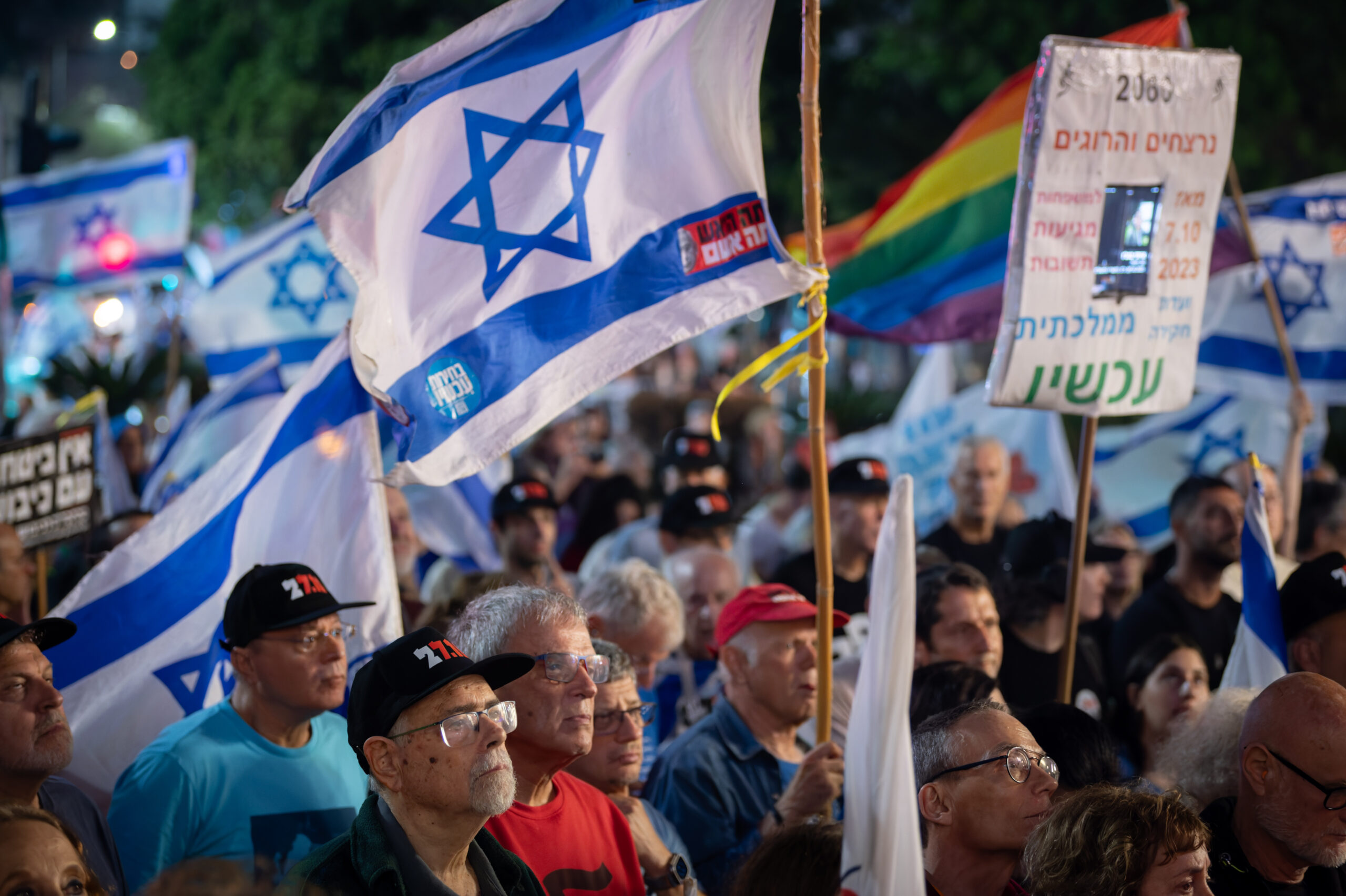
Israelis go to the polls tomorrow, and the final surveys agree on only one thing: neither camp is close to the 61 seats needed to form a government. For followers of Rabbi Yitzchak Kaduri, the elder of the kabbalists, a possible deadlock carries a meaning far beyond politics. Decades ago, Rabbi Kaduri named a sign that would precede the Messiah and a specific year it would arrive. The sign was elections without a government. The year was 5787, the Hebrew year that began this past September.
The year surfaced in a recent lesson by Rabbi Yoav Alon, a former scientist who teaches on the Or HaGeula (“Light of Redemption”) YouTube channel, titled “The Redemption in 2027!” Rabbi Alon related a story he heard from his friend and teacher, Rabbi Uri Sofer.
Thirty-seven years ago, as the year 5750 approached, expectation of the Messiah ran high in the Torah world. Some promised that he could not fail to arrive. Rabbi Sofer and his study partner came to pray at sunrise in the kabbalists’ yeshiva in Jerusalem, met Rabbi Kaduri, and asked him whether the Messiah and the redemption were about to be revealed in 5750.
“Rabbi Kaduri made a gesture of humility, of dismissal,” Rabbi Alon said, “and told them that according to the sages of Baghdad, it was received that the redemption would be in the year 5787.”
“It was hard to wait another 37 years,” Rabbi Alon added.
The 37 years have passed.
The last disciple of the Ben Ish Chai
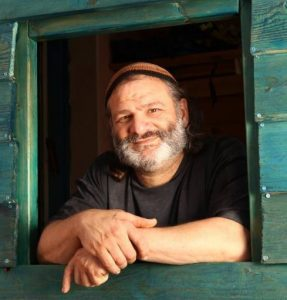
Rabbi Kaduri was born in Baghdad on the 16th of Tishrei, the day of Sukkot when the patriarch Isaac is welcomed into the sukkah as a heavenly guest, and he was named Yitzchak for him. His father, a spice trader, sent him as a child to study at Baghdad’s Zilka yeshiva, where he met the Ben Ish Chai, Rabbi Yosef Chaim of Baghdad, the leading Sephardic sage of his generation. According to Rabbi Alon, the Ben Ish Chai blessed the 10-year-old with a long life and instructed him to remain hidden until age 80. Only then did Rabbi Kaduri emerge as the famous elder of the kabbalists.
His brilliance showed early. At 17, he delivered a sermon before the great Torah scholars of Baghdad, who afterward asked him to limit his public sermons for fear of the evil eye. He moved to the Land of Israel in 1923, studying under the leading kabbalists of the day, including Rabbi Yehuda Ftaya and Rabbi Yaakov Chaim Sofer, author of the Kaf HaChaim. He knew all the writings of the Arizal, Rabbi Yitzhak Luria, by heart.
He later headed the Nachalat Yitzchak yeshiva for kabbalists, and his Jerusalem home became an address for thousands seeking blessings: public figures, politicians, army and police officers, and ordinary citizens. He recorded the name and mother’s name of every person who came to him, filling dozens of notebooks.
Politicians sought him out. On the eve of the 1996 election, Benjamin Netanyahu came to his home for a blessing. Rabbi Kaduri promised him, “Tomorrow you will be prime minister.” Netanyahu won.
Elections without a government
Rabbi Kaduri left a second sign tied directly to the ballot box. Rabbi Eliyahu Merav, who frequented Rabbi Kaduri’s court as a young man some 40 years ago, told Israel365 News, then Breaking Israel News, in 2019 that someone once asked the elder of the kabbalists when the Messiah would arrive and what signs would precede him. Rabbi Kaduri answered, “When there will be elections, but there will not be a government.”
Rabbi Merav said that at the time, the answer seemed contradictory and no one understood it. Elections always produce a government. Then, in 2019, Netanyahu won the April election but could not form a coalition after Avigdor Liberman refused to join, and for the first time in Israel’s history, the country was forced into a second general election. Rabbi Merav said he realized it was precisely the situation Rabbi Kaduri had described decades earlier.
The sign appeared in writing as well. That September, as the country headed into the repeat vote, the Jerusalem Post reported on a hidden manuscript by a leading mystic, accompanied by a photograph of Rabbi Kaduri meeting Netanyahu. The manuscript warned that on the eve of 5780, which it called “the year of corrections,” there would “not be a government in Israel for an extended period.” The years 5780 and 5781 brought a second and a third election, and Israel had no permanent government until May 2020. Two more elections followed by 2022.
Tomorrow’s vote takes place in the year Rabbi Kaduri named, with the sign he gave once again in view. The average of the final four polls showed neither bloc close to a 61-seat majority.
The Messiah he said he met
In his final years, Rabbi Kaduri spoke of little else. His students say that both the Ben Ish Chai and the Lubavitcher Rebbe blessed him to live to see the final redeemer. His closest followers said he told them he met the Messiah on the 9th of Cheshvan, 5764, November 4, 2003. In his final Yom Kippur address, shortly after Hurricane Katrina, he called on the Jews of the world: “Jews must come to the land of Israel to receive our righteous Mashiach.”
Rabbi Kaduri passed away on the 29th of Tevet, 5766, January 28, 2006. His funeral drew over 200,000 people, with eulogies by Rabbi Ovadiah Yosef, Rabbi Mordechai Eliyahu, and President Moshe Katzav.
Rabbi Kaduri’s students preserved his date for 5787 for decades. The question is: what made the sages of Baghdad point to this year, and why does the Bible tie the Third Temple to Cheshvan, the very month we are in now?
A thousand years as one day
The answer begins with a verse from Psalms, attributed to Moses himself:
“For a thousand years in Thy sight are but as yesterday when it is past, and as a watch in the night.” (Psalms 90:4)
The Sages built a historical framework on this verse. The Talmud (Sanhedrin 97a) teaches that the world will exist for six thousand years. Each millennium corresponds to one day of Creation, and the seventh corresponds to the Sabbath, the era of redemption. “The six days of preparation called Shabbat correspond to the six thousand years of this world,” Rabbi Alon explained.
He said the year 5750 marked 750 years into the sixth millennium, “midday,” when “the light of Shabbat already begins to break through.” Rabbi Kaduri accepted the framework and corrected the date.
The month that was promised the Temple
The deeper key lies in the Temple’s own calendar. The Bible records precisely when King Solomon finished building the First Temple:
“And in the eleventh year, in the month Bul, which is the eighth month, was the house finished throughout all the parts thereof, and according to all the fashion of it. So was he seven years in building it.” (1 Kings 6:38)
Bul is the ancient name for Cheshvan, the eighth month counting from Nisan. The Temple stood complete in Cheshvan, yet the dedication took place when all Israel gathered to King Solomon “in the month Ethanim, which is the seventh month” (1 Kings 8:2), which is Tishrei, nearly a year later.
The Sages explain what happened in between. The midrash Yalkut Shimoni (Kings, 184) teaches that the finished Temple stood locked for twelve months while the people grumbled against Solomon. God had commanded the wait. Rabbi Alon said Tishrei was chosen because it was likely the month of the birth of Abraham. Cheshvan was left without its celebration, and God promised to compensate the month with the dedication of the Third Temple.
The same pattern repeated with the Tabernacle in the desert. Rabbi Alon explained that the Mishkan was completed in Kislev, but God chose to wait for Nisan, likely the month of the birth of Isaac. Kislev received its reward centuries later, when the Maccabees purified the Second Temple from the defilement of the Greeks on the 25th of Kislev, the first day of Hanukkah.
Kislev has received its reward. Cheshvan is still waiting.
The month is commonly called Mar Cheshvan, “bitter Cheshvan,” because it is the only month of the Jewish year without a single festival. “But the Holy One, Blessed be He, promised it that in the future, the Temple would be dedicated in it,” Rabbi Alon said, “and then Cheshvan will be raised up.”
It was in Cheshvan that Rabbi Kaduri said he met the Messiah. It is Cheshvan that holds the promise of the Third Temple. And this Cheshvan falls in 5787.
Rabbi Alon stressed that 5787 marks the beginning of the redemption, and that its pace depends on Israel. “This is the beginning. It can be long,” he said. “But it can also be short, if we are worthy, and perhaps we can receive the Temple already in the month of Cheshvan.” Then he added, “Everything is ready.”
Hidden in the letters of the Bible
Rabbi Kaduri’s date has found support from another direction. Rabbi Matityahu Glazerson, one of the best-known researchers of Torah codes, published a video presenting a table he says he found long ago, which he says confirms that the redemption will come in 5787.
Torah codes are words and phrases found by reading the letters of the Five Books of Moses at equal intervals. Rabbi Glazerson has published more than 30 books on the subject and co-authored Torah Codes: A Glimpse into the Infinite with mathematicians Eliyahu Rips and Robert Haralick. The authors acknowledge that the existence of codes about events thousands of years after Sinai is a matter of controversy, and treat it as a question of probability and statistics. Rabbi Glazerson’s tables have drawn attention before. In July 2016, he published a table he said showed Donald Trump would win the presidential election.
In his new video, Rabbi Glazerson points to 5787 in the table alongside Mashiach, the Messiah, and ties the redemption to keeping the Sabbath and to teshuva, repentance.
A warning before the dawn
Rabbi Alon closed his lesson with a warning from Rabbi Yisrael of Ruzhin, the 19th-century Hasidic master. Before the coming of the Messiah, the Ruzhiner taught, there will be two towering Torah scholars, each fluent in every part of the Torah. One will stand on the side of holiness. The other will drag Israel down to the depths, and he comes from the erev rav, the “mixed multitude” that left Egypt with Israel and has troubled the nation ever since. His students asked how they would tell the two apart. The answer was a simple test: the one from the erev rav praises the wicked and persecutes the righteous.
The end is known
Rabbi Merav drew a lesson from Rabbi Kaduri’s signs that applies directly to this year. He said that signs of the Messiah’s approach are a call to focus even more on doing God’s will. If the Messiah does not appear tomorrow, the main thing is to avoid confusion, because the end is known and clear.
The Bible counted the First Temple in months: completed in Bul, dedicated in Ethanim. The Sages kept that calendar for the Third Temple and gave Cheshvan a promise that has waited three thousand years. Rabbi Kaduri spent decades hidden in study, emerged at 80, and named the year to two young men who asked him the question every generation has asked. He did not live to see 5787. Tomorrow, Israel votes in the year he named, in the month the Temple was promised, under the sign he gave. The bitter month is half gone.

