




The Strait of Hormuz has been closed for more than seven months. Iranian missiles and drones have struck Saudi oil refineries, the US Embassy in Riyadh, and the airspace of half the Gulf. On Thursday, two Houthi cruise missiles hit Riyadh’s King Khalid International Airport and killed three people. The same day, President Trump announced that the United States “will not be attacking Iran at any time prior to the Midterm Elections,” while the Pentagon readied plans for a renewed campaign.
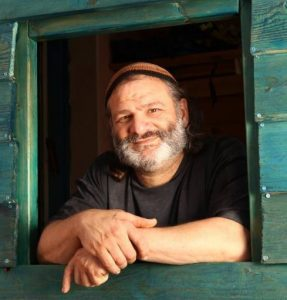
To Rabbi Tovia Singer, the headlines are an open page of the Bible.
“Right now, we’re in a war that is identified in Ezekiel 38 and 39 as a war between Persia and Israel,” Singer told Rabbi Aron Sokol, host of the YouTube channel Parsha Inspired, in an interview recorded on the eve of Sukkot. “That’s transparent, and that’s the headlines around the world. There could be a war going on in Africa, in Nigeria. No one pays attention to that. This is the big one.”
Persia Leads the Coalition
Singer said the identity of the attacker requires no guesswork. “We’re told this in unambiguous language in Ezekiel 38:5. Persia’s the lead, but we’re given around it many other peoples that are attacking Israel.”
The verse reads:
“Persia, Cush, and Put with them; all of them with shield and helmet.” (Ezekiel 38:5)
Ezekiel goes on to describe an assault from “the uttermost parts of the north.” Singer pointed to Lebanon. “Right now, Israel is dealing with our enemies in the north who are directly connected to Iran. These are the Hezbollah, which is a terror organization, a Shia Muslim group that’s funded… They are proxies of Iran,” he said. “People will say, what about the north? That’s what’s going on literally now, in real time.”
The war with Iran began on February 28, when the United States and Israel launched strikes on the Islamic Republic. Two days later, Hezbollah opened fire on northern Israel, and the IDF went into southern Lebanon. A temporary ceasefire with Lebanon has held on paper since April, while Israeli strikes on Hezbollah continue and the terror group has rejected two US-brokered agreements requiring it to disarm.
“Hooks in the Mouth of a Beast”
Singer said the strangest feature of the war is Iran’s refusal to walk away from it.
“Iran has no good reason to be in this war,” he said. “It sits on one of the largest oil reserves in the world, and natural gas. Just let the Strait of Hormuz open up, let it just be open to free traffic, and abandon any ambition for a nuclear program. That’s all Iran would have to do. It has a population of nearly 100 million people that are at the edge of economic destruction. Just let it go.”
Tehran has done the opposite. On October 4, Iran’s parliament speaker and chief negotiator, Mohammad Bagher Ghalibaf, declared that “the Strait of Hormuz will not open until our seven conditions based on the Islamabad memorandum are met.” The Revolutionary Guards have been charging tolls reported at up to $2 million per ship for passage through a waterway that normally carries a fifth of the world’s oil and gas.
“They’d rather be attacking fellow Muslims,” Singer said. “They’re attacking not Israel so much right now, but attacking Arab countries. And they don’t need this. But it’s clearly God is doing to Iran what God did to Pharaoh. He’s not letting them act like a rational interlocutor.”
Singer was describing Ezekiel’s account of how Gog comes to the battle:
“And I will turn thee about, and put hooks into thy jaws, and I will bring thee forth, and all thine army, horses and horsemen.” (Ezekiel 38:4)
“The God of Israel is dragging Iran into this, Ezekiel 38:4, with hooks in the mouth, like a beast,” Singer said.
He also predicted the American president’s dilemma before Trump’s announcement. “Trump doesn’t want this. Trump wants to get to the midterm elections and win in the legislative branch. He wants this to go away,” Singer said. “I’m sure he’s scratching his head: what will it take for Iran to go away without him attacking? It won’t go away. And Iran will force it, pushing the envelope.”
According to Axios, the Pentagon instructed US Central Command on October 7 to finish preparations for resuming major combat, and US officials briefed IDF Chief of Staff Eyal Zamir on a possible return to fighting within three weeks.
Why the Redemption Takes Time
Singer said the slow pace of the war has a purpose. He used the Passover Seder to explain it. Seder means “order,” and the Passover meal unfolds in 15 distinct stages. The Haggadah tells of the Sages in Bnei Brak who discussed the Exodus all night, until their students came to tell them it was time for the morning Shema.
“Each stage is not time-bound. Each stage rather is bringing us to the next level,” Singer said. “If it suddenly just happens, no one has a chance to rectify their ways, to come to the God of Israel. So these stages are intrinsically beneficial, in that they are turning the eyes of the Jewish people and the world to Hashem.”
He said the waiting has already produced results. “How many people do you think in the last three years since October 7th have repented? We don’t know the number, but it’s enormous,” he said. “They can’t even make tzitzit quickly enough to keep up with the demand.”
Singer said Ezekiel explains his own prophecy. “Unlike other prophets, Ezekiel provides his own commentary. He’s like his own Rashi,” he said. “He explains very simply why this has to happen: so that my glory will be spread around the world, and the nations will see the glory of Hashem, and they should repent and recognize the God of Israel.”
He pointed to the verses that state that purpose directly:
“And I will set My glory among the nations, and all the nations shall see My judgment that I have executed, and My hand that I have laid upon them. So the house of Israel shall know that I am the LORD their God, from that day and forward.” (Ezekiel 39:21-22)
The Sukkah and the Concrete Roof
What does a flimsy hut of branches have to do with a war of missiles and nuclear threats?
The connection runs deep in Jewish tradition. On the Shabbat that falls during Sukkot, synagogues around the world read Ezekiel’s prophecy of Gog as the haftarah, the weekly reading from the Prophets. On the first day of Sukkot, they read Zechariah 14, the prophecy of the nations gathering against Jerusalem. The Sages bound the holiday to the final war.
Singer said the key lies in the roof. The schach, the covering of a sukkah, must be made of loose branches or bamboo, cut off from the ground. “The schach of any sukkah is so vulnerable that a great wind can come and blow it away. If it rains, it’s going right through,” he said. That fragile roof recalls the ananei hakavod, the clouds of glory that sheltered Israel for 40 years in the wilderness.
Singer contrasted it with “the reinforced steel concrete roof” of the bomb shelter. “The people who trust in the material roof go to war against the children of Israel here in the Holy Land, a very tiny place, smaller than the state of New Jersey,” he said. “And it’s against the people that don’t trust in the roof, but rather trust in the God of Israel. In this case, trust in the clouds of heaven.”
He said leaving the house for the sukkah completes the work of Yom Kippur. “We spent an entire day fasting and praying, 25 hours. But after all, it was basically a lot of talking and chest pounding,” he said. “Now we want to physically, demonstrably make it clear that everything we said, we really meant. Lord, we love you very, very much. We meant it.”
Singer said that trust will one day be shared by the nations. Zechariah prophesies that after the final war, the survivors of the nations “shall go up from year to year to worship the King, the LORD of hosts, and to keep the feast of tabernacles” (Zechariah 14:16).
“In what universe do non-Jews celebrate Sukkot? In this universe, the messianic universe,” Singer said. “Those who somehow resisted the temptation of trusting in that reinforced concrete roof, but instead chose the God of Israel, Jew and Gentile, they will stand side by side, beneath the clouds of glory in the sukkah.”
The Cloud That Caught the Arrows
The war that began on October 7, 2023, began on Simchat Torah, the day that closes Sukkot. Two years later, on October 13, 2025, the last 20 living hostages came home on Hoshana Rabbah, the final day of Sukkot itself. Since then, Israel has fought much of the war overhead, intercepting barrages of Iranian ballistic missiles in the sky.
Rashi teaches that when the Egyptians pursued Israel to the sea, the pillar of cloud stood between the camps and caught the Egyptians’ arrows and stones (Rashi on Exodus 14:19). Singer said the same pattern has repeated.
“That’s how it was 3,300 years ago for our ancestors. The Egyptians threw spears against us, but that cloud in the heaven turned it all around,” he said. “We are reacting to the arrows that come towards us, and Hashem then protects us, and those arrows turn back and take out the enemy.”
He made his most striking claim about October 7 itself. Before the massacre, he said, Israel stood “at the precipice of destruction,” surrounded by Hamas in Gaza, Hezbollah in Lebanon, the Houthis in Yemen, and an Iran on the verge of a nuclear weapon.
“If October 7 did not occur, Iran would have acquired the nuclear weapon and had the delivery system,” Singer said. “If Israel would try to attack Iran’s nuclear weapons on its own, between Hezbollah, Hamas, the Houthis, Iran, there would have been thousands of missiles launched at us a day. If Israel could take out 95 percent, that means 5 percent gets through.”
“We somehow were saved by the worst attack against our people since the Holocaust,” he said.
Singer cited Ezekiel’s words to Israel: “B’damayich chayi,” “In thy blood, live” (Ezekiel 16:6). Isaiah gave the same promise:
“Take counsel together, and it shall be brought to nought; speak the word, and it shall not stand; for God is with us.” (Isaiah 8:10)
“It’s not because we’re smarter than our opponents. Not because Jews are clever. It’s not because the Israel Defense Forces is better trained,” Singer said. “There’s one reason: because the God of Israel is with you. When God is with you, nothing is impossible.”
Pharaoh at the Sea
Singer ended where the redemption began, at the shore of the Red Sea. “If they had just stayed behind and not gone into the sea in hot pursuit… After all, they had just seen 10 major plagues. Maybe this is not a good idea. Just go back,” he said. “Oh no, they keep going. Very much like present-day Iran. They just won’t give up.”
The ships are still anchored off Bandar Abbas. The Pentagon is still drawing up its target lists. The Houthis are still firing on Saudi Arabia. Ezekiel wrote that God would put hooks in the jaws of the invader and drag him to the mountains of Israel, so that the nations and the house of Israel would know Him. Singer said the outcome was written 2,500 years ago.
“Here we are, and the God of Israel has delivered us,” Singer said, citing Isaiah: “No weapon that is formed against thee shall prosper” (Isaiah 54:17). “We’re living in a remarkable time, when we see the hand of God. The hand of God in the Bible always means the salvation of Israel before the eyes of the nations of the world.”