
When Lamentations describes Jerusalem in ruins, it reaches for one image above all: a widow.
“How deserted lies the city, once so full of people! How like a widow is she, who once was great among the nations!” (Lamentations 1:1)
Every Tisha B’Av, the fast day mourning the destruction of the Temples, Jewish communities around the world read those words aloud. Out of every image of grief available, the text chooses the widow.
The Bible commands care for the poor, the hungry, and the stranger. Yet it returns to the widow again and again, and God goes so far as to attach His own name to her cause.
Why her?
The woman the Bible keeps returning to
The widow appears throughout the Bible, often beside the orphan and the stranger. The laws of Moses build her into the farming year: the forgotten sheaf, the olives left on the branch, and the grapes left on the vine all belong to her (Deuteronomy 24:19-21). Every third year, a tithe goes out so that she “may come and eat and be satisfied” (Deuteronomy 14:29).
The Prophets held Israel accountable for how it treated her. Isaiah commands, “plead the case of the widow” (Isaiah 1:17), then condemns Jerusalem’s leaders because “the widow’s case does not come before them” (Isaiah 1:23). Jeremiah, Ezekiel, Zechariah, and Malachi all return to the same charge (Jeremiah 7:6; Ezekiel 22:7; Zechariah 7:10; Malachi 3:5).
Then God speaks about her in the first person:
“Do not take advantage of the widow or the fatherless. If you do and they cry out to me, I will certainly hear their cry. My anger will be aroused, and I will kill you with the sword; your wives will become widows and your children fatherless.” (Exodus 22:22-24)
Few commands in the Bible carry a warning like that. He promises to hear the widow Himself, and whoever harms her will leave a widow behind.
Why the widow is the test
The Sages noticed that this law protects every vulnerable person, yet the Bible names the widow and the orphan specifically. They explained that the Bible names the people most easily wronged (Mekhilta on Exodus 22:21). A widow in the ancient world could lose her protector, her advocate, and her income in a single day.
Maimonides takes the idea further. A person must treat widows and orphans with exceptional care, he writes, because grief leaves them vulnerable, even when they are financially secure. Even the widow of a king deserves gentleness and honor (Maimonides, Laws of Character Traits 6:10).
The Bible’s concern for the widow, then, is not only about money. It is about a person whose world has collapsed, who now walks into every room carrying an absence.
The deepest answer
Still, that does not fully explain why God ties His own identity to her. The Psalms call Him “a father to the fatherless, a defender of widows” (Psalm 68:5). Moses describes Him as the One who “defends the cause of the fatherless and the widow” (Deuteronomy 10:18).
Why would the Creator of heaven and earth introduce Himself this way? The answer lies in Lamentations itself, where Israel became the widow. Jerusalem sat alone, her people in exile, her Temple in ashes. Then Isaiah delivered God’s answer:
“Do not be afraid… You will forget the shame of your youth and remember no more the reproach of your widowhood. For your Maker is your husband…” (Isaiah 54:4-5)
God commands His people to care for the widow, and then He shows them how. When Israel sat alone, He stepped into the empty place Himself.
Every time the Bible tells us to protect her, it asks us to do for her what God did for Israel: to stand in the place where someone is missing.
The empty place today
Jerusalem no longer sits desolate like the widow Lamentations mourned. Its streets are full again, and Zechariah’s vision of old men and women sitting in Jerusalem’s streets while children play around them has come to life (Zechariah 8:4-5). Yet inside that rebuilt nation, the empty place remains.
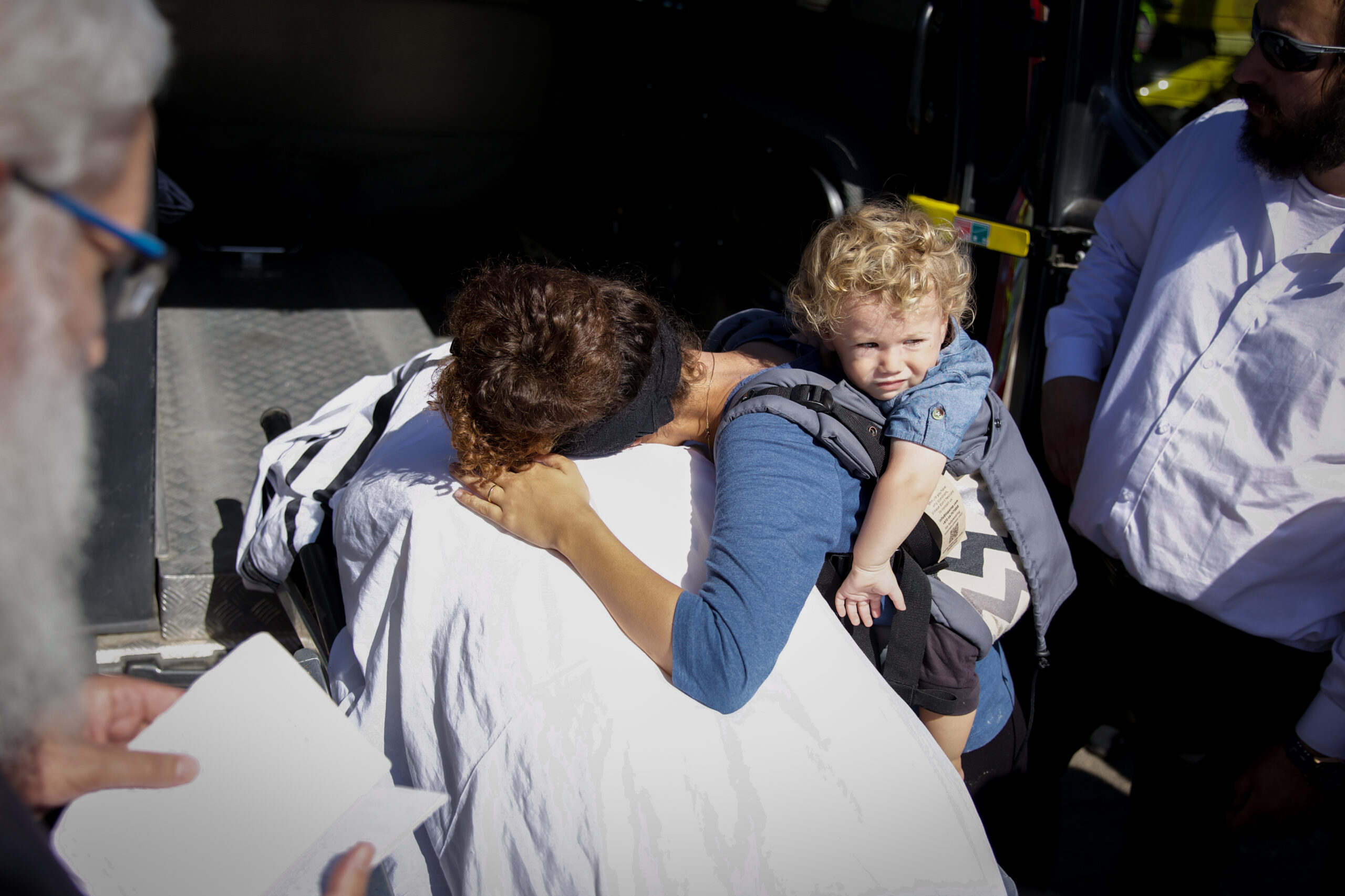
Since October 7, hundreds of Israeli women have become widows through war and terror (Defense Ministry and National Insurance Institute data, October 2026). Sofia Chicheportiche is one of them. On the morning of the attack, her husband, Sgt. Maj. Reouven Chicheportiche, left Shlomit with his security team to defend nearby Pri Gan. They fought for hours and stopped a massacre. Reouven was killed in that battle while Sofia sheltered their four children in their safe room.
Israel365 supporters stood with Sofia and her family as they faced life without him. And many more widows across Israel carry the same burden today. Some lost husbands to war and terror; others lost them to illness or accidents. They still face rent, groceries, medicine, children to raise, and homes to hold together, and the bills do not wait for grief to pass.
This month, Israel365 is dedicating Humanitarian Month to the people the Bible refuses to forget, starting with the widow. Your gift helps provide food, housing support, medicine, and care to widows across Israel.
Lamentations looked at a ruined city and saw a widow. God looked at that widow and refused to leave her alone.
Today, you can stand in that same place.