
Elie Mischel
At Israel365 News’ English-language election town hall, Member of Knesset Ohad Tal and Moshe Feiglin argued that Israel cannot win its wars until it remembers who it is.
On a Friday a few weeks ago, MK Ohad Tal’s phone rang. On the line was the mother of an IDF soldier. Her son was an exemplary soldier with a clean record, the only one in his unit trained to operate its anti-drone system. That week, the army removed him from his post.
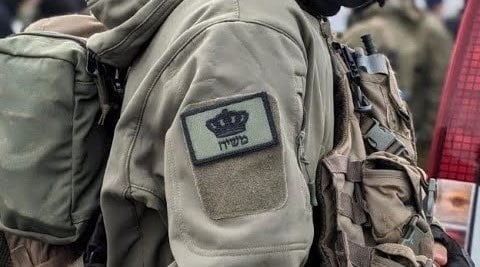
His offense was wearing a patch on his shoulder bearing a single Hebrew word: Mashiach, Messiah. When his commanders told him to take it off, he complied immediately. The army removed him anyway, not for a few weeks or months, but permanently, and from reserve duty as well.
To his mother, the patch was the source of his courage. “They don’t understand that this is what gives them strength, that this is what brings up their spirit,” she told Tal through tears. Her son is not the first. Soldiers wear all kinds of patches on their uniforms, but commanders are obsessed with stripping off one in particular. “Of so many patches in the army, why are they always obsessed with the Mashiach patch?” Tal asked. “Always the same story.”
Tal told the story last week at the Begin Center in Jerusalem, where Israel365 News hosted an English-language town hall with candidates from 10 parties three weeks before the Oct. 27 election. For two hours, the candidates clashed over the failures of October 7, the drafting of ultra-Orthodox men into Israel’s army, and the cost of living. But two men running on the same joint list made a different argument: the real question on the ballot is whether Israel still knows what it means to be a Jewish state. A country that has forgotten will never know how to win its wars.
Tal, a Religious Zionist Party lawmaker, served as a tank commander and fought in Jabalya during the war in Gaza. Moshe Feiglin, the head of the Zehut party, is running this year alongside Religious Zionism. In the 1990s, Feiglin founded Zo Artzeinu (This Is Our Land), a mass protest movement against the Oslo Accords, and stood trial for sedition over it. “I’m very proud of it,” he told the audience.
Tal opened his remarks with a photograph. During the Sukkot holiday, the leaders of Israel’s opposition parties gathered for coffee in a living room. Many Israelis noticed where they were not sitting: in a sukkah, the temporary booth Jews are commanded to dwell in during the Feast of Tabernacles. The Bible commands Israel: “You shall live in booths seven days” (Leviticus 23:42).
For Tal, that picture said everything. Every year, sukkahs fill balconies, rooftops and courtyards across Israel. Yet not one of the politicians hoping to lead the Jewish state thought to hold their meeting inside one, as God commands. That is not an oversight. It shows how far Israel’s opposition has drifted from the most basic expressions of Jewish life.
“It may sound like a small, minor detail that nobody cares about, but I think that it grasps the whole essence of what these elections are all about. We are in the biggest struggle for the most important issue, and that is the identity of this country. This is what divides today left and right in Israel.”
Feiglin began by putting a question to the crowd. “What is the main issue of this election?” he asked. When the answers did not satisfy him, he supplied his own. “Don’t you think that the issue is the 7th of October? Don’t you think that the issue is how do we make sure that something like this doesn’t happen again to our children and to our grandchildren?”
Then he criticized the leadership of both the Left and the Right. Israel’s politicians spent three years using the massacre “to bash the other political side” instead of trying to understand it. The left brought the Oslo process and its terrorists to the gates of Israel’s kibbutzim. But the right governed for most of the 30 years that followed. “Did we throw the Oslo process into the garbage bin of history? No. We continued it. So we cannot blame the Left anymore.”
The root of the failure is spiritual, not military. “Our problem is that we lost our Jewish identity, our national Jewish identity. And with it, we lost our sense of justification. The Gaza Strip is part of Eretz Yisrael, the land of Israel that we got from God. It’s ours.”
The room erupted.
Tal took that argument one step further. He agreed with Feiglin that October 7 sits at the center of this election. But a nation that does not know why it exists cannot even define what it is fighting for.
“Without realizing who we are, why we are here, and what does it even mean to be a Jewish state, it will be very, very hard to define what victory looks like. What do we even want? That’s the struggle.”
In Tal’s view, the answer shows up on the map. “We led a revolution in the past four years in Judea and Samaria,” pointing to more than 100 new communities, nearly 200 farms covering a million dunams, and what he called “de facto sovereignty.” No line of the night drew louder applause. “There’s only one party who delivers, not just promises.”
For Feiglin, Jewish identity leads straight to Gaza. If God gave the land to the Jewish people, then Israel must not apologize for settling it, and certainly has no obligation to hand it to a population that cheered as Hamas paraded hostages through its streets. A nation that believes the land is its own fights to win. A nation that has lost that conviction ends up sending hundreds of trucks of supplies into Gaza every day to feed the enemy while Hamas regroups. Zehut plans to shut them down.
In his closing statement, Feiglin spelled out what victory means: conquest. “Send them away, and we can make the land flourish with Jewish villages. That’s the only moral solution.”
Earlier in the evening, before Feiglin said a word about expulsion, Moran Zer-Katzenstein of the left-wing Democrats warned the audience that Feiglin was hinting at removing Gaza’s population and challenged the crowd to reject it. “If you really think in your mind that this is possible, this is what Jewish morality means, then you can clap.” Much of the audience did exactly that.
The two men were not the only ones on stage to frame the election as a battle over Israel’s soul. Fleur Hassan-Nahoum, running with former Brig. Gen. Ofer Winter’s Amcha Yisrael party, reminded the audience that Winter’s superiors reprimanded him for reciting the Shema with his soldiers before leading them into battle. On the other side of the political map, Lianne Pollak-David of Gadi Eisenkot’s Yashar party insisted that the current government “does not represent the Israeli spirit.”
Everyone on the stage, it seemed, wanted to claim Israel’s soul. They disagreed about what that soul is.
Feiglin closed the first panel by pointing to the pin on his lapel, an image of the Holy Temple. “We did not forget the dream of the Jewish nation. We connect ourselves back to our vision, the vision of the people of Israel for 3,000 years.”
Tal put it more simply. “We are in a struggle for the soul of this country, for the identity of this country.”
The soldier who wore that patch was the only man in his unit who knew how to bring down enemy drones. Today he cannot return to his post, and the army has barred him from reserve duty. His offense was a single word: Mashiach, Messiah. Jews have prayed for the Messiah’s coming three times a day for two thousand years.
Tal and Feiglin believe Israel will not win its wars until its army stops treating faith in the Messiah as a threat and starts seeing it for what it is: the strength its soldiers carry into battle. On October 27, Israelis will decide whether they agree.