



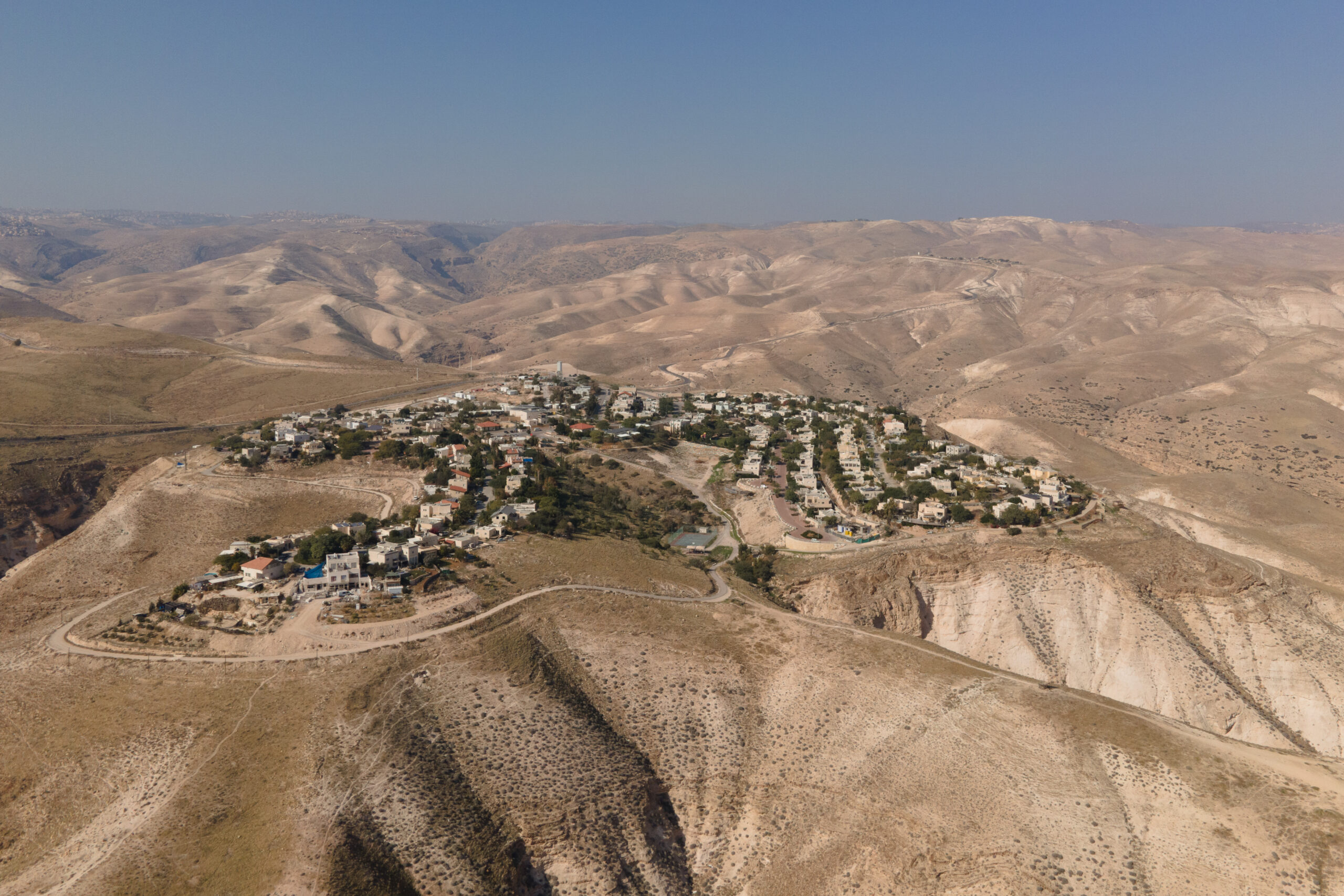
Some 3,700 years ago, the Philistines of Gerar went after the patriarch Isaac, hitting him where it would hurt the most. They filled his father Abraham’s wells with dirt to drive him off the land. On Tuesday afternoon, on a hill above Alon Road in Binyamin, Isaac’s descendants met the same weapon in a deadlier form. A flock of sheep drank from a water trough that local residents say terrorists from the Arab village of al-Mughayyir had poisoned, and within minutes dozens of animals were convulsing in the grass. By evening, nine sheep and the dog that guarded them were dead, and more than 40 others were being treated where they had collapsed.
Local residents said a terrorist cell from the Arab village of al-Mughayyir slipped into the grazing area and poured a toxic substance into a water trough used by the local flocks, Arutz Sheva reported. Shepherds said the sheep began showing severe poisoning symptoms shortly after drinking. Residents rushed to the hill with veterinary medications. The shepherding dog drank from the same trough, developed severe symptoms soon after, and died. Security forces arrived and launched searches for the suspects.
Residents said Tuesday’s attack was the 13th poisoning in the grazing lands along Alon Road in the past year, and they attribute all of them to a cell operating out of al-Mughayyir. In earlier attacks, a few animals died each time. On Tuesday, roughly 50 sheep drank the poison.
A year of poison
The Binyamin Regional Council laid out the pattern in a report published on September 7. The council documented at least 11 incidents since June 2025 in which animals were poisoned, or food and water sources were found laced with suspected poison, at the strategic farms between al-Mughayyir and Alon Road. Dozens of sheep, goats, cows and dogs were killed or sickened.
The report lists the attacks farm by farm. In February, poisoned dates were found in the pastures of David’s Fortress Farm (Metzudat David). In May, four sheep were sickened after a cistern at the Shlishah farm was poisoned, and trackers followed footprints toward a nearby village. In July, two sheep at the same farm died, and about 15 more were poisoned after a substance suspected to be poison turned up in a trough. Poisoned dates were later found at Tel Talpiot, where two dogs died. In August, one sheep died, and five more were sickened at Shlishah, and another sheep was hurt in the pastures of Ma’alot David.
Palestinian Terrorism 2.0
— ilana israelov (@izrailov94) August 30, 2026
Goats poisoned to death by Palestinians, Jewish shepherds attacked with stones by Palestinians
Poisoning attacks strike again: For the second time in the past week, a Palestinian terrorist cell from the village of Al-Mughayyir in Binyamin infiltrated… pic.twitter.com/DMdC6CT795
The methods have grown more sophisticated. In May, Yeshiva World News reported that terrorists from al-Mughayyir broke into grazing areas overnight and poisoned about 20 water troughs, breaking the locks on some of them. The poison was mixed with oil so it would float on the surface and be drawn up in the first bucket of water given to the animals. A shepherd spotted the substance in one well and pulled his flock back, but several sheep had already begun foaming at the mouth and convulsing.
David’s Fortress Farm, owned by Evyatar and Batya Karo, has been hit repeatedly. In November 2025, Arabs from al-Mughayyir entered the farm’s pastures on Shabbat and scattered poisoned dates in the grass, killing two goats. A resident had spotted two suspects working the ground near an illegal structure by Alon Road and called in the IDF. Soldiers from the Binyamin Brigade later arrested a suspect after the shepherd identified him.
“The terror that Jewish drivers on Alon Road used to absorb is now absorbed by the farm that stands on the front line and guards the road,” Karo told the Srugim news site at the time.
In late August, two of Karo’s goats began foaming at the mouth after eating pita laced with poison, and days later poison appeared in the farm’s troughs. Residents who rushed to treat the animals were met by a hail of stones from the village. “We are not afraid,” Karo told JNS. “We will continue to go out here in the Land of Israel despite all the intimidation and the poisonings, the blocking of trails and the attempts to prevent us from being here.”
On the night of September 2, Binyamin Brigade soldiers and Israel Police entered al-Mughayyir to recover livestock stolen from Karo’s farm and to capture the cell attacking the farms. Dozens of residents pelted the troops with stones, and the soldiers returned fire. Two of the rioters were killed, a third was seriously wounded, and a 17-year-old stone-thrower was arrested. The forces returned 13 goats and six sheep to their owner. The rioters killed two more sheep during the confrontation, and the village responded with a wave of incitement and threats against Karo.
Poison across Judea and Samaria
The Alon Road attacks are one front in a wider campaign against Jewish flocks. In December 2025, Elisha Yered laid out the record in Arutz Sheva under the headline “Seven incidents, zero indictments.”
The pattern began about three years ago at the Ein Samia spring, then under full Arab control. A month after shepherds Nachman Mordoff and Harel Masoud were murdered in a shooting attack at Eli, their friends from Kochav HaShachar pushed their flocks toward the spring. On the first day, an Arab came to the pasture with a warning. “It’s not worth it for you to be here, it would be a shame,” one resident recalled being told. The next day the goats began collapsing one after another. “The Arabs sprayed the area with poison, and within a few days 25 of our goats died,” the resident said. Nobody was ever arrested.
During the current war, a shepherd from Givat Or Meir near Ofra watched two Arabs run from his grazing area into a house in the neighboring village, then found his sheep foaming at the mouth after drinking from a cistern. Police forensics collected evidence and left, and the IDF never came. Two weeks later, the village poisoned a second cistern. This time the shepherd had antidotes waiting on the hill, and the sheep were saved with liquid charcoal. Soldiers confiscated two vehicles from the suspects’ home and made no arrests.
At the Seven Shepherds Farm (Chavat Shivat HaRo’im) near Ma’ale Levona, three sheep died after drinking from a cistern. Two weeks later, six more died after drinking from the same cistern, and the farm blamed residents of the Arab village of Sinjil. At the Malachei Avraham farm near Ma’ale Hever in the southern Hebron Hills, poison was scattered in the grass and the cisterns. The shepherding dogs survived after antidote injections, and a sheep died a day later.
Yehuda and Shomron Rescue Without Borders: Poisoning Terror Attack! Sheep were harmed following poison scattered by Arabs in grazing areas near Khirbet Abu Falah (between Ofra and Shilo) pic.twitter.com/z7l9KtKnq7
— DeepState Illuminate (@TheDeep_State6) October 6, 2026
In late November 2025, after the second poisoning at David’s Fortress Farm, the IDF and police arrested four suspects from al-Mughayyir within a day. Israel Police issued a statement saying it “views with great severity” Palestinian attempts to harm the farms’ grazing by killing sheep and goats, and warned that anyone who harms “the farms that guard the lands of the homeland” would meet the rule of law quickly. Two days later, the village was celebrating the release of all four on bail.
The same week, hundreds of rioters from the village of Rashida in eastern Gush Etzion attacked Jewish shepherds from Givat Makneh Avraham in front of cameras and stole part of their flock. Four shepherds were wounded, and two were taken to the hospital. More than a week later, police had not arrested a single suspect.
Fire and theft
Poison is one weapon in what Israeli farmers call agricultural terrorism, a campaign of arson, theft and sabotage that runs from the Golan to the Negev and hits hardest in Judea and Samaria.
On July 18, a fire swept out of the hills near Kedumim and into Chavat Gilad in Samaria. About 100 families were evacuated, more than 30 structures were damaged, and at least 13 homes burned. Two firefighters were injured. Investigators first pointed to a cigarette butt thrown from a car. Samaria Regional Council head Yossi Dagan rejected that from the first day. “There is a very strong suspicion that this was arson,” Dagan said. “I call on the security forces to lay their hands on those responsible.”
Two days later, undercover Border Police officers and IDF soldiers arrested two Palestinians on suspicion of starting the fire, and the police recognized the blaze as an incident whose circumstances “raise reasonable grounds to assume the damage was caused by a hostile act,” allowing residents to be compensated as victims of terror. “Whoever sets fires, harms residents and tries to spread fear must know that the security forces will pursue him, reach him and bring him to justice,” said National Security Minister Itamar Ben Gvir. The police also cautioned that the investigation was still open, and Ynet reported on July 23 that the two suspects had been released.
Theft follows the same map. Near Kochav HaShachar, Arabs loaded an ATV belonging to a new farm onto a truck parked by Alon Road and raced toward al-Mughayyir. A resident gave chase, the ATV tumbled off the truck on the dirt road, and an Arab pickup rammed the resident’s car. Soldiers arrested five suspects for the ramming.
The war on farms crosses the Green Line. In 2025, arsonists burned every bale of hay stored for the historic dairy barn of Yesh Atid MK Ram Ben-Barak in Nahalal, in the Jezreel Valley. “My great-grandfather, one of Nahalal’s founders, built this dairy farm over 100 years ago,” Neta Ben-Barak, who manages the farm, told Ami Magazine. “This terrorism threatens to destroy our life’s work.” Other farmers told the magazine of slashed greenhouse covers and irrigation equipment worth hundreds of thousands of shekels carried off in a night. In 2018, the cherry orchards of Kfar Etzion were set on fire more than ten times in two weeks.
The HaShomer HaChadash organization, which guards farmland across Israel, recorded 186 agricultural crimes in 2022 and estimates that 39 percent are never reported. Israel’s Border Police and a 2017 State Comptroller report found that most agricultural crime is carried out by organized gangs, many of them operating out of the Palestinian Authority.
“The writing on the wall”
Yisrael Ganz, head of the Binyamin Regional Council and chairman of the Yesha Council, has warned that the poisonings are a rehearsal.
“If we stay silent when they poison sheep, we will weep when they poison Israelis,” Ganz said when the council released its report. “Don’t say the writing wasn’t on the wall. The State of Israel has been preparing for years for a scenario of poisoned drinking water, and here, before our eyes, they are already poisoning the water sources used by flocks. We must not wait for this method to be turned against human beings.”
“I call on the security establishment to act with determination against the terrorists from al-Mughayyir, who have proven over the years the will, the intent and the ability to murder Israelis,” he continued. “The people responsible must be arrested and this phenomenon cut off now, before it is too late.”
The council noted that the farms on the open ground between al-Mughayyir and Alon Road carry security weight of their own. Terror attacks launched from al-Mughayyir have reached Alon Road in the past and endangered the drivers on it.
Poisoning terror attack number 13 (!) in the Alon Road area: Arab terrorists from the village of Abu Falah scattered poison this morning in the grazing fields of one of the nearby hills. Five sheep are suffering from severe poisoning symptoms. Residents of the hill are providing… https://t.co/KK95JcINXC
— An Israeli mother (@IsraMum) October 6, 2026
The council also flagged a troubling overlap. On August 30, shepherds were stoned on the Quarries Road near al-Mughayyir. Around the same time, a far-left anarchist activist attacked a shepherd near the Rimonim junction, wounding him so badly that he lost consciousness. When two dead goats were found at David’s Fortress Farm, another shepherd in the area was attacked by an anarchist activist. The council said the unusual closeness in time and place between the poisonings and the anarchists’ attacks on shepherds raises suspicion of their involvement, and called on security officials to investigate.
The international press tells this story in reverse. In November 2025, one week after the poisoned dates killed Karo’s goats, Palestinian media accused Jewish residents of poisoning sheep in al-Mughayyir. The Times of Israel ran the claim on its live blog under the headline “Settler extremists accused of poisoning flock of sheep near Ramallah.” Thirteen poisonings of Jewish flocks in a single year along the same road have drawn no comparable attention from the outlets that report every allegation against Jewish shepherds.
Esek, Sitnah, Rechovot
The Bible tells of a similar occurrence in the life of Isaac. The patriarch settled in Gerar and grew so wealthy in flocks and herds that the Philistines envied him. Their response was aimed at the water.
“Now all the wells which his father’s servants had digged in the days of Abraham his father, the Philistines had stopped them, and filled them with earth.” (Genesis 26:15)
In a land of shepherds, water decides who stays. A flock without a well has to leave, and the Philistines knew it. Plugging the wells was an eviction notice, and the next verse makes it explicit when Abimelech, king of the Philistines, tells Isaac to go away from them.
Isaac refused to let the wells stay buried. The Bible records that he dug them out again and gave them the same names his father Abraham had given them. Then his servants dug new wells. The herdsmen of Gerar fought him over the first, and Isaac named it Esek, meaning “contention.” They fought him over the second, and he named it Sitnah, meaning “enmity.” The third well they left alone, and Isaac named it Rechovot, meaning “wide spaces,” declaring that God had made room for him to be fruitful in the land.
The Ramban (Nachmanides), the 13th-century commentator who made it to the Land of Israel, where he died, read the three wells as a prophecy. The first well, Esek, corresponds to the First Temple, which the nations fought over until they destroyed it. The second, Sitnah, corresponds to the Second Temple, which was surrounded by hatred until it too was destroyed. The third, Rechovot, corresponds to the Third Temple, which will be built without strife, when God widens the borders of Israel. The Ramban built his commentary on the principle that the deeds of the fathers are a sign for the children, ma’aseh avot siman labanim. Isaac’s fight over water in Gerar is the blueprint for his descendants’ fight over the Land.
The Sages paid special attention to the men who tend sheep. The Midrash (Shemot Rabbah 2:2) teaches that God tested both Moses and David as shepherds, watching how they cared for their flocks before entrusting them with the people of Israel. Jacob spent twenty years with Laban’s flocks, and the patriarchs lived their lives as herdsmen moving across the hills of Judea and Samaria. The shepherd on the hill is the oldest figure in Jewish history in the Land of Israel.
The hilltop farms of Binyamin have returned that figure to the same hills. “One shepherd with 100 sheep today manages to guard an area equal to two established communities,” Yered wrote, adding that hundreds of thousands of dunams have been returned to Jewish hands. The terrorists of al-Mughayyir understand this as clearly as the Philistines did. They cannot dig up a road or a town, so they go after the trough.
Isaac’s answer was to keep digging. The Karo family’s answer has been to keep grazing. Thirteen times in a year, someone has filled the wells near Alon Road with poison, and thirteen times the shepherds have come back to water their flocks. The Bible already wrote the end of this story. After Esek and Sitnah comes Rechovot.
