
Passengers stepping off an El Al flight from Tel Aviv at Amsterdam’s Schiphol Airport last week expected the usual walk through the “Nothing to Declare” lane. Instead, Dutch customs officers stopped the Israelis, with one officer calling out, “Everyone from Israel, come over here!” Every bag went through an X-ray machine. The officers were hunting for wine, dates, olives, and any other product that might have come from Jewish communities in Judea, Samaria, eastern Jerusalem, or the Golan Heights.
The searches came one day after the Netherlands began enforcing a sweeping ban on products from Jewish communities beyond the 1967 ceasefire lines. The ban took effect on September 22 and bars all goods obtained or manufactured wholly or partly in what Dutch customs calls an “unlawful Israeli settlement.” Dutch authorities have stressed that the measure does not apply to goods produced or purchased within Israel’s pre-1967 lines. Arab-made products from the very same hills remain perfectly legal. The law sorts identical jars of olives by the identity of the people who grew them, and only one group’s olives are contraband: the olives grown by Jews.
U.S. Ambassador to Israel Mike Huckabee put the absurdity in front of millions. After meeting Dutch Christians at church in Israel, he posted on X that they would be flying home the next day and had to check their souvenirs to make sure nothing came from Judea or Samaria, since a violation could carry a possible six-year prison term. Huckabee called the situation “insane.”
Huckabee also wrote, “A Nativity set from Bethlehem could put you in prison! Insane!” The Times of Israel noted that the Nativity example misses the mark, since Bethlehem is a Palestinian city and falls outside the ban. That correction exposes the law more sharply than Huckabee’s original complaint. A Nativity set carved by an Arab in Bethlehem passes through Schiphol untouched. A bottle of wine from a Jewish winery in Shiloh, a few kilometers north, brings a criminal investigation. By the ban’s own definition, which covers all of eastern Jerusalem, a mezuzah case bought from a Jewish shop in the Old City’s Jewish Quarter, steps from the Western Wall, falls inside the forbidden zone. The Dutch government has drawn a line through the Land of Israel, and the only merchants on the wrong side of it are Jews. A law that criminalizes a product because a Jew made it is racist, whatever language the Dutch Foreign Ministry uses to describe it.
Roger van Oordt, Israel’s Honorary Consul in the Netherlands and former director of Christians for Israel Netherlands, put it bluntly: “What we are seeing is Jew-hatred in its deepest form.” He said the measures target some 700,000 Jews living where Jews have lived for 2,000 years. Europe, he said, wants to decide that Jews cannot live there, while failing to protect Jews in Europe as well.
Van Oordt knows that second failure firsthand. During the 2014 war in Gaza, antisemitic vandals attacked the home of Dutch Chief Rabbi Binyomin Jacobs. Van Oordt, a close friend of the rabbi, went to the house with his wife and two of his children and cleaned it up himself.
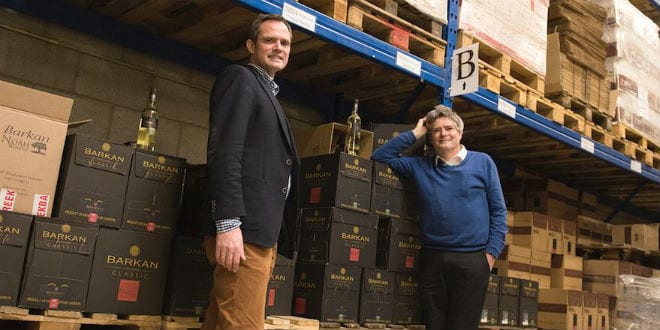
The Dutch ban strikes directly at a Christian institution that has stood with Israel for nearly half a century. Karel van Oordt, Roger’s father, founded Christians for Israel and its import agency, the Israel Products Centre, in 1979 to support Israel economically, believing that returning the Jews to their land would bring the Messiah. Until his death in 2013, he frequently taught that the task of Christians is to comfort Israel, echoing Isaiah’s Nachamu, nachamu ami (Comfort, comfort My people). His son Pieter told Israel365 News that the family has prayed for Israel since 1835. The movement Karel started now has branches and affiliates in more than 30 countries, and, in partnership with the Jewish Agency, its groups have helped more than 100,000 Jews make aliyah (immigration to Israel). Frank van Oordt, who now directs Christians for Israel Netherlands, was just named number 16 on the Israel Allies Foundation’s list of Israel’s Top 50 Christian Allies.
The Israel Products Centre imported 120,000 bottles of Israeli wine a year, along with tons of Dead Sea cosmetics and everyday Israeli goods, sold mostly to Protestant Christians who buy out of a sense of moral duty to help the Jews return to their land. The Dutch ban marks the Van Oordts’ fourth battle with their own government over products from Judea and Samaria. When the European Union began labeling those goods in 2016, the company waived shipping costs to boost sales. Pieter van Oordt wrote to thousands of customers that the policy was prejudicial, singled out Israel while ignoring other disputed territories, and denied Israel’s biblical right to the land. He also warned that it would cost Jewish and Arab workers their livelihoods. “These people deserve a salary to support their families,” he wrote.
In 2019, the Dutch Ministry of Economic Affairs asked the Israel Products Centre to confirm it was complying with European rules requiring products made by Jewish-owned companies in Judea, Samaria, the Golan Heights, and parts of Jerusalem to be labeled by origin. Roger van Oordt refused, calling the regulations racist and saying labeling had been designed for food safety and had become a political weapon against the Jewish state. “They mean separating products made by Jews and Arabs,” he said. No comparable Dutch or European labeling rules applied to products from any other disputed region in the world.
Two years later, the government followed through. In April 2021, the Netherlands Food and Consumer Product Safety Authority fined the Israel Products Centre $2,514 for refusing to replace the label on a bottle of Israeli wine with one reading “Product from the West Bank (Israeli settlement).” At least four Dutch political parties objected that the rule targeted Israeli products while ignoring products from other disputed areas, including Western Sahara and Northern Cyprus. Health Minister Tamara van Ark insisted the rules were applied universally. The Center for Information and Documentation on Israel, the Dutch Jewish community’s watchdog, said it had no information on any enforcement action against products that were not made by Israelis.
Five years after the fine, the separation Van Oordt described has become a criminal law. Pieter van Oordt called the ban extremely disappointing, noting that many of his suppliers in Judea and Samaria employ large numbers of Palestinians and that the ban hits thousands of workers who earn their living there every day. Palestinians employed by Jewish-owned businesses in Judea and Samaria earn on average more than double the wages paid at Arab-owned businesses in the same areas. Van Oordt called it ironic that a government claiming to stand up for Palestinians is harming Palestinian workers. By late July he was racing to sell off his remaining stock from Judea and Samaria before the September 22 deadline. The Netherlands had pushed for a ban across the European Union, failed to win enough support, and turned to a national law instead.
Christians traveling to Israel face the same bind. The International Christian Embassy Jerusalem is making European boycotts a focus of its Feast of Tabernacles this year, with participants touring Judea and Samaria while the organization plans to challenge the boycotts through advocacy and legal avenues. ICEJ spokesman David Parsons acknowledged the tension, saying the organization has no wish to encourage supporters to defy the criminal laws of their own countries. Dutch Christians who come to Jerusalem for Sukkot this week, as the prophets foretold the nations would, now return home to customs officers checking whether their souvenirs were made by Jews.
The prohibition applies to personal luggage, souvenirs, and gifts as well as commercial shipments, and travelers are instructed to verify a product’s origin from labels, packaging, or seller information and to keep documentation. Items such as wine, dates, soap, and souvenirs are subject to the ban, which also applies to goods made elsewhere that contain a single ingredient from the covered areas. The rules apply to people arriving from other European Union countries as well. Goods bought before the ban took effect cannot be brought in after that date. The ban also prohibits the sale, purchase, and brokering of the goods inside the Netherlands, while services remain exempt.
The penalties are severe. Intentional violations can result in up to 6 years in prison or a fine of up to €103,000, and unintentional violations can result in up to 1 year in prison. A Dutch Customs spokesperson said that when agents find goods falling under the measure, “we will seize them and draw up an official report.”
The account of the Schiphol searches came from Sivan Behr, an opinion writer who was on the flight and published her report on the Dutch news site NieuwRechts. Behr described officials directing everyone arriving from Israel to baggage screening, including travelers who had entered the Nothing to Declare lane. One passenger asked why the checks were necessary, since everyone had already passed through extensive security screening in Tel Aviv. A customs official answered that the inspections are standard on all intercontinental flights. Behr rejected that explanation, citing previous trips on which she had never encountered similar procedures. NieuwRechts later learned that a unit of the Royal Netherlands Marechaussee, the Dutch military police, has been assigned to carry out additional checks on passengers arriving on flights from Israel. Behr’s report raised the question of whether passengers arriving from other countries under Dutch and European sanctions, including Russia, face comparable inspections.
Passengers also complained about their treatment. When one traveler approached a customs officer to explain that the passengers were from Israel and did not speak Dutch, the officer shouted an obscenity at him, telling him to shut up and wait, according to testimonies reported in the Dutch press.
The searches struck a nerve among elderly Dutch Jews who travel between the two countries. An 82-year-old named Dudi, scheduled to fly from Tel Aviv to Amsterdam next week, told reporters his blood was boiling because the new rules place the burden of proof on the passenger. He said he was born during the Second World War and had to hide. “Jews were marked and discriminated against then too. Now it is happening again,” he said.
Dutch Customs says it may inspect travelers’ luggage, but that nationality, religion, and appearance are not grounds for selecting a passenger. Dutch authorities have not confirmed that the Schiphol checks were conducted specifically to enforce the ban.
Jerusalem responded within days. On Sunday, Foreign Minister Gideon Sa’ar revoked the credentials of all Dutch diplomats operating at the Netherlands Representative Office in Ramallah, ordering them to return their documentation within seven days, after which their Israeli-granted immunities expire. Sa’ar said the Netherlands can keep representing its interests with the Palestinians from Palestinian Authority territory, and not from the territory of the State of Israel. “Israel will not ignore measures intended to harm it,” Sa’ar wrote on X. He also accused the Dutch government of feeding antisemitism in the Netherlands with its anti-Israel policy rather than addressing it.
An Israeli official described the move as a dramatic step. The Dutch mission stays open, but its diplomats lose the ability to move freely through Judea and Samaria and could face prosecution if they meet with Palestinians involved in terrorism.
The Ramallah move follows an August decision, approved by Prime Minister Benjamin Netanyahu, in which Sa’ar expelled two Dutch representatives from the International Support Center for Gaza in Kiryat Gat. At the time, Sa’ar warned that “those who act against Israel will have no foothold in the region.” Earlier this month, Israel ordered the closure of the British Consulate in eastern Jerusalem after London announced similar sanctions.
Dutch Foreign Minister Tom Berendsen said he regretted the “unnecessary” decision and that the Netherlands was weighing its response, insisting the sanctions are not aimed at Israel. Dutch opposition leader Geert Wilders backed Jerusalem, posting, “Well done Gideon Sa’ar.”
The Netherlands is part of a broader Western campaign. Ireland, Belgium, and Spain have taken similar measures, and Norway is considering a law making trade with Jewish communities in Judea, Samaria, and eastern Jerusalem a crime. The leaders of Britain, France, and Canada issued a joint statement this month committing to ban the goods and target those who facilitate or profit from them. Israel’s Ministry of Economy and Industry plans to provide affected businesses with up to 200,000 shekels (about $54,000) and help them find new markets, including the Philippines, India, the United Arab Emirates, Chile, and Argentina, according to the Israeli business daily Calcalist.
The United Nations joined in the same week. On September 25, three days after the Dutch ban took effect, the UN Human Rights Office added 61 companies to its blacklist of businesses operating in Jewish communities in Judea, Samaria, and eastern Jerusalem, bringing the total to 214 companies from 11 countries. This round targeted agriculture, transport, storage, waste management, energy, food, and hospitality, the same farms, wineries, and food producers whose products Dutch customs officers are now hunting at Schiphol. The database, mandated by the UN Human Rights Council, was first issued in 2020 and expanded in 2023 and 2025. The UN’s own findings undercut its accusations. The office established no case in which any listed company caused a human rights violation on its own. It classified 200 of the companies as contributing to harm to Palestinian self-determination and the remaining 14 as directly linked to it. UN Human Rights Chief Volker Türk called the report “another reminder to companies that they have human rights responsibilities.” The Human Rights Council maintains no comparable standing blacklist for companies operating in Northern Cyprus, Western Sahara, or any other disputed territory in the world.
The Dutch ban and the UN blacklist achieve by force of law what the Boycott, Divestment and Sanctions (BDS) movement has demanded for two decades, and the movement’s founders have been explicit about their goal. BDS co-founder Omar Barghouti has declared, “Definitely, most definitely we oppose a Jewish state in any part of Palestine.” The Palestinian BDS National Committee, which directs the global campaign from Ramallah, counts among its members the Council of National and Islamic Forces in Palestine, a coalition that includes Hamas, Palestinian Islamic Jihad, and the Popular Front for the Liberation of Palestine, all designated terrorist organizations. A 2019 report by Israel’s Strategic Affairs Ministry titled “Terrorists in Suits” examined 13 BDS organizations and found 30 current and former terror operatives in senior positions, 20 of whom had served time in prison, some of them convicted murderers. After the BDS National Committee’s ties to Hamas, Islamic Jihad, and the PFLP were exposed, the fundraising platform DonorBox shut down its account.
Germany, a nation that knows exactly where boycotts of Jews lead, drew the line in 2019, when the Bundestag became the first European parliament to declare the BDS movement antisemitic. The resolution stated that the movement’s “Don’t Buy” stickers on Israeli products recall the Nazi slogan Kauft nicht bei Juden! (“Don’t buy from Jews!”) and the smears on Jewish shop windows that accompanied it. The Netherlands, from which more than 100,000 Jews were deported to their deaths during the Holocaust, has now gone further than any sticker. Its customs officers stand at the airport with X-ray machines, searching Jewish luggage for Jewish goods.
For nearly two thousand years, the mountains of Samaria produced no Jewish wine. Today, Jewish vintners in Shiloh, Psagot, and the Shomron hills win international awards, and Christians in Nijkerk import their bottles by the tens of thousands because they read Jeremiah’s promise as still being kept. The Dutch government has now made the fulfillment of that prophecy a criminal offense punishable by six years in prison, and the United Nations has put the vineyards on a blacklist.