




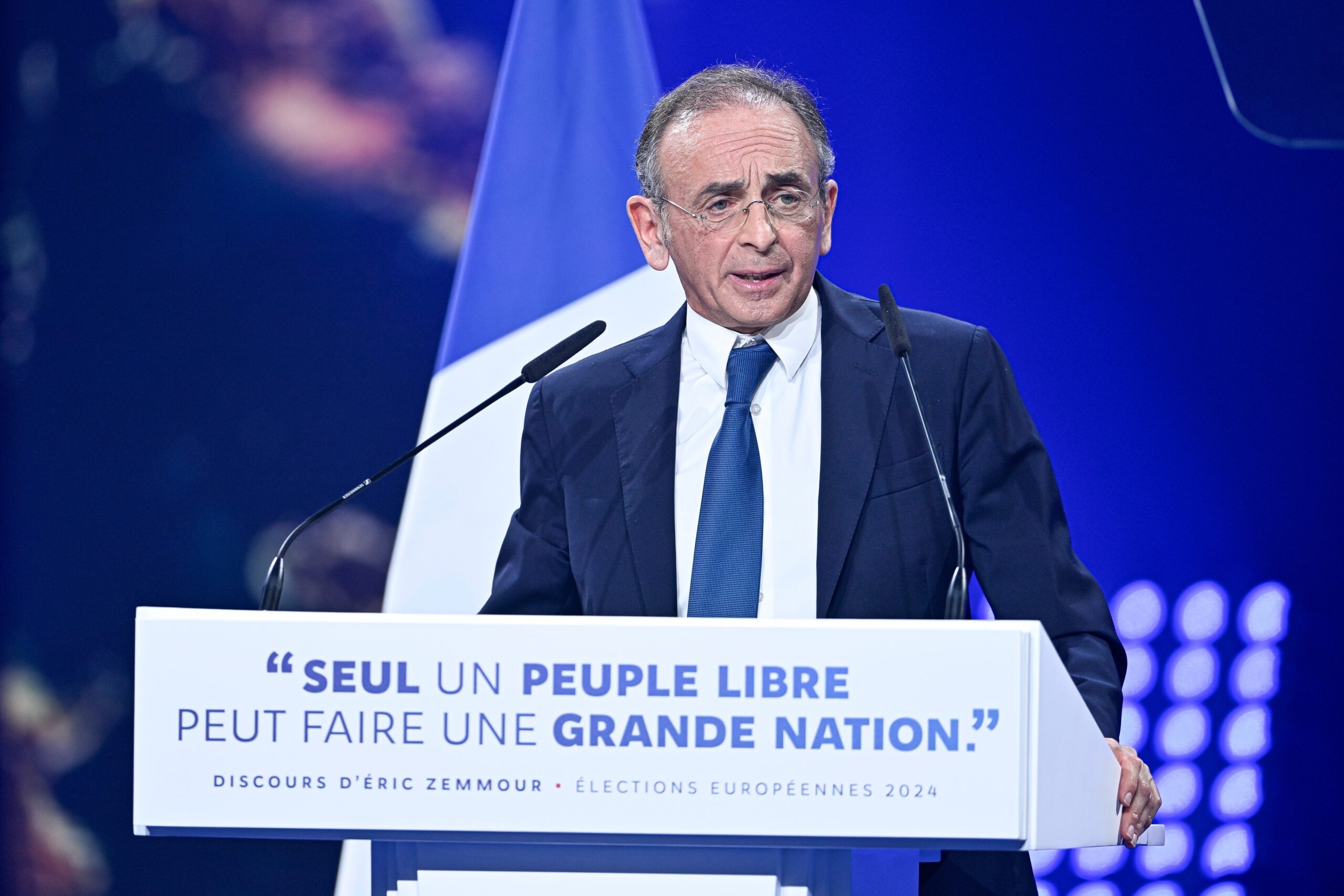
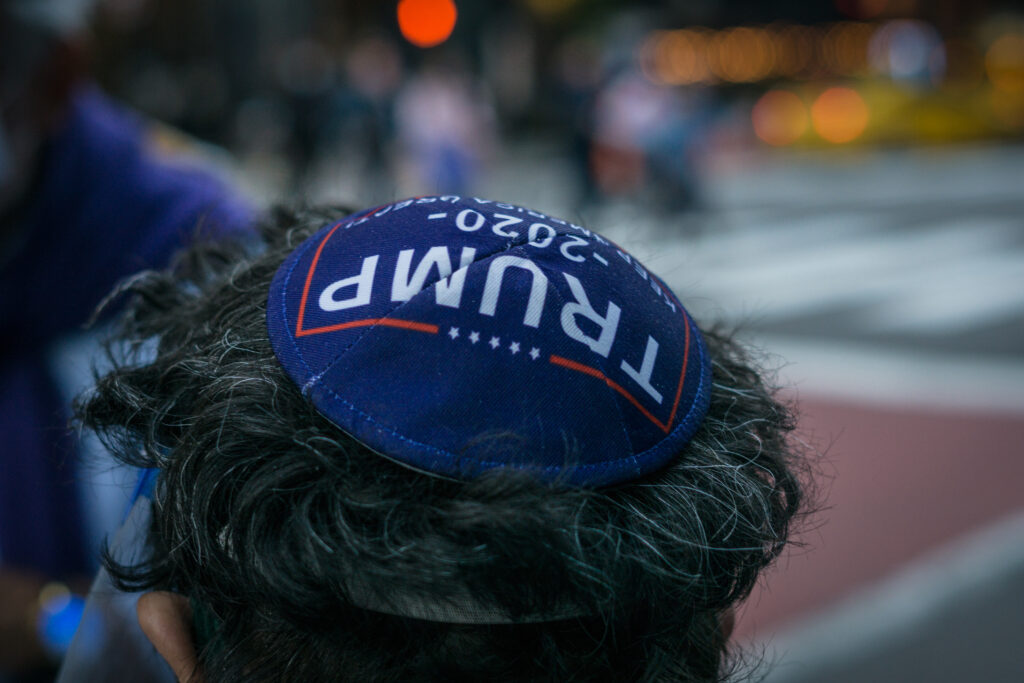
Éric Zemmour, the far-right leader of France’s Reconquête party who has confirmed he will run for president again in 2027, said this week that his proposed ban on religious symbols in public spaces should extend to the kippah as well as the Islamic headscarf. Asked directly on BFMTV’s “Face à BFM” whether a symbols ban should cover the kippah, Zemmour answered without hesitation: “In public spaces, yes.” He described enforcing the ban as an “absolute priority.” Zemmour, who is himself Jewish, said his own parents told him as a child to remove his kippah after leaving synagogue, framing the practice as consistent with the French secular tradition of keeping religious affiliation private. He added that French Jews today rarely wear a kippah in public at all, citing the ongoing danger of antisemitic attack.
A Jewish Candidate, and a Divided Jewish Community
Zemmour’s relationship with French Jewry has never been simple, and this latest proposal has widened a rift that has existed since he first entered politics. Although he has described himself as a non-believer, he has said in past interviews that he keeps a kosher home and attends synagogue services on the High Holy Days, and other accounts describe him as having followed halakha and attended synagogue more frequently before his father’s death in 2013. That mixture of private observance and public secularism is part of what makes his politics so difficult for many French Jews to categorize.
His harshest critics come from within the community he belongs to. Bernard-Henri Lévy, the philosopher, has called Zemmour “dangerous” and said he “dishonors Jewish morality,” comparing him directly to Donald Trump as a figure whose politics are incompatible with Jewish values. Francis Kalifat, president of the CRIF umbrella organization representing French Jewish communities, went further still, writing that Zemmour is “a useful Jew and the new leader of Holocaust denial in our country.” Nazi hunter Serge Klarsfeld and his son Arno wrote that Zemmour “tramples national values as well as Jewish ones.”
The criticism intensified after Zemmour made a specific historical claim in a 2021 interview with CNews, stating that “Vichy protected French Jews and gave the foreign Jews to the Nazis,” referring to the World War Two-era collaborationist French government. France’s Chief Rabbi, Haïm Korsia, responded by calling Zemmour an antisemite and a racist. The claim was not merely controversial; it was legally actionable. On April 2, 2025, a French court fined Zemmour ten thousand euros for repeating it. In 2022, Zemmour separately claimed that French homosexuals were not imprisoned or sent to concentration camps during that same period, a statement that drew a lawsuit from gay rights organizations. He has also cast doubt on the innocence of Alfred Dreyfus, the Jewish army officer whose wrongful conviction for treason became one of the defining cases of modern antisemitism, suggesting in a 2020 television appearance that Dreyfus may have been targeted “for being German, not for being Jewish.”
Zemmour is also a leading proponent of the “Great Replacement” theory, the conspiracy claim that white, native-born French people are being deliberately replaced through immigration, chiefly by Muslims. That platform has produced a mixed but substantial legal record: he was fined for incitement to racial discrimination in 2011 and for incitement of hate against Muslims in 2018, a conviction he unsuccessfully appealed to the European Court of Human Rights. He has also been acquitted of similar charges six separate times, in 2008, twice in 2014, and again in 2016, 2017, and 2019, with two further convictions from 2015 and 2020 overturned on appeal.
Not every Jewish voice in France has turned against him. The publication Tribune Juive has run columns from Jewish writers defending Zemmour or attacking his establishment critics. Elie Sasson, a dentist and Tribune Juive columnist, wrote that the criticism from CRIF and Lévy amounted to an “excommunication” of Zemmour for failing to be a “good leftist Jew.” William Fitoussi, another supporter, called him the only politician “seeking to end the inflow of millions, including the murderers of their brethren from the community.” Perhaps the most unsettling endorsement, however, came from Jean-Marie Le Pen, the National Rally founder and a convicted Holocaust denier, who told Le Monde that the only difference between himself and Zemmour “is that he’s Jewish,” adding that this fact gives Zemmour “greater liberty” to voice positions that would otherwise be branded fascist.
A Symbol Already Disappearing
Zemmour’s proposed ban arrives as a formality layered atop an existing reality. French Jews, by Zemmour’s own account, have largely stopped wearing kippahs in public out of fear, a retreat driven by years of antisemitic violence rather than by any law. A ban would not create that disappearance. It would simply make official what fear has already accomplished.
A candidate who wants the law itself to formalize the kippah’s retreat from public life is not resolving that tension. He is choosing a side in it, and asking an entire country to enforce his choice on every Jew who has not yet given up wearing one.
