

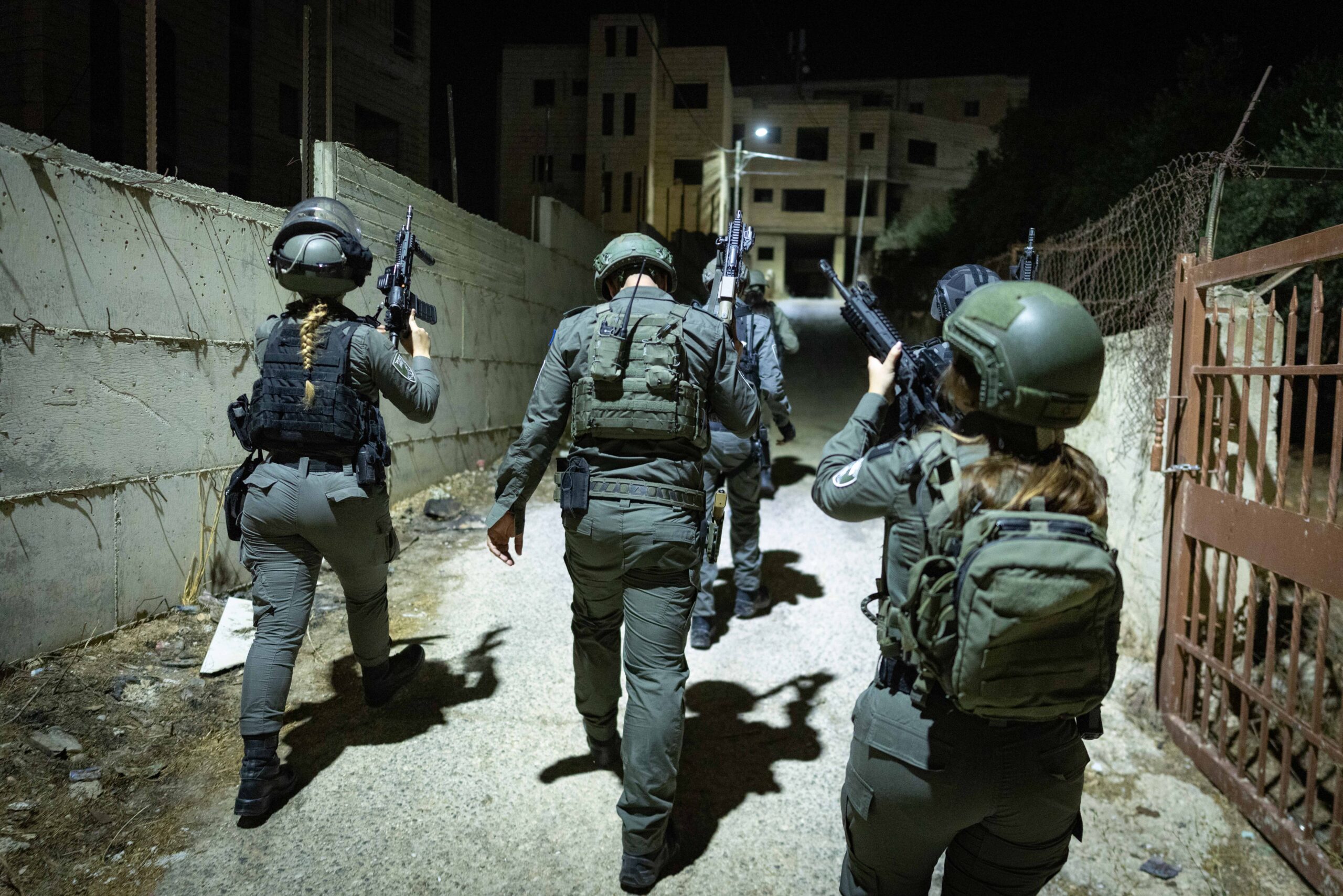
Seventy-seven percent of Israelis, including 86% of Jewish Israelis, believe a large-scale terrorist attack modeled on the October 7 Hamas massacre could originate from Judea and Samaria, according to new polling data released by the Jerusalem Center for Security and Foreign Affairs (JCFA). The number has climbed steadily for over two years, and it now sits alongside a defense establishment warning that the threat is not theoretical.
The JCFA survey, conducted September 2-4 among 703 Jewish and Arab Israelis by Dr. Menachem Lazar’s Lazar Research Institute, found that 75% of Jewish Israelis and 67% of all Israelis oppose establishing a Palestinian state along the pre-1967 lines. That opposition has held remarkably steady since October 7, 2023, according to the JCFA, which has now tracked the question across seven consecutive surveys spanning 30 months.
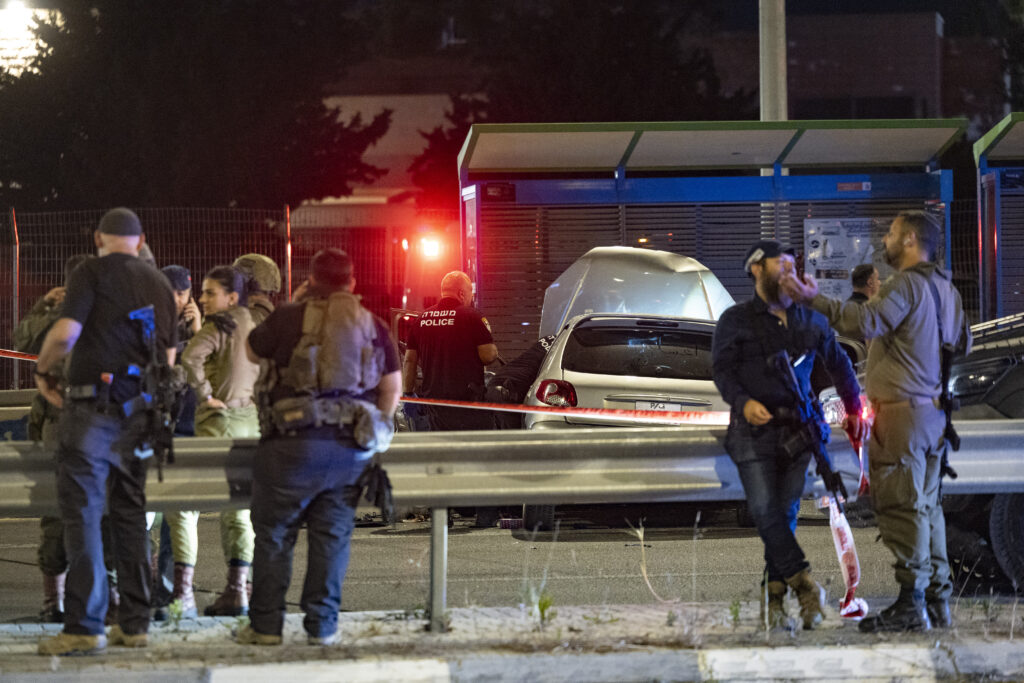
What has not held steady is fear of the West Bank itself becoming what the JCFA calls Israel’s “next front.” In February 2025, 62% of Israelis and 68% of Israeli Jews told JCFA pollsters they were concerned about an October 7-style attack from that direction. Nineteen months later, in the September 2026 survey, that number reached 77% overall and 86% among Jewish Israelis. Even on the political left, where respondents were evenly split at the start of the tracking period, 58% now say they are concerned, compared to 32% who are not.
The fear is not confined to abstract polling. Defense Minister Israel Katz announced this month that he and Prime Minister Benjamin Netanyahu have instructed the IDF to prepare for what he called “an all-out war” against Palestinian Authority officials and infrastructure if Israel identifies signs that PA-linked security forces are preparing an October 7-style assault. “If the security apparatuses of the Palestinian Authority and the bodies associated with them launch, or we know for certain that they are about to launch, an October 7-style terrorist attack against forces and Jewish settlements,” Katz said the IDF has been ordered to move against “all terrorist infrastructure in Judea and Samaria.”
The warning follows research published by the JCFA in July, authored by Lt.-Col. (res.) Adv. Maurice Hirsch, documenting what he termed a “turning the guns” scenario: the possibility that Palestinian Authority security personnel, trained and armed under the framework of the Oslo Accords, could turn those weapons on Israeli civilians and soldiers. Hirsch’s study found that PA security forces have grown to roughly 70,000 personnel, some 133% beyond what the Oslo Accords permit, with the overage in Judea and Samaria alone reaching approximately 400% above the authorized limit. Those forces are now armed with rocket-propelled grenades and shoulder-launched missiles, according to the study, and Hirsch identified four separate 22-kilometer routes by which PA forces could reach Israeli population centers in a short span of time.

When JCFA pollsters asked the Israeli public to rank the threats the next government should prioritize, the “turning of the guns” scenario in Judea and Samaria scored 3.6 on a six-point scale, placing it above concerns about Hezbollah’s rebuilding in Lebanon and behind only the reconstitution of Iran’s nuclear program and Hamas’s rearmament in Gaza.
The polling also shows broad Israeli support for a specific security posture rather than territorial withdrawal. Seventy-one percent of Israelis back maintaining long-term military buffer zones along the borders with Gaza, Lebanon, and Syria, with 57% calling such zones an essential security requirement. Support for that position reaches 80% among Jewish Israelis, and crosses political lines, with 78% backing on the right, 62% in the center, and 43% on the left.
Two years after October 7 reshaped Israeli public opinion almost overnight, driving opposition to Palestinian statehood from 69% to 79% in a matter of weeks, the numbers coming out of Judea and Samaria suggest that trauma has not faded. It has migrated. What began as a hardened consensus against a Palestinian state has become, three surveys and thirty months later, a specific and rising fear about where the next attack will come from. Israel’s defense establishment, judging by Katz’s warning this month, appears to be operating on the assumption that the public’s instinct is correct.