



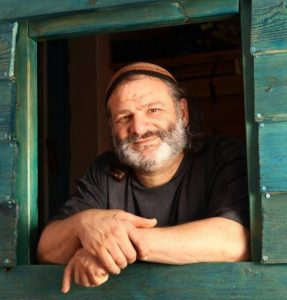

Vice President J.D. Vance told a Christian podcaster this week that he is not entirely sure he is going to heaven. Speaking to 22-year-old evangelist Bryce Crawford in a wide-ranging interview about faith, doubt, and the end of days, the second-highest official in the United States government put his own odds of salvation at seven or eight out of ten. “I’m always one of these people who is always going to have little doubts,” Vance said. A year ago, he told Crawford, his answer would have been lower still: a five or a six.
Vance gave the interview while promoting his new memoir, “Communion: Finding My Way Back to Faith,” which recounts his 2019 conversion to Catholicism. He was raised in a loosely observant evangelical household in Appalachia, drifted into atheism during his years at Yale Law School, and was baptized into the Catholic Church at age 35, crediting the writings of Saint Augustine with giving him an intellectually serious path back to belief. His wife, Usha Chilukuri Vance, is the daughter of Indian immigrants and a Hindu; Vance has said the couple agreed to raise their children Catholic.
The confidence Vance expressed to Crawford was not rooted in his own record of good deeds. “Obviously, it’s not about what we’ve done to deserve it,” he said. “Jesus is God’s sacrifice. He is the person who forgives sins.” His hesitation, he explained, centers instead on whether the entire framework is true. “I still occasionally have doubts. Like, is this actually real?” he said, adding that he has grown more confident in God’s existence than at any other point in his life, even as the question of an afterlife itself remains open to him. “I just try to have some humility about what I don’t know,” he said. “And I think that’s why I say an eight, not a ten.”
The conversation moved quickly from personal salvation to the end of the world. Asked whether the end times are approaching, Vance said he tries not to dwell on the question, but added, “There are things about the world that make me feel not shocked if the antichrist was walking among us.” He said he tries to live as though the end times could be near regardless of the timeline. “I try not to focus too much on it, but if I’m doing as much of God’s work as possible right now, and if that leads to the end times, OK,” he said.
Vance also described what he called “spiritual dark energy” surrounding some uses of artificial intelligence, citing a friend whose spouse used an AI chatbot for marriage counseling. “There’s no real human feedback,” he said. “It sort of short-circuits that social part of our brain where we respond to other people’s wants and needs. I think that’s kind of satanic.” Pressed by Crawford on whether he had encountered evidence of the supernatural since taking office, Vance turned to Donald Trump’s survival of the July 2024 assassination attempt in Butler, Pennsylvania, calling it more than coincidence. “Whatever the reason is, whatever God was trying to accomplish, it is just so obvious to me that coincidences like that don’t happen without the hand of Providence,” he said. Had Trump not survived, Vance said, he would have concluded “very dark forces had taken out Donald Trump” and that the American political system would have suffered “an illegitimacy.”
Crawford also raised Trump’s April Truth Social post featuring an AI-generated image depicting himself in the pose and posture of Jesus, which Trump deleted after backlash from his own supporters, including former Congresswoman Marjorie Taylor Greene, who called it “an Antichrist spirit.” Vance defended his running mate. “He did not mean to mock or mimic God; that’s just not who he is,” Vance said, describing Trump as a man who “likes to have a good time” and did not intend offense.
A compelling question lies beneath all of it: does doubting your own worthiness before God disqualify a person, or is that doubt itself the mark of one who understands what is actually being asked of him?
The Hebrew Bible answers plainly. “For there is not a righteous man on earth that doeth good, and sinneth not” (Ecclesiastes 7:20). Kohelet, King Solomon at the height of his wisdom, does not carve out an exception for kings, prophets, or the pious. No man on earth does only good and never sins. The Sages built an entire framework of teshuva, or return, on this premise, because a religion that demanded perfection for entry into the World to Come would have no adherents left standing. The demand is not flawlessness. The demand is that a person recognize his failures, turn from them, and keep walking. A leader who says “I still have doubts” and a leader who says “I don’t think I qualify” are both closer to the truth of Ecclesiastes than one who claims certainty of his own righteousness. Confidence in God is not the same claim as confidence in oneself, and the Hebrew Bible has never confused the two.
Trump himself has spent the past year offering his own running commentary on the same question, in a considerably less theological register. In July 2025, his campaign sent a fundraising email tying his survival in Butler to a divine assignment: “I believe that God saved me for one reason: TO MAKE AMERICA GREAT AGAIN.” The following month, on Fox and Friends, he suggested that ending the Russia-Ukraine war might tip the scales in his favor. “If I can save 7,000 people a week from being killed, I think that’s pretty—I want to try to get to heaven if possible,” he said, adding, “I’m hearing I’m not doing well. I hear I’m really at the bottom of the totem pole.” Days later, on Todd Starnes’ radio show, he mused that heaven ought to work like a “report card.”
By October, with the war still unresolved, Trump reversed course. Aboard Air Force One, he told reporters, “I don’t think there’s anything that’s going to get me into heaven. I think I’m not maybe heaven-bound,” before adding, half-joking, “I may be in heaven right now as we fly in Air Force One.” At the National Prayer Breakfast in February, he struck a more defiant note: “I really think I probably should make it. I mean, I’m not a perfect candidate, but I did a hell of a lot of good for perfect people.” He closed his remarks that day by quoting a line from the Christian scriptures on purity of heart, then immediately undercut himself: “I don’t know if that applies to me necessarily. I’m not so sure. I try.” Weeks later, speaking in Rome, Georgia, he was more direct still: he hopes to make it to heaven, he said, “but I doubt I will, to be honest.”
Two men at the top of the same administration, a year apart in temperament and vocabulary, have arrived at the same admission: neither is certain he has earned a place in the world to come. Vance reaches for Augustine and humility before mystery. Trump reaches for a ledger of accomplishments and a joke to soften the answer. But the Hebrew Bible got there first, three thousand years earlier, and without hedging: there is no man on earth who does good and never sins. What a person does with that knowledge, not the discomfort of admitting it, is where the real accounting begins.

