
As Israel’s October 27 election approaches, a wave of new political parties has entered an already crowded field, reshaping how Israeli voters think about their choices and complicating what was already going to be a difficult coalition-building exercise, especially for undecided voters. A recent panel of undecided Israeli voters, which discussed issues and impressions as part of the webinar series “What Are We Thinking?,” spent much of their conversation dissecting these emerging parties, who is behind them, what they stand for, and whether any of them will actually pass the electoral threshold to survive long enough to matter or make an impact.
Several parties among dozens of small and new parties dominated the conversation, each doing its best to define itself uniquely from among the others, carve out a distinct constituency, and identify the issues that matter to them.
Zionist Home (the Reservists Party), led by former Knesset members Yoaz Hendel and Chili Trooper, has generated significant interest and enthusiasm among center and center-right voters. Hendel’s record of active reserve duty since October 7 and his vocal advocacy for reservist rights gives the party an authenticity that resonated strongly with panelists. “He was actually walking the walk,” said one participant. Trooper was described as one of the most trustworthy figures in Israeli politics, someone you would want as a friend, not just a politician. The party’s platform centers on the ultra-Orthodox draft and national service equity, two of the most polarizing domestic issues in Israel today.
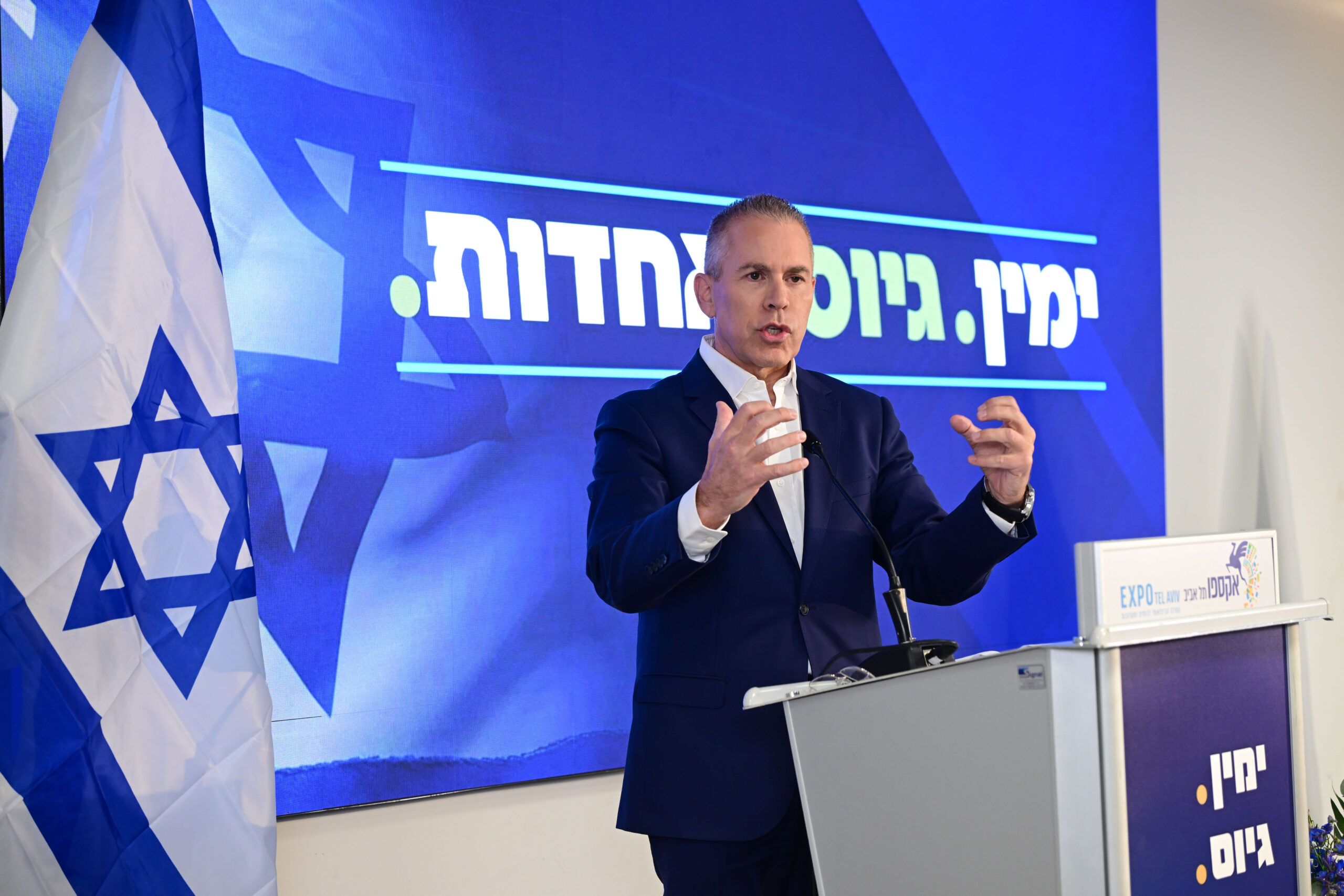
The Unity Party, formed by Gilad Erdan and Yuli Edelstein, both longtime Likud stalwarts who have served in different ministerial capacities, represents a different kind of departure. The panelists viewed it with a mixture of respect and pragmatic skepticism. Erdan’s extended tenure as Israel’s UN ambassador left him politically disconnected from his Likud party base, and the feeling among participants was that neither he nor Edelstein was likely to sustain an independent party through election day. The more likely scenario, many agreed, is that they will use their party as leverage to secure favorable positions within a larger bloc, with either Naftali Bennett and Yair Lapid’s Beyachad or Gadi Eisenkott’s Yashar parties, the two main opposition parties leading in the polls, as being the most probable destinations.
Sharon Haskell’s Israel First Party is currently a solo initiative by a politician who has already moved from Likud to Gideon Sa’ar’s New Hope and back out again. She, too, has served in multiple government roles, most recently deputy Foreign Minister before resigning to start her own party. This was viewed with similar skepticism. With no announced running mates and a short political runway, her party was seen more as a placeholder than a serious independent force.
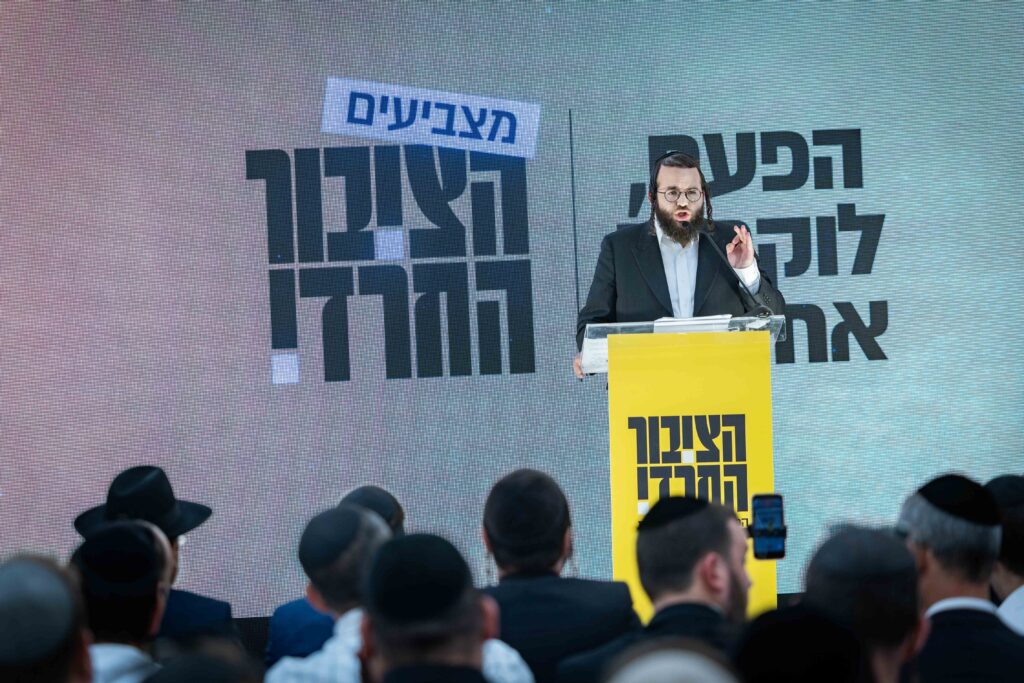
A potential new Haredi (ultra-Orthodox) party, not yet officially registered at the time of the conversation, generated the most intriguing discussion. Presumably led by Moti Leitner and Eli Yishai, a former Shas leader widely remembered as a capable and principled figure who was pushed out when current Shas head Aryeh Deri returned from prison, the party would target ultra-Orthodox voters willing to break with their rabbinical leadership on the question of army service and, ultimately, what’s good for their community. The participants acknowledged the enormous social pressure that makes such defection difficult, and that ultra-Orthodox voters largely follow their rabbis’ instructions. But they saw the party as a potentially significant disruptor, one that even some non-Haredi voters said they might support if polling suggested it could clear the 3.25% threshold required for Knesset entry. As one panelist noted, the rabbinic leadership may tell their community to vote one way, but are not present in the polling places with them.
Einat Wilf’s Oz Party was flagged for its “draft for all” platform, proposing mandatory military or civilian national service for every Israeli, regardless of religious affiliation, ethnicity, or background. Her website’s four-language interface (Hebrew, English, Arabic, and Russian) signaled a genuine attempt at broad appeal. Participants found her smart and compelling, though they noted her party still lacked visibility and a full candidate list to make it widely appealing. Practically, it is largely not even mentioned in the polls where the above parties at least have the traction of being identified as possibly passing the threshold.
The proliferation of small parties creates a serious arithmetic headache in forming a government coalition. If three or four new center to center-right parties each pull in enough support for two Knesset seats but fall short of the 3.25% threshold, those votes are simply discarded. The panel estimated this could waste six to eight potential seats, a significant number in a body where 61 seats is the majority. The damage would fall disproportionately on the center-right, since nearly all of these new parties are drawing from that space.
Some panelists noted that most of the new parties would ultimately need to merge, form technical blocs, or negotiate their way onto lists of the established parties before election day. The deadline for such arrangements, roughly three weeks before the vote, will likely produce a wave of late consolidation.
The deeper political question hovering over all of it is Prime Minister Netanyahu. Many of these new parties exist because Likud under Netanyahu has blocked what panelists called “an entire generation of capable politicians from advancing” as his successor within Likud. Not only have many of those who have established new parties – Erdan, Edelstein, and Haskell in particular – been sidelined within Likud, but the more established parties and many of their leaders, including former Prime Minister Naftali Bennett and Yisrael Beiteinu party head Avigdor Lieberman, all left Likud partly because the path forward was closed and/or over differences with Netanyahu that prevented their advancement.
As one panelist noted, “a whole generation is not being given a chance to serve at the top.” Whether the resulting fragmentation helps or hurts the prospects of unseating the current government and forming a new government depends entirely on whether these fragments can assemble into something coherent before the deadline and the ballots are printed.
The panel ended without consensus on an outcome but with a shared sense that this election’s defining drama will not be the campaign itself, but the coalition negotiations that follow.
Hear the whole panel conversation on YouTube or on the Inspiration from Zion podcast. Register here to be part of the next “What Are We Thinking” webinar on September 16.