


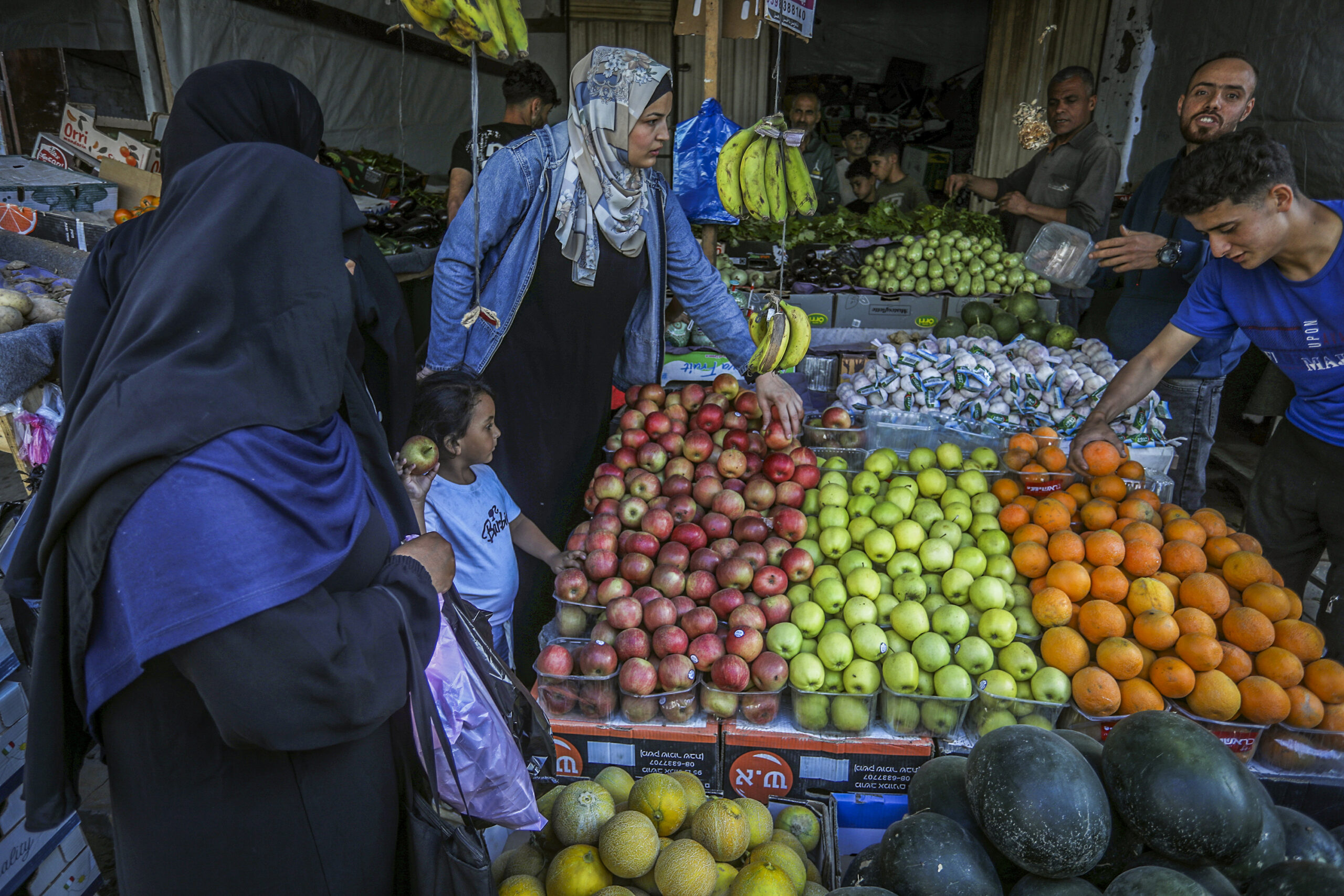
For nearly two years, the world was told a simple story: Israel was starving Gaza. The United Nations declared famine. The Secretary-General called it a “living hell.” A UN commission accused Israel of genocide. Photographs of emaciated children circulated across every major news outlet, and Israel’s denials were treated as the predictable defense of a guilty party. Now the UN’s own data has quietly dismantled the story it built.
A population-based nutrition survey conducted by the State of Palestine Nutrition Cluster, led by UNICEF and using the gold-standard weight-for-height measurement researchers had “repeatedly failed” to collect for most of the war, found that only 0.5 percent of children under five in Gaza showed signs of acute malnutrition. UNICEF’s own release put the figure near one percent. Either number places Gaza among the lowest rates of acute child malnutrition in the entire region, far below neighboring Egypt and Jordan. “Wasting is low across all domains,” the survey concluded, “suggesting no widespread acute malnutrition at population level.” Gaza’s children were also found to have a stunting rate of 12.2 percent, less than half the regional average of 26 percent. Elena Naumova, a Tufts University professor of nutrition epidemiology, said of the number: “I thought it would be much higher, to be honest.” A researcher with experience surveying famine conditions in the Horn of Africa said she had “never seen” obesity emerge in a population declared famine-stricken a year earlier. “We have people in Africa eating wild grasses just to stay alive,” she said. “There’s no obesity problem.”
This blood libel reflects one of the most grievous sins described in the Bible. When the twelve spies returned from scouting the land of Israel, ten of them delivered a report designed to terrify the nation rather than inform it. The Bible records their words plainly: “We are not able to go up against the people, for they are stronger than we” (Numbers 13:31). The report was not built from nothing; the spies had seen real fortified cities and real formidable people. But the conclusion they drew, and the panic they spread, exceeded what the facts supported. The Sages teach that the sin of the spies was not in what they observed but in the motzi shem ra, the false report, they constructed from selective observation and delivered with total certainty. Numbers and images were real. The conclusion built on top of them was not.

The parallel to the famine declaration is unmistakable. In April 2024, Samantha Power, then head of USAID, became the first American official to tell Congress that famine had begun in Gaza and cited a document that was a projection of possible outcomes, not a confirmed finding. By August 2025, the Integrated Food Security Phase Classification made it official, declaring famine in Gaza Governorate and warning that more than half a million Palestinians faced “catastrophic conditions characterized by starvation, destitution, and death.” The IPC projected that at least 132,000 children under five would suffer acute malnutrition through June 2026, including more than 41,000 severe cases. UN humanitarian chief Tom Fletcher called the evidence “irrefutable.” Secretary-General António Guterres wrote that Gaza had become a “living hell” for which “there are no words left.” UK Prime Minister Keir Starmer threatened to recognize a Palestinian state unless Israel took “substantive steps.” A UN commission concluded Israel had “committed genocide against Palestinians in the Gaza Strip.”
None of it matches what UNICEF’s own survey teams measured eleven months later.
The gap between what was declared and what has since been measured has drawn sharp criticism of the methodology behind the original famine declaration. Rather than the weight-for-height measurement now recognized as the gold standard, the IPC leaned heavily on mid-upper-arm circumference, a method its own training materials describe as an emergency substitute to be used only “in the absence” of weight-for-height data. The IPC also lowered its malnutrition threshold from 30 percent to 15 percent of children with low arm measurements shortly before the famine declaration, a change that identifies roughly half as many cases as the weight-for-height standard would. Israel’s Ministry of Foreign Affairs accused the IPC at the time of “shaping both their data and methodology to support” a predetermined conclusion. Columbia University marketing professor Ran Kivetz, who tracked food shipments into Gaza using UN and Israeli government data for sixteen months, called the famine declaration “a complete politicization of science.” “No matter your politics, at some point, facts need to matter,” he said. U.S. Ambassador to Israel Mike Huckabee called the reversal a “revelation.” “It just shows what Israel has to confront every single day, which is utterly fake news that they are committing a genocide and trying to starve people,” he said.
Despite the new data as a repudiation of the original declaration, some sources persist in blaming Israel for a famine in Gaza. Alex de Waal, a British anthropologist and leading famine researcher, said the survey gave no “cause to question the accuracy” of the IPC’s earlier findings, noting that “children can rebound very quickly from acute malnutrition.” He called the low stunting rate “the single most encouraging finding” of the survey. UNICEF itself has noted that stunting, unlike acute malnutrition, does not reverse quickly. “Acute malnutrition can improve within weeks,” said UNICEF regional director Edouard Beigbeder. “The wider damage does not.” Nearly one in ten Gazan women of reproductive age were found to be malnourished, and only 20 to 30 percent of toddlers were eating an adequately diverse diet, findings UNICEF says reflect poor food quality rather than food scarcity.
An editorial in the Jewish Times argued that this distinction changes nothing about the accountability owed. “These were not harmless statistical errors,” the editorial stated. “They were accusations of extraordinary moral consequence, broadcast around the world and used to portray Israel as deliberately starving children. Institutions that helped create that indictment cannot publish new numbers and quietly move on. They owe Israel, and the public they persuaded, an explanation.”
The nutrition survey answers one question: whether Israel deliberately starved Gaza’s population. It does not answer a second, separate question: what happened to the aid that did enter the Strip. On that question, the Israel Defense Forces has now disclosed intelligence it says provides the answer directly. Following an analysis of intelligence gathered throughout the war, the IDF revealed that Hamas operatives embedded themselves on aid trucks, covertly and openly, to seize shipments as they crossed into Gaza. The IDF says Hamas diverted a fixed share of all incoming aid, ranging from 15 percent to more than 25 percent, adjusted over time according to the terror group’s own internal assessments, distributing it to its fighters or reselling it to Gaza’s residents at inflated prices. Captured internal Hamas documents, the IDF says, record these decisions directly.
The IDF outlined three further revenue streams built on the same pipeline. Hamas smuggled banned goods, particularly cigarettes, through the same crossings used for humanitarian aid, then barred independent merchants from selling them so it could control resale at inflated prices; Israeli security forces at the crossings say they thwarted dozens of smuggling attempts over the course of the war. Hamas also exploited international aid organizations to bring “excess” aid items into Gaza purchased with foreign funds, including money from Iran, funneled through a hawala network run by Hamas operatives in Turkey in coordination with the group’s leadership on the ground, then resold those goods for cash. A fourth stream came through extortion, as Hamas used its control of Gaza’s territory to impose “protection” fees across entire industries. The IDF estimates the terror group accumulated hundreds of millions of dollars in cash and goods through this system. That revenue narrowed sharply after Israel’s political leadership ordered a halt to aid entering Gaza in early March, a decision the IDF says caused severe financial strain within Hamas, forcing the group to reduce or suspend salary payments to some of its members.
The rise of the Gaza Humanitarian Foundation offers its own evidence of what Hamas had been extracting. Aid distribution through GHF-secured centers, operated by an American civilian company in coordination with international organizations, allowed food to reach Gaza’s residents directly for the first time in the war, cutting Hamas out of the distribution chain entirely. The IDF has said it will continue backing the GHF model specifically to keep aid out of Hamas’s hands. Hamas’s response to a system built to feed civilians without its involvement was not cooperation but violence: attacks on GHF-linked staff and distribution sites. A terror group with nothing to lose from an aid system’s success does not need to attack it.
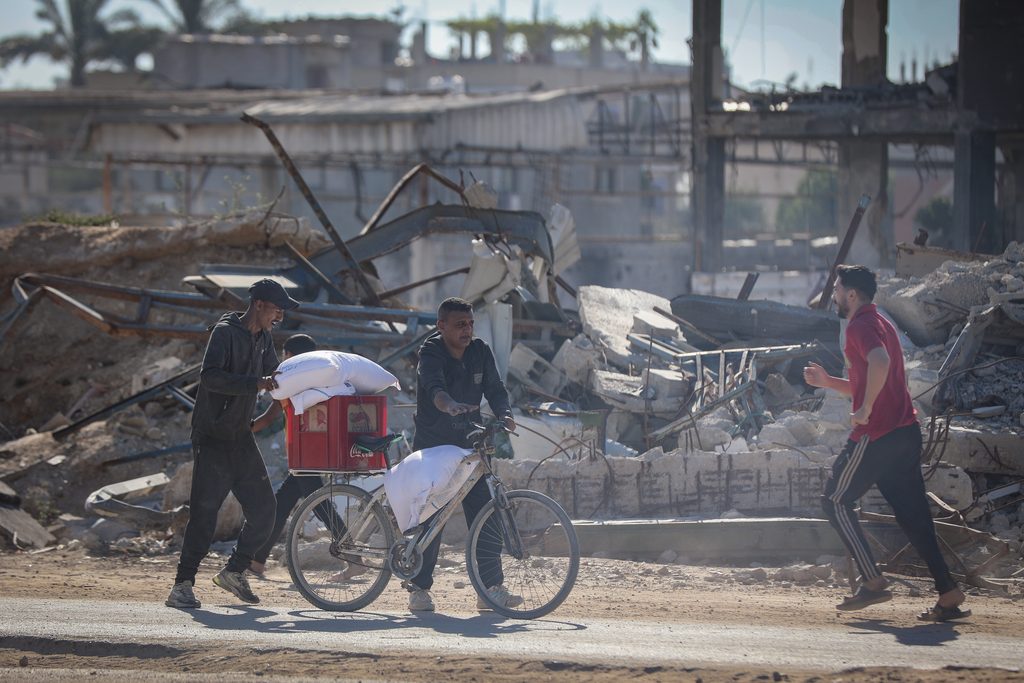
An internal USAID review examining specific incidents of violence at aid sites found no confirmed Hamas affiliation in the cases it studied, and attributed more than a quarter of those incidents to Israeli military actions instead. That review addressed individual violent episodes. It did not address the financial architecture the IDF says Hamas built around the aid system as a whole, documented, according to the IDF, in Hamas’s own captured records.
Coverage of the reversal has been sparse. Outside Fox News and Israeli outlets, the story has gone largely unreported by the outlets that gave the original famine declaration front-page prominence. Al Jazeera’s recent headline read: “Gaza’s children still struggling with hunger as another famine threatens.” Wikipedia’s page on the “Gaza Strip famine” still opens by stating as settled fact that Gaza “underwent a famine as a result of an Israeli blockade,” without mentioning October 7 and dismissing Israel’s video evidence of Hamas hijacking aid as unverified.
Money has kept the original narrative alive on its own. Organizations including the International Rescue Committee continue active fundraising campaigns built on claims of ongoing starvation in Gaza, even as the UN’s own survey data contradicts the premise. The UN Security Council convenes this week for a high-level debate on conflict-related food insecurity, where briefers are expected to describe Gaza and Sudan as marking the first year in two decades with two confirmed famines in the same year, a claim now directly at odds with UNICEF’s own June findings.
The spies who terrified the nation in the wilderness were not punished for reporting what they saw. They were punished for the conclusion they built on top of it, and for the panic that conclusion spread through a nation that trusted their certainty. Gaza’s own nutrition data, gathered by the same UN-affiliated body that declared famine a year earlier, has now delivered its own quiet reversal. The institutions that spread the original report, and the world that believed it without question, owe more than a footnote in a survey few will read. They owe the same volume, urgency, and certainty with which the original charge was delivered, this time in service of the truth.
