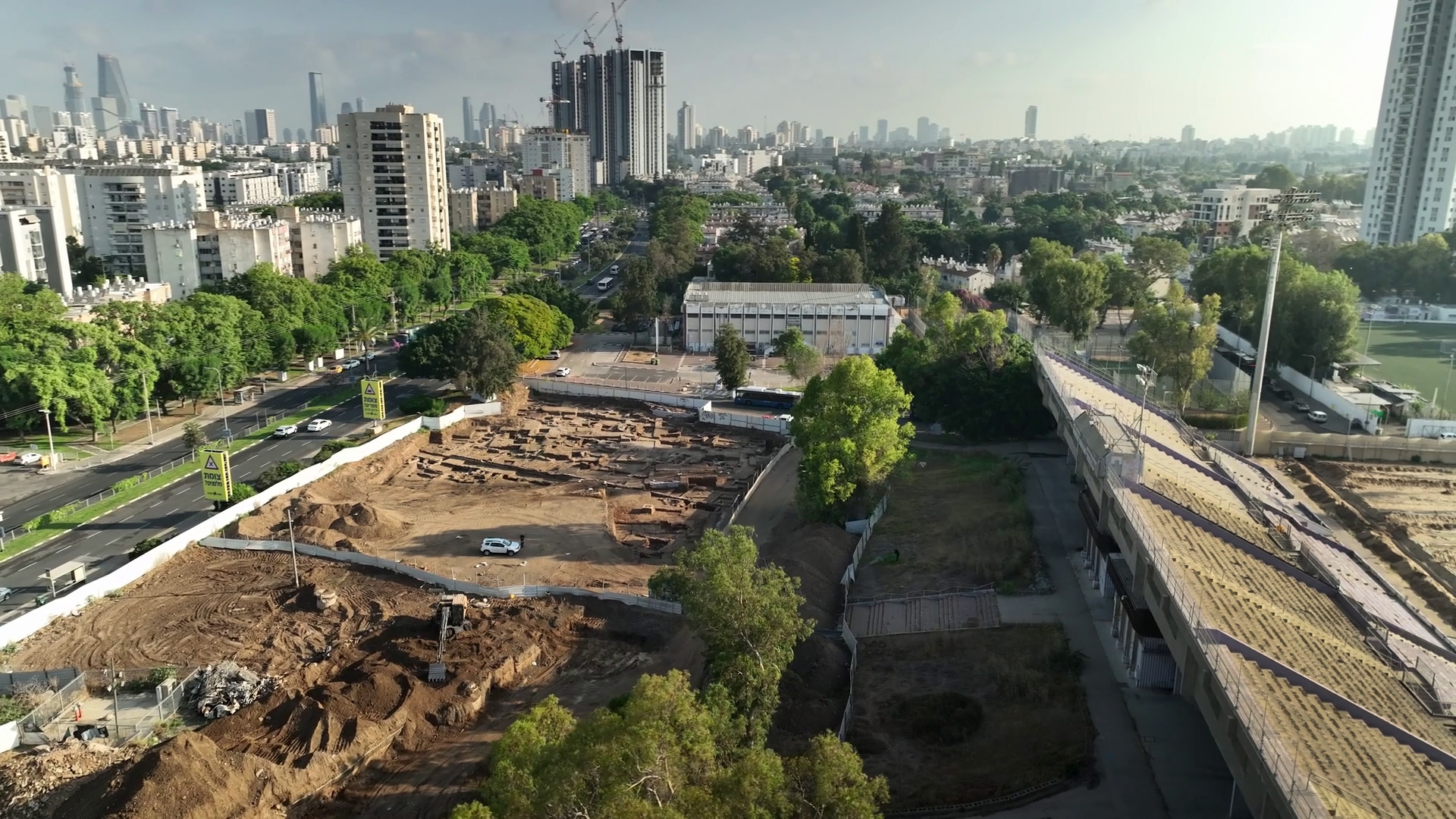
A planned network of intersecting streets, lined with shops, warehouses, pottery kilns, and industrial workshops, has been uncovered by Israel Antiquities Authority archaeologists in the parking lot of Ramat Gan’s Winter Stadium, ahead of construction of a new bus terminal at the site by Netivei Ayalon. The excavation directors say the find exceeded anything they expected at a location where ancient remains had already been found.
“Although buildings and artifacts from ancient periods have been discovered in the area in the past, the results of the current excavation exceeded all expectations,” said Dr. Yoav Arbel and Lior Rauchberger, who directed the dig for the Israel Antiquities Authority. “The excavation uncovered an organized, planned complex featuring straight, intersecting streets. Lining these streets were a series of rooms that served as shops or warehouses, plastered industrial facilities, pottery kilns and more.”
Built With the Backing of Regional Authorities
According to Arbel and Rauchberger, the layout itself points to centralized planning rather than organic growth. “Clearly, its main phase was planned in advance in detail by engineers and was built with the knowledge of the regional authorities, and perhaps even on their initiative and with their funding,” they said. Its location, they added, was almost certainly deliberate: the site sat near the main road linking Jaffa, Ramla, then the district capital, and Jerusalem, possibly along a secondary route branching off that central artery, in an area offering fertile agricultural land and accessible water sources.
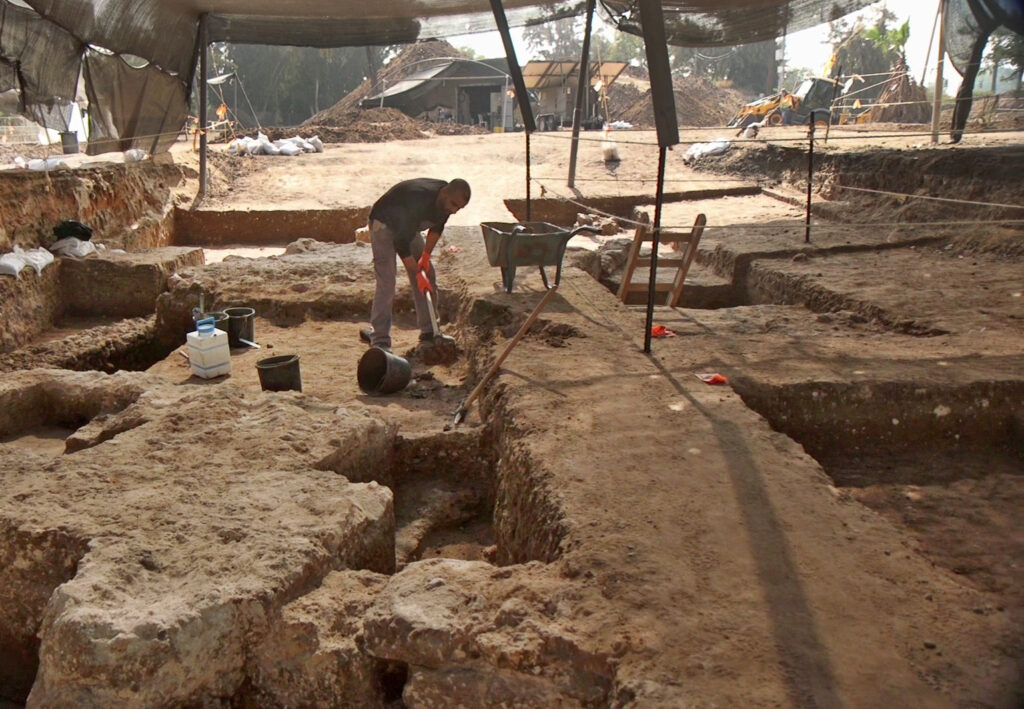
Researchers say the complex may have functioned as a large trade and industrial waystation, or alternatively formed part of a still-undiscovered settlement nearby. Built in the seventh or eighth century CE, during the Umayyad and early Abbasid periods, it operated for roughly 150 years before being abandoned for reasons that remain unclear. The site was resettled in the tenth century, under Fatimid rule, when residential buildings, production facilities, and numerous tabuns, clay baking ovens, were installed. It was abandoned a second and final time in the late eleventh century, shortly before the Crusader conquest, and was never resettled after that.
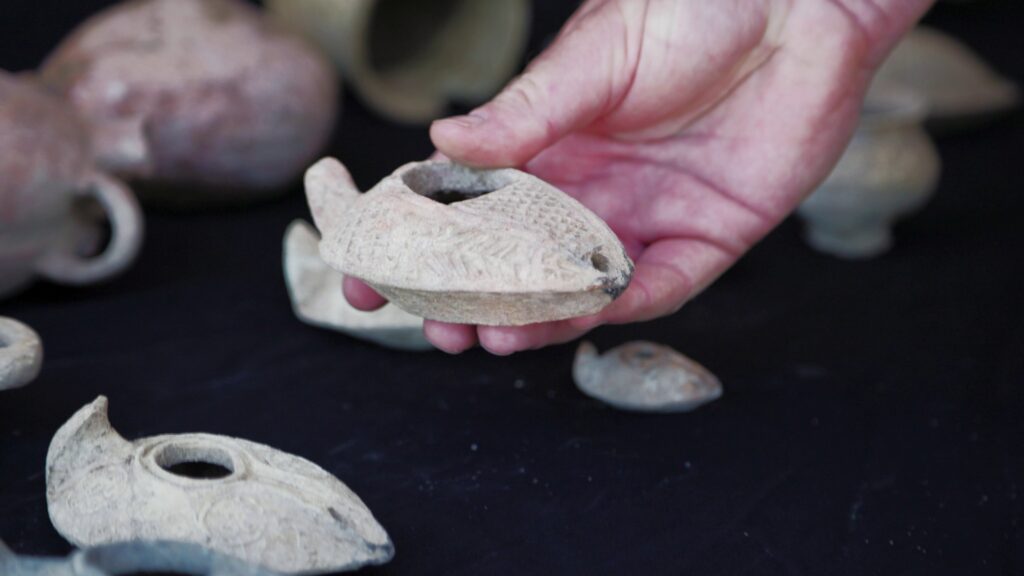
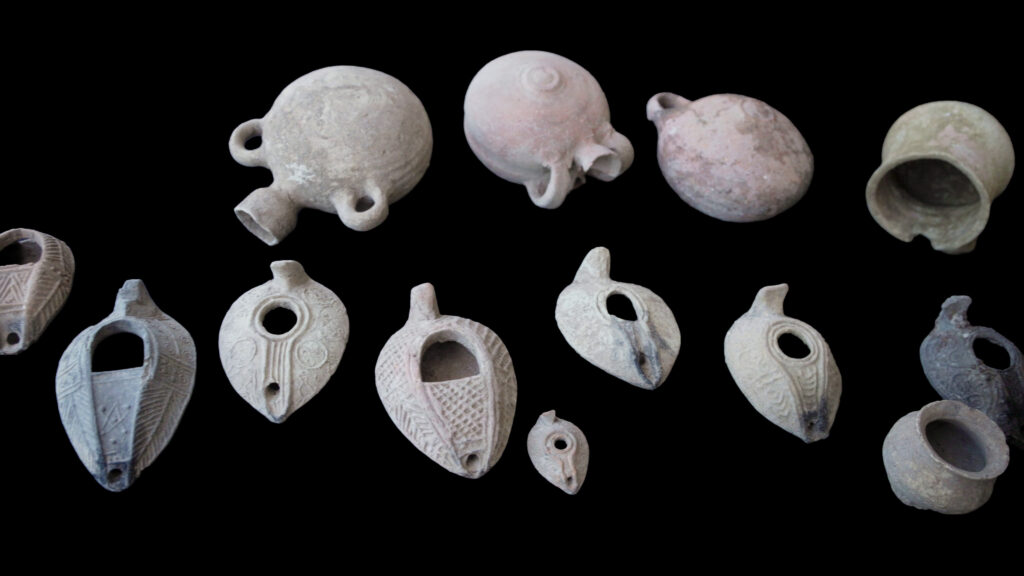
Alongside the building remains, archaeologists recovered dozens of pottery vessels and intact oil lamps, bronze tableware and cosmetic implements, iron pickaxe heads, a sickle, numerous nails, dozens of coins, and a large quantity of local and imported pottery and glass fragments. “Together, these finds provide a vivid reflection of the period’s culture, trade and economy,” the excavation directors said.
The population of the region during these centuries was mixed, including Muslim, Christian, Jewish, and Samaritan communities. Ramla, the district capital, had a Muslim population, while the Yarkon area was likely home to a substantial Samaritan community, descendants of a much larger population that had flourished there under Byzantine rule before the Muslim conquest of the seventh century. The excavation itself, however, turned up no finds clearly identifying the ethnic or religious identity of the people who lived and worked at the site.
Israel’s Minister of Heritage, Rabbi Amichai Eliyahu, called the find a reminder of how much remains beneath the country’s modern surface. “The discovery of ancient finds in a residential neighborhood in Ramat Gan, adjacent to a well-known, long-standing stadium, once again demonstrates the historical and archaeological wealth of the State of Israel, where windows onto distant periods of the past may open anywhere,” he said.
The Israel Antiquities Authority will hold a public open day at the site this coming Wednesday, August 19, with admission by advance registration only. The finds will subsequently be covered over to ensure their preservation, though officials say the possibility of displaying some of them publicly in the future is being examined.
The Biblical Ground Beneath Ramat Gan
Ramat Gan itself is a modern city, founded in 1921 as a farming settlement and named simply for its hilltop gardens. But the ground it sits on carries a far older name. On the Yarkon’s southern bank, within Ramat Gan’s own boundaries, sits Tel Gerisa, an ancient mound inhabited from the Early Bronze Age through the early Islamic period and fortified as early as the Middle Bronze Age. Archaeologist Binyamin Mazar identified the site with Gath-Rimmon, a town the Book of Joshua lists among the territory allotted to the tribe of Dan: “And Jehud, and Bene-berak, and Gath-rimmon” (Joshua 19:45). Bene-berak survives today as neighboring Bnei Brak, and the same chapter of Joshua names the Yarkon River itself, describing the boundary running “unto Jarkon, with the border before Japho,” placing the modern Yarkon in the text of the Bible by name.
This was Danite territory at the western edge of the tribal allotments, close enough to the coast that the tribe of Dan later found itself squeezed by Philistine pressure and sent part of its population north in search of new land, the episode recorded later in the same book of Joshua. Long before Ramat Gan existed as a city, the ground beneath its stadium parking lot sat inside the ancient borders assigned to one of the twelve tribes of Israel.
What Was Happening Here 1,500 Years Ago
The newly excavated complex itself dates to roughly 1,300 years ago, but the region’s history in the century before that, some 1,500 years ago, was defined by catastrophe rather than construction. In 529 CE, the Samaritan population that the excavation’s own researchers say once flourished across this part of the country rose up against Byzantine rule in what became the bloodiest of the Samaritan revolts.
Led by a messianic claimant named Julianus ben Sabar, who was proclaimed king after his forces seized the city of Neapolis, modern Nablus, the revolt spread rapidly through Samaria and the surrounding countryside, reaching from Caesarea to Beit She’an. Ben Sabar’s forces killed the local bishop and burned churches across the region. The Emperor Justinian I responded with overwhelming force, dispatching imperial troops together with Ghassanid Arab allies, who crushed the rebellion by 531 CE. Ancient chroniclers put the death toll as high as one hundred thousand, a figure modern historians treat with some caution but that nonetheless points to a demographic catastrophe. Ben Sabar himself was captured and beheaded, his head sent to Justinian as a trophy of the victory.
The consequences reached the Sharon and Yarkon region directly. The once-substantial Samaritan population that had lived across this part of the country for centuries never recovered, and Byzantine restrictions on Samaritan religious practice, land ownership, and civic life tightened further in the revolt’s aftermath. By the time Muslim armies conquered the region roughly a century later, and the newly excavated commercial complex beside Winter Stadium rose from the ground not long after that conquest, the demographic landscape of the Sharon coastal plain had already been reshaped by what happened at Neapolis in 529. The shops, kilns, and workshops now emerging from the earth in Ramat Gan were built atop ground that had, within living memory of its builders’ grandparents, been the site of one of the deadliest revolts in the entire Byzantine period.