




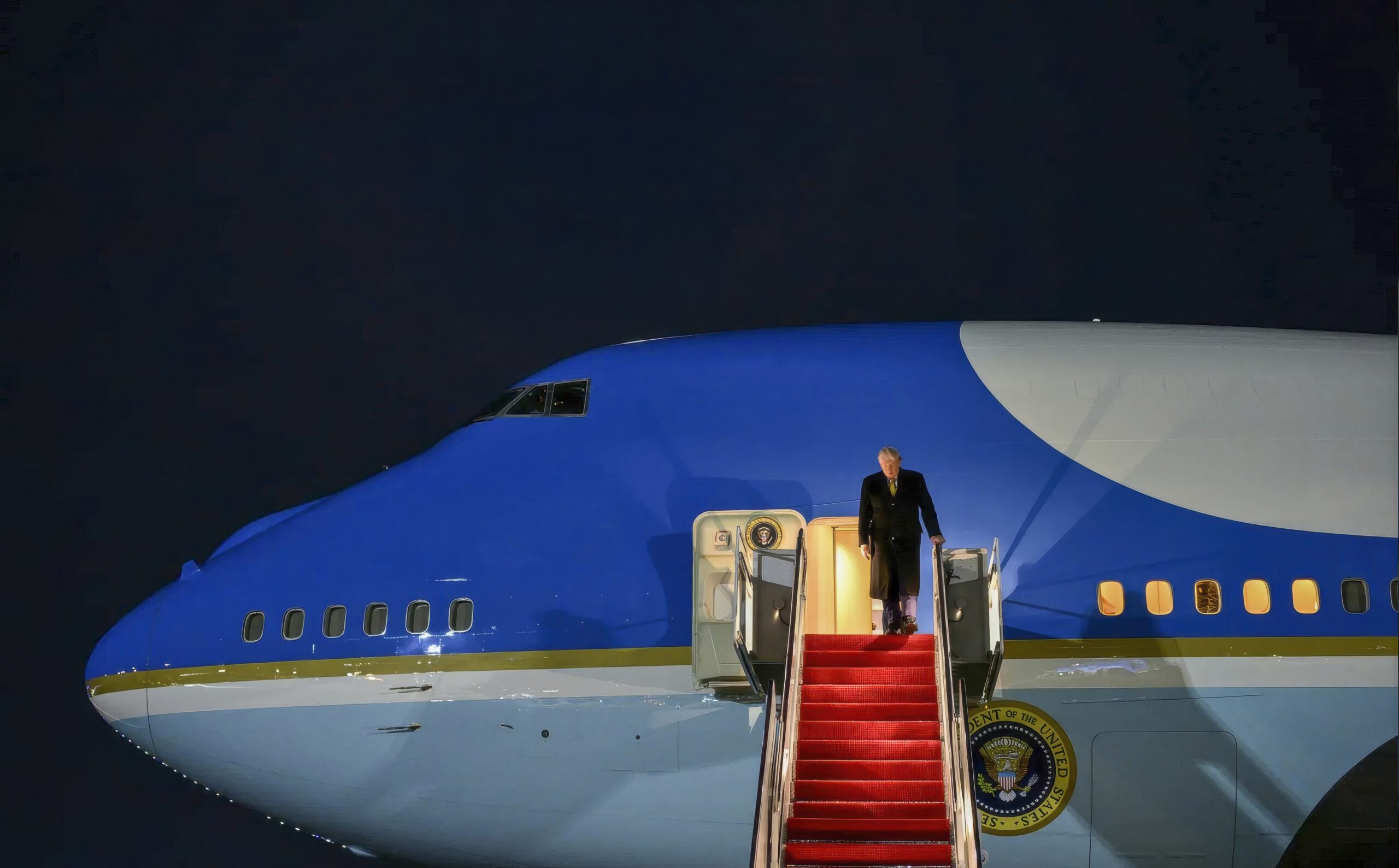
Israel provided the intelligence that led the US Secret Service to secretly pull President Trump off Air Force One and smuggle him onto a different aircraft as he prepared to leave Turkey last month, The Wall Street Journal reported this week, citing an unnamed American official. The intelligence indicated Iran was developing a plan to use shoulder-fired missiles against the president’s plane.
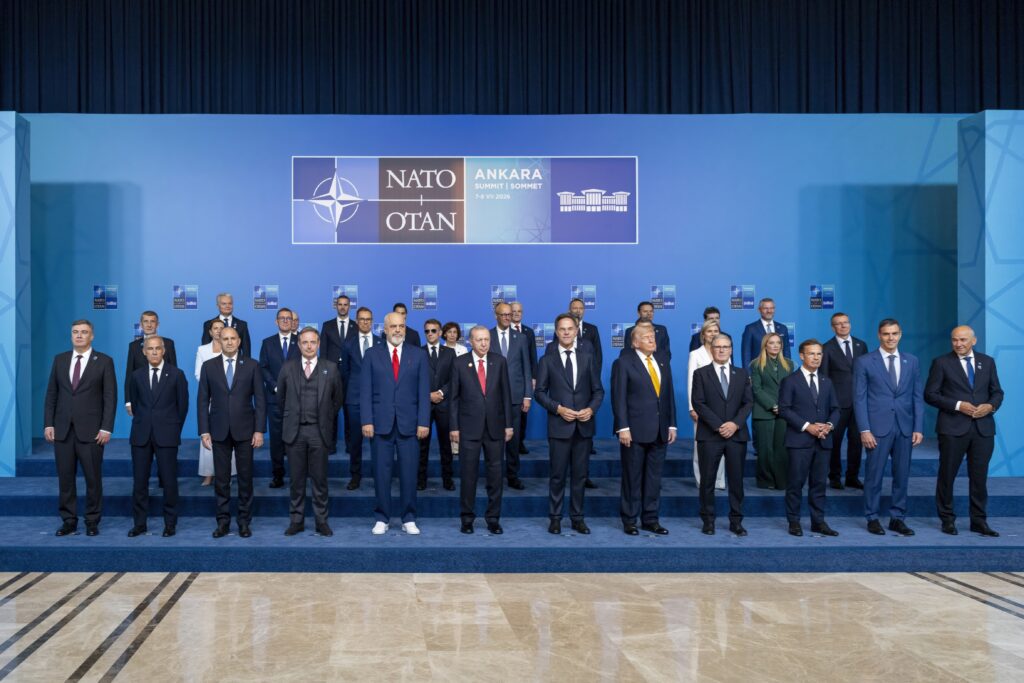
The operation itself, now reported in full detail for the first time, was an elaborate piece of misdirection. Trump had flown to the NATO summit in Ankara aboard the newly refurbished jet gifted to the United States by Qatar, its first international trip. Before leaving Turkey, Trump announced he would instead fly home on the older Air Force One “for old time’s sake,” while the Qatari jet made a stop at RAF Mildenhall in Britain so American service members stationed there could tour it. Trump boarded the old Air Force One in front of the cameras in Ankara as planned. But shortly afterward, he was quietly loaded into an airport catering truck, driven out of view of the press, and transferred to a much smaller aircraft, a military C-32A parked nearby, which flew him to the same British base before returning him to Washington. The deception ran so deep that even some of Trump’s own staff, including Secretary of State Marco Rubio, boarded the old Air Force One, believing the president was aboard, unaware he had already been secretly moved to a different plane entirely. White House communications director Steven Cheung would only say that the new aircraft carries “high-level security protocols” designed to protect the president and his staff.
Trump confirmed the account days later. “I go by Secret Service and the military. They wanted me to go in a different flight, different plane,” he told reporters. “I just have to do what they say.” He argued the plane he was originally seen boarding had actually been the more exposed target: “I think actually the plane that I flew on was at greater risk, because that would be the plane I think that they would be more likely to go for.” He also reaffirmed his distrust of Tehran directly: “Are you saying I trust Iran?! I’m the last person to trust Iran. They’ve lied to me constantly.”
Not the First Warning, and Not the Only Target
The Ankara plot is only the latest entry in a threat campaign against Trump that Iran has pursued consistently since January 2020, when Trump ordered the drone strike that killed IRGC Quds Force commander Qassem Soleimani. Iranian officials, from Supreme Leader statements down to state media broadcasts, have publicly vowed revenge for that killing for years, and US law enforcement has spent that same period uncovering plots that moved well past rhetoric.
In 2022, federal prosecutors charged Pakistani national Asif Raza Merchant with plotting to hire a hitman to assassinate Trump or another senior US official on Iran’s behalf, a $300,000 contract monitored by the FBI for weeks before Merchant’s arrest; a jury convicted him this past March. Around the same period, the Justice Department disrupted a separate IRGC-linked plot targeting John Bolton, Trump’s former national security adviser, who has lived under round-the-clock protection for years as a result. In November 2024, the department unsealed charges against Farhad Shakeri, an IRGC asset operating from Tehran, along with two American accomplices, for a plot to surveil and kill then-President-elect Trump, in a scheme that also targeted an Iranian-American activist and two Jewish Americans living in New York, a detail that made clear the same network saw little distinction between the president and ordinary American Jews as targets of Iranian retribution. Ahead of the July 2024 Butler, Pennsylvania rally where Trump survived a gunman’s bullet, the National Security Council had already separately warned the Secret Service of an elevated Iranian threat, though investigators found no link between that shooter and Tehran specifically.
The threats have carried a price tag from the very beginning. Days after the Soleimani strike in January 2020, Iranian lawmaker Ahmad Hamzeh offered “$3 million to anyone who kills Trump” on behalf of Soleimani’s hometown of Kerman, while state broadcasters floated a separate, symbolic $80 million bounty during the general’s funeral procession, one dollar for every Iranian. The dollar figures climbed sharply this year alongside the broader escalation with Iran. An Iranian-linked website claimed to have collected more than $30 million for a “Trump assassination reward” that also covered Israeli Prime Minister Benjamin Netanyahu, with state-affiliated outlets Fars News Agency and Keyhan publicly endorsing the campaign and invoking religious death sentences against both men. In May, Ebrahim Azizi, chairman of the Iranian parliament’s National Security and Foreign Policy Committee, announced a bill proposing a €50 million reward for killing Trump, Netanyahu, or the CENTCOM commander, framed explicitly as retaliation for the deaths of Khamenei and Iranian military commanders. The Iran-backed Islamic Resistance in Iraq separately announced its own $10 million bounty on Trump’s life, a claim Russian state media moved quickly to amplify.
The campaign has since expanded well beyond Trump himself. As tensions escalated this year, Iranian state-linked billboards appeared across Tehran showing Trump’s wife and children, Melania, Ivanka, and twenty-year-old Barron, with the word “KILLED” printed in red above their images and text reading “Hey, Terrorist! Get ready to die.” A separate billboard depicted Trump inside a casket beneath the words “We Kill Trump,” in both English and Persian. Intelligence officials disclosed that an actual plot targeting Ivanka Trump specifically had been organized by an operative connected to the IRGC, an Iraqi national who had obtained a layout of her Florida home and posted online messages warning her that “neither your palaces nor the Secret Service will protect you.” A separate video threat aimed at Melania Trump catalogued what it called her personal “weaknesses” before closing with an ominous message directed at Barron. Nathan Sales, a former State Department counterterrorism coordinator, summarized the pattern bluntly: “The Iranian regime remains a clear and present danger to President Trump, and to the countless other Americans it has targeted for assassination and kidnapping on American soil.”
Set against that history, Israel’s role in exposing the Ankara plot is not an isolated act of goodwill. It is the latest instance of a country that shares Iran as its own primary existential adversary using its intelligence advantage to protect an American president Tehran has spent five years trying to kill.
An Old Pattern, Written Long Before Air Force One
The shape of what happened last month, a loyal figure uncovering a palace assassination plot and quietly ensuring the king’s safety, is not a new story in Jewish history. It is, almost exactly, the plot of a chapter near the beginning of the Book of Esther.
In those days, while Mordecai sat in the king’s gate, two of the king’s chamberlains, Bigthan and Teresh, of those that kept the door, were wroth, and sought to lay hands on the king Ahasuerus. And the thing became known to Mordecai, who told it unto Esther the queen; and Esther told the king thereof in Mordecai’s name. And when inquisition was made of the matter, and it was found to be so, they were both hanged on a tree; and it was written in the book of the chronicles before the king. (Esther 2:21-23)
Mordechai, a Jew living inside a foreign empire with every reason to distrust the throne he served, uncovered a plot to kill the king and made sure it reached Ahasuerus in time, asking for nothing in return. The act went formally recorded but entirely unrewarded, filed away in a court chronicle and seemingly forgotten, until a sleepless night years later sent the king back to that same chronicle, setting in motion the very reversal that saved the Jewish people from Haman’s decree. The Talmud and later commentators treat that overlooked entry in the chronicles as a hinge point of the entire Purim story, proof that an act of loyalty performed with no expectation of reward can still turn out, in retrospect, to have been the moment everything else depended on.
Israel’s intelligence services owe President Trump no particular debt of loyalty distinct from ordinary alliance interest, and the immediate motive for flagging an Iranian plot against him is straightforward: Iran is Israel’s enemy as much as it is America’s, and a plot against Trump’s life is a plot Israel has every operational reason to want stopped regardless of any personal relationship. But the structure of the story, a warning delivered quietly, without ceremony, that turns out to have protected the head of a foreign government from an assassin’s plan, is one the Jewish people have told about themselves since Persia the first time. Whether this particular warning becomes, like Mordechai’s, a detail future historians look back on as more consequential than it appeared in the moment remains, as it always does with these things, a matter for time to decide rather than the headlines of any single week.
