




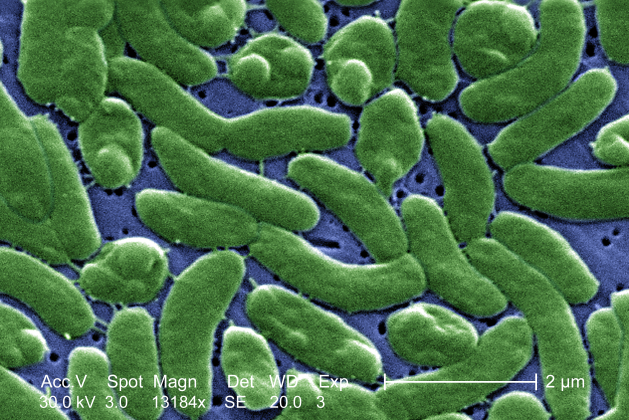
A rare and often fatal “flesh-eating” bacteria has killed at least seven people along the Gulf Coast so far this year, with health officials in two states warning residents to stay cautious around warm coastal water through the rest of the summer.
Florida’s Department of Health confirmed a second death from Vibrio vulnificus this year in data posted August 6, alongside 14 additional confirmed cases. Louisiana has recorded five deaths and nine total cases in 2026, every one of them a hospitalized patient who contracted the infection through a wound exposed to seawater and who had an underlying health condition. That marks a sharp jump for Louisiana specifically: the state had averaged seven cases and one fatality a year over the past decade, before 2025 alone brought 26 cases and five deaths.
Vibrio vulnificus lives naturally in warm, brackish coastal waters, the mix of salt and fresh water found where rivers meet the ocean, and belongs to a family of more than 80 Vibrio species, most of which are harmless or cause only mild foodborne illness. V. vulnificus is the dangerous exception. People contract it either by eating raw or undercooked shellfish, particularly oysters, or by exposing an open wound, including small cuts, fresh tattoos, or piercings, to contaminated water. Once in the bloodstream, it can cause sepsis, blistering skin lesions, and organ failure within hours, and roughly one in five people who contract it die, sometimes within a day or two of the first symptoms. The nickname “flesh-eating bacteria” refers to necrotizing fasciitis, a severe infection that kills the flesh around a wound, though the CDC notes a different bacteria, a type of Streptococcus, is actually the most common cause of that condition nationally.
The trend line is climbing well beyond this year’s headlines. Maryland’s confirmed Vibrio cases have more than doubled since 2018, from 100 to 260 last year, and Virginia’s have nearly doubled over the same stretch. A 2024 study found a 39% rise in per capita Vibrio infections in Maryland between 2006 and 2019, and separate East Coast research found that wound infections specifically caused by V. vulnificus grew eightfold between 1988 and 2018. The bacteria have also been detected this spring in water samples off New York’s Long Island, well north of its traditional range. Scientists attribute the spread directly to warming water: V. vulnificus thrives once water reaches 64 degrees and has moderate salinity, conditions the Chesapeake Bay now meets for a longer stretch of the year after its average temperature rose 1.8 degrees over the past three decades. “With every year now, because of climate change, we’re seeing it higher and higher in more northerly latitudes,” said Dr. Peter Hotez, dean of the National School of Tropical Medicine at Baylor College of Medicine.
Health officials in both Florida and Louisiana are urging the same basic precautions: cook seafood thoroughly rather than eating it raw, wash hands after handling raw shellfish, and avoid salt or brackish water entirely if you have an open wound, a recent piercing, or a fresh tattoo. Anyone who develops redness, swelling, warmth, or discoloration around a wound after exposure to coastal water is advised to seek medical care immediately and inform the provider of the exposure. People with chronic liver disease, cancer, diabetes, HIV, or conditions requiring immunosuppressant treatment face a substantially higher risk of severe illness or death if infected.
A Disease the Prophet Zechariah May Have Already Named
One detail in the outbreak has drawn attention from a different direction entirely. Rabbi Rami Levy, an end-of-days lecturer based in Jerusalem, told Israel365 News that the clinical description of a Vibrio vulnificus infection, flesh that appears to rot away around an open wound, tracks closely with a plague the prophet Zechariah assigned to the enemies of Jerusalem in the End of Days: As for those peoples that warred against Yerushalayim, Hashem will smite them with this plague: Their flesh shall rot away while they stand on their feet; their eyes shall rot away in their sockets; and their tongues shall rot away in their mouths. (Zechariah 14:12)
“The prophet described a disease that would accompany the War of Gog and Magog,” Rabbi Levy said. “The current outbreak is exceptional and appears to fit the prophet’s description, but it is not nearly on the scale of what we will see before Moshiach.” He was careful to draw a real distinction rather than claim a direct fulfillment. “The plague that comes after Gog and Magog will be even worse than the Bubonic Plague the world saw in the Middle Ages, destroying a significant part of the world population,” he said, “but it will afflict specifically the people who came out against the Jews.” Referring separately to earlier flesh-eating bacteria cases reported in England, he added that those specific cases “do not seem to fit the description of the striking of people who came out against Jerusalem,” a distinction that keeps his reading of the Gulf Coast outbreak narrower than a blanket claim about any flesh-eating illness anywhere.
Rabbi Levy read the current cases as a smaller signal rather than the prophecy’s fulfillment. “Right now we are just seeing wake-up calls, reminders that Moshiach is on the way,” he said. “God works in stages. He could have created the world in one moment, but he chose to do it in six days. The sunrise and sunset are gradual, coming in stages. The Messiah will work in the same way. There will be hints, small occurrences that will reappear in the final days.”
The idea that Egypt’s ancient plagues will return before the final redemption, in an intensified form, is not a new or isolated reading. The sixth plague of Egypt, generally translated as boils, is itself widely linked by scholars to the bubonic plague, whose hallmark symptom is boil-like black ulcers: It shall become a fine dust all over the land of Egypt, and cause an inflammation breaking out in boils on man and beast throughout the land of Egypt. (Exodus 9:9) That connection gained physical evidence in 2010, when scientists excavating ancient Egyptian ruins found 3,000-year-old Nile rat remains alongside fleas, the animal and insect combination responsible for transmitting the plague in the ancient world. The prophet Micah separately promises that the wonders of the Exodus will recur before the final redemption: I will show him wondrous deeds as in the days when You sallied forth from the land of Egypt. (Micah 7:15) The fifth-century Midrash Tanchuma states the principle directly: “Just as God struck the Egyptians with ten plagues, so too He will strike the enemies of the Jewish people at the time of the Redemption.” The thirteenth-century Spanish commentator Rabbi Bahya ben Asher explained the difference in scale explicitly: “In Egypt, God used only part of His strength. When the final redemption comes, God will show much, much more of His power.”
There is also a narrower, more literal point at the heart of this outbreak, separate from its prophetic reading. Vibrio vulnificus reaches people almost entirely through raw or undercooked shellfish or through wounds exposed to contaminated seawater, and shellfish is the one category of seafood the Bible excludes from a kosher diet outright, permitting only fish with both fins and scales. A dietary law with no stated medical justification in the text turns out, in this instance, to close off one of the two main paths into a genuinely lethal modern infection, a coincidence that Rabbi Levy’s broader framework would likely read as no coincidence at all.