

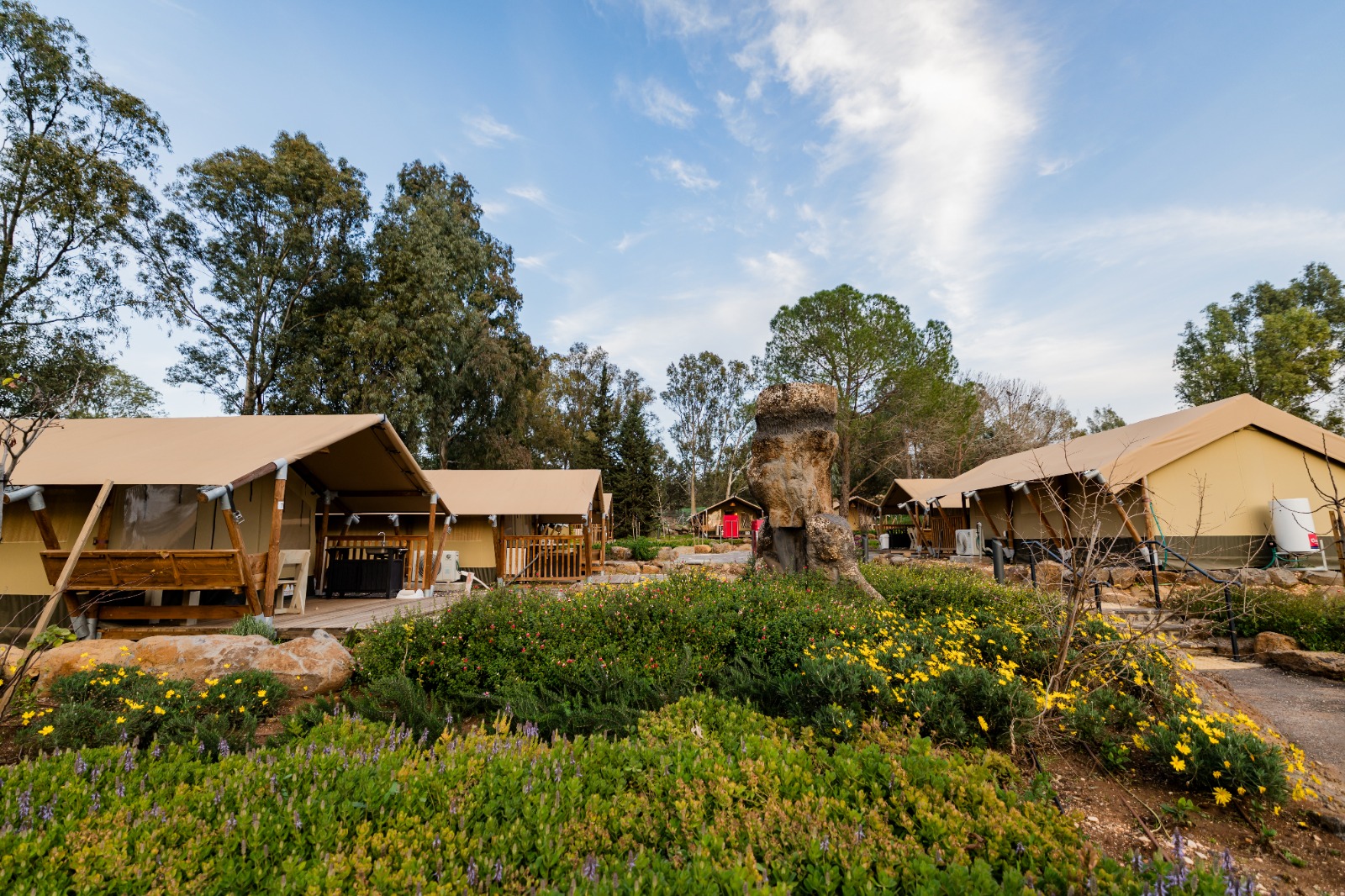
More than a millennium and a half after Jewish farmers and craftsmen laid black basalt foundations on the Golan Heights, the ancient village of Katzrin has reopened to the public following a NIS 40 million renovation. The site now combines the excavated remains of a fourth-century synagogue and residential quarter with a glamping complex, an amphitheater, and family attractions, making it one of the most ambitious heritage tourism projects launched in the Golan since Israel regained the plateau in the Six-Day War.
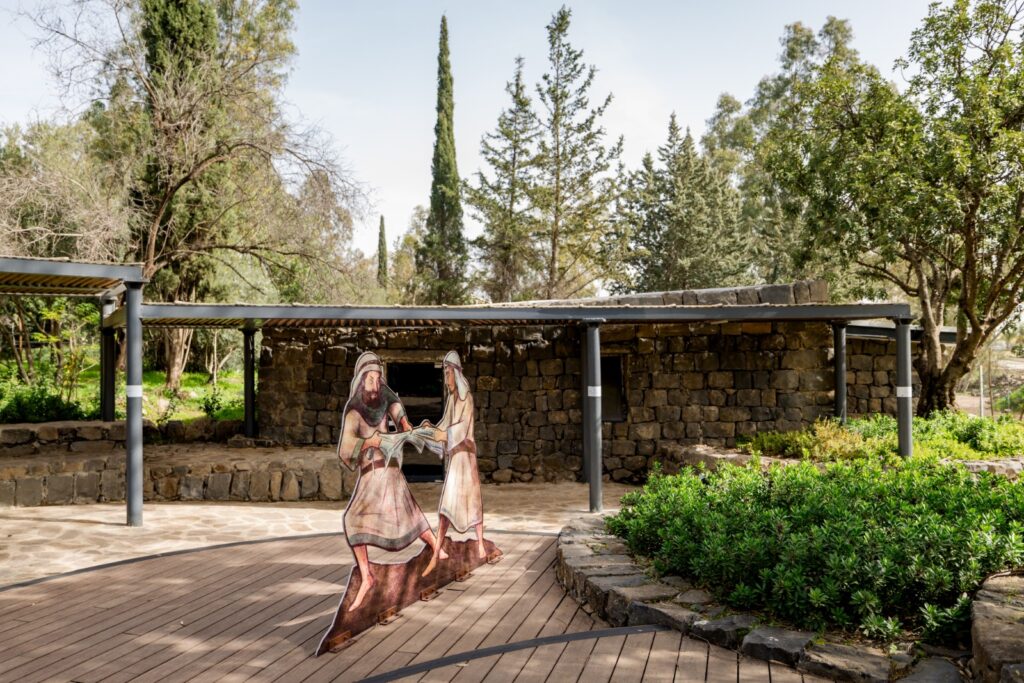
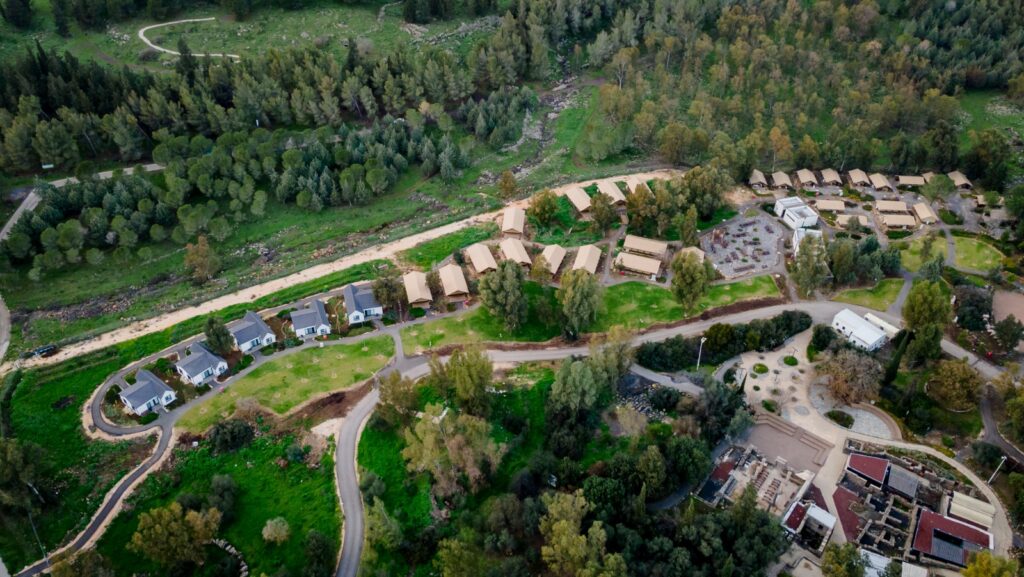
The renewed complex sits in Katzrin, widely known as the capital of the Golan, and is built around the remains of an ancient Jewish village and its synagogue, dating to roughly 1,600 years ago. The project connects visitors to that archaeological legacy while adding overnight accommodation, cultural programming, nature trails, and leisure space, positioning Katzrin as a full-scale tourism anchor for the northern region rather than a single historic stop.
Golan in the Bible and the Talmud
The Golan’s Jewish story begins in the Bible itself. Golan in Bashan was one of six cities of refuge that Moses designated, a place where a person who killed unintentionally could flee for protection from the blood avenger. The book of Deuteronomy records the command directly: “Bezer in the wilderness, in the table-land, for the Reubenites; and Ramoth in Gilead, for the Gadites; and Golan in Bashan, for the Manassites” (Deuteronomy 4:43). The book of Joshua confirms the appointment and adds that Golan was handed to the Gershonite Levites as their inheritance, alongside their role as a sanctuary city for the manslayer (Joshua 21:27).
That biblical foundation gave the region its name for the centuries that followed. By the Talmudic period, Jewish settlement on the Golan had grown into a network of close to thirty villages, each built around a synagogue of local black basalt, a construction style found almost nowhere else in the land of Israel in comparable numbers. Katzrin was among the largest of these communities, thriving from roughly the fourth through the eighth centuries. A massive earthquake in 749 CE leveled the village along with many other Jewish and Christian sites across the Galilee and the Golan, and Katzrin lay abandoned for roughly five hundred years before a mosque was briefly built over the fallen synagogue during the Mamluk period. The synagogue itself was rediscovered in 1976 during archaeological surveys conducted after Israel took control of the Golan, and full excavation and restoration began in 1982.
Christian Heritage in the Surrounding Region
Katzrin’s location places it within a stretch of the Golan and northern Galilee that also carries deep significance for Christian visitors. A short drive north brings travelers to Banias, identified in the New Testament as Caesarea Philippi, the site of Peter’s declaration of faith recorded in the Gospel of Matthew. East of the Sea of Galilee lies Kursi, the traditional site of the healing the Gospels describe as the Miracle of the Swine, where archaeologists have excavated and partially restored a Byzantine-era monastery and church. Together with nearby Galilee sites such as Capernaum, Tabgha, and the Mount of Beatitudes, Katzrin offers Christian heritage travelers a natural stop that links the region’s Jewish past to the Gospel narrative along the Sea of Galilee’s shores.
A Complex Built for Long-Term Tourism
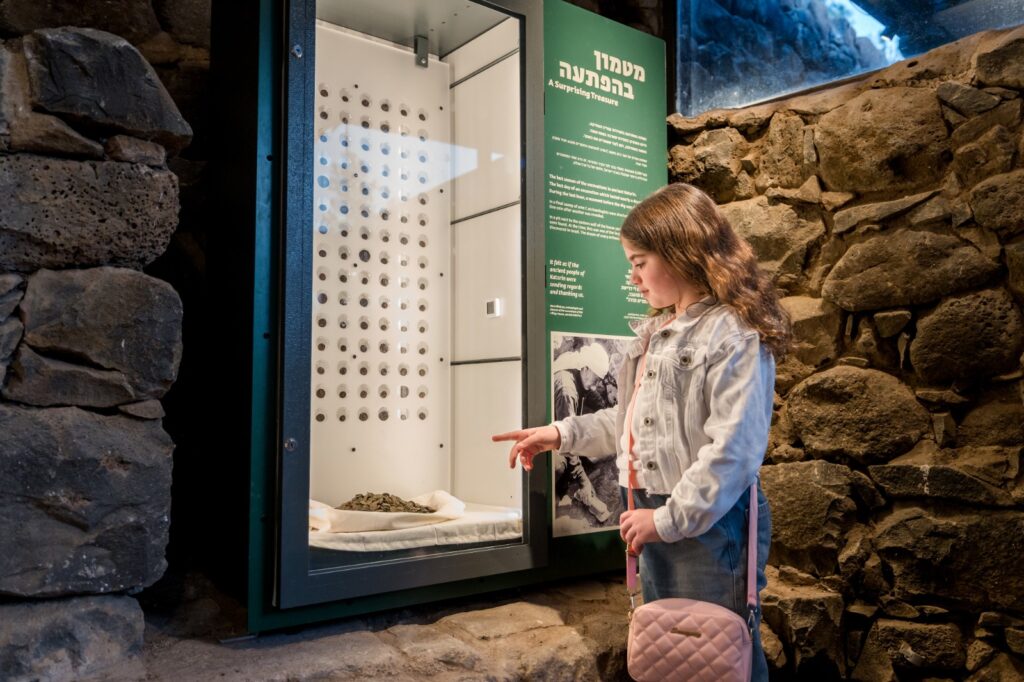
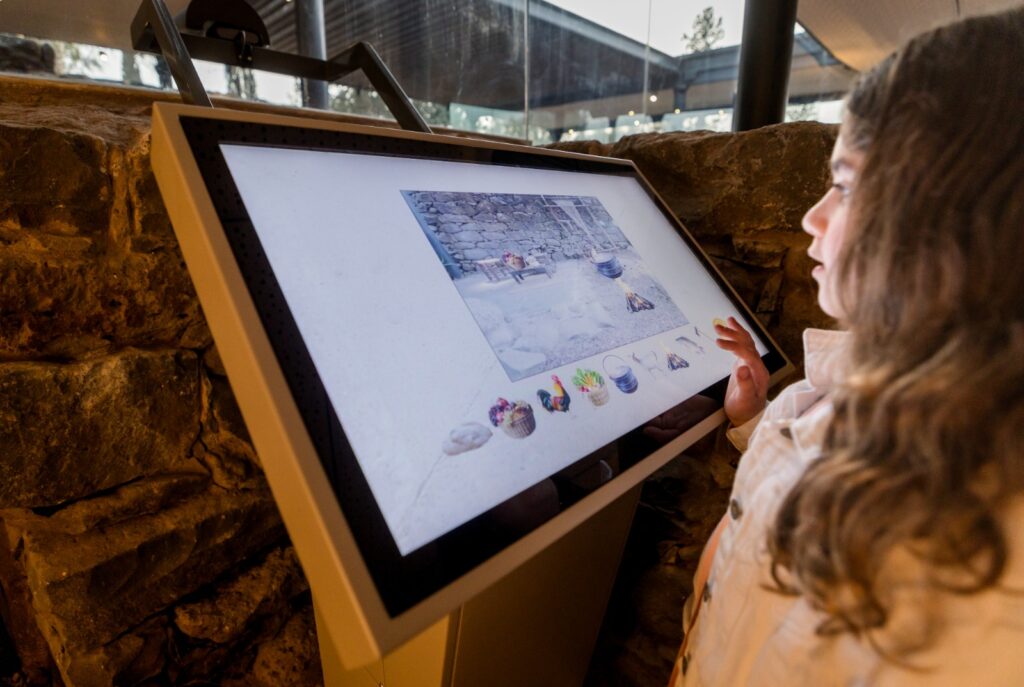
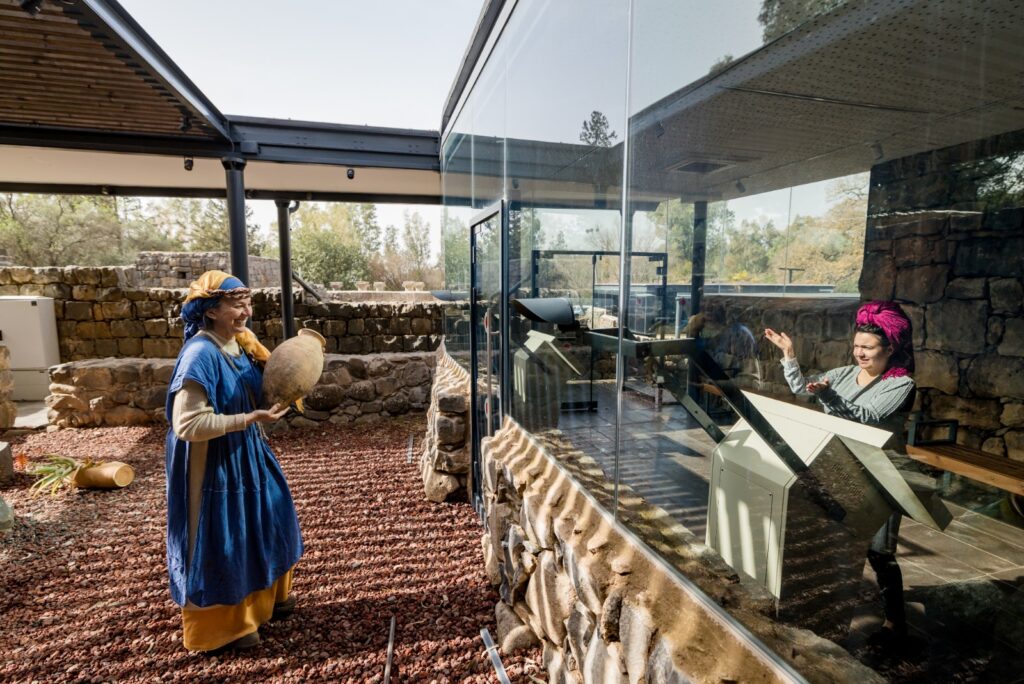
The renewed site includes a luxury glamping complex with roughly 400 accommodation places, an amphitheater for cultural events and performances, wading pools, interactive activity areas, and advanced multimedia systems layered into the historic setting. Preservation and restoration work extended to the village’s ancient structures, with continued development and accessibility upgrades at the synagogue itself, along with new promenades, landscaping, walking trails, and leisure areas throughout the park.
The project was led by the Israel Ministry of Tourism together with the Katzrin Local Council, and carried out by the Israel Government Tourism Corporation in cooperation with the Ministry of Culture and Sport, the Ministry of Heritage, KKL-JNF, Mifal HaPais, the Israel Land Authority, the Open Areas Protection Fund, and the Israel Antiquities Authority. Officials describe it as part of a broader strategy to make Katzrin a leading tourism anchor in the Golan, supporting local businesses and expanding the range of experiences available across the North for both domestic and incoming visitors.
Michael Izhakov, Director General of the Israel Ministry of Tourism, said the Katzrin project reflects the ministry’s long-term approach to development. “The projects in Katzrin are an example of the Ministry of Tourism’s long-term policy, accompanying local authorities from the planning stage through completion,” he said. “We are working to create complete tourism complexes that combine heritage sites, accommodation infrastructure, nature, and leisure. A recently approved government decision will allow us to continue expanding the development momentum in the region, in accordance with the policy of Minister of Tourism Haim Katz, and to turn Katzrin and the Golan into one of Israel’s most significant tourism centers.”
Yehuda Dua, head of the Katzrin Local Council, called the reopening a milestone for the entire North. “This is a special day for Katzrin and for the entire North,” he said. “We have shown that it is possible to take a 1,600-year-old heritage asset and, alongside careful preservation, turn it into a major tourism and economic anchor that will attract tens of thousands of visitors each year.”
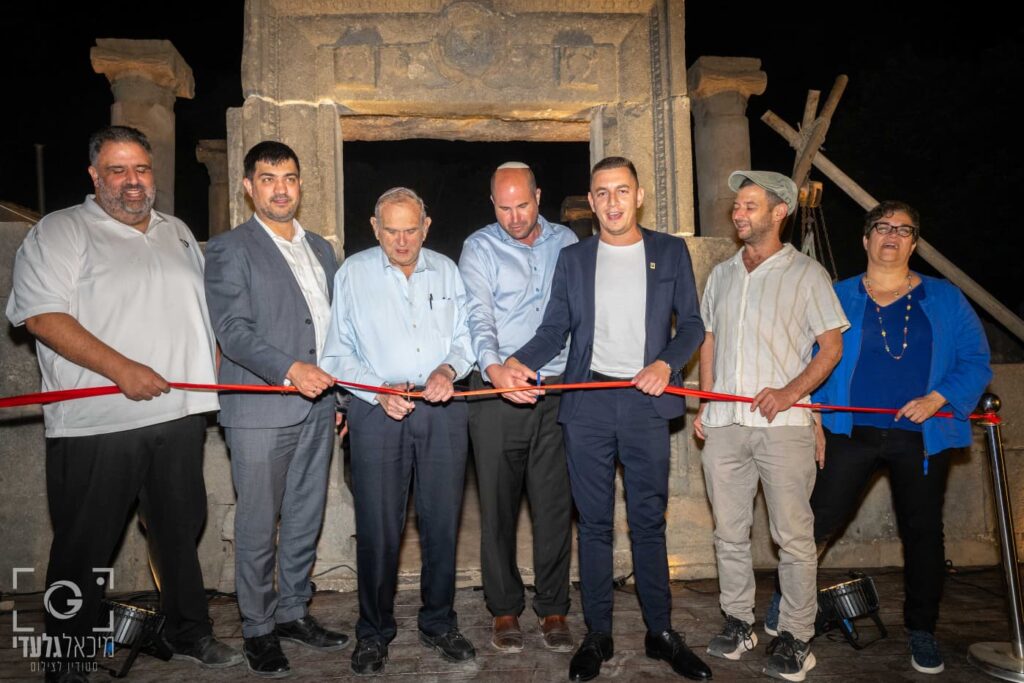
The inauguration ceremony drew representatives of the participating ministries and partner organizations, local leadership, and guests from Israel’s tourism and heritage sectors.
Katzrin’s black basalt walls stood empty for twelve centuries before Israeli archaeologists uncovered them, and Israeli builders raised them again. The synagogue where Jewish villagers once prayed under Byzantine rule now stands open to visitors from across the world, a physical link between the Golan’s biblical designation as a city of refuge and its role today as a living center of Jewish life on the land.