




An estimated 49,000 migrants crossed from Morocco into Ceuta, Spain’s North African enclave, within less than 24 hours this week, one of the largest single-day irregular border crossings recorded anywhere in Europe. Video circulating on social media showed people swimming around border barriers and using inner tubes to reach Spanish territory, while others forced their way through land crossings in scenes that overwhelmed local authorities almost immediately.
Un'operazione organizzata da 🇺🇸Washington e 🇮🇱Tel Aviv e coordinata con le 🇲🇦autorità marocchine per destabilizzare la 🇪🇸#Spagna, fare un regalo all'estrema destra europea, e punire il Paese che ha osato sfidare l'Impero americano e i suoi sgherri armati israeliani. #Ceuta pic.twitter.com/5vyeudXYgi
— Michele Gamba 🇮🇹🇪🇺🇵🇸🇨🇺✯PD✯ (@MicGamba) July 31, 2026
🇪🇸➡️🇲🇦 Il est temps que l'#Espagne quitte Ceuta et Melilla et les restitue au Maroc.
— MD🇲🇦 (@GeoCherifien) July 30, 2026
Ces deux villes sont marocaines et ces jeunes #Marocains ne font qu'exercer leur droit légitime de fouler la terre de leurs ancêtres. ✊#Ceuta #Melilla #Maroc #Décolonisation… pic.twitter.com/sREg5uFQtl
Des migrants marocains filmés en train de poignarder des Espagnols en pleine rue à Ceuta.⁰Chaos total, rues transformées en zone de guerre, habitants enfermés chez eux.⁰L’invasion n’est plus une métaphore. C’est la réalité.#Ceuta #Immigration https://t.co/AZE3EOkoKV
— GDams (@Gdams70) August 1, 2026
Spain’s Interior Ministry said roughly 50,000 people entered the enclave from Thursday morning onward, and that by Friday nearly all of them, some 48,000, had already turned back toward Morocco. Casualty figures shifted as recovery operations continued through the weekend: Spanish officials initially reported nine bodies recovered off Ceuta’s coast, a number that rose over subsequent updates to 57 recovered on the Spanish side of the border alone, with officials warning that additional bodies likely remained on the Moroccan side. By Saturday, crossings had stopped overnight and most remaining migrants had turned back.
Dopo aver superato il confine spagnolo a #Ceuta e aggredito gli agenti di pattuglia, questi signori sono stati rimandati in Marocco grazie ad un accordo internazionale di vent’anni fa.
— Matteo Salvini (@matteosalvinimi) August 24, 2018
Se lo fa la Spagna va bene, ma se lo propongo io allora sono razzista, fascista e disumano. pic.twitter.com/5AjJtN47Bg
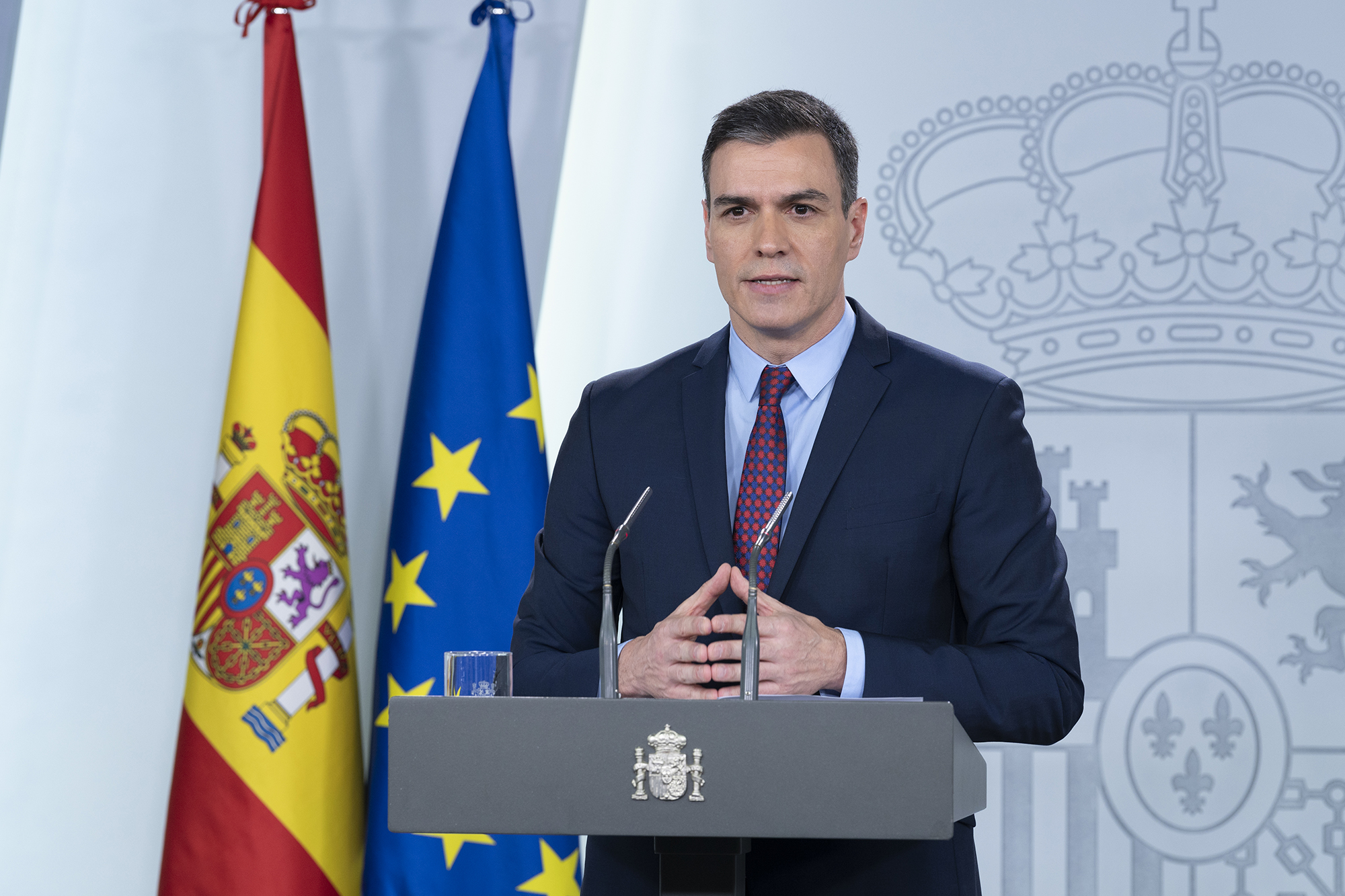
Ceuta’s regional president, Juan Jesús Vivas, called the situation “a total humanitarian and social emergency” and pressed Madrid to declare a national state of emergency. Spanish Prime Minister Pedro Sánchez, visiting the enclave, described the crisis as “an attack on Spain’s territorial integrity” and pledged the full resources of the state to restore order. Madrid deployed military units, naval and air assets, and diving teams to patrol the coastline, and Spanish police began installing a 500-meter floating barrier along the Moroccan border on Saturday.
Ceuta and Melilla, Spain’s two autonomous cities on Morocco’s Mediterranean coast, are the European Union’s only land borders with Africa. Morocco has never accepted Spanish sovereignty over either territory and considers both occupied Moroccan land, while Madrid maintains they are fully part of Spain. Spain’s Interior Minister, Fernando Grande-Marlaska, blamed people-smuggling networks for exploiting migrants and spreading distorted claims about a Spanish Supreme Court ruling on maritime interceptions, and explicitly rejected any suggestion that Morocco itself posed a threat, calling it “a fully reliable partner.” The New York Times, reporting separately from the scene, found that Moroccan police had themselves encouraged migrants to cross, with one migrant recalling an officer telling him directly, “Come to Spain.” The same migrant said Spain offered no welcome once he arrived, describing officers there instead screaming at people to leave.
Then Came the Blame
None of that record stopped a conspiracy theory from taking hold within hours, one that had nothing to do with Morocco, smuggling networks, or Spanish immigration policy, and everything to do with Israel.
The theory traces to a single post. Israeli Ambassador to the United Nations Danny Danon criticized Madrid’s handling of the crisis, writing that Spain, which “never misses an opportunity to lecture Israel,” might explain why it still maintains “colonial enclaves in Africa.” Spanish Transportation Minister Óscar Puente responded by sharing Danon’s post with a single line: “Well, things are starting to become quite clear.” Puente offered no elaboration, but the comment was almost universally read as an insinuation that Israel bore some responsibility for the crisis itself.
Spain, which never misses an opportunity to lecture Israel, has declared a state of emergency in Ceuta following the crisis over its immigration policy.
— Danny Danon 🇮🇱 דני דנון (@dannydanon) July 30, 2026
Maybe before it continues lecturing us, it’s time it explained to the world why it still maintains colonial enclaves in…
From there the claim metastasized in both directions across the political spectrum simultaneously. Spanish commentator Carolina Alonso alleged a coordinated operation involving Morocco, the United States, Israel, and the European and Spanish far right, framed as retaliation for Sánchez’s recent trip to Algeria and, in her telling, a step toward annexing Ceuta and Melilla. Gabriel Rufián, spokesperson for the Catalan separatist party ERC, wrote that “the Moroccan dictatorship, in the service of the US and Israel,” was turning its own people into “disposable cannon fodder.” On the opposite end of the spectrum, American conspiracy broadcaster Alex Jones claimed Israel had “launched an Islamic invasion of Spain” with American backing, while far-left Spanish activist Ana Alcalde, known online as “Gaza Barbie,” pushed a parallel version accusing Israel of orchestrating the crisis to topple Sánchez’s government. American commentator Candace Owens amplified a seven-year-old post from Yair Netanyahu, the Israeli prime minister’s son, as supposed proof. At no point did any of these accounts produce actual evidence.
Israel’s own government moved quickly to shut the theory down. Dana Erlich, Israel’s chargé d’affaires in Spain, wrote publicly that Danon’s remarks did not represent the position of the Israeli state and that Jerusalem was simply monitoring the situation in Ceuta, an unusually direct disavowal of a fellow Israeli diplomat’s comments.
What Actually Happened, and What Didn’t
Set against the facts on the ground, the claim collapses on its own terms. Nothing in Spain’s account, Morocco’s account, or the on-the-scene reporting from The New York Times places Israel anywhere near the events in Ceuta. The people who crossed the border were Moroccan migrants, encouraged, according to eyewitness accounts, by Moroccan police, into a Spanish-administered territory that Morocco itself disputes and has disputed for decades, entirely independent of anything happening in Gaza or Jerusalem. Spain’s own interior minister publicly rejected the idea that Morocco was hostile to Spain at all, let alone acting on Israel’s behalf.
What makes the theory notable is not its evidence, since it has none, but its shape. A far-right American broadcaster and a far-left Catalan separatist arrived at the identical accusation from opposite ends of the political map within the same 48 hours, each one landing on the same target: not Morocco, whose citizens actually crossed the border, and not Spain’s own immigration policy, which Spanish officials themselves debated openly, but Israel, a country with no role in Spanish border enforcement, no jurisdiction over Moroccan police, and no stake in an enclave dispute between Rabat and Madrid that predates the modern state of Israel by decades. When the facts of an event point nowhere near a country, and the blame lands there anyway, from both political extremes at once, that is not analysis. It is the oldest reflex in European politics, dressed up in the language of geopolitics, and it found an audience in Spain within hours of the first migrant reaching the shore.
Diplomatic relations between Madrid and Jerusalem, already at what observers describe as an all-time low, are unlikely to recover from the episode soon. Spain has positioned itself as one of Europe’s most vocal critics of Israel’s conduct in Gaza since the Hamas-led October 7, 2023 massacre, formally recognized a Palestinian state in May 2024, and Sánchez has built much of his foreign policy profile around that criticism. A migrant crisis with no connection to Israel becoming, within a single news cycle, another chapter in that same story says less about Ceuta than it does about how reflexively the accusation now gets reached for.


