

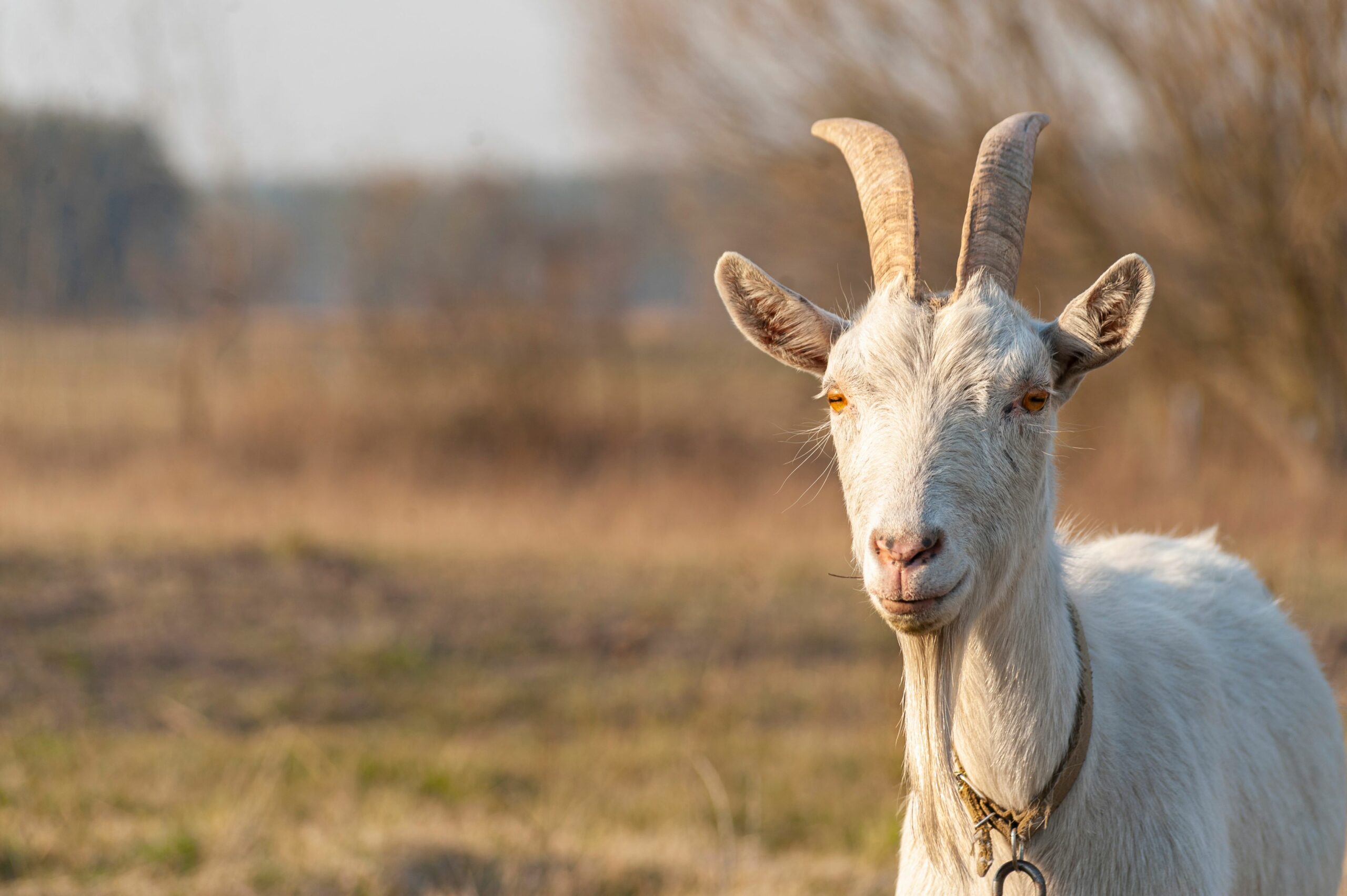
A tax deadline from the Bible is being revived this month as a global day of compassion for animals. Jewish Vegan Life, a nonprofit working at the intersection of Jewish observance and plant-based living, has launched a coordinated international campaign reviving Rosh Hashanah La’Behemah, the New Year for Animals, with events running from August 9 through August 13 in Washington, D.C., Los Angeles, Pittsburgh, Montreal, and Jerusalem, alongside a worldwide livestream produced with Mercy for Animals, The Good Food Institute, and the Freedom Farm Animal Sanctuary.
The events fall in the days surrounding Rosh Chodesh Elul, the very new year the Mishnah assigns to this observance in the first place.
The Bible’s Four New Years
Most people who know the Jewish calendar know one new year, Rosh Hashanah, on the first of Tishrei. Jewish law actually recognizes four, laid out at the opening of the Mishnah in Tractate Rosh Hashanah, each governing a different legal or agricultural cycle rather than a different date for the same celebration.
The first of Nisan marks the new year for kings and for the festivals, the point from which the reigns of Jewish monarchs were counted and from which the order of the pilgrimage festivals is calculated. The first of Tishrei is the new year most people already recognize, marking the count of years themselves, including the cycle of the Sabbatical and Jubilee years, and serving as the new year for the tithing of vegetables. The fifteenth of Shevat, Tu B’Shvat, is the new year for trees, determining which year’s crop a fruit belongs to for tithing purposes, a dispute in which Beit Hillel’s date of the fifteenth prevailed over Beit Shammai’s position of the first of the month.
The fourth is the one Jewish Vegan Life has built its campaign around: the first of Elul, the new year for tithing animals.
What the New Year for Animals Actually Was
The obligation behind this date comes directly from the book of Leviticus: And all the tithe of the herd or the flock, whatsoever passeth under the rod, the tenth shall be holy unto Hashem. (Leviticus 27:32)
In practice, this meant that a tenth of the new lambs and calves born to a person’s flock or herd each year had to be set aside as ma’aser behemah, brought to the Temple in Jerusalem as an offering. The first of Elul served as the legal dividing line between one year’s newborn animals and the next, just as a fiscal year determines which tax bracket a transaction falls into. An animal born on the last day of Av belonged to one year’s count; one born the next day, on the first of Elul, belonged to the next. Beit Shammai disputed even this, holding that the animal new year fell on the first of Tishrei instead, a disagreement the Mishnah preserves without fully resolving. The practice itself lapsed with the destruction of the Temple, since tithed animals require an operating Temple and altar to be brought as offerings, and it has had no operative legal function in the nearly two thousand years since.
A Legal Deadline Reimagined as a Day of Compassion
Jewish Vegan Life‘s campaign takes that largely forgotten agricultural deadline and reframes it entirely, building the observance around the principle of Tza’ar Ba’alei Chaim, the prohibition against causing animals unnecessary suffering. Michael Gribov, the organization’s Head of Movement Building, described the New Year for Animals as a call to move away from factory farming and align modern food choices with that principle.
The campaign spans plant-based communal meals, framed as seders, across multiple cities. Rabbi Jonathan Bernhard is leading an interactive seder in West Hollywood, and a Pittsburgh event billed as a Seder of Compassion, held in partnership with Humane Action Pennsylvania and Beit Kulanu, pairs a guided communal meal with a full plant-based dinner. Montreal’s gathering, led by Rabbi Boris Dolin, and Washington’s Dupont Circle dinner, held with the Veg Society of DC and DC Voters for Animals, follow a similar format, while Jerusalem’s contribution is a community potluck built around Jewish teachings on stewardship.
Rabbi David Rosen, a member of the organization’s Executive Council, framed the original legislation as ahead of its time, noting that the Bible established formal obligations toward animal welfare long before secular societies organized similar protections. Jewish scholar and longtime animal-welfare advocate Dr. Richard H. Schwartz, who has pushed for the holiday’s revival for years, called the campaign an effort to turn a theological ideal into a functioning, coordinated movement, spanning continents and drawing in partnerships with established animal protection organizations.
Whether the modern reframing will find lasting traction remains an open question, since the original observance was a technical marker for a Temple-era tithe rather than a stated day of animal compassion. But the organizers are betting that a real date already fixed in Jewish law gives the campaign a foundation that a newly invented awareness day would lack, and the first of Elul, arriving this year within days of a Bible-mandated legal deadline nobody has needed to observe in two thousand years, is the date they’ve chosen to build it around.
Members of the public, spiritual leaders, and climate advocates of all backgrounds are invited to participate and support this campaign.
For more information about the campaign, event registration, and a full schedule of global programming, visit JewishVeganLife.org/new-year-for-animals.
Jewish Vegan Life is a 501 (c) (3) nonprofit organization dedicated to fostering a healthier, more sustainable, and more compassionate world. By connecting ancient Torah values with modern plant-based living, the organization empowers communities worldwide to make food choices that reflect reverence for all living beings.