




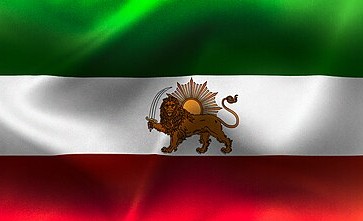
Since February 2026, the Middle East has been living through a war that began with a joint American and Israeli strike that killed Iran’s Supreme Leader, spread into missile and drone attacks across nearly every Gulf Arab state, closed the Strait of Hormuz to global shipping, and pulled Pakistan in as a mediator between Washington and Tehran. A memorandum of understanding was read to reporters in June, and the guns have gone largely quiet since. But a teaching in the Midrash, written well over a thousand years before any of these nations existed in their current form, describes a nearly identical sequence of events as the marker of the final redemption.
The King of Persia Provokes the King of Arabia
Rabbi Yitzchak Goldstein explained this teaching in the Hebrew-language Kikar last week. The teaching comes from Pesikta Rabbati, chapter 36, in the name of Rabbi Yitzchak. In the year the Messiah is revealed, he taught, all the kings of the nations will provoke one another. The king of Persia will provoke the king of Arabia.

The identification of Persia with Iran is the simplest piece of this teaching. The nation known today as Iran is the historical core of the land that carried the name Persia for the better part of two thousand years, making “the king of Persia” a natural and direct reference in a modern context. And the confrontation the Midrash describes has a living counterpart this year. After the American and Israeli strikes on February 28, Iran retaliated far beyond Israel and American bases, firing missiles and drones at Saudi Arabia, the United Arab Emirates, Qatar, Kuwait, and Bahrain. Saudi Arabia intercepted cruise missiles aimed at its own air bases and oil infrastructure, and by late summer, its foreign ministry was still fielding Iranian accusations that Gulf states had taken part in strikes against it. This was not a symbolic reading of “the king of Persia provokes the king of Arabia.” It was the headline of the war.
The King of Arabia Goes to Edom for Counsel
The Midrash continues: the king of Arabia will go to Edom to take counsel from them.
That line maps almost exactly onto this year’s events. Saudi Arabia signed a mutual defense agreement with Pakistan in September 2025, and once the war widened, Pakistan sent thousands of troops and fighter jets to defend the kingdom. But the deeper and older pattern is Gulf reliance on the West itself: Saudi Arabia and the UAE lean on American security guarantees, American air bases, and American diplomatic weight, and it was Saudi Arabia’s own crown prince who reportedly urged President Trump directly on how to proceed against Iran. An Arab kingdom turning to the power that the tradition calls Edom for counsel and protection is not a stretch of the text. It is precisely what happened.
One textual note matters here. The version in Pesikta Rabbati has the Arab king going to Edom for counsel. A parallel version in Yalkut Shimoni on Isaiah, remez 499, has him going to Aram instead, a one-letter difference in Hebrew that changes the geography of the teaching considerably. Since Edom is the term the tradition consistently identifies with Rome, and by extension with the Western world, that is the version this reading follows, and the one this year’s events support.
The King of Persia Returns and the Nations Are Shaken
The king of Persia will then return, the Midrash teaches, and lay waste to the entire world. All the nations will be terrified and fall on their faces, gripped by pains like a woman in labor.
That line reads very differently today than it would have in the ancient world. A war centered on one country once shook empires and neighboring regions. A war that closes the Strait of Hormuz shakes the entire planet within days, disrupting oil and gas supplies, halting flights across an entire region, rerouting global shipping away from both the Strait of Hormuz and the Red Sea, and rattling financial markets far from the battlefield itself. The 2026 Iran war did precisely that, and did it within the first week.
Israel’s Fear, and the Answer Given to It
Israel, too, will be shaken, the Midrash says, asking where they can go and where they can turn. God’s answer to them is direct: “My children, do not fear… the time of your redemption has come.” The teaching adds a promise that distinguishes this redemption from the first: unlike the exodus from Egypt, which was followed by centuries of exile and further subjugation, this redemption will have no further suffering or subjugation after it.
Israel felt this year’s war directly. Iranian missiles struck multiple locations across the country, and the single deadliest strike hit a residential neighborhood in Beit Shemesh. The Midrash explicitly places Israel’s fear alongside the nations’ fear, and answers it with the same message: this is not the beginning of another exile, but the approach of a redemption with no further exile to follow.
The Midrash continues that when the Messiah is revealed, he will stand on the roof of the Holy Temple and announce to Israel that the time of their redemption has come, citing the words of Isaiah as proof: Arise, shine, for your light has come, and the glory of Hashem has shone upon you. (Isaiah 60:1)
Persia and Rome, Argued in the Talmud Itself
A second, older source directly addresses the relationship between Persia and Rome. In Tractate Yoma 10a, Rabbi Yehoshua ben Levi, citing his teacher, taught that Rome is destined to fall into the hands of Persia, reasoning by a kal vachomer: the First Temple, built by the descendants of Shem, was destroyed by the Chaldeans, and the Chaldeans in turn fell to the Persians. The Second Temple was built by the Persians and destroyed by the Romans. By that same logic, Rome should fall to Persia as well.
This would imply that the Midrash predicts that the US and the West will fall to Iran. But an alternative opinion in the Midrash hints at a different outcome.
Rav disagreed entirely, teaching that Persia is destined to fall into the hands of Rome. When challenged on how the builders could fall to those who destroyed, Rav answered that it was decreed by the King, and a baraita is cited in support of his position specifically, tied to the fact that both Persia and Rome had destroyed synagogues. The Gemara then adds a further teaching in the name of Rav: the son of David will not come until the wicked kingdom of Rome spreads across the entire world for nine months, as described in the verse in Micah about a woman in labor giving birth before the rest of her brethren return.
This is the piece of the teaching requiring the most caution, and it is also the one this year tested most directly. If Edom and Rome represent the Western power of the age, no nation today holds anything resembling the global reach the United States holds, through its economy and currency, its military alliances, its technology and artificial intelligence industries, and its cultural and diplomatic weight. Set against that backdrop, this year’s war reads as a real-world test of Rav’s position specifically.
The two opinions in Yoma 10a are not a minor dispute. They point in opposite directions, and this year gave a live test of which one is actually unfolding. Had Iran been allowed to dominate its Arab neighbors unchecked and outlast Israel militarily, that outcome would have leaned toward Rabbi Yehoshua ben Levi’s position, Rome falling to Persia. Instead, Trump’s refusal to accept anything short of surrender, paired with Israel’s own military campaign against Iran’s leadership and infrastructure, is what tipped the outcome toward Rav’s position instead. Read this way, Trump’s strong posture and the strength of the US-Israel alliance are not incidental to the story. They are the mechanism by which one Talmudic opinion prevailed over the other in real time, keeping Persian domination from taking hold.
It was the United States and Israel that struck first, killing Iran’s Supreme Leader within hours. It was President Trump who declared there would be no deal with Iran short of what he called unconditional surrender. And it was Iran, not Rome, that came out of the opening months of this war visibly weakened, its military and nuclear infrastructure devastated, even as the broader conflict has not yet reached a final resolution.
What This Does Not Prove, and What It Does
None of this should be read as certainty. The Sages did not write the words Iran, Saudi Arabia, or United States, and nothing permits pinpointing a single event in 2026 as the precise fulfillment of what Rabbi Yitzchak described. The phrase describing Rome’s kingdom spreading across the entire world for nine months itself requires interpretation, whether it means direct political rule, outright military supremacy, or simple global hegemony and influence, and reasonable readers can differ on which of those this year’s events represent.
What can be said is that five distinct elements, a recognizable Persia, a real Arab kingdom under attack, that kingdom turning westward for counsel, a shockwave reaching every corner of the globe, and a live confrontation between Persia and the power identified with Rome, have all appeared together this year in a configuration that maps unusually closely onto a fifteen-hundred-year-old text. History has certainly produced wars between Persia and Rome before, and conflicts between Persians and Arabs before that. What stands out is not any single element. It is all five arriving at once, in a form that fits the modern world with striking precision.
The Midrash itself does not end in fear of Persia or fear of war. It ends with reassurance. Whatever this year’s events do or do not turn out to fulfill, the message the Sages placed at the center of this teaching was never meant to produce dread. It was meant to produce the opposite: the humble, the Midrash says, are told plainly that the time of their redemption has come.
