




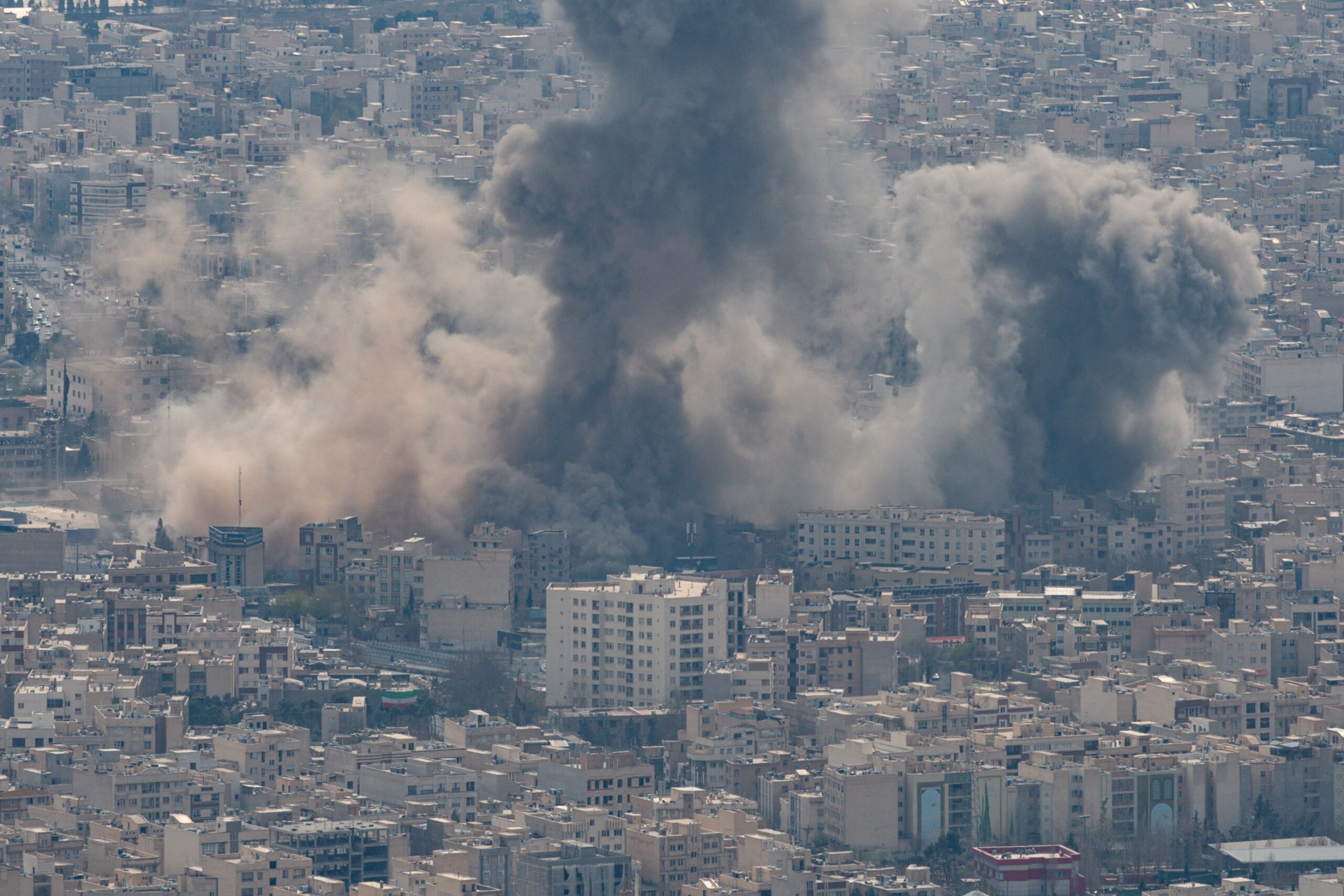
As the military confrontation between the United States and Iran grinds on, a specific rumor has begun taking hold in both Iran and Pakistan: that the war itself is the mechanism that will summon the Mahdi, the messianic figure of Shia and broader Islamic end-times belief, back to earth to defeat America. The claim is circulating in two very different forms in the two countries, as an article of stated faith inside Iran’s own Revolutionary Guard, and as viral astrological prophecy in Pakistan, but both point to the same underlying phenomenon: a war being read, in real time, as the opening act of an apocalyptic script.
The Doctrine Behind the Rumor
The belief driving the Iranian version of this rumor sits at the center of Twelver Shia theology, the dominant branch of Islam in Iran and the branch from which the Islamic Republic draws its religious legitimacy. Twelver Shia Muslims hold that there have been twelve rightful Imams, spiritual and political successors to the Prophet Muhammad descended through his son-in-law Ali, and that the twelfth of these, Muhammad ibn al-Hasan al-Mahdi, did not die but went into “occultation,” a state of divine concealment, in the ninth century CE. Twelver doctrine holds that this Hidden Imam remains alive though hidden from the world, and that he will one day reemerge as the Mahdi to establish justice after a period in which injustice has become widespread and unbearable, a moment sometimes preceded, in various tellings, by cataclysmic war and upheaval. That framework, paired with the memory of the Battle of Karbala and its themes of righteous martyrdom against overwhelming odds, has been deliberately woven into Iranian state rhetoric since the 1979 Islamic Revolution, invoked in political speeches and official ceremonies alike to cast present-day struggles as continuations of a sacred historical drama.
There is no direct reference to a messiah in the Koran, but Islam has a strong tradition of Mahdi, a redeemer of Islam who will come as a ruler. The arrival of Mahdi will coincide with the arrival of the Christian messiah, who will be the Mahdi’s assistant in fighting the Masih ad-Dajjal, the false messiah, or anti-Christ. According to the tradition, the Mahdi will reappear along with Jesus, who will declare himself a Muslim, and kill Christians who refuse to convert.
Mahdi is also seen as a time when everyone will convert to Islam. In the Hadith, quotes from Umm Salama, one of Muhammad’s wives, states that when the Mahdi arrives, non-Muslims will all convert. According to Shia Islam, the Mahdi will be preceded by an era in which two-thirds of the world’s population will die – one-third by plague and one-third by war. The time before the arrival of the Mahdi will also see a great war in Syria and Iraq that will destroy both countries, accompanied by a great fire and “redness in the sky.”
For Sunni Muslims, the Mahdi is the Prophet Muhammad’s successor who is yet to come. For most Shia Muslims, the Mahdi was born but disappeared and will remain hidden from humanity until he reappears to bring justice to the world. As in Judaism and Christianity, there have been Muslim leaders through the ages who have claimed to be the Mahdi, though his arrival is still anticipated.
The Shia Islamic concept of Mahdi includes resurrection of the dead, especially of their dead imams and leaders, as well as the belief that the Mahdi will conquer Constantinople, which was the capital of the Roman and Byzantine Empires and was instrumental in the rise of Christianity. Constantinople was later conquered and became the capital of the Islamic Ottoman Empire.
The concept of the Mahdi greatly influences the political agenda of the Islamic Republic of Iran, the global leader of Shiite Islam, and this is not the first time such rhetoric has surfaced at the top of the Iranian state. After delivering his first address to the UN General Assembly in 2005, then-President Mahmoud Ahmadinejad recounted in a filmed meeting with the senior Shiite cleric Ayatollah Abdullah Javadi Amoli that a member of his own delegation told him he had been surrounded by a halo of light while speaking, immediately after he closed the speech with a prayer for the Mahdi’s return, and that everyone present had watched him with rapt attention throughout. Ahmadinejad stopped short of claiming outright that he had received a divine sign, but strongly implied it, an early public marker of how deeply Mahdist expectation runs through Iran’s political class.
The Rumor Takes a Specific Shape Inside the Revolutionary Guard
According to reporting by the Jordanian news site Akhbar Hayat, that latent expectation has now crystallized into a specific, dated rumor inside Iran’s Islamic Revolutionary Guard Corps: a growing belief, in some circles within the Guard, that the Mahdi will physically appear as soon as this coming August, and that it is precisely the severe punishment Iran is currently absorbing in its war with the United States that will trigger his emergence to personally take command of the fight and defeat America. Abdullah Haji Sadeghi, the representative of Iran’s supreme leader to the Revolutionary Guard, has given that belief an institutional voice, describing the Guard, and its Quds Force specifically, as “one of the tools for paving the way for the emergence of the Imam of the Age.” In this telling, the war is not simply being endured. It is being interpreted as the necessary, foreordained prelude to the Mahdi’s arrival, a framing that gives continued sacrifice and continued fighting a cosmic justification no battlefield setback can easily undercut.
The Same Rumor Resurfaces in Pakistan, Dressed as Astrology
That expectation has now jumped borders and genres, surfacing in Pakistan through an entirely different vehicle: a viral video, posted July 24, by a Pakistani astrologer named Samiah Khan, who fused astrological forecasting directly with the language of Islamic end-times belief. Asked on camera whether the current moment meant the world was approaching Qiyamah, the Day of Judgment, in light of American and Iranian expectations about the arrival of Jesus and the Mahdi respectively, Khan demurred on the theological question but confirmed the underlying premise, saying she could not speak to scholarly interpretation but could read “the changes of the earth and sky,” and that she had been saying since before this year that 2026 through 2028 would not be years of good news. She described the war as having only been “paused” earlier this year before resuming in mid-February, predicted the crisis would next move toward Europe, and forecast a coming Muslim awakening in which the ummah would be forced by circumstance to unite. Asked directly what Muslims worldwide, and Pakistanis specifically, should do in response, Khan invoked the Battle of Karbala explicitly, urging resolve rather than fear and pointing to the willingness of those who died at Karbala to accept martyrdom rather than retreat, the same historical touchstone Iran’s own state rhetoric draws on.
What makes the Pakistani version notable is not its content; astrological predictions of war and upheaval are a genre unto themselves. What makes the Pakistani version notable is its packaging: end-times material that in Iran is transmitted through clerical and Revolutionary Guard channels is, in Pakistan, going viral through social media video dressed as horoscope commentary, reaching an audience with no direct connection to Iran’s clerical establishment. The same underlying rumor, that this war is building toward a divinely orchestrated climax rather than a negotiated or militarily decided end, is now circulating through two entirely different transmission belts in two different countries at the same time.


