

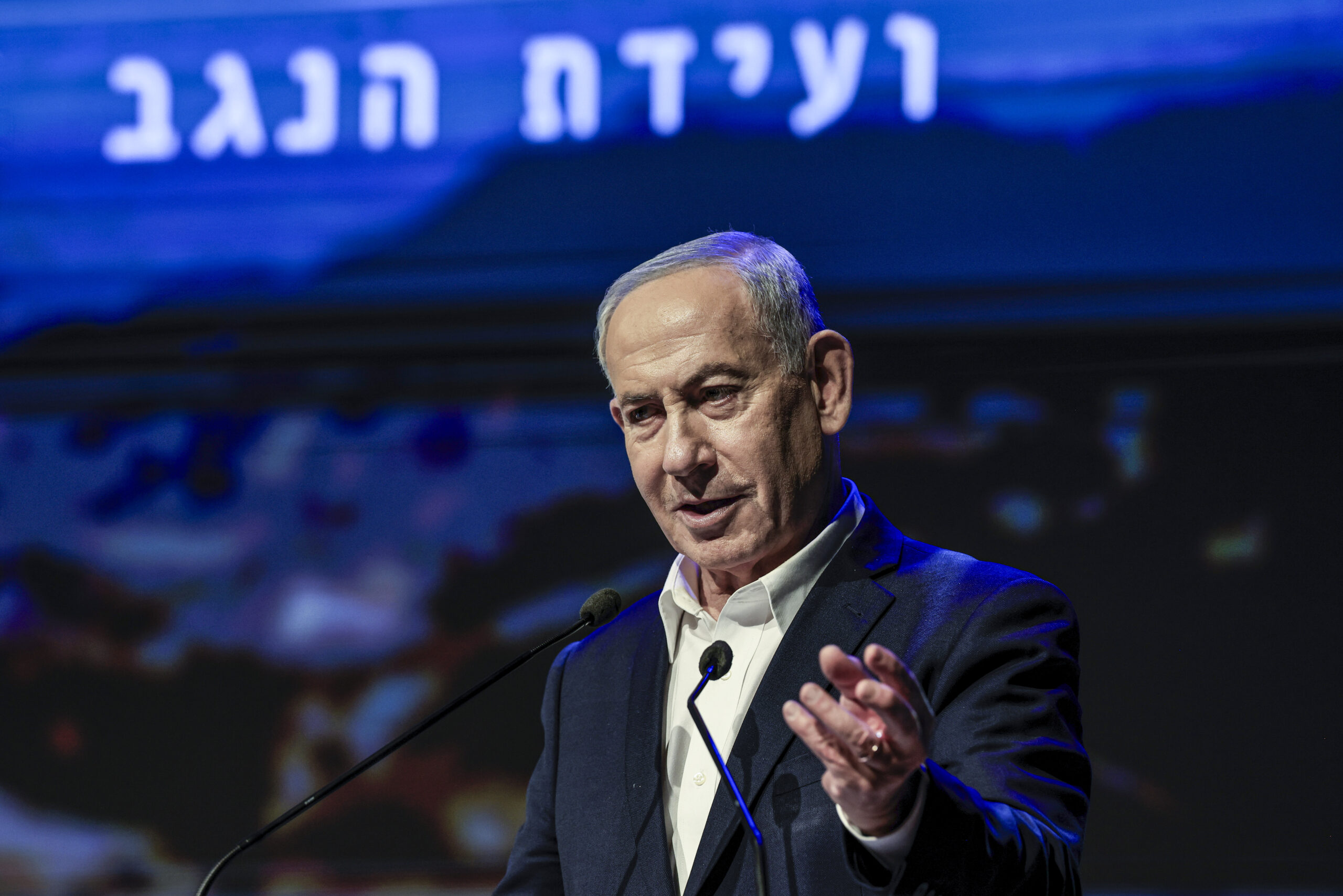
Saudi Arabia has quietly delivered a message to Washington that goes far beyond anything Riyadh (shorthand for the Saudi government) has said in public. According to a report in Israel Hayom, representatives of Crown Prince Mohammed bin Salman told the White House, the State Department, and members of Congress that Saudi Arabia is prepared to reopen talks on joining the Abraham Accords, but only on two conditions: Prime Minister Benjamin Netanyahu must no longer serve as prime minister after Israel’s October election, and policies advanced by Finance Minister Bezalel Smotrich in Judea and Samaria over the past three years must be reversed.
Two conditions, one connected demand
American officials who received the Saudi message reportedly concluded that Riyadh views the two demands as linked. Saudi officials are said to believe Netanyahu will keep backing Smotrich’s approach in Judea and Samaria for as long as he remains in office, making a deal unworkable while he is prime minister. Smotrich, who holds authority over parts of Israel’s Civil Administration there, has pushed the establishment and recognition of new communities, faster housing approvals, and measures aimed at strengthening long-term Israeli control of the land. After an Israeli planning committee approved more than 2,100 housing units across three communities in June, Smotrich said plainly, “We are continuing to build the Land of Israel in practice.”
Netanyahu has already rejected the substance of what Riyadh is asking for. During the war, Saudi Arabia reportedly raised the possibility of formal recognition of Israel in exchange for major concessions on the Palestinian question, including a public Israeli commitment to the eventual establishment of a Palestinian state. Netanyahu turned that down. The current report suggests Riyadh has now escalated the price further, tying any deal not to a policy shift but to a change in Israel’s leadership itself.
The Saudi Foreign Ministry’s public position has long rested on what it calls an irreversible pathway to Palestinian statehood based on the pre-1967 lines, with Jerusalem’s eastern half as a Palestinian capital. Crown Prince Mohammed bin Salman reinforced that position in a 2024 address, stating Saudi Arabia would not establish diplomatic relations with Israel without movement toward Palestinian statehood.
The unfinished work of Lindsey Graham
Senator Lindsey Graham spent his final weeks trying to close the gap between those Saudi conditions and what an Israeli government could realistically deliver. According to Axios, Graham had been laying the groundwork for a renewed diplomatic push on Saudi-Israel normalization before his death, calling it the defining prize of a broader postwar settlement for the Middle East. He discussed the initiative directly with Trump and with envoys Jared Kushner and Steve Witkoff, and held extensive talks with Netanyahu confidant Ron Dermer, Saudi Ambassador Princess Reema bint Bandar, and Saudi Foreign Minister Prince Faisal bin Farhan. He was preparing to travel to both capitals, hoping to have a framework in place by November, ahead of Israel’s October election and the seating of a new Congress in January. Hours before his death, Graham reportedly told a confidant he “can’t die now,” pointing to unfinished business on Russia sanctions, Iran, and Israeli-Saudi normalization.
October 7 and the accord it was meant to stop
Before the Hamas-led October 7, 2023 massacre, Riyadh and Washington had already made substantial progress toward a broader agreement: Saudi recognition of Israel, a US-Saudi defense pact, and American assistance for a Saudi civilian nuclear program. Israeli officials and regional analysts have long argued that the timing of the October 7 attack was not incidental. Hamas and its Iranian patrons launched the massacre precisely as that normalization track was nearing completion, understanding that a Saudi-Israel accord would isolate Iran regionally and strip Hamas of its claim to represent the Palestinian cause. The attack achieved its immediate aim. Momentum collapsed, and Saudi Arabia hardened its position, moving from seeking limited Israeli concessions to demanding a credible, irreversible path to Palestinian statehood as the baseline for any future talks.
What the Abraham Accords actually require
Here lies the distinction Saudi Arabia’s conditions obscure. The Abraham Accords, signed in September 2020 between Israel, the United Arab Emirates, and Bahrain, and later joined by Morocco and Sudan, broke deliberately from the older Arab League model that made normalization with Israel contingent on a full Israeli-Palestinian settlement. The Accords acknowledge the Palestinian issue. They do not condition normalization on it. The UAE, Bahrain, Morocco, and Sudan all established full diplomatic relations with Israel while the Palestinian question remained entirely unresolved, choosing instead a framework built on security cooperation, trade, technology, and regional connectivity, alongside an Israeli commitment to avoid unilateral steps affecting the Palestinian arena.
Saudi Arabia is choosing a different path. Riyadh has revived the older model that the Abraham Accords were built to replace, one that ties Israel’s relations with the Arab world to Palestinian statehood and, in this latest iteration, to the composition of Israel’s own government. The kingdom continues to weigh whether it needs Israel as a partner against Iran and as a gateway to American security guarantees, even as it insists on terms no current Israeli government has been willing to accept.
Riyadh has not moved because the underlying strategic logic favors normalization. Iran remains a permanent, structural threat to Saudi Arabia regardless of what happens between Jerusalem and the Palestinians, and no regional alternative Riyadh has explored, whether with Turkey, Pakistan, or Egypt, delivers the security depth or American backing that a relationship with Israel would provide. What Psalm 83 describes as nations setting aside their disagreements to unite against Israel finds its modern echo not only in Hamas’s decision to attack on October 7, but in every demand since that treats Israel’s sovereignty over its own land, and its own choice of leadership, as negotiable currency. Israel did not accept that price when Saudi Arabia raised it during the war. There is no reason to expect any Israeli government will accept it now.