


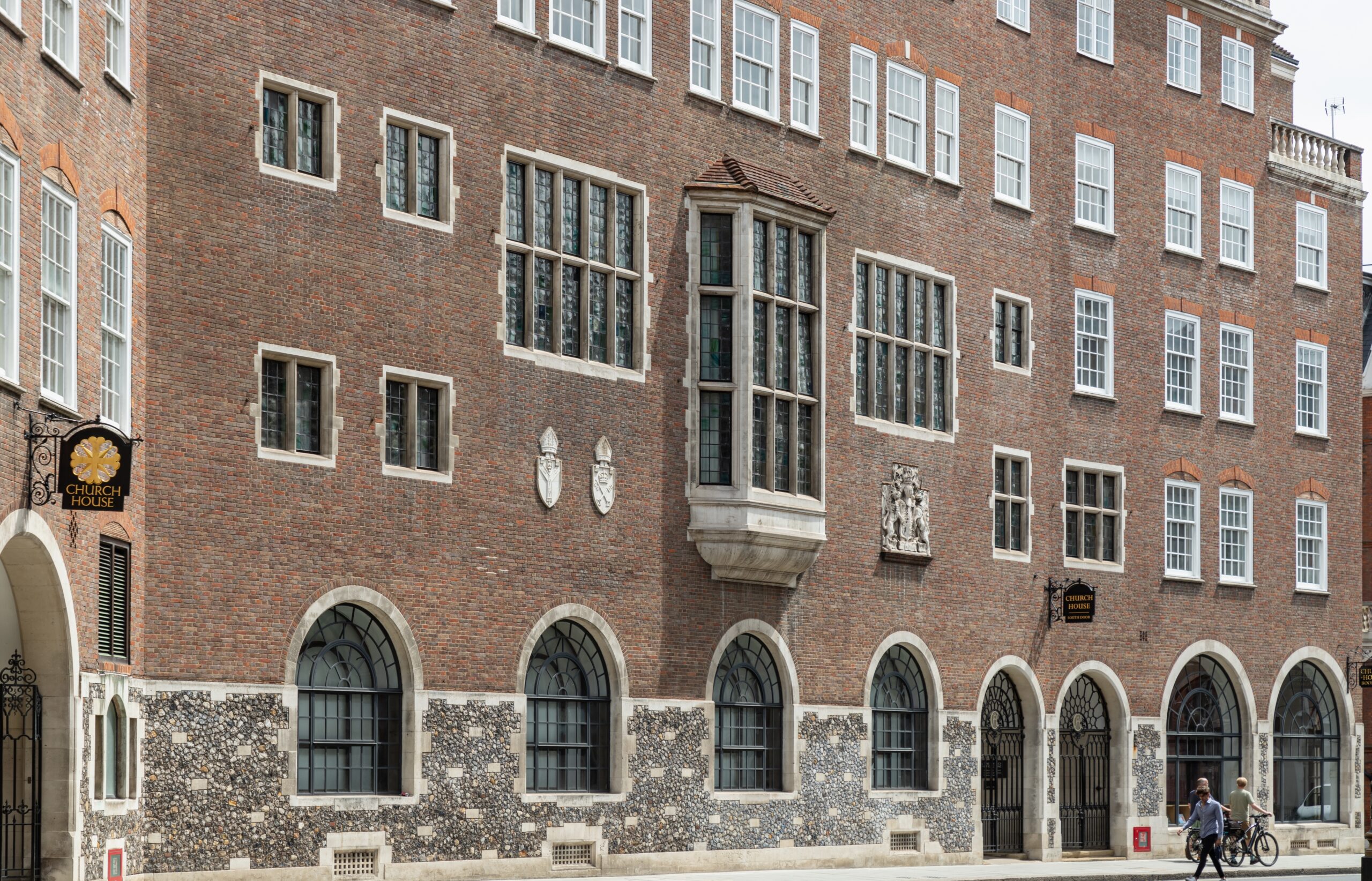
The Church of England’s General Synod gathered in York this week to vote on a motion that would formally commit the Church to “engage with” a document accusing the Jewish state of genocide, colonialism, and ethnic cleansing. After a full day of debate, the vote never happened. Synod ran out of time before members could cast a ballot, and the motion now sits with the Business Committee, which will decide when it returns to the floor. The document at the center of the storm, known as Kairos Palestine II, has already drawn condemnation from Britain’s Chief Rabbi and a former Archbishop of Canterbury, and it lands in a Church whose relationship with the Jewish people carries a history far older and darker than this week’s headlines suggest.
The motion came from the Diocese of Carlisle and asked Synod to “stand in solidarity” with Palestinian Christians “in non-violent resistance to the ongoing occupation.” It called on the Church to formally receive four Kairos Palestine documents dating back to 2009, encourage engagement with them at every level of Church life, and review the Church Commissioners’ investment policy in light of the International Court of Justice’s 2024 advisory opinion on the status of Judea and Samaria. The underlying text, titled “A Moment of Truth: Faith in a Time of Genocide”, states plainly that “the genocidal war on Gaza is the continuation of the Zionist project to seize all of Palestine, emptied of its Palestinian people.” It calls Israel a “colonial, settler, and exclusionary entity,” instructs churches to “distinguish between dialogue with Jews and dialogue with Zionism,” and, while condemning the killing of civilians on October 7, 2023, describes the Hamas terrorist attack that day as an act “born out of decades of injustice, oppression and displacement.”
Chief Rabbi Sir Ephraim Mirvis responded strongly. “The content of Kairos II is deeply concerning, and I would hope the synod will see it for what it is,” he said, calling the document “a one-sided account of a complex conflict” that “downplays the historical experiences and legitimate concerns of Jewish people” and amounts to “political activism dressed up as theology.” He went further still: “It is truly shocking that a document which purports to speak in the name of truth contains so much falsehood.” Lord Carey, Archbishop of Canterbury from 1991 to 2002, backed the Chief Rabbi’s warning and raised a further concern: as Supreme Governor of the Church of England, King Charles could find himself, through no fault of his own, tied to a document that Mirvis says “risks undermining decades of careful relationship-building.” The Board of Deputies of British Jews called the document’s central claim, that Zionism is a settler-colonial movement built on Jewish supremacy, false and damaging enough that rejecting it outright is “the only responsible course.” Anglican theologian Ian Paul argued the motion assumes a Palestinian commitment to nonviolence that the historical record does not support, and objected to the motion’s use of the word “genocide” itself, noting that the term was coined to describe the murder of six million of nine million European Jews, a scale Gaza’s war, whatever judgment one reaches about it, does not approach.
Supporters of the motion framed it differently. The Venerable Stewart Fyfe, Archdeacon of West Cumberland and the motion’s sponsor, said he was not seeking Synod’s endorsement of the document’s contents. “We’re saying, let’s at least read these documents, let’s hear why they are saying this, and let’s seek an understanding,” he said. Archbishop of Canterbury Sarah Mullally told Synod she had heard the Jewish community’s concerns but defended the motion as pastoral rather than political. “I am a pastor, not a politician,” she said. “When I say the Palestinian people deserve their freedom, that is not a political statement, but a moral and spiritual one.” The Bishops of Gloucester and Southwark spoke in favor during the debate, and every amendment aimed at blocking the motion failed before time ran out.
The Church of England’s governing body has a disturbing history of targeting the Jewish state. In 2006, General Synod voted to disinvest from Caterpillar Inc. over the company’s bulldozers, citing a call from the Episcopal Church in Jerusalem to pursue “morally responsible investment” away from firms “profiting from the illegal occupation.” Lord Carey told The Jerusalem Post at the time that the vote left him “ashamed to be an Anglican.” Then-Archbishop Rowan Williams, who had supported the motion, wrote to Chief Rabbi Jonathan Sacks expressing “deep regret” that the vote had caused distress, insisting Synod had only meant to “register concern” rather than divest outright. The distinction did little to calm the reaction at the time, and two decades later, Synod is once more debating language, accusing Israel of the gravest crime in international law.
The Church’s discomfort with the Jewish people runs through the institution’s own founding soil. In 1144, the Church sanctioned one of the first recorded blood libels in European history after the death of a boy named William of Norwich, and Norwich Cathedral’s clergy helped popularize the charge that Jews murdered Christian children for ritual purposes. In 1190, a mob besieged the Jewish community of York at Clifford’s Tower; hundreds died, many by their own hand rather than surrender to the crowd outside. In 1255, the shrine of “Little Saint Hugh of Lincoln” was built on another blood libel, and Lincoln Cathedral maintained the shrine and its accompanying legend for centuries, drawing pilgrims to venerate a myth invented to justify hatred of Jews. The pressure the Church placed on England’s Jewish community throughout the thirteenth century, the forced conversions, punitive taxation, and clerical demands for restrictions on Jewish life, culminated in King Edward I’s Edict of Expulsion on 18 July 1290, a date that fell that year on Tisha B’Av, the fast day on which Jews mourn the destruction of both Temples in Jerusalem. The Church did not merely permit the expulsion. It contributed a tenth of its own revenue to the Crown in gratitude for it. Jews were barred from England for more than three and a half centuries, until Oliver Cromwell allowed their return in the 1650s.
The General Synod will eventually return to this motion, and it may well pass in some form, just as the 2006 Caterpillar vote passed despite an archbishop’s discomfort. What matters more than the parliamentary outcome is the pattern now visible across nine centuries of English religious history: a document born in a Palestinian church calling Zionism a colonial project, read and debated inside a cathedral tradition that once built shrines to blood libels and expelled the Jewish people from English soil altogether. The Church of England has apologized for its medieval record. Whether it has learned from it will be decided not by the Business Committee’s scheduling, but by what Synod actually votes for when the debate finally resumes.
