
A 1,600-year-old Samson mosaic and a hoard of bronze coins hidden in a Jewish escape tunnel now stand on public display for the first time, offering visitors a direct window into a thriving Jewish community that once flourished on the shores of the Sea of Galilee.
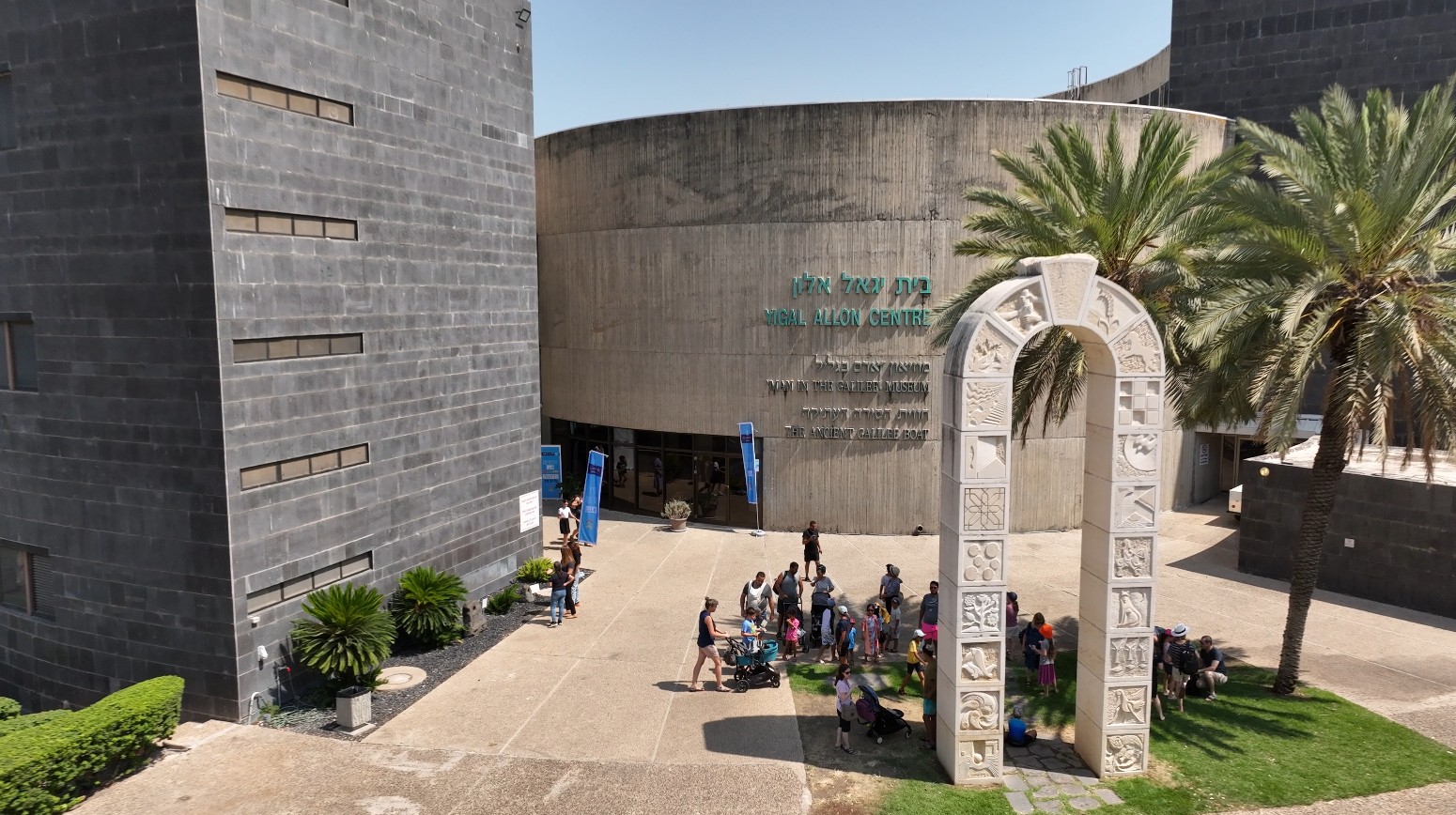
The new exhibition, “Secrets of Huqoq,” opened this week at the Yigal Allon Center Museum in Kibbutz Ginosar, located on the shores of the Sea of Galilee and overlooking the Horvat Huqoq site itself. The exhibition serves as a preliminary visitor center while direct public access to the archaeological site is prepared, a process expected to take several more years.
The village of Huqoq appears in the Bible, listed among the border towns allotted to the tribe of Naphtali in the division of the Land of Israel: “And the coast turneth westward to Aznoth-tabor, and goeth out from thence to Hukkok, and reacheth to Zebulun on the south side, and reacheth to Asher on the west side, and to Judah upon Jordan toward the sunrising” (Joshua 19:34). The town the Bible calls Hukkok is the same Huqoq whose synagogue floor has now stunned archaeologists for over a decade.
Horvat Huqoq is best known for the ancient synagogue uncovered there, excavated under the direction of Professor Jodi Magness of the University of North Carolina at Chapel Hill. The mosaics decorating its floor are unmatched by any other synagogue discovered in Israel, both in their artistic beauty and in the range of biblical and extra-biblical scenes they depict.
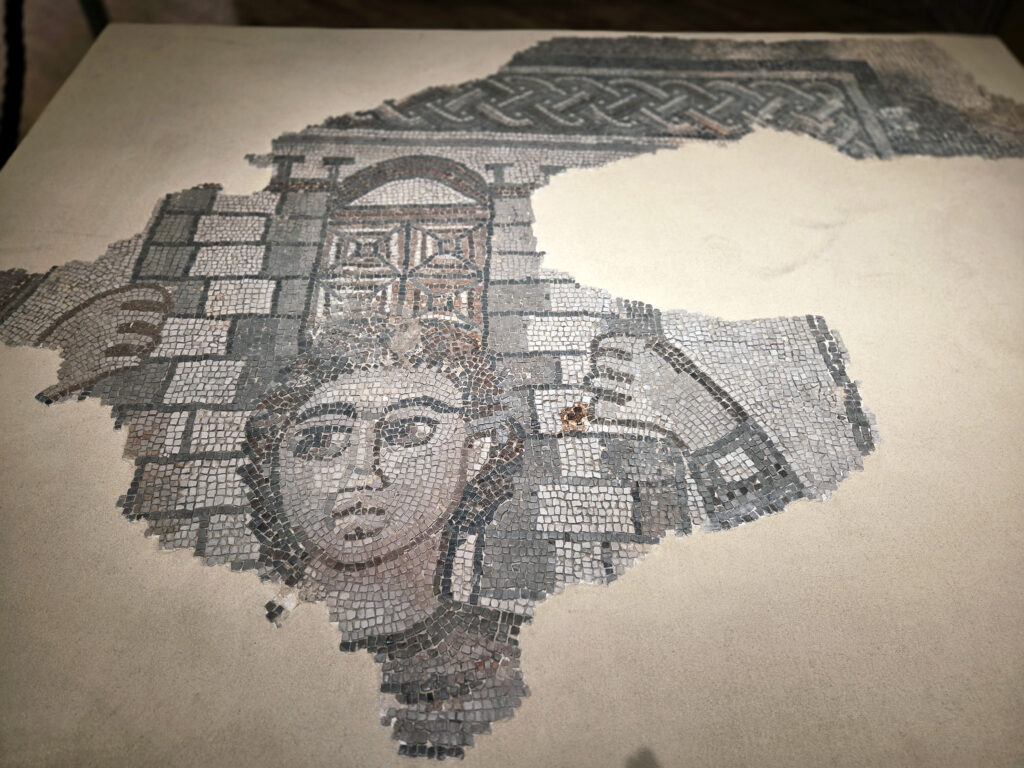
The centerpiece of the new exhibition is the original Samson mosaic, the only mosaic from the site currently on public display. It depicts the biblical judge Samson carrying the gates of Gaza on his shoulders, a scene drawn directly from the book of Judges: “And Samson lay till midnight, and arose at midnight, and took hold of the doors of the gate of the city, and the two posts, and removed them with the bar, and put them upon his shoulders, and carried them up to the top of the mountain that is before Hebron” (Judges 16:3). Alongside the original mosaic, the exhibition displays photographs of the site’s other floor mosaics, courtesy of Professor Magness.
“The Huqoq mosaics are some of the most exciting and moving finds I have ever been privileged to unearth,” Magness said. “I am delighted that the original Samson mosaic, alongside images of the site’s many other mosaics, are being displayed to the public so close to where they were found. For me, they are still part of an ongoing research effort, and therefore this exhibition invites the public to join the journey of discovery as it unfolds.”
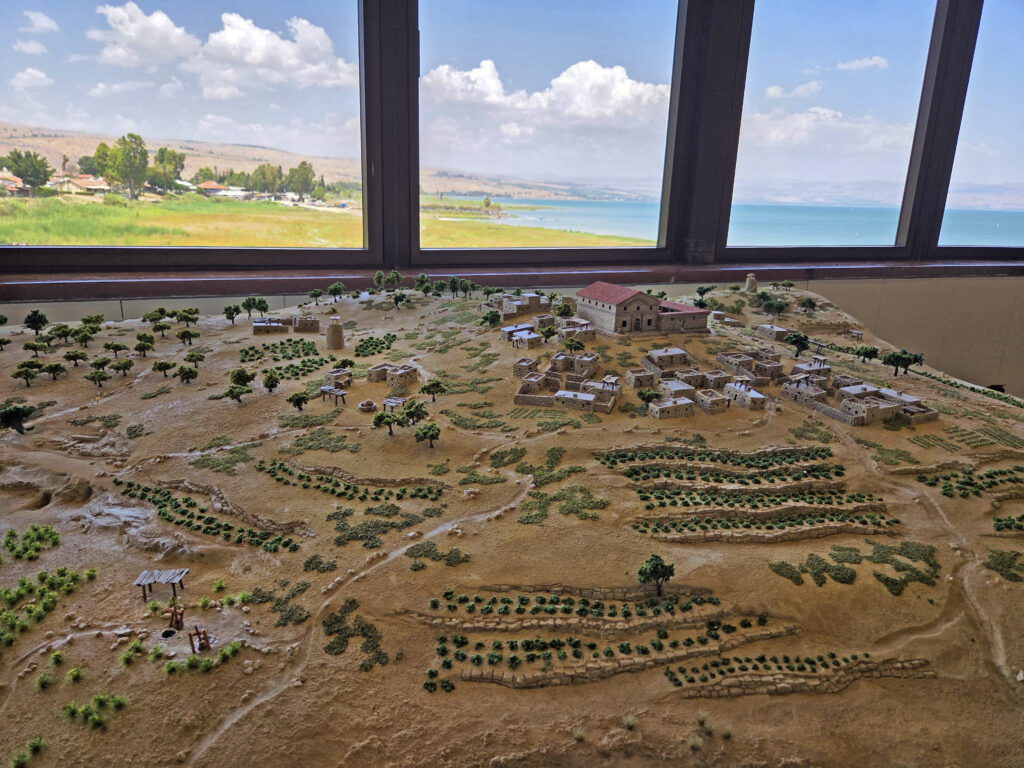
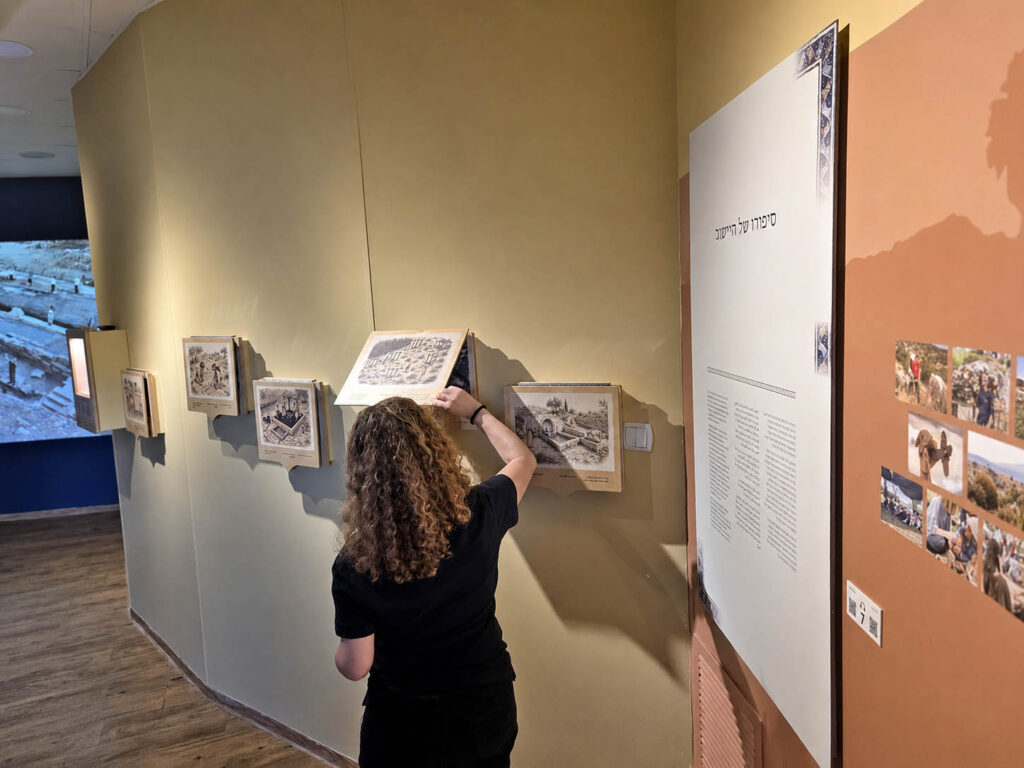
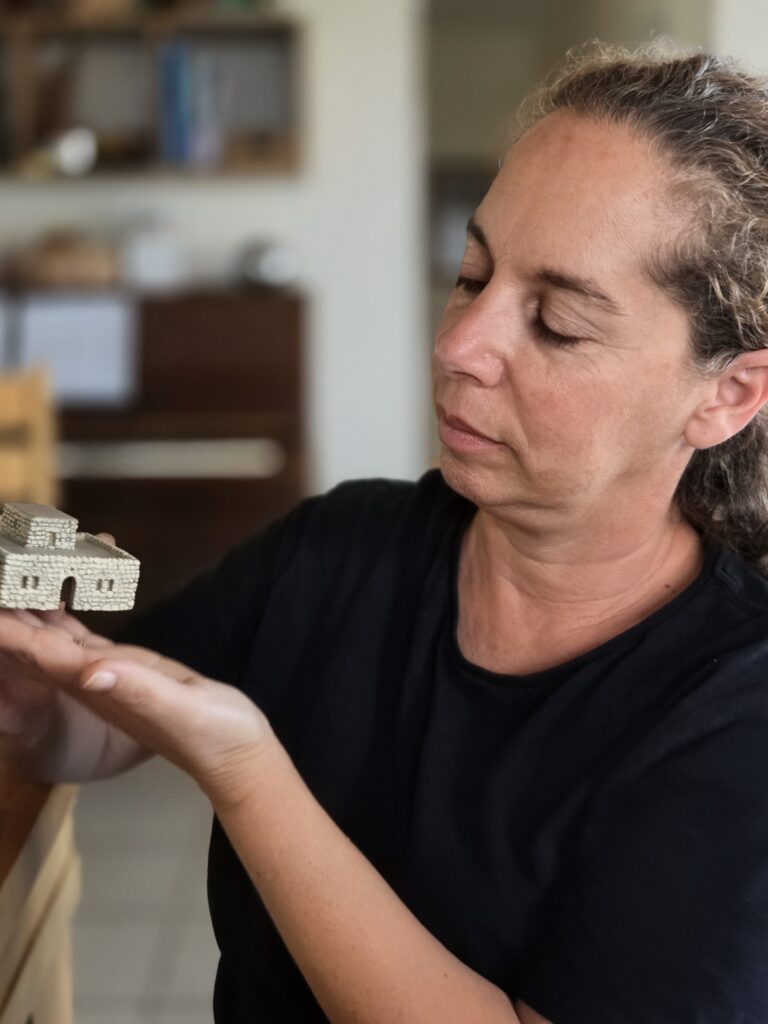
The exhibition expands beyond the mosaics to reconstruct Huqoq as a full living environment: a village built around a spring, agricultural installations, ritual immersion baths known as mikvehs, and a hidden underground escape network built into the hillside. Through artifacts, photographs, a scale model of the settlement, and a simulated underground space, visitors can trace the story of a community whose full picture is still emerging from the ground.
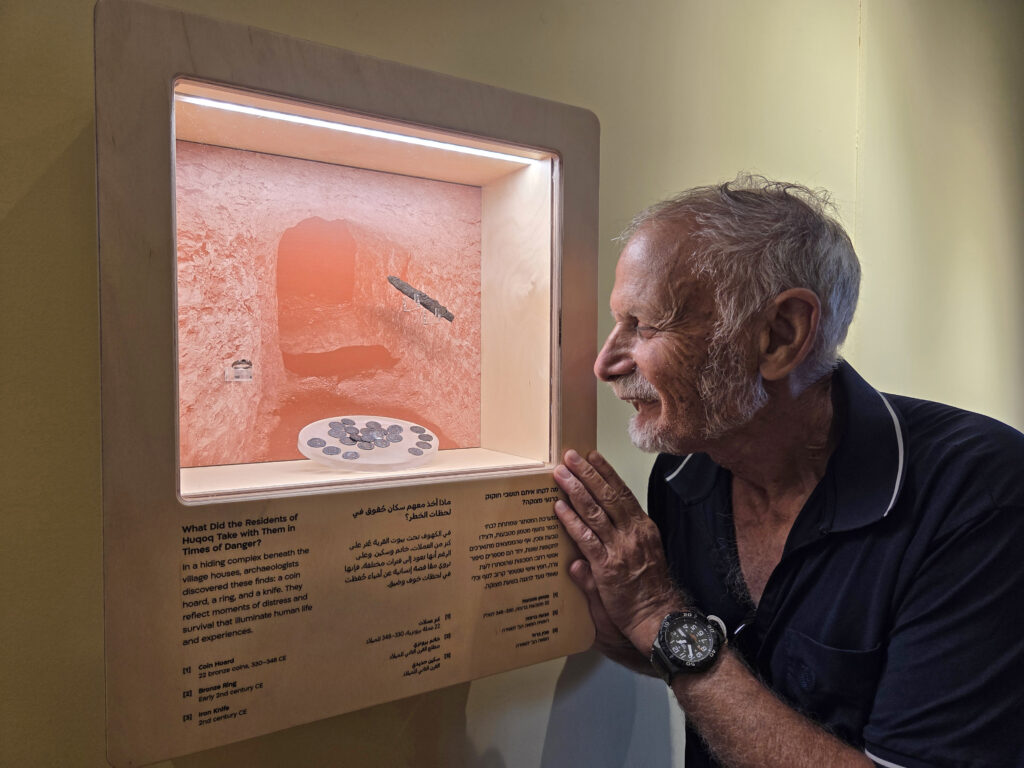
For the first time, the exhibition also publicly features a hoard of bronze coins discovered by Israel Antiquities Authority excavators inside the hidden escape system beneath the village, a system built in the same period as the synagogue above it. The coins join other artifacts recovered from the same tunnel network, including a ring and a dagger, evidence of a Jewish community that built secret refuges to preserve its life and its tradition under threat.
In recent years, Huqoq has become a center for educational and community programs run by the Israel Antiquities Authority’s northern region education division, together with the Jewish National Fund (KKL-JNF). Students, families, soldiers, volunteers, and area residents have taken part in the excavation, sifting, and fieldwork, becoming participants in the site’s ongoing story rather than mere observers of it.
Dr. Einat Ambar-Armon, curator of the exhibition for the Israel Antiquities Authority, described the significance of the find. “Huqoq is a small site telling a big story: about a living Jewish Galilee community in the Roman-Byzantine period, about an extraordinary artistic creation, and about an entire region whose life revolved around the synagogue,” Ambar-Armon said. “Since preparing the site itself for public visitation is expected to take several more years, our exhibition already serves as a first gateway to the village of Huqoq and to the archaeological and human story it reveals, located near and within sight of the real place.”
The opening also marks a broader expansion of the museum itself. The second floor of the Yigal Allon Center is now designated the archaeology floor, titled “When Galilee Was the Center.” Positioned alongside the museum’s existing “Sanhedrin Trail” exhibition, “Secrets of Huqoq” places the village within the larger story of the Galilee as the center of Jewish life, scholarship, and community during the Roman-Byzantine period, the era in which the Mishnah and the Jerusalem Talmud were compiled in this same region.
KKL-JNF Chairman Eyal Ostrinsky framed the exhibition as part of the organization’s broader mission. “The ‘Secrets of Huqoq’ exhibition is an invitation to embark upon a fascinating journey to one of the most impressive archaeological sites ever discovered in Israel,” Ostrinsky said. “Preserving heritage and making it publicly accessible is an integral part of KKL-JNF’s mission to connect people, the land, and its history.”
Israel Antiquities Authority Director General Eli Escusido called Huqoq one of the most significant sites uncovered in the Galilee in recent years, one still under active study. “This is an expression of the role of the Israel Antiquities Authority: not only to uncover findings, but to make the past accessible and meaningful for the entire public,” Escusido said.
Israeli Minister of Heritage Rabbi Amichai Eliyahu tied the discovery directly to the continuity of Jewish presence in the land. “The spectacular Huqoq finds and mosaics are the living voice of a Jewish community that dwelt here in the Galilee some 1,600 years ago, gathered in their synagogue, read, told and taught the stories of the Bible uniquely reinforced by the images around them, and left behind for us a profound testimony to Jewish identity, faith, and roots in the Land of Israel,” Eliyahu said. “The ‘Secrets of Huqoq’ exhibition connects the public to this continuum, from this ancient Galilee village to the present-day State of Israel.”
Dr. James Fraser, Dorot Director of the W.F. Albright Institute of Archaeological Research, one of the exhibition’s partner organizations, noted the American role in bringing the project to fruition. “This vital assistance expresses international cooperation in the research, preservation, and accessibility of cultural heritage, at a symbolic time when the United States is celebrating 250 years of its own independence,” Fraser said, referring to support from the United States Embassy in Israel and the U.S. Department of State.
The Bible names Huqoq as a border town of Naphtali roughly 3,200 years ago. The mosaics beneath its synagogue floor were laid some 1,600 years ago. The coins and weapons hidden in its escape tunnels tell of a community that fought to survive. Now, on the shores of the Sea of Galilee, all three chapters of that story stand open to the public in a single room.
“Secrets of Huqoq” is open Sunday through Thursday, 8:00 AM to 4:00 PM, at the Yigal Allon Center Museum in Kibbutz Ginosar.