Scientists have found something that should not exist: living tissue with no owner, no purpose, and, so far, no expiration date.
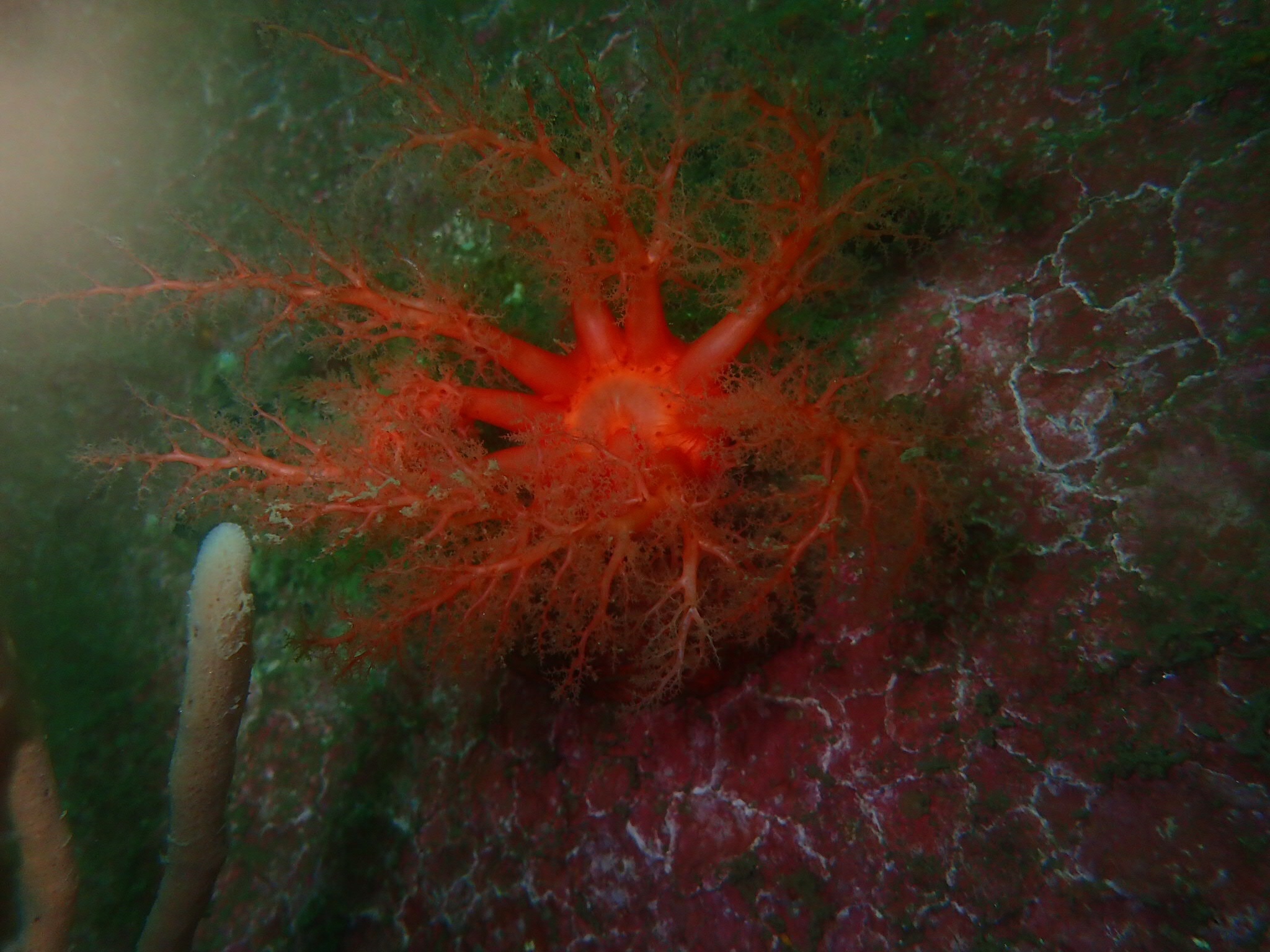
Researchers at Memorial University of Newfoundland report that severed tissue from the sea cucumber Psolus fabricii has survived for more than three years in ordinary seawater, healing, growing, and maintaining continuous immune activity, according to a study published on May 27 in the journal Science Advances. The tissue was never meant to survive at all. It was amputated tube feet, the small appendages P. fabricii uses to move across the ocean floor, and detachment is a natural defense mechanism the animal uses to escape danger, similar to a lizard shedding its tail. Severed tissue in nearly every known species dies within weeks. This did not.
“We noticed that they were still there after a couple of days, and then weeks, and then months, and they were still stuck on,” said lead author Sara Jobson, a doctoral candidate involved in the study. “They were healing, and they even grew a little bit. They were surviving in their natural environment.”
Jobson and her team deliberately collected the phenomenon, amputating tube feet from three sea cucumbers and placing the tissue in tanks with flowing, unsterilized seawater. Over three years, the tissue displayed cell division, tissue reorganization, and the ability to absorb dissolved amino acids directly from the water for fuel. The tissue has no mouth. It has no gut. It does not reproduce. It is not becoming a new organism. It is simply continuing to live, indefinitely, as disconnected matter.
“We often call them, lovingly, our little lab zombies,” Jobson said. “Because we don’t know: Do they count as alive? Do they count as dead?”
Comparable tissue from related sea cucumber species tested in the same conditions did not come close. The best-performing rival specimen died within three and a half months.
This is huge for regenerative biology.
— SciTech Era (@SciTechera) May 31, 2026
“Scientists just discovered that detached tissue from the sea cucumber Psolus fabricii survived for more than 3 years completely outside the animal’s body.”
“The isolated tissue didn’t just stay alive. It healed wounds, reorganized its… pic.twitter.com/nTo2xFNlMq
Alejandro Sánchez Alvarado, a molecular biologist and president of the Stowers Institute for Medical Research, urged caution on the word “immortal,” noting that researchers still need to examine the tissue’s telomeres, the protective DNA sequences at the ends of chromosomes that shorten with each cell division, before declaring the tissue biologically ageless. He added that the coordination the tissue sustains across so many biological processes for so long is itself remarkable, regardless of the immortality question.
Marine biologist Noé Wambreuse of the University of Southampton, who was not involved in the study, called the demonstrated tissue survival an entirely novel finding, distinct from the species’ well-documented regenerative abilities.
The discovery raises a question that has occupied theologians and scientists for millennia, long before a sea cucumber’s severed foot sat stubbornly alive in a Newfoundland lab tank. What actually makes something alive, and can that condition ever be made permanent?
The Hebrew Bible answers the first question with precision. In Genesis, God forms man from dust and breathes life directly into him: “And the LORD God formed man of the dust of the ground, and breathed into his nostrils the breath of life; and man became a living soul” (Genesis 2:7). The Hebrew phrase is nishmat chayim, the breath of life, and the result is nefesh chayah, a living being. Life in the biblical account is a direct transfer of divine breath into physical matter, and that transfer is what separates a living creature from an assembly of cells that happens to be functioning.
The Bible attaches a second condition to life: blood. Leviticus states it directly: “For the life of the flesh is in the blood: and I have given it to you upon the altar to make an atonement for your souls: for it is the blood that maketh an atonement for the soul” (Leviticus 17:11). The Hebrew word for life in this verse is again nefesh, the identical term used for the soul breathed into Adam. Blood is nefesh itself, made physical, which is why Israelite law forbids its consumption and mandates its use in atonement.
By this biblical standard, the sea cucumber tissue occupies genuinely strange ground. It has no breath and no independent blood system of its own, yet it grows, defends itself, and metabolizes. The Bible defines life by breath and blood functioning together within a created being, which is precisely what this severed tissue lacks, even as it persists.
Judaism treats eternal life as a feature of the world to come and the Messianic era. The prophet Isaiah describes a Messianic era in which human lifespan itself is transformed: “There shall no more be thence an infant of days, nor an old man that has not filled his days; for the youth shall die a hundred years old, and the sinner being a hundred years old shall be accursed” (Isaiah 65:20). Reaching one hundred years old will be considered dying young.
Isaiah goes further, promising an end to death altogether: “He will destroy death forever; and the Lord Hashem will wipe away tears from off all faces” (Isaiah 25:8). According to Jewish tradition, death entered the world through Adam’s sin in the Garden of Eden, and the Messianic era reverses that decree rather than merely delaying it.
The late Rabbi Eyal Riess, former director of the Tzfat Kabbalah Center, put the matter bluntly in comments to Israel365 News. “The natural condition of man is to live forever, and the Messiah will return us to that,” Riess said. He pointed to Genesis 3:22, where God acknowledges the danger of man eating from the tree of life after gaining forbidden knowledge: “Now that the man has become like one of us, knowing good and bad, what if he should stretch out his hand and take also from the tree of life and eat, and live forever!” Death, in this reading, was never the default setting for human beings. It was imposed.
Maimonides held that the Messianic Age unfolds within the framework of natural law, with aging and death still present even after Israel’s political redemption is complete. He wrote that the Messiah himself will die and be succeeded by his sons. Other Talmudic and Midrashic sources describe something more radical: a world purged of suffering entirely, culminating in techiyat hameitim, the resurrection of the dead, in which mortality itself is dismantled rather than merely extended.
The sea cucumber’s severed tissue offers neither resurrection nor soul. It offers only unexplained persistence, cells that refuse to decay as every other tissue on earth does. Science calls that a gray zone between life and death. The Bible has already staked out the far edge of that same territory, in a promise that death itself has an expiration date.