




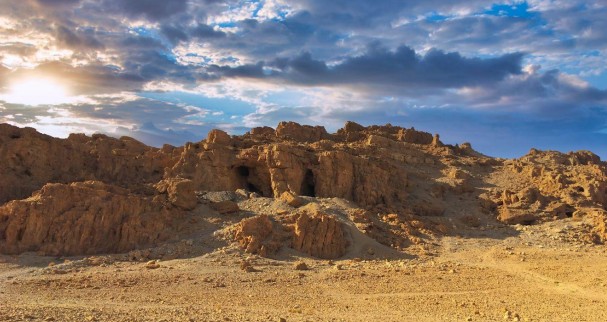
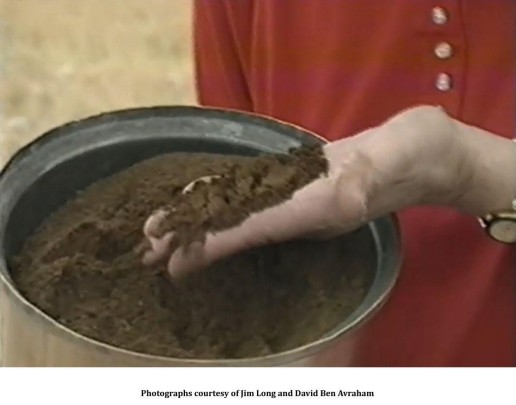
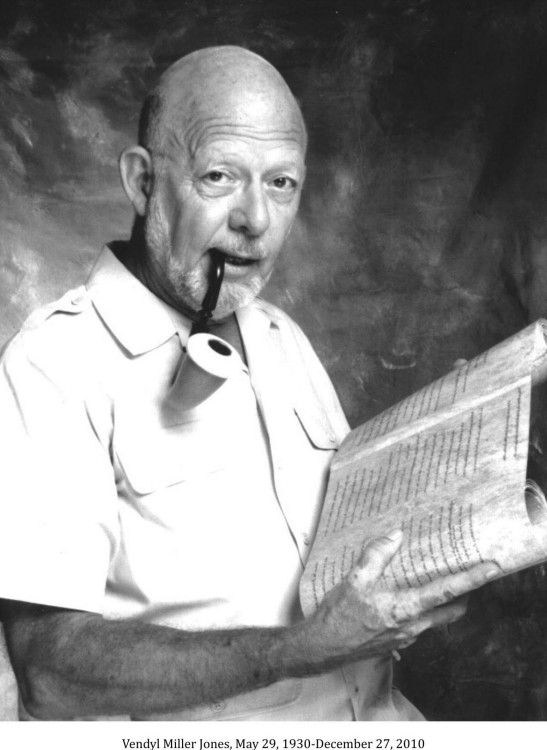
In May 1992, a team of volunteers led by Texas Pastor Vendyl Jones was digging at the base of a limestone cliff near Qumran when they uncovered what may be one of the most significant archaeological discoveries in modern history. Beneath it lay a hollowed recess packed with a reddish-brown organic powder, sealed away for two thousand years. Jones believed the aromatic dust was Ketoret, the sacred incense burned twice daily on the golden altar inside the Jerusalem Temple. What followed was a story of scientific discovery, bureaucratic complications, private custody, tragic murder, and a mystery that, more than three decades later, is the subject of a new sourcebook from Project Qumran.
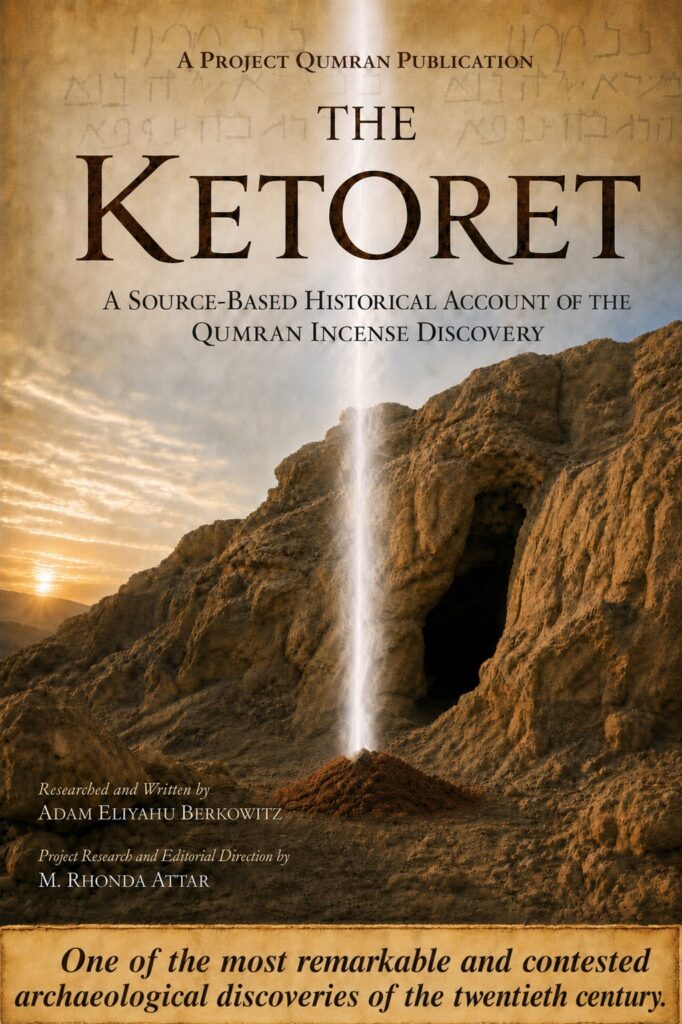
The sourcebook, The Ketoret: A Source-Based Historical Account of the Qumran Incense Discovery, assembles the full documentary record of that find, including laboratory analyses, eyewitness testimony, and chain-of-custody documentation. Tragically, the events appear to have culminated in the material being discarded as common debris. The project included efforts to uncover the truth about the material found at Qumran and is ongoing, with more revelations in store. The book confronts, head-on, the controversies that have surrounded the discovery since the moment it was made.
The Incense That Stopped a Plague
In the Temple service, the Ketoret was burned twice each day, morning and evening, on the golden Mizbeach HaKetoret, the incense altar, by a priest chosen by lottery in the inner sanctuary. The Talmud records that the fragrance could be detected as far as Jericho, roughly 25 kilometers away. The Sages taught that no priest who offered the Ketoret ever became poor, and that the demand for the privilege was so intense that the Temple administration reformed the lottery to give every priest a single turn in a lifetime.
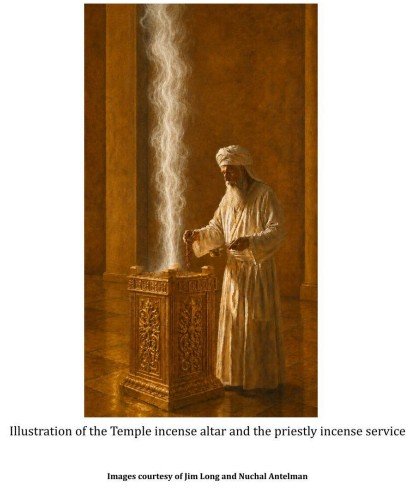
The incense’s power appears in one of the most dramatic episodes in the entire Bible. When a plague broke out among the Israelites in the wilderness, killing 14,700 people in a single day, Moses instructed Aaron to take burning coals from the altar, add Ketoret, and run into the midst of the stricken camp.
“And Aaron took it as Moses had spoken and ran into the midst of the congregation; and behold, the plague had begun among the people, and he put on the incense and atoned for the people. And he stood between the dead and the living, and the plague was halted.” (Numbers 17:12–13)
Ketoret stood between the dead and the living, and the plague stopped. The Sages understood that the incense carries a unique atoning power that no other Temple offering shares. The Pitum HaKetoret passage, recited daily in Jewish prayer to this day, is considered a protection against plague and calamity. The formula for the incense itself was so sacred that the Bible explicitly forbids its private replication: “Whoever makes any like it to enjoy its fragrance shall be cut off from his people.” (Exodus 30:38)
It was this substance, or what may be this substance, that Vendyl Jones pulled from the desert floor at Qumran in the spring of 1992.
The Man Who Went Looking
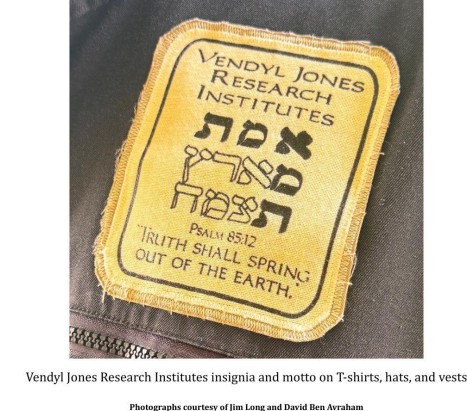
Vendyl Jones was a Texas-born former Baptist minister who eventually left Christianity and became a Noahide, a non-Jew who accepts the seven universal laws given at Sinai. Jones spent decades convinced that the Temple treasures described in the Copper Scroll, one of the Dead Sea Scrolls, were still hidden in the Judean desert. The scroll lists 64 locations of buried Temple gold, silver, and sacred substances, with enough geographical specificity that Jones treated it as a real inventory. His motto was Emet min ha’aretz titzmach, “Truth shall spring from the earth” (Psalms 85:12). He spent much of his adult life in Israeli excavation trenches trying to manifest the promise of truth expressed in that verse.
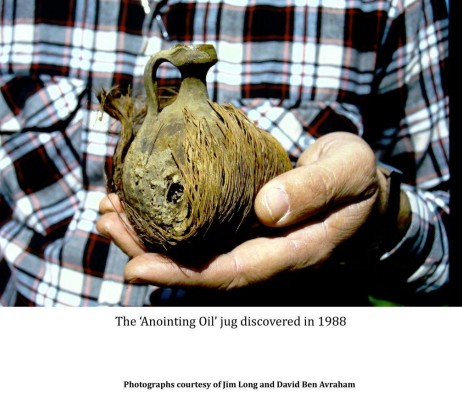
Jones made headlines in 1988 when his team found a juglet containing a reddish oil near Qumran, which he identified as Shemen Afarsimon, the rare balsam used in Temple anointing rituals. The story ran on the front page of the New York Times. Four years later, his team returned to a cave formation south of the Qumran settlement — what Jones called the Cave of the Column — and in a hollowed cavity at its base, beneath a flat stone, found a large cache of powder.
The Discovery and the Disaster
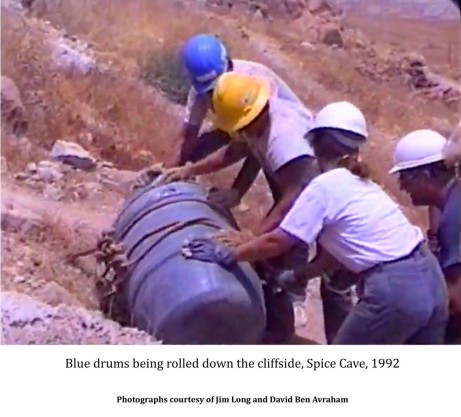
The material was intensely fragrant. Volunteers who handled it reported that the scent permeated their clothing for days. It was transferred into large plastic drums and taken off-site. Before submitting the legally required report to the antiquities authority of COGAT (the civil authority under the IDF which oversees archaeology in Judea and Samaria), Jones called a press conference at the site. CNN and CBS were there. So were international wire services. The coverage went global.
The COGAT response was immediate. Jones had violated the conditions of the excavation permit by going public before filing. The permit was revoked, and the dig was shut down. COGAT did not confiscate the material, did not even acknowledge its existence or its possible identity. Officially ignored, the cache of aromatic dust slipped from official oversight into a tenuous chain of private custody traced by the sourcebook.
The Three Controversies
Controversy One: How Much Did Vendyl Jones Actually Find? Initial reports placed the quantity at approximately 600 kilograms, a figure that gave the story its staggering scale. Witness accounts diverge sharply, with some eyewitnesses confirming a quantity of 600 kilograms. Others describe it as 300 kilograms. The discrepancy has implications for the material’s true identity, and the sourcebook devotes a full chapter to it, weighing every side of the issue. No definitive number emerges from the testimony available, but what does emerge is that the cache shrank dramatically over the decades that followed as it passed through several hands.
Controversy Two: Who Actually Lived at Qumran? The standard scholarly view holds that Qumran was occupied by the Essenes, an ascetic sect that rejected the Jerusalem Temple hierarchy and withdrew to the desert to await its purification. If the Essenes occupied the site, a cache of Ketoret, the incense of the very Temple they rejected, is difficult to account for. A competing view, advanced by serious archaeologists, holds that the Qumran community was priestly: kohanim, Temple priests, who fled Jerusalem during a period of upheaval and brought sacred materials into the desert for safekeeping. Under that reading, a sealed cave at Qumran, full of Temple incense, is exactly what the evidence predicts. The sourcebook presents both positions and the arguments behind each.
Controversy Three: Where Is the Incense Now? This is the hardest question of all. The material passed through a series of private hands over the following decades, eventually coming to rest in Ma’ale Levona, a community in Samaria, in the care of Sarah Richardson, Vendyl Jones’s daughter. The sourcebook traces that custody chain in full, and is unflinching about where it goes cold. What happened to the incense in Ma’ale Levona is the darkest chapter of the story.
A Murder and a Final Search
Following the October 7, 2023, Hamas terrorist attack on Israel, bomb shelters across Samaria were cleared and reorganized. The sourcebook concludes, based on testimony gathered from multiple witnesses, that material stored in the Ma’ale Levona shelters, including what appears to have been the remaining cache, was discarded during those clearances as unidentified waste.
In May 2025, the story reached its darkest point. Sarah Richardson, age 73, was found murdered at her home in Ma’ale Levona. Her son was charged with the killing and reportedly confessed, though the legal status of that confession has been contested in court. The last confirmed custodian of the Ketoret was gone, and its final resting place was empty.
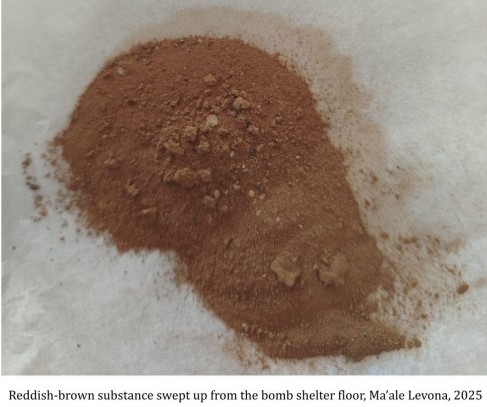
Researchers traveled to Ma’ale Levona and searched the premises and the bomb shelters across two visits in November and December 2025. What they recovered from the shelter floor was approximately one liter of reddish dust from the original cache that Project Qumran has been able to locate.
What the Scientists Found
Whatever questions surround the chain of custody, the scientific record assembled around the 1992 find is not easily dismissed.
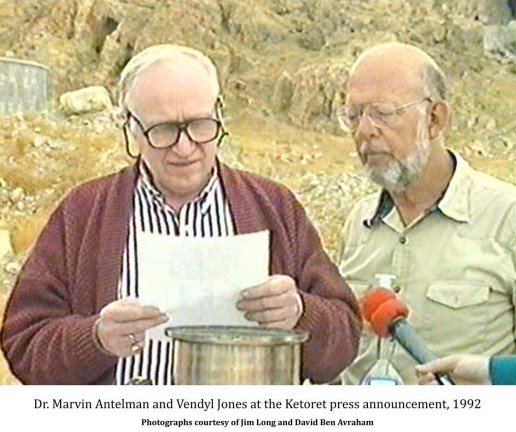
Rabbi Dr. Marvin Antelman, a chemist affiliated with the Weizmann Institute, performed a preliminary chemical analysis in 1992. Working from a 26-gram sample, he used mass spectrometry and atomic analysis to identify the organic constituents of the powder. He positively identified eight of the eleven principal Ketoret ingredients specified in the Talmud, including Mor (myrrh), Levonah (frankincense), Kinamon (cinnamon), Charkom (saffron), and Kosht (costus).
A second independent analysis came from Dr. Terry Hutter, a palynologist, a specialist in ancient plant material, pollen, and spores. Hutter identified plant fragments corresponding to at least nine of the eleven Ketoret ingredients under microscopy, each traceable to the correct botanical families and consistent with Second Temple period material. His report describes the fragrance released when the sample was opened as “profuse and almost immediate.” It was intense enough that family members elsewhere in the house noticed it without being told what was being examined.
Both Antelman and Hutter were careful not to acknowledge that a definitive conclusion would require more comprehensive testing with modern analytical tools unavailable to them in the 1990s.
The Investigation Continues
Project Qumran is now arranging advanced scientific testing of the dust recovered from Ma’ale Levona. The analytical technologies available today, such as DNA analysis, isotope tracing, and high-resolution mass spectrometry, can identify organic compounds and their geographic origins with a precision that was impossible in 1992. The organization is pursuing additional samples and testimony and will publish results as they become available.
The sourcebook explicitly states that the material Jones discovered in 1992 has not been definitively identified as the Ketoret. Its claim is that the evidence gathered over 33 years is sufficient to demand proper scientific follow-up, and that the window for that follow-up may be closing as surviving samples dwindle and witnesses age.
If the advanced testing confirms what Antelman and Hutter indicated — that this reddish dust is, in fact, the Ketoret of the Jerusalem Temple — it would have huge implications for archaeology. Perhaps even more significant are the implications for the nation of Israel. The Ketoret formula has been lost to the Jewish people since the Temple’s destruction in 70 CE. Its authentication would bring the reinstatement of the Temple incense service one tangible step closer. The Bible emphasized that precision was essential in creating the incense. The formula was lost when the Temple was destroyed, but Project Qumran intends to find out if it can be rediscovered.
The hardcover edition is coming soon to Amazon.
Join the Project Qumran Newsletter: Receive updates, research notes, publication announcements, and future releases from Project Qumran.
Join as a partner in the ongoing project.
